

In a Chinese context, McKinsey has been called the “Shaolin Temple” of the management consulting business, and if so, Joe Ngai could be McKinsey’s own Jet Li. At 51, he is at the top of his game in the martial arts of consulting. He has been chairman of McKinsey’s Greater China office since 2022, after joining the firm as an associate in 2002. His resume can be intimidating – three degrees from Harvard in seven years (bachelor’s and a joint JD/MBA) after graduating from Phillips Exeter Academy as valedictorian in 1993.
From a middle-class Hong Kong family, he spent his primary and junior high years at Diocesan Boys’ School and only left for high school in the United States after his sister went to university abroad.
The culture shock was intense – the only time Joe had been to the US previously was to visit Disneyland. Helping him manage was a life-long passion for music. After starting with the piano at age six, he switched to a cello because it fit his hands, and he has been a serious cellist ever since. In New Hampshire, he played at a local pub for pocket money, but he was good enough to perform at the Tanglewood Music Festival, the summer home of the Boston Symphony Orchestra, where he met his musical hero, Yo-Yo Ma, in the summer of 1991.
He chose Harvard over Juilliard. Yet Ngai continues to juggle wide-ranging interests that balance his success as a senior partner of one of the world’s premier consulting firms. In an interview with AmCham HK e-Magazine, he talks about Artificial Intelligence (AI), surviving in the “world’s toughest gym” of the China market, the role music has played in his life, and why he has stuck with the Arsenal Football Club all these years.
Q. Artificial Intelligence (AI) is disrupting business like never before. How do you advise companies to cope with it? And how is McKinsey coping with it internally?
A. Once upon a time, the digital transformation was all about logic and science, but AI has proven helpful in language, arts and music – creative fields. The application is very, very broad and across business, everyone every day is asking how AI can make things more productive. And a generation of human resource managers is saying, before we hire anyone, let’s think how AI can be helpful, first. It has become part of corporate life to ask these questions. I like to think that this is something that will bring us to bigger and better and more productive things.
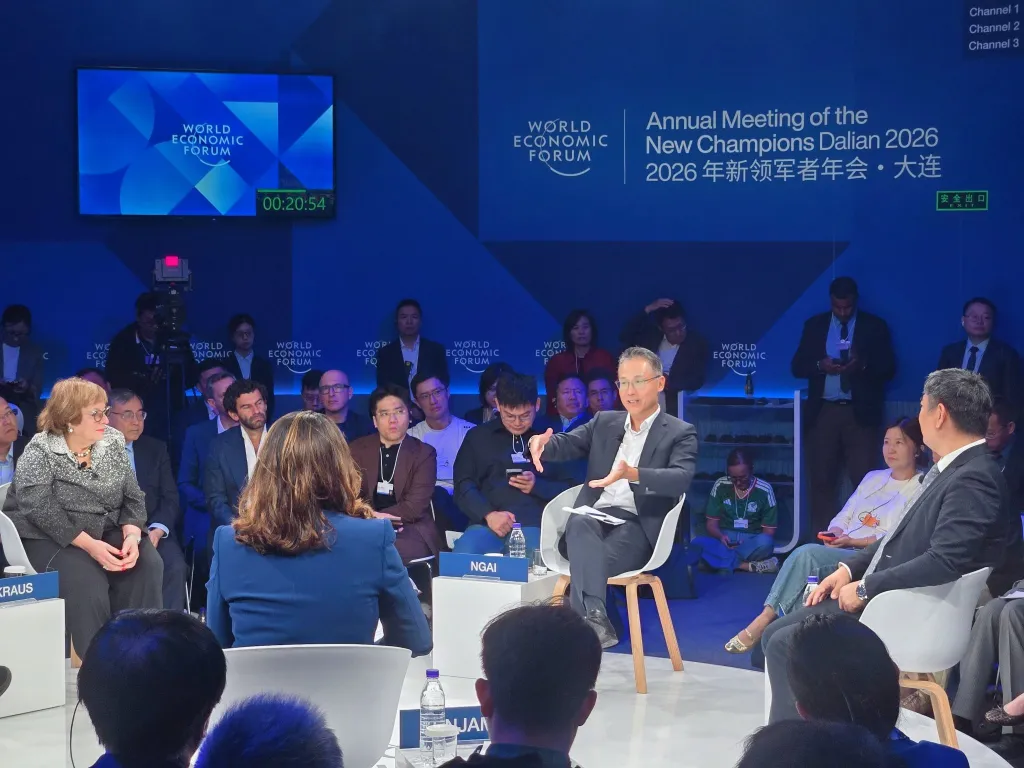
It has the potential to take away a lot of the more mundane and administrative tasks by automating them and elevating us to work on things that are more high value-add, more based on human judgement. That is the promise.
On the other hand, there is fear around job security and the impact on young people and whether it is bringing more inequality to society. A handful of people dominate the technology. There are two sides to this, and one side is very frightening. In every boardroom, in every single management meeting, AI is the most often heard word, with a snowball effect that makes the digital era look like the Stone Age. Some may call it a bubble, but I think there is a lot of substance behind it.
It’s going to be here, right around us, changing everything we do in a very fundamental way. At McKinsey, we are also fundamentally rewiring how our teams work – shifting time and energy toward what matters most: rigorous problem-solving, strategic client counsel, and building the capabilities that endure.
At the same time, we’re hiring a lot of people, because in the consulting world, AI is bringing a lot of optimism that we can unlock the full growth potential of our clients. A lot of them are asking us AI-related questions. As consultants, we thrive when the world is moving quickly, and right now the world is moving as quickly as it ever has.
Q. In your new book, The Next China is Still China, you call China the “world’s toughest gym” for business. Can you talk about what that means?
A. The Chinese market has always been ultra-competitive. During the high growth period when Gross Domestic Product (GDP) was growing at 8% or 10% it was ultra-competitive, but the market was growing so quickly that it was easier. In a big growing market, everyone found their role, there was more room, there was more white space.

In the last couple of years, China has entered a more medium growth phase. I don’t want to use the word slowdown, because GDP growing at 4% to 5% is not a slow economy by any stretch of the imagination, but relative to where we were before, it’s certainly slower. As GDP slows down, naturally, the competitive intensity goes up.
You have lower growth in the market with an equal number of competitors, and the way I describe that is a no-frills gym. It’s a gym where there is no air conditioning, no cushions, you don’t get to rest for very long, there’s barely enough food to go around, and so people are constantly competing and getting better.
Most of these are Chinese companies, but the outcome of this is that you have a few winners, who have risen to the top among all the competitors. When they look around at other gyms in the rest of the world, they find that there are a lot of high-potential, perhaps smaller, but easier gyms out there. The motivation, the incentive, the acceleration of going into the world has happened in the last couple of years as China moved into a more moderate growth phase.
If you look at it from a multinational perspective, the question is, what do I gain by getting into this gym? Why am I putting myself into this gym where, frankly, it doesn’t look very easy. You’re caught in a difficult place.
On the one hand, getting into this gym is an investment, and how do I justify the return? On the other hand, can you afford not to be in it? Because these guys are going to get better every day, every weekend. They are in there 24/7. If I don’t participate, when these guys come out, they will come to my home market and other markets, and how do I compete against them?
That’s behind the fear that you have around the world today about the Chinese industrial engine, that’s spreading its wings around the world and it’s scary. On the one hand, it’s tough to re-invest and put yourself through this gym. On the other hand, not participating in it is just as risky, because you miss out, you don’t understand what these players are about, and you miss out on the opportunity to self-improve.
In this gym, people are also innovating all the time, because companies in China innovate to survive. Whether it’s squeezing more costs or coming up with new products, for a lot of multinationals, it’s your window into some of the most iterative, fast-moving innovation and new products, and how do I take inspiration from this? How do I learn from this, so that I can build a faster-moving company at my own headquarters? Now there are multiple reasons to be in China, not only to sell into a market of 1.3 billion or 1.4 billion people.
Q. What are the pain points for Chinese companies going abroad?
A. Winning over customers is the easy part. What I’ve found is that customers around the world behave very similarly. They love great products, they love innovation and they love a cheap price. Given how Chinese products offer great value for money, I think around the world people quite like products that are made in China.
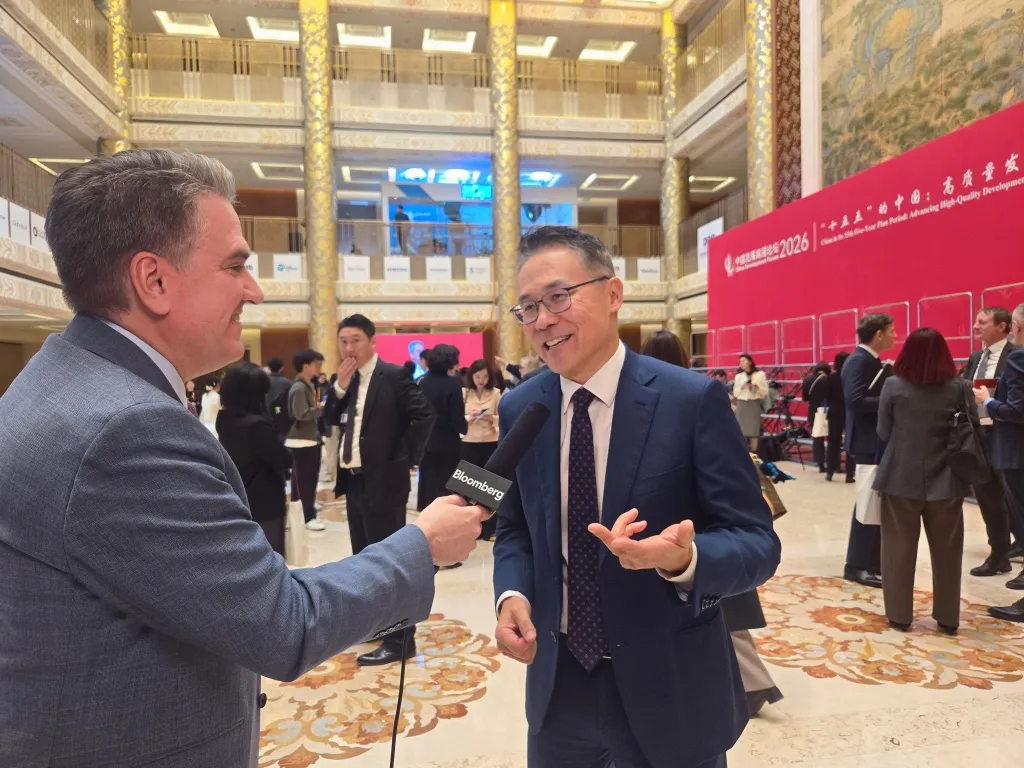
The more difficult challenge is how Chinese companies get accepted by industry groups, the business sector and the community. Individual customers are the easy part. The difficulty is in the institutional part.
My analogy for this is a tennis club. A Chinese executive goes to your country – pick a country, say Sweden – and is invited by the local chamber of commerce to have a tennis game in the local club. Trained in the gym, they come out and hit the ball hard, winning a 6-0 first set, which is pretty humiliating for the host. Then they switch sides, and the Chinese player again wins 6-0, and game over.
Then they say, “Now I’ve shown you my tennis game, please accept me into your club.” What they do not realize is that tennis clubs run based on whether people like you or not. The membership committee vets new members.
There are no tennis clubs in China. In China, the best student is the class captain. The most successful entrepreneur becomes the spokesperson for the community. Excellence is a ticket to your standing in the community.
However, when you go outside China, there are a lot of tennis club-like environments where you need to get accepted as part of the community, and to do that you need to make friends. You need to contribute to the whole community and be part of the ecosystem. Even if you play well, maybe you should ease off a bit and play doubles.
There is a lot of learning that needs to happen, as Chinese companies go from factory of the world to corporate citizen of the world, and the transition is going to take time. The business culture that was forged in China’s extraordinarily competitive domestic market rewards speed, efficiency, and winning – all are critical strengths. But the tennis club dynamic I described requires a different set of skills: relationship-building, community contribution, and the long game. That’s not something that gets learned overnight, and I say that with genuine respect for how far Chinese companies have already come.
Q. What role has music played in your life?
A. I wanted to be a professional musician for many, many years of my life. I started playing the piano when I was six and the cello when I was eight. Yo-Yo Ma was my idol. Playing the cello was my passion when I was growing up in Hong Kong, at Diocesan Boys School. I played even at Harvard, for one or two years. Then I figured out that it was such a tough career that I would be better off just becoming a consultant. I gave up on my music career because I did not have the confidence that I could make a great career out of it.
Music was the one constant in my life, because it was the same instrument, and the same music. It was the one thing that helped with my culture shock.
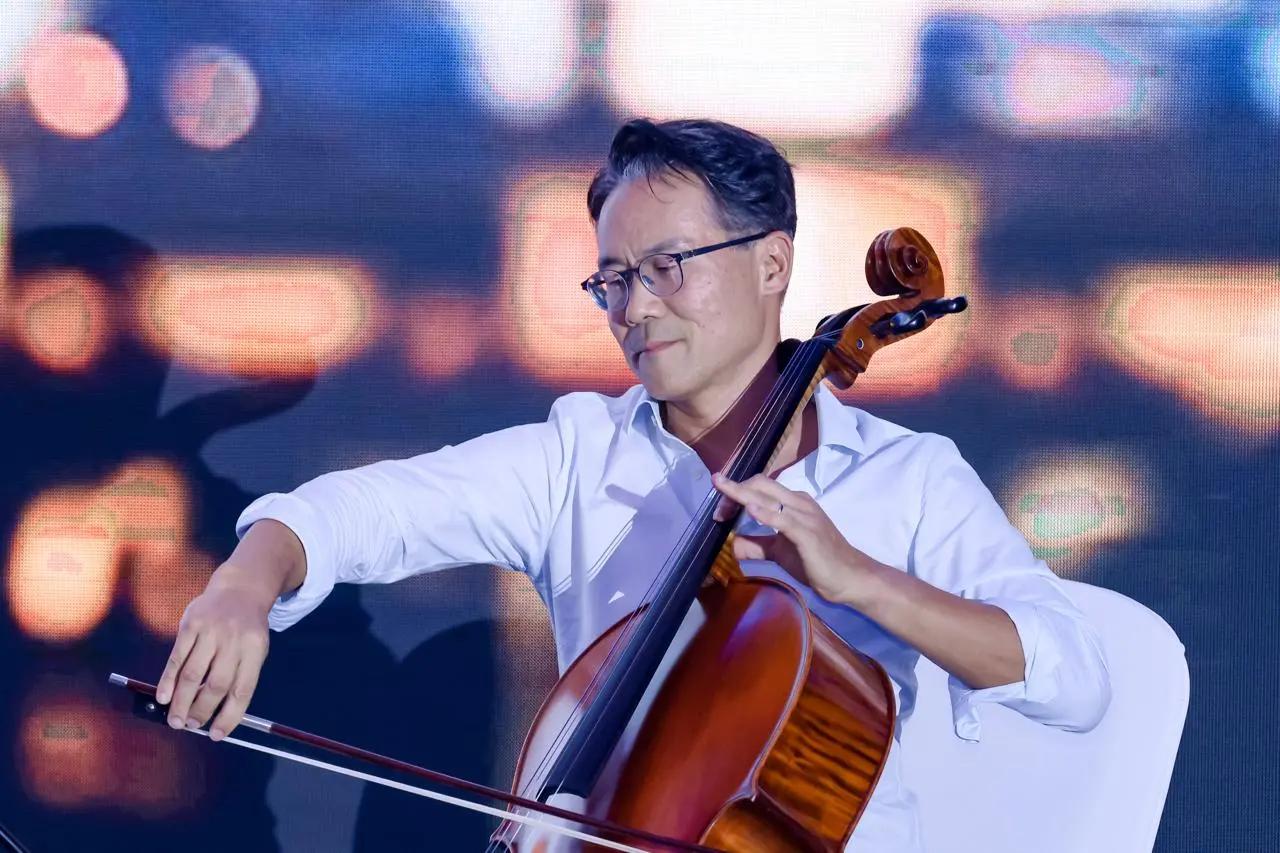
I played in the Harvard orchestra, which is a very, very good orchestra, for two years. And people were very serious. A lot of my friends became professional musicians. This is a whole other realm of life that I had a privilege to participate in, one I remain grateful for.
I met Yo-Yo Ma in 1991, when I was playing in the youth program of the Tanglewood Music Festival, which was the summer home of the Boston Symphony Orchestra. At our final concert, Yo-Yo Ma was the soloist playing with us, and I was in the orchestra.
That was the climax of my musical career. By that summer, I felt that I had lost some enjoyment when I played too much and it became a job. So, I applied to Harvard and music slowly, gradually became less a part of my life.
I play a lot less now, but every so often I still get to play a little bit. I’m technically not as strong as I once was, but musically I’m better than I was when I was younger.
Q. What lessons can you share from your experience?
A. The first thing I would say is that the world is becoming much more fast changing, and business cycles are shorter. You need to get ready for two, three, or four careers and transitions – which means embracing more diversity. Being in the right mindset for that is very important, because sometimes we give up too easily.
People are going to have many, many opportunities amid all these disruptions. AI is a big disruption, but it can also be the biggest equalizer. If you make good use of it, you can overcome all your previous inadequacies and become someone who is very, very resourceful, or you can sit there and be replaced. It all depends on who you want to be.
My first lesson is that it’s not a straight path, and there’s no need to either give up too early or become too cynical too early, around opportunities or your career, because I’ve seen so many people with their second or third careers become very, very successful, but not the first.
The second lesson is that sometimes, the context gives you the opportunity, and you need to run hard and celebrate. It’s far easier to succeed when the wind is behind your back. I came back to Hong Kong in the year 2000, and then World Trade Organization (WTO) accession opened the door to the most incredible 15 or 20 years of economic prosperity and growth in China – a period that produced some of the most remarkable growth stories I have ever witnessed. My clients went from operating a single factory to developing the tallest buildings in the country.
I seized those opportunities and made the most of them. One of the biggest things that we learn at McKinsey is that by far the most important choice you make is which pond you decide to be in. And you better be in a pond where there’s quite a lot of wind behind your back.
The third lesson is to keep learning, you know. I came to McKinsey as an associate, thinking that I would stay here for two years, and learn something, and move on.
Twenty-four years later, I’m still here and still learning. And that is exactly what today’s environment demands – one where knowledge can be commoditized easily and technology can replace careers and structures overnight.
The only response is to keep progressing. A lot of people come to me for career advice, and the question I ask them is: are you still learning? Are you still progressing? Three, five years from now, will you be a better person, because of it?
If not, find the environment that gives you that opportunity – before you become stale and cynical.
I remain optimistic, energetic, and willing to listen and learn more. I tell this to young people – but it’s not just for the young. I’m 51 and I feel like my willingness to learn feels as great as when I was 22. It’s a state of mind – about how you carry yourself and have the humility to know that everything that you know can be replaced. You need to keep moving and find joy in doing it.
Q. What do you do outside work? And why are you an Arsenal fan?
A. I do a lot of sports – these days, I’m doing a lot of trail-running. I’m preparing for the 100 km Oxfam Trailwalker race this year and regularly run 15 km and 20 km on weekends. In Hong Kong we are blessed with the mountains and outdoors, and I love being out there. I play a lot of golf on weekends as well, and I still play soccer – sport is very much my thing. I see it as an individual right and a way to refresh yourself.

As to Arsenal, everyone in Hong Kong picks a team at some point when they start watching football. There’s a team that just catches you. For me, that was Arsenal many, many years ago. It was during a time when they were doing very, very well, and I loved their teamwork, and the selflessness of how they played. Like all Arsenal fans, I went through pretty much 20 years of not winning anything.
Going through a very uncomfortable and very difficult period makes you stronger, and so I derive a lot of lessons from supporting a team that went so long without a trophy. How do you remain hopeful despite the disappointment, stay loyal, and not become cynical? Even in being a football fan, there are many good lessons for life.

(The Arsenal Football Club was called the ‘Invincibles’ after winning England’s Premier League in 2003-4 without losing a single match, but its next Premier League title was not until the 2025-26 season).
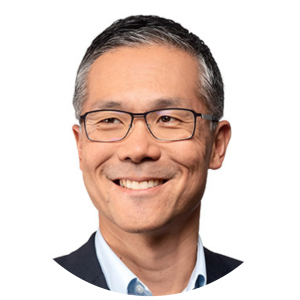
Joseph Luc Ngai is a senior partner and chairman of Greater China for McKinsey & Co., where he has worked since 2002, after founding and serving as CEO of an Internet company, Delirium Corporation. Ngai has three Harvard degrees (MBA, 2000; JD, 2000; BA, economics, 1996). He is a past president of the Harvard Alumni Association of Hong Kong, president of the Exeter Regional Association, and a director of the Diocesan Boys’ School Foundation. He chairs DiamondCab, a social enterprise that provides barrier-free taxi services in Hong Kong.
His most recent book, co-authored with Nick Leung, also a McKinsey senior partner, is The Next China is Still China – An Insider’s Playbook for Winning in the New Era (New York, Scribner, 2026).