
By Edith Terry
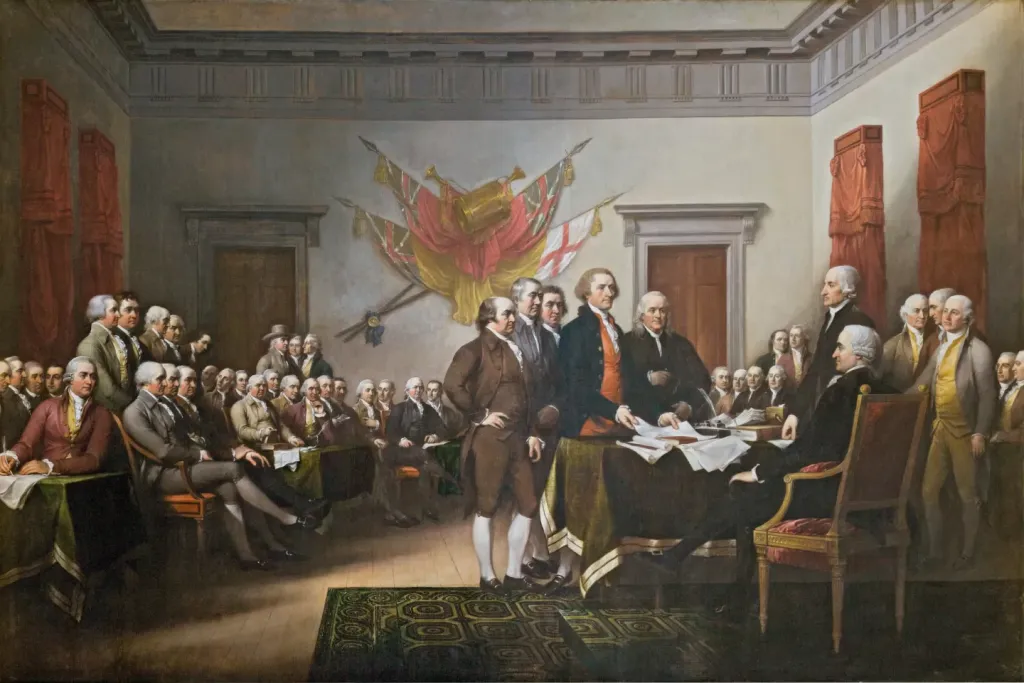
A restless country, the United States of America never stays still for long. One of the most famous observers, Alexis de Tocqueville, in the 1830s found a country of small, largely self-governing townships that he believed was the most successful democracy of the time, based on “equality of condition.”
This year marks the 250th anniversary of the Declaration of Independence. As the US and China – arguably the world’s most consequential bilateral relationship – engage at the highest levels, the effects are being felt directly in Hong Kong. In our cover story, AmCham HK e-Magazine talks with Julie Eadeh, United States Consul General for Hong Kong and Macau, about the meaning of the 250th anniversary, the current state of US-China relations, and her efforts to build trust and promote US. interests in Hong Kong after a chilly six years.
A party and a marching band restore a “positive vibe”
The grand ballroom of the Hong Kong Ocean Park Marriott Hotel was awash in Americana. There were hulking Harley Davidson motorcycles; American flags, of course; a locally brewed 250th anniversary pale ale; a miniature Statue of Liberty; a National Basketball Association (NBA) trophy and NBA Legend “Cat” Cuttino Mobley, known for his three-point shooting, standing by; long tables full of American beer, wine and spirits; and an even longer, red carpet stretching nearly the 50-meter length of the Marriott’s ballroom.

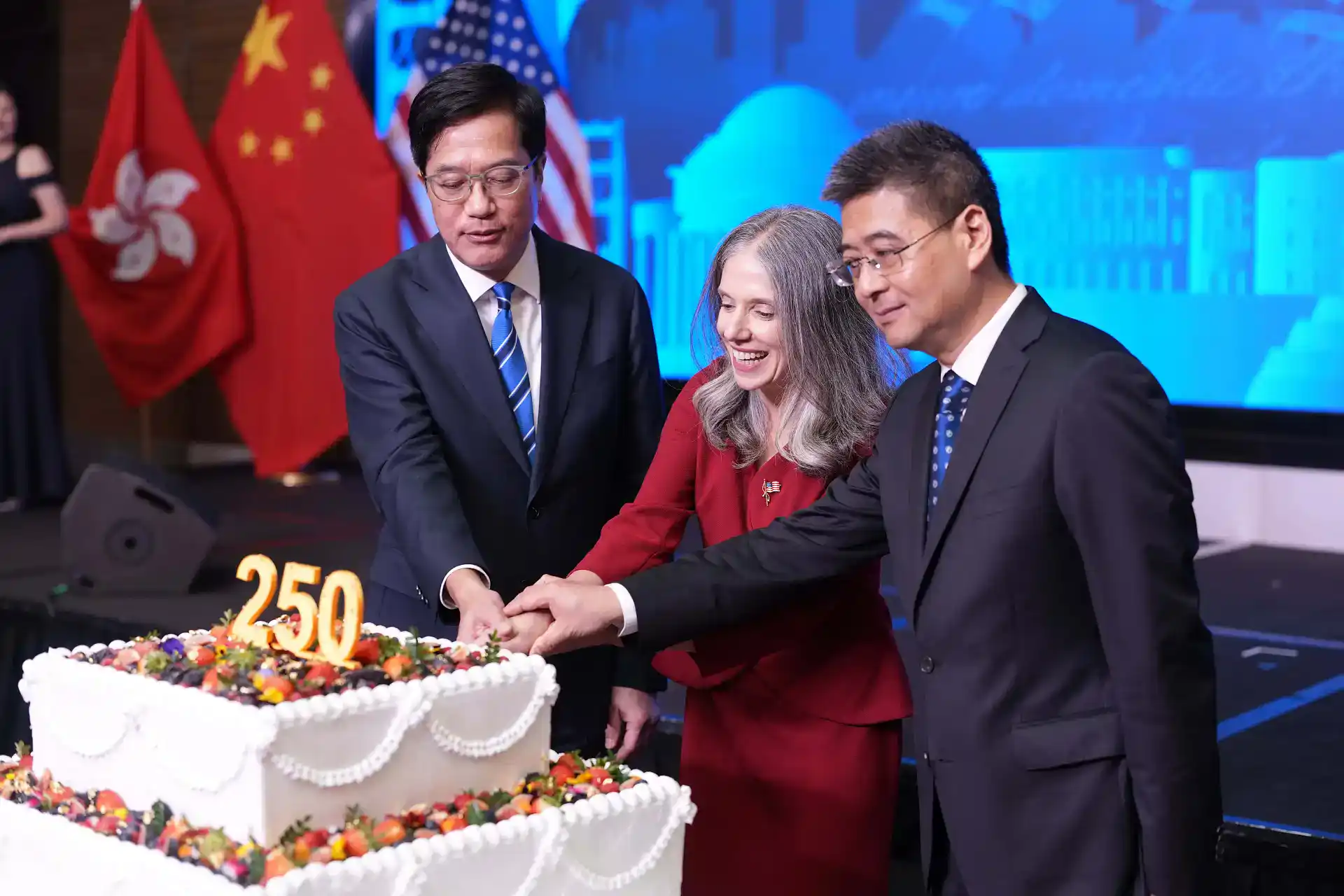
It was June 23, and more than 1,000 people crowded into the ballroom. Hosted by the US Consulate General Hong Kong and Macau, the 250th anniversary celebration of the US Declaration of Independence, was a small but distinct turning point in a relationship that has grown frosty in recent years.
On stage were Julie Eadeh, Consul General for Hong Kong and Macau, Michael Wong, Hong Kong’s Deputy Financial Secretary, and Hua You, Deputy Commissioner of the Office of the Commissioner of the Ministry of Foreign Affairs in the Hong Kong Special Administrative Region. “We are proud of the role that Americans have played in Hong Kong’s growth as a world class city,” Eadeh said.
“The people of Hong Kong have also shaped America. At least a quarter of a million Americans were born in Hong Kong, and many more trace their roots here, including many of you. Tens of thousands of Hong Kong students have studied in the United States. Hong Kong Americans have won Olympic medals, held public office, made scientific discoveries, built successful businesses, and shaped American culture. After all, Bruce Lee, one of Hollywood’s most iconic figures, was born in San Francisco.”
A prominent Hong Kong columnist, Wang Xiangwei, who was at the party, noted the “positive vibe” and urged Beijing to consider having a leaders’ meeting in Hong Kong during the November 18-19 meetings of the Asia Pacific Economic Cooperation forum (APEC) in Shenzhen. Setting a leaders’ meeting in Hong Kong would be a “masterstroke,” the columnist, now a visiting fellow at Harvard’ University’s Kennedy School, wrote afterwards.
In another small but measurable step a few weeks after the Consulate’s reception, the United States quietly let the National Emergency with Respect to Hong Kong expire. The national emergency was first declared July 14, 2020 under Executive Order 13936 and has been renewed annually since then. China’s Commerce ministry and the Hong Kong government immediately welcomed the move.
Whether or not President Donald Trump and President Xi Jinping cross the Shenzhen border to meet in Hong Kong, official representation at the US Consulate’s reception represented a small reset on its own.
In his comments, Wong was decidedly upbeat about the US business presence in Hong Kong, with the number of US companies based here rising by 11% over the last year to 1,550. Wong also pointed to the 2026 Business Sentiment Survey by the American Chamber of Commerce in Hong Kong.
“An overwhelming 92% of the respondents planned to maintain their regional headquarters in Hong Kong for the next three years, and they cited efficiency, stability and the very safe business environment as reasons to continue to base their regional operations in this lovely city,” he said.
Secretary for Commerce and Economic Development Algernon Yau and former Hong Kong Chief Executive Donald Tsang were also there. On the US side, Assistant Secretary of the Treasury Jonathan Burke represented the most senior US government executive branch official to visit Hong Kong since 2023.
The hit of the night was the Eastern Michigan University Marching Band, also known as “The Pride of the Peninsula” referring to the peninsular part of Michigan where the university is located.
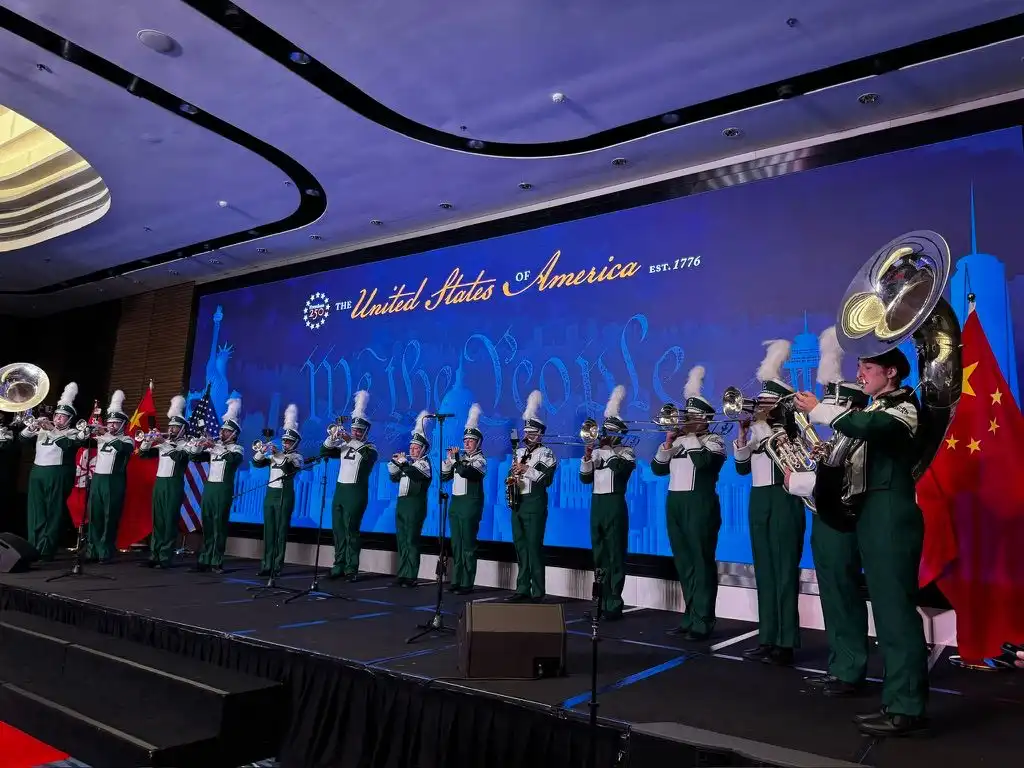
Marching bands came to symbolize the healing power of small-town values following the 1957 Broadway hit, The Music Man, in which a traveling con man becomes a small-town band leader after falling in love with the town librarian. In this case, the marching band came from Eadeh’s alma mater, Eastern Michigan University. Marching bands are almost synonymous with high school and college football in the US and have been part of American culture since the 19th century, encouraging crowds to cheer louder while marching on the playing field.
The 16 young band members, in plumed hats and green and cream-colored uniforms, played a medley of songs ranging from the Star-Spangled Banner and God Bless America to the classic tribute to Hong Kong, Below the Lion Rock. A bald eagle named Swoop, the university mascot, in a full-body costume, pranced on stage and took selfies with the audience. The big city audience loved it.

Rebuilding trust
In an interview a few weeks later from Michigan, where Eadeh grew up, she talked about the 250th anniversary, restoring a strained official relationship with Hong Kong, and her career as a US Foreign Service Officer.
“Our 250th anniversary celebration represented a great opportunity to remember the long and important ties between the people of the United States and Hong Kong,” Eadeh said. “The attendance and enthusiasm in the room reflected a keen desire for both sides to find ways to engage, according to the vision set out by the two presidents. It’s not a zero-sum game.”
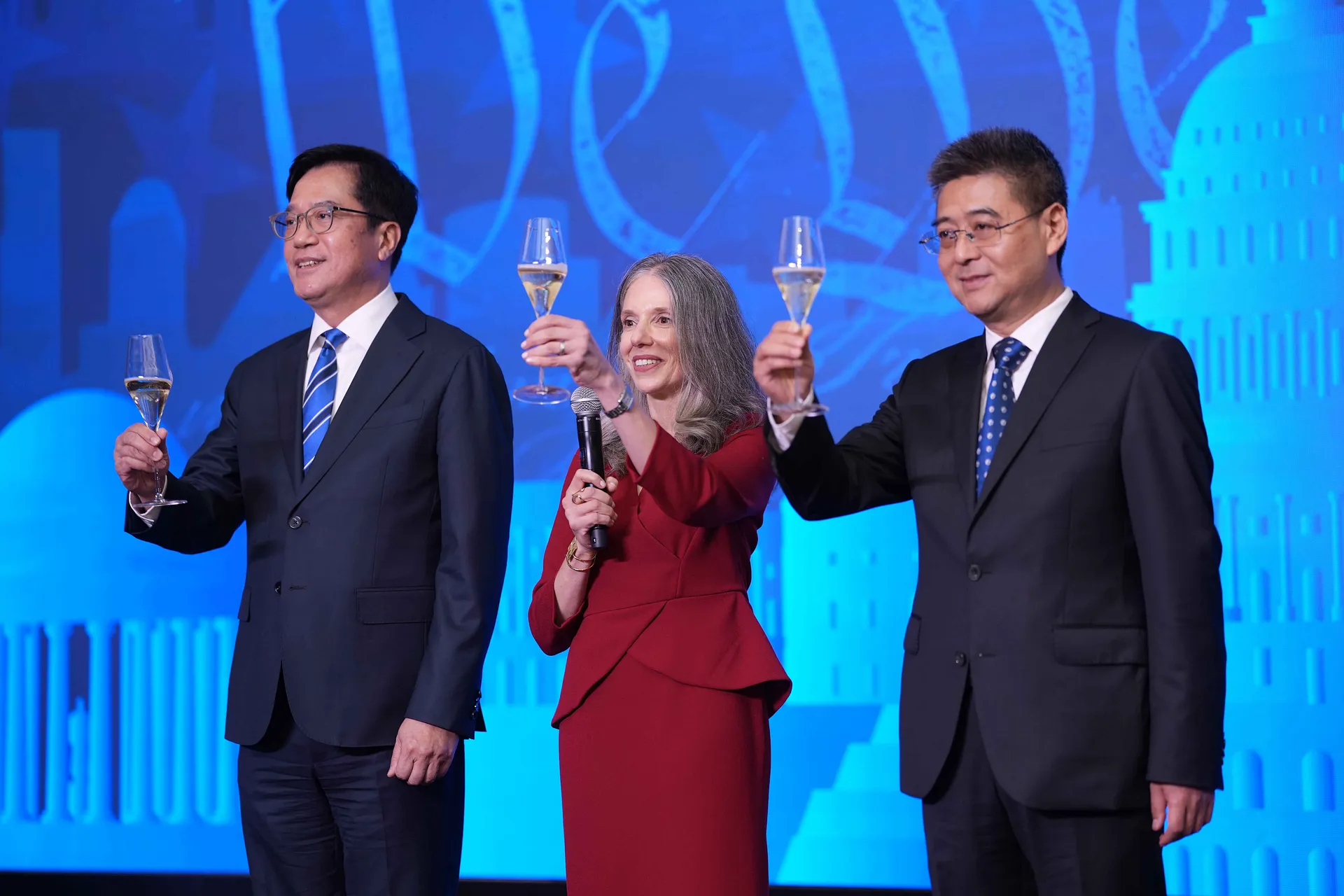
“When Deputy Financial Secretary Wong and I delivered our remarks, you could hear a pin drop in that room. My personal assessment is that everybody was waiting to see what we would say and how we would say it, because there is a desire in the community for us to stabilize the US-Hong Kong relationship. There is a wide recognition that the relationship is so important, and it felt like people were holding their breath.”
Eadeh, who previously served in Hong Kong from 2017 to 2020, bid for the post because of her belief in the value of the relationship, despite anticipating that it would be difficult after the chill experienced by her predecessors since 2020.
Since then, Hong Kong government representatives have largely refused meetings with US diplomats, effectively cutting them off from official contact. Eadeh is aware that people have been warned not to attend their events or engage. She has been working to “slowly, slowly rebuild trust.”
“Business plays a big role in this too. Hong Kong wants American businesses here and we have this opportunity created by President Trump and President Xi. The business community needs to take a more active role in helping bridge that gap because I know the Hong Kong government still talks to the American business community and wants them to succeed in Hong Kong.”
“Having the business community serve as advocates for engagement is going to be necessary and beneficial in moving forward.”
If Trump does visit Hong Kong as part of the APEC meeting in November, he will be only the second sitting US president to visit Hong Kong after Bill Clinton in 1998, but both George H.W. Bush and Donald Trump visited Hong Kong before they were presidents. In 1978, Bush fired Jardine Matheson’s Noonday Gun in Causeway Bay and announced his intention to run for president at the Foreign Correspondents Club.
Trump was in Hong Kong in 1993 to negotiate a deal with Stanley Ho for his second Trump Tower after New York (it never happened). He stayed in The Peninsula Hotel and told the South China Morning Post: “I’m a New York boy, born and bred and there’s only one other city in the world that impresses me – Hong Kong.”
Strategic pragmatism
Eadeh has pursued a course of strategic pragmatism in her efforts to rebuild ties. “The Chinese often talk about 5,000 years of history. If you think about that long trajectory, two things can be true. We can acknowledge the difficulties of the past few years, and at the same time, we can honor the past and the relationships between our people that have endured for so long,” she said.
“The decisions that the United States has taken on Hong Kong reflect deep concern about what has happened in Hong Kong,” Eadeh said.

“But again, two things can be so. President Trump and President Xi have committed to a broad framework of a constructive relationship of strategic stability. And my guidance from the White House has been to pursue American interests in everything that we do, whether it is looking at illicit finance, law enforcement cooperation, transnational cooperation or people-to-people ties. Everything we do in Hong Kong is vitally important, and I think vitally important for Hong Kong too.”
“We are committed to finding pragmatic, targeted ways to engage in areas of shared mutual interest. That is not always easy.”
Among other successes, more official US visitors have made their way to Hong Kong in the last 10 months since Eadeh arrived in August 2025 than in the previous six years. The list includes the first US senator to visit Hong Kong since 2019, Steve Daines (R-Montana) in March, and senior officials from the US Treasury, State Department, and Department of Commerce.
When Eadeh made her courtesy calls after she arrived as Consul General in August 2025, she learned that some of the largest US banks had been in Hong Kong for over 100 years, including Citibank (1902) and J.P. Morgan (1924).
“From our earliest days, Americans were looking for trade, commerce and engagement with the world, and I think that’s still true today,” she added. “The fact that the United States has been in Hong Kong for 183 years says something very profound about Americans and the American community in Hong Kong.”
“I know some Americans who were born in Hong Kong and are in their 80s, and are Americans through and through, but who are also Hong Kongers. There’s a sense that Hong Kong as we know it today was built together. I think the 250th anniversary is a fitting time to remind us of that, given the difficulties of the last six or seven years,” she added.
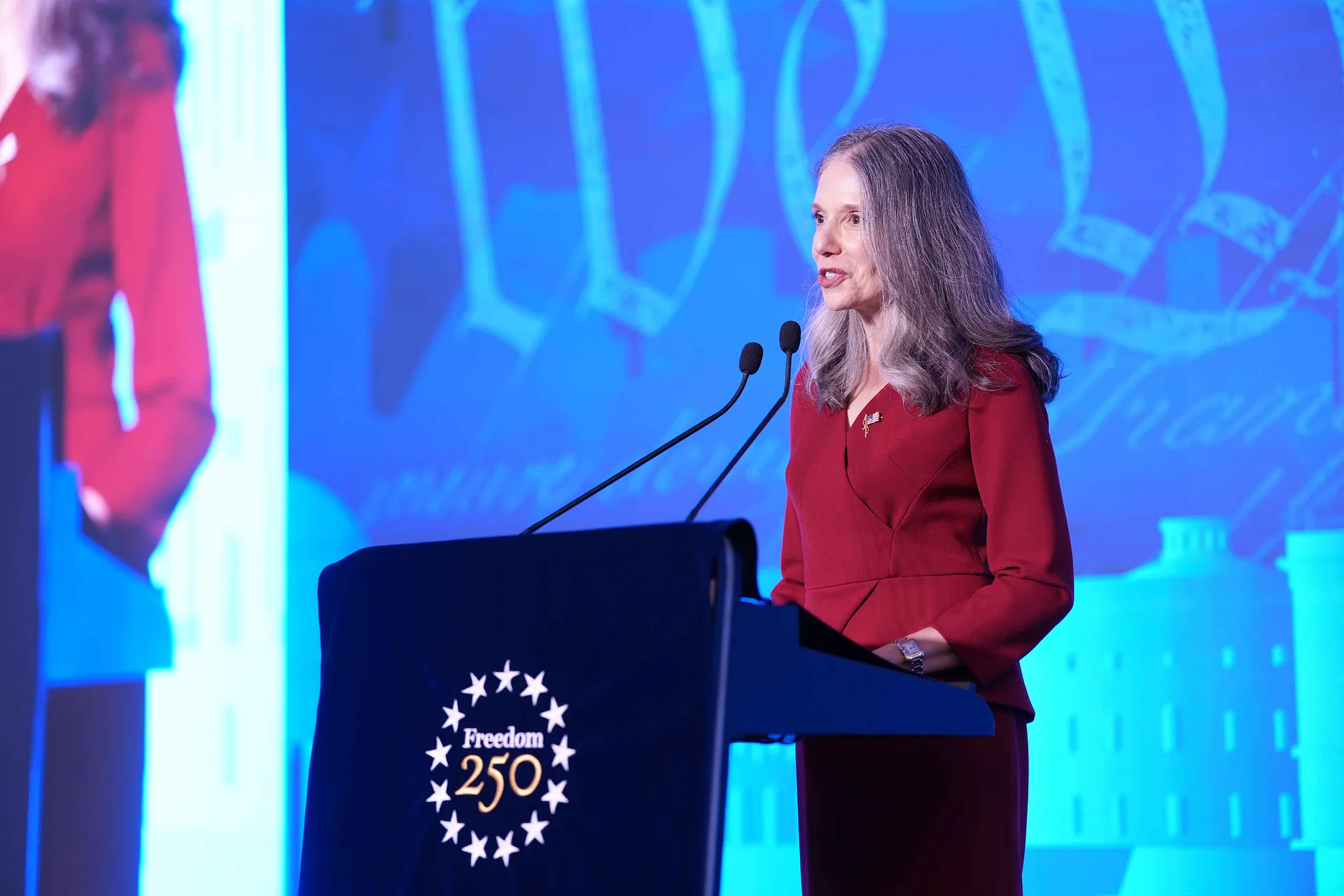
Eadeh served elsewhere for most of those years, first in as official spokesperson at the US Embassy in Ankara, Türkiye, then as Consul General in Istanbul, after Hong Kong. Following the protests in Hong Kong and imposition of the National Security Law, the US and China exchanged sanctions on officials, the US withdrew recognition of Hong Kong as a separate customs zone with special trading status, and Hong Kong declared bounties on several Hong Kong protestors who sought refuge in the US.
“While the geopolitical and broader US-China relationship tends to affect Hong Kong, the city is extraordinarily important in its own right,” Eadeh said. “Hong Kong is strategically important to US interests, including the access we have to China and the broader Indo-Pacific. Forty percent of American companies in Hong Kong use it as their regional headquarters. Hong Kong is a gateway connecting American businesses to China and to the rest of the region and the world.”
“I’m cautiously optimistic that we can use this opportunity to move into a period of a constructive relationship of strategic stability and rebuild trust.”
An unlikely career
If Eadeh is a believer in the “equality of condition” praised by Tocqueville, she came to it through her own life experience.
“My parents were really scrappy immigrants who worked hard to make a life for us, and they taught us from a young age the value of hard work,” she said. “We’ve always had this profound belief in the goodness of America, which is why my parents chose America, and taught us how important service was, and how we had an obligation to give back to this great country that gave so much to us,” she said. “And that idea of service resonated with me from a very young age.”
She embarked on a career first as an Arabist, at the Center for Contemporary Arab Studies at Georgetown University. Her introduction to diplomacy came from her Eastern Michigan mentor, Dr. Janice Terry, a historian specializing in Middle Eastern history and politics, who invited a State Department recruiter to meet with her class. Terry encouraged her to pursue graduate studies. She couldn’t afford to live at Georgetown, so she stayed with a friend in Frederick, Maryland, a two-hour commute by public transport, and worked hard.
After the September 11 attacks occurred in her first year of the Georgetown program, she joined the State Department in 2002 as a Presidential Management Fellow working on Middle East issues. She married a fellow Foreign Service Officer and they embarked on a career together.
And if Hong Kong presents challenges, she was prepared by her last assignment in Türkiye.
“Istanbul was very similar to Hong Kong in terms of the commercial aspects of the relationship, but also a complex political relationship. That’s one of the reasons I felt really prepared to come back to Hong Kong to manage this incredibly difficult but consequentially important relationship here. In Türkiye, we didn’t agree on everything, but we found ways to preserve the alliance for the interests that we do share. Building trust is one person at a time, one conversation at a time.”
The American Chamber of Commerce in Hong Kong will hold its own 250th anniversary celebration on September 23, 2026, at the Conrad Hotel, with Jamie Dimon, chairman and CEO of J.P. Morgan.