

The World Artificial Intelligence Cooperation Organization (WAICO) held its first meeting in July 2026 in Shanghai, with representatives from 29 countries as well as António Guterres, Secretary-General of the United Nations. How this will play into a similar quasi-governmental organization under discussion in the United States, or guardrails that may be the outcome of the China-US official dialogue on Artificial Intelligence (AI) is still unknown. Here, Professor Brian Wong of The University of Hong Kong explains China’s view on AI governance, explains the nuances of China’s perspective in asserting its own approach to the transformative technology of AI.
China’s new global club on AI
“Intelligent connectivity, human-machine collaboration, cross-sector integration, joint creation and sharing, and other intelligent technologies are unleashing enormous power. All this carries within it great opportunities as well as challenges to governance. We human beings must answer the questions posed by our times: How to get along with thinking machines? How to ensure security when an algorithm is part of decision making?”
These words came not from a seasoned member of the Artificial Intelligence (AI) safety community; nor were they promulgated by a scholar working on the frontier of machine learning research in London or Silicon Valley. Instead, they are the English translation of an excerpt from a speech delivered by Chinese President Xi Jinping at the 2026 World AI Conference in July.
Under President Xi, the Chinese state has made AI governance – and, specifically, “global AI governance” – a core thrust of its vision for the country’s role in the world. Indeed, on the same occasion, the World AI Cooperation Organization (WAICO) was established, featuring 29 initial signatory countries, including Indonesia, Brazil and Russia.

Thus far, Beijing has placed substantive emphasis upon devising high-level normative principles and advocating the adoption of a Chinese technological stack as the primary drivers of its global governance push. More specific recommendations and regulations on usage have largely been domestically oriented. Its ardent pursuit of such initiatives – united under the deftly ambiguous and encompassing banner of the “Global AI Governance Initiative” – is rooted in its quest for self-sufficiency, supply chain resilience and growing global soft power, especially among countries that are seeking alternatives to the West-dominated order.
The evolving trajectory of China’s AI governance
The Chinese state’s interest in AI governance is by no means new. In July 2017, when Artificial Generative Intelligence (AGI) was conspicuously absent from most policymaker discussions in Washington, DC and London, the State Council issued a notice on the “New Generation Artificial Intelligence Plan.” [i] The document explicitly communicated that Beijing viewed AI as “a new focus of international competition,” “a new engine of economic development,” and a source of “new opportunities for social construction,” signaling to domestic policymakers and foreign observers alike a resolve to integrate AI developments into measures of state performance and legitimacy.
The subsequent few years saw a primarily domestically oriented campaign of legislation, focusing on the effects and usage of AI. While early-stage regulations, such as the 2021 commercialization-oriented Recommendation Algorithm Rules and 2022 Deep Synthesis Provisions, were centered around ensuring the transparency and accountability of algorithms, the rapid development of generative AI convinced the state to roll out the Interim Measures for Generative AI in 2023, and more specific regulations governing the commercialization and application of anthropomorphic AI agents in 2026.
Conspicuously missing throughout these documents, however, is an explicit articulation of how they can, should, or may be applied beyond China. Up until the advent of open-source AI, Beijing has kept broadly faithfully to its long-standing doctrine of “non-interference” in eschewing more vocal demands that foreign states refrain from or embrace AI models. The newfound praise in state rhetoric for “open-weight models” (namely, AI models of which trained parameters – numerical values shaping how it handles inputs and yields outputs – are publicly available) perhaps signals a subtle yet important shift, as the authorities appear increasingly keen to stake out a moral case for their approach to AI implementation, regulation, and ethics – conveniently encapsulated by the banner term governance.
China’s Three-layered approach to global AI governance
One way of interpreting China’s global AI governance vision is as a pyramid comprising three layers – heavy at the top layer of principles, substantially lighter at the bottom of layer of detailed policies and recommendations. Sandwiched between the two is the layer of the tech stack – both the soft and hard infrastructure supplied by Chinese providers and operators.

A detailed survey of the relevant documents reveals three thematic, high-level commitments. First, that AI should be leveraged to advance the development of individual, sovereign nations, anchored in a “people-centered philosophy.” Equality of access is framed as a moral imperative, especially on the part of less advantaged Global South nations. Second, that AI security must be obtained through the supervision of responsible stakeholders and be excluded from select domains of militarization and information warfare. Third, that AI governance best takes place through multilateral and multi-stakeholder corroboration and collaboration. An apt summary is hence development, security, and multilateralism.[ii] Evidently, such commitments should not be taken at face value as fully indicative of pledges by the state. Yet they remain valuable in reflecting the overarching narrative that China is keen to project abroad on navigating the opportunities and risks of AI.
Private players in China have undertaken key steps in recent years to expedite the globalization of the Chinese tech stack – namely, the attraction and integration of users across vast swathes of the world, especially in developing economies where users have limited purchasing power. Over the past few years, Chinese open-weight AI models have considerably surged in market share and now command about 70% of global token consumption across major development platforms such as OpenRouter. Despite recent reports suggesting it is considering export controls for select technologies, Beijing has largely adopted a permissive, if not implicitly encouraging, attitude towards the overseas expansion of Chinese AI firms, especially in tapping into the rapidly emerging data center ecosystem available in Southeast Asia.
Yet despite China’s sophisticated domestic regulations, there is little evidence suggesting that the Chinese leadership is keen on exporting its intricate AI laws, policies, and specific recommendations abroad. While individual tech firms have experimented and engaged with self-regulation on their own, there exist no explicit, cohesive state-driven guidelines concerning how AI should be developed, trained, aligned, and adopted elsewhere in the world beyond China’s borders. In some ways, this stands in stark contrast to the “Clean Network Program” rolled out by the first Trump administration and continued by its successor, for which Chinese digital applications were the foremost targets.

Some may interpret such lightness on details as cohering with China’s long-professed doctrine of not interfering with the “internal affairs” of other states. Yet a more practical reading would suggest that the state is neither concerned with how precisely AI is implemented in other countries – so long as it does not undermine its domestic policy agenda – nor necessarily in possession of the familiarity and expertise to opine on AI usage abroad. Indeed, overseas versions of Chinese applications often operate on separate, non-securitized data stacks embedded within local jurisdictions – see, for instance, TikTok’s routing of its data and traffic via Oracle servers.
Why is the Chinese state pursuing global AI governance?
There are at least three reasons why Beijing prizes global AI governance as an important foreign policy objective.
The first motivation consists of China’s drive towards self-sufficiency, or at least dependence upon closely aligned technological partners. A comparative study of the 14th and 15th Five-Year Plans would find that “technological self-reliance and self-strengthening” features prominently in the leadership’s macroeconomic vision. Throughout Joe Biden’s tenure as US president, the US and its allies implemented initiatives clearly targeting the ability of Chinese firms to access then-cutting-edge chips, through the 2022 CHIPS and Science Act and the (now-defunct) 2025 AI Diffusion Rule. While the second Trump presidency has seen more mixed signals on export controls, the gist remains clear – Washington will continually seek to kneecap China’s ability to develop and possess the most powerful AI models.
If we are to conceive of the AI supply chain as a river, then the upstream includes the supply chains for critical raw materials and sources of training data by Chinese models; the midstream includes the establishment of China-controlled data-centers and frontier labs, and the downstream comprises the plethora of application-oriented AI-backed startups that have emerged across Shanghai, Shenzhen, and Hangzhou.
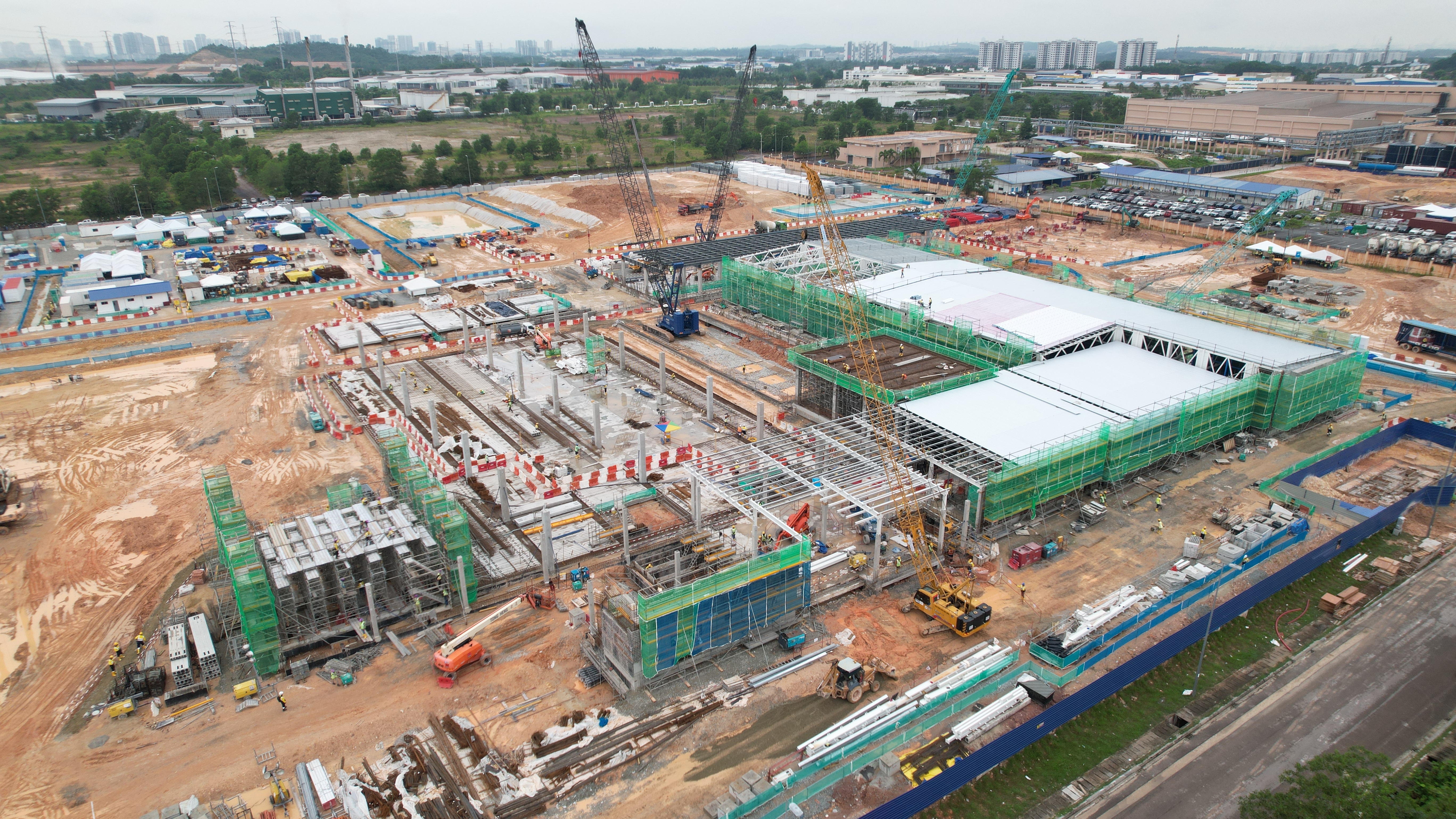
Across all three fronts, Chinese AI firms are increasingly looking overseas for growth opportunities, to regions such as the Association of Southeast Asian Nations (ASEAN), Sub-Saharan Africa, the Gulf states, and Central Asia. For data sourcing, they are turning to population-rich countries, such as Indonesia and Brazil (both members of BRICS+).[iii] And for data centers and offshore training, energy-rich and upper-middle-income economies, such as Malaysia take priority, while Sub-Saharan Africa and Central Asia are seen as key destinations for AI applications.
The second motivation consists of market access. In positioning Chinese AI as more affordable, open, and transparent, the proposed global governance initiatives would facilitate market expansion and deepening by Chinese AI firms, thereby generating more revenue and attracting more talent to Chinese labs down the line.
The perception of China as a “responsible stakeholder” in the AI space goes hand in hand with attracting those who are convinced that AI should not be monopolized by a handful of private corporate enterprises – even while the Chinese state retains decision making power over the trajectory of AI development within its own borders. The Digital Silk Road features the broader hybrid 5G infrastructure, such as cloud data centers and AI-embedded hardware that countries can be persuaded to install, as natural extensions of the Chinese AI stack.
Across both fronts, global AI governance provides a highly compelling normative story and helps to legitimize the presence of Chinese AI abroad. Indeed, economics is not all there is to the governance story.
The third motivation concerns the soft power dividends accrued to Beijing, as noted by select observers of US-China technology competition. In contrast to the closed-weight models (models where trained parameters are not publicly available, in contrast to open-weight models) pioneered by a handful of American frontier labs, which are often unaffordable for corporations and individuals in the Global South, Chinese labs have opted for making their open-weight products widely available at a fraction of the prices of their counterparts. The Brand Finance Global Soft Power Index 2026 shows that China now ranks first in global perceptions not just for doing business, but also as a leader in advanced science and technology and innovation.
While the “best” of China’s AI labs may lag their American rivals by months based on AI performance benchmarks, for most ordinary users, the disparity is comparatively limited in significance and impact. The normative principles and tech stack accompanying China’s global AI governance drive compound the country’s perceived credibility and appeal as a technological powerhouse.
Looking ahead
The path ahead for Beijing’s advancement of global AI governance will by no means be straightforward. Skeptics allude to the innate vagueness and ambiguity with which some of its core principles are couched. Others fear that the vision places too much power in the hands of the individual governments, to the detriment of alternative sources of power and accountability. Cynics also question the extent to which governance is merely a foil for attempts to slow down frontier AI developments in the US – though such warnings of the purported “emerging tech trap,” in turn, reveal existing biases and presumptions.
Will China succeed in delivering more equitable, accessible, and positively impactful AI for the world at large? Only time will tell.
[i] See the following excellent translation by DigiChina at Stanford University: https://digichina.stanford.edu/work/full-translation-chinas-new-generation-artificial-intelligence-development-plan-2017/.
[ii] See China’s Global AI Governance Initiative 2023, Global AI Governance Action Plan 2025, and Xi Jinping’s remarks at the 2026 WAIC; also see https://www.chinausfocus.com/finance-economy/chinas-vision-in-global-ai-governance, https://www.tandfonline.com/doi/full/10.1080/10670564.2022.2107391.
[iii] A multilateral forum originally consisting of the founding members of Brazil, India, Russia, and China (BRIC), prior to the entry of South Africa and subsequent inclusion of the United Arab Emirates, Iran, Egypt, Ethiopia, and Indonesia.

Dr. Brian Wong is an HKU-100 Assistant Professor in Philosophy at the University of Hong Kong. His research examines the intersection of geopolitics, political and moral philosophy, and technology. He serves as the director of the newly established Hong Kong Global AI Governance Hub, and sits on the Steering Committee for the Hong Kong Ethics Lab. As the chief strategy officer of the HK-ASEAN Foundation, he advises multi-national corporations, family offices, and leading think-tanks on geopolitical affairs and macro risks throughout Asia. He co-founded and served as the inaugural editor-in-chief at the Oxford Political Review and is a former columnist at the Hong Kong Economic Journal. Brian is also a Nonresident honorary fellow at the Center for China Analysis at the Asia Society. A Rhodes Scholar (HKSAR, 2020), Brian holds a DPhil in Politics, an MPhil in Political Theory (Distinction), and an MA in Philosophy, Politics, and Economics from the University of Oxford.