

Lehman Brothers headquarters in New York, 15 September 2008 — the day the bank collapsed and Beijing’s view of the United States began to change.
By Ker Gibbs
Ker Gibbs was working for HSBC in Shanghai during the boom years of the 2000s, when China seemed on the brink of capital account liberalization – which would have made Shanghai, not Hong Kong, China’s international financial capital. That didn’t happen, largely because of the reaction by China’s political leadership to the Global Financial Crisis of 2008. Today, Gibbs commutes between San Francisco and Shanghai, where he served as both Chairman and President of AmCham Shanghai in the mid to late 2010s. In this opinion piece, he offers an intriguing business insider’s perspective on the path that China took afterwards and its consequences for US-China relations. A large part of the article is an excerpt from his new book, The Fragile Dragon – China’s Strengths and the Limits to its Power. The views expressed in this article are those of the author, and do not reflect or have any relation to views of AmCham.

Donald Trump’s management of the relationship between the United States and China has been transformative. His trade war, tariffs and technology competition turned what was once called engagement into managed rivalry – a relationship defined less by cooperation than by competing interests carefully contained. But the transformation did not begin when he took office in 2017. It began in 2008, in the wreckage of the global financial crisis.
The collapse of Lehman Brothers in September 2008 triggered the worst economic crisis since the Great Depression, but it also vindicated the faction within the Chinese Communist Party (CCP) that had been resisting financial openness to the West. They believed that the party, not the market, should remain in control. Internationalizing the renminbi, opening the capital account, and turning Shanghai into a true international financial center – all of which were accelerating as policies at the time – were deemed a big mistake and needed to be reversed.
Rush Doshi, who served as China Director on the National Security Council under President Biden, argues that the 2008 global financial crisis was the most important single turning point in China’s strategic posture since Tiananmen.
In his book, The Long Game, Doshi draws on Chinese-language party documents to show how China’s strategic guidance formally shifted from Deng Xiaoping’s decades-old doctrine of “hide our capacities and bide our time” to a new directive issued by Hu Jintao at China’s 2009 ambassadorial conference to “actively accomplish something.”
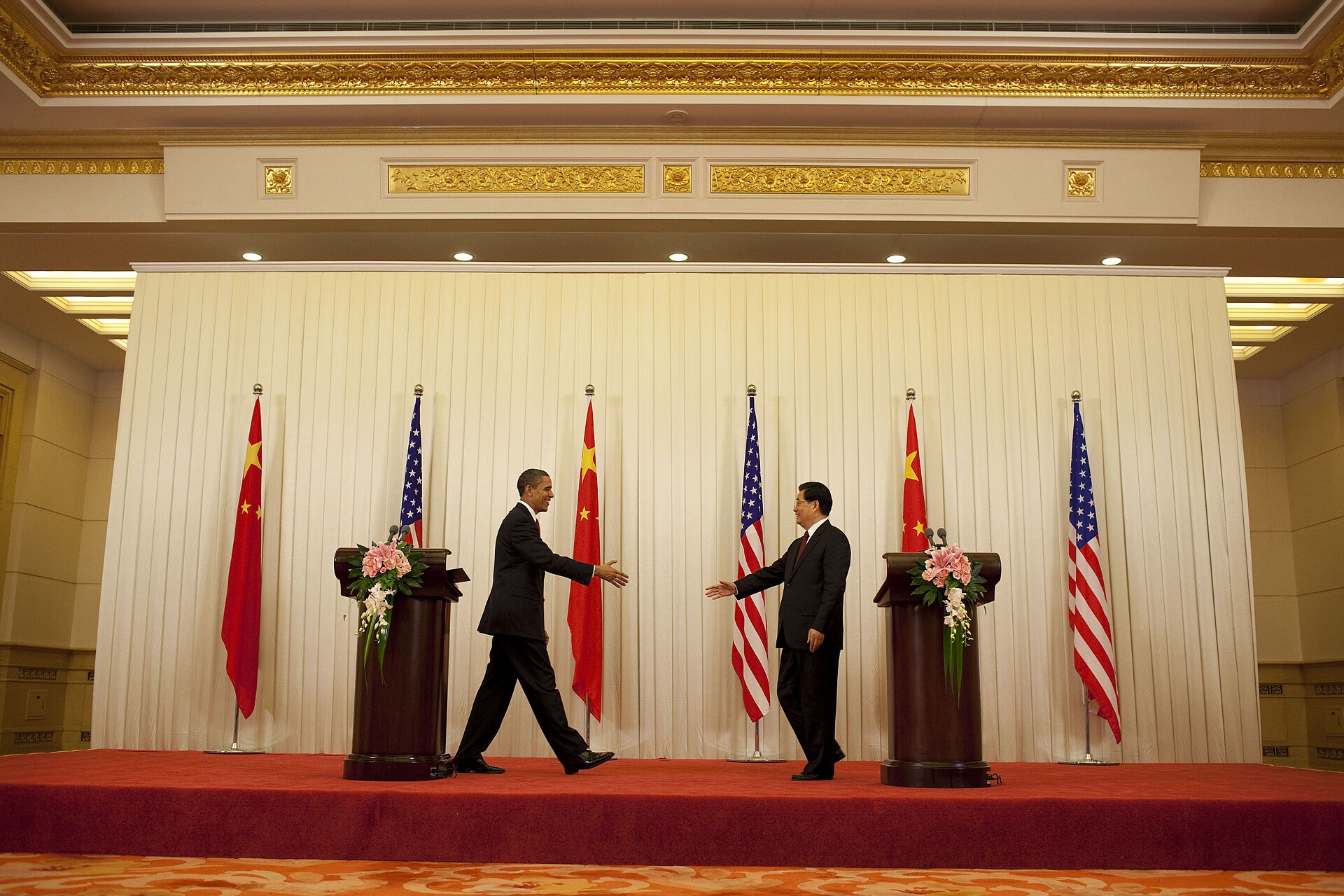
Hu declared, in documented party language, that there had been “a major change in the balance of international forces.” Internally, Chinese officials no longer looked to the US as a model or viewed China’s role in the international financial system as subordinate to the US, especially when devising strategies to stabilize the effects of the crisis.
No more hiding and biding
Those of us working in China at the time experienced this transformation vividly, as it was communicated to us in ways that only the CCP can. Below is an excerpt from my book, The Fragile Dragon, that describes the mood at the time:
“The conference room in the old offices of the American Chamber of Commerce in Shanghai faced an inside courtyard, providing natural light but not much of a view. Winter was coming, but that was not the cause of our dark mood. The Lehman Brothers bank had just collapsed, the stock market was in turmoil, and a recession was coming – or worse. The crisis originated in America, but the ripple effects were already hitting China, with major implications for US-China relations as well as our businesses.

“I hope they don’t actually speak to Chinese government officials like that,” said Ben Kinnas, jerking his head toward the conference room door through which a group of US officials had just left. Ben was the head of Wells Fargo in China, and chair of the committee. His thinning hair and stocky frame gave him an air of authority, but everyone in the room also knew he had paid his dues with decades of experience as a banker in Shanghai, Hong Kong, and earlier in Japan. He laughed about having worked for five banks without ever changing jobs; banks are constantly getting merged or acquired, resulting in management shuffles that leave some people out of a job, but not Ben. He was a survivor, and we looked to him to read the landscape. “They won’t get far trying to tell the Chinese what to do.”
“A group of US Treasury officials had just left our meeting, and several of us lingered to discuss their visit. Treasury had staffers based in the embassy in Beijing, where they could be close to the People’s Bank of China (PBOC), which serves the same function as the US Federal Reserve, and other national government offices. They visited us regularly, Shanghai being the financial and commercial center of China. In the wake of the crisis that was unfolding, the Beijing-based officials were joined by colleagues from Washington who brought with them a long list of measures they expected the authorities in Beijing to implement. It sounded like a lecture.
“The tables in our conference room were set up in a horseshoe so all the members of the chamber’s financial services committee could see each other. Two flags – one for the People’s Republic of China, the other for the US – were placed at the open end of the horseshoe. Ben, the chair of our committee, sat at the bottom of the horseshoe facing the flags.
“The financial services committee was one of about 20 industry committees in the chamber and included members from large companies like Bank of America, AIG, and Wells Fargo as well as smaller firms. In accordance with Chinese law and the chamber’s own rules, only foreign firms were allowed to join, but they did not necessarily need to be American. European bankers could join our meetings. Japanese financial institutions were invited but rarely attended, perhaps because of language difficulties.
“The industry committees formed the core of the chamber. The roughly 3,000 members grouped themselves by industry or function to form committees to share best practices, exchange information, and organize events to address issues of common interest. I would later succeed Ben as chair of the financial services committee, but at the time I was still a junior member. I worked for a boutique investment bank some years before moving to Hong Kong and Shanghai Banking Corp (HSBC).
Ben’s criticism of the officials hung in the air. None of us wanted to say out loud what we were all thinking: US government officials had a habit of talking when they should be listening. Given that the crisis originated in their jurisdiction and resulted from financial mismanagement and inadequate regulation, a certain degree of humility would have been appropriate. These were, after all, the same Treasury officials who had failed to understand the risks associated with securitizing mortgages and allowing banks to create what some have characterized as a “financial time bomb.”
“As one of the most senior executives managing a major foreign financial services firm in China, Ben Kinnas had regular meetings with Chinese officials at the highest levels. He was close to people like Fang Xinghai, who was Director-General of the Shanghai Municipal Financial Service Office at the time and would go on to become a top official with the China Securities Regulatory Commission (although currently under investigation for corruption). With a degree from Tsinghua and a PhD from Stanford, Fang did not need to be schooled by people from Washington.
“Han Zheng was another of China’s capable bureaucrats in whom foreign businesspeople had a great deal of confidence for his skills as a manager. He served as the mayor of Shanghai from 2003, and in 2006 he served briefly as the acting party secretary for the city, which is above the mayor in the Chinese political system. He served only five months before being replaced by none other than Xi Jinping, who moved from Zhejiang to the top post in Shanghai on his way to becoming the most powerful leader in the country. Han later returned to the role of Shanghai party secretary, serving from 2012 until being elevated to national level as executive vice-premier in 2018.
A new regime, pointed messages and Shanghai’s missed chance
“In the years that followed the 2008 crisis, Ben Kinnas, the Wells Fargo banker, put the pieces together to explain what happened as the crisis unfolded. “We were summoned up to Beijing every few days, usually with a phone call in the afternoon telling us to appear the next day. I was told to come alone,” Ben recalls. “I walked into the CBRC (China Banking Regulatory Commission) offices in Beijing, and I saw in the room my counterpart from some of the other foreign banks in China.” Ben[ET1] and his colleagues interacted regularly with CBRC officials and knew them to be professional and forthcoming, but they were noticeably absent from the meeting.
“Apparently, the bankers were summoned by Communist Party officials – as distinct from government – who stepped in to deliver a pointed message. The CBRC, a government body under the State Council, had been moving China cautiously toward liberalizing the financial sector, gradually opening the capital account and planning to internationalize the renminbi. All that was about to change.
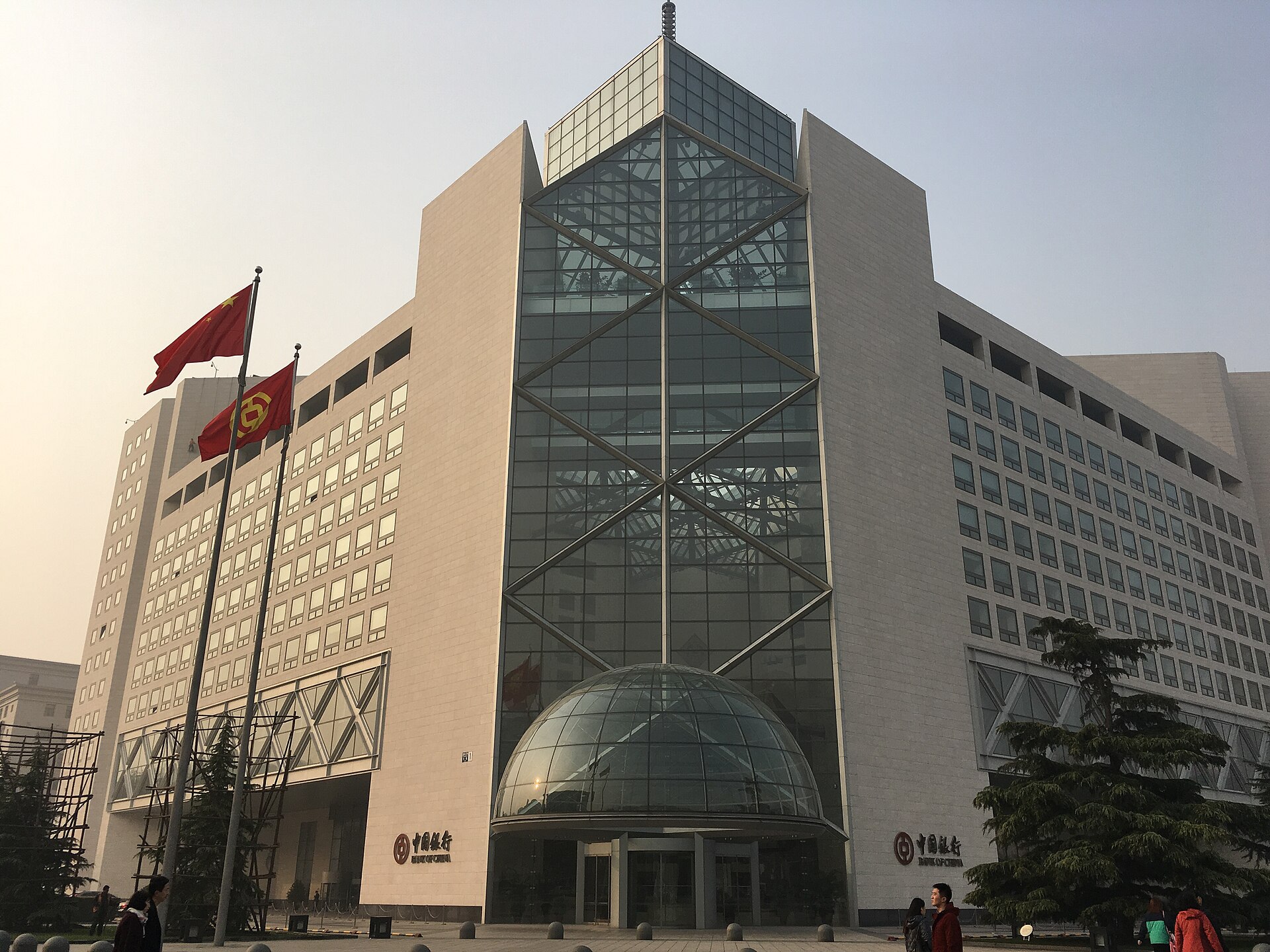
“China’s economy in the mid-2000s was already deeply enmeshed in global trade and supply chains, but its financial system would remain cordoned off, tightly controlled by the state. Foreign banks were permitted to operate, but despite WTO pledges, only within carefully defined limits. China – guided by the Party – had no intention of exposing itself to the discipline or the volatility of the global financial system.
“This impulse was less about confidence than about fear. To the officials delivering the message, financial integration represented not opportunity but fragility. Xi Jinping would later give voice to this instinct, embedding the idea that control equals security at the heart of China’s political economy. The global financial crisis of 2008 seemed to confirm their caution, reinforcing the belief that openness is weakness and that China’s stability depends on insulation from the outside world. Yet that same insulation – the refusal to liberalize, the reliance on administrative control – has become one of China’s enduring vulnerabilities, a constraint that limits both innovation and trust in the system itself.
“I think now that the financial crisis gave the Party the excuse to do what they wanted to do anyway, which was separate from the West,” Ben explained, in a recent conversation from his home on Hilton Head Island in South Carolina. “That meeting sent a message not just to us, but to their own people in the CBRC who were heading in the other direction.” Party officials would have known that Ben and his counterparts from other foreign banks would discuss what they heard with their CBRC colleagues as well as US government officials. The Snowden leaks made sure of that. We discovered US government notes on WikiLeaks, detailing the conversations we had in 2007 and 2008 – mentioning some of us by name – discussing sensitive topics like protectionism, exchange rates, and our understanding of the Chinese government’s plans.[i]
“Before the crisis, Beijing had announced a plan to transform Shanghai into an international financial center, even setting 2020 as the date by which it should be accomplished. As chair of the financial services committee, Ben led an effort to produce an AmCham Shanghai study, together with the Brookings Institution, supporting the idea and providing technical guidance on changes that would need to take place for it to work. None of that happened. Shanghai remains a powerful domestic financial center, but its international capabilities fall far behind New York, London, or even tiny Singapore.

A turning point in China’s relationship with the world
“It took the United States most of a decade to fully recover from the Global Financial Crisis, and not before millions of people lost their jobs, and countries throughout the world experienced a prolonged decline in economic activity as financial institutions failed to provide liquidity. The US government poured billions into the auto industry, saving General Motors (GM) and Chrysler from an inevitable collapse that would have sent shock waves through the broader economy. American taxpayers spent $700 billion on the Troubled Asset Relief Program (TARP), making GM and American International Group (AIG) among the largest state-owned companies in the world.
“China responded by investing heavily in infrastructure projects and stimulating demand, largely by funneling stimulus funds through state-owned enterprises (SOEs), rather than through the private sector which was already providing the core of jobs. While economic growth recovered quickly in the years that followed, in the end China was left with a debt overhang and a property market weighed down by massive oversupply, because it was into the property market that much of the stimulus cash went.
“The Chinese economy continued to expand in Gross Domestic Product (GDP) terms, but it is also instructive to look at how the respective stock markets have fared since. In mid-2008, the Shanghai stock market was at about 2,650 while the Dow Jones index was around 11,400. In late 2025, the Shanghai index was around 3,800, up around 50 percent, while the DJI was at 48,400, more than four times higher. That raises the question of how much of China‘s growth over the years has been healthy and organic.
“Regardless, the global financial crisis marked a turning point in how China viewed the United States – and itself. For decades, the Communist Party had promoted the idea that China’s political and economic model was more stable and resilient than the West’s, but after the very visible collapse of major American banks, this narrative began to resonate with ordinary citizens.
“For the first time, the United States appeared fragile, its authority in global finance shaken. Yet China’s newfound confidence masked its own vulnerabilities. The very mechanisms that Beijing portrayed as sources of strength – state power, insulation, and central control – also revealed the system’s deepest weakness, a dependence on control itself, a persistent fear of exposure to the forces that make open economies more resilient over time and an unwillingness to face problems publicly and deal with them.”
(This is the end of the excerpt from The Fragile Dragon)
Beyond integration with a global system led by the US
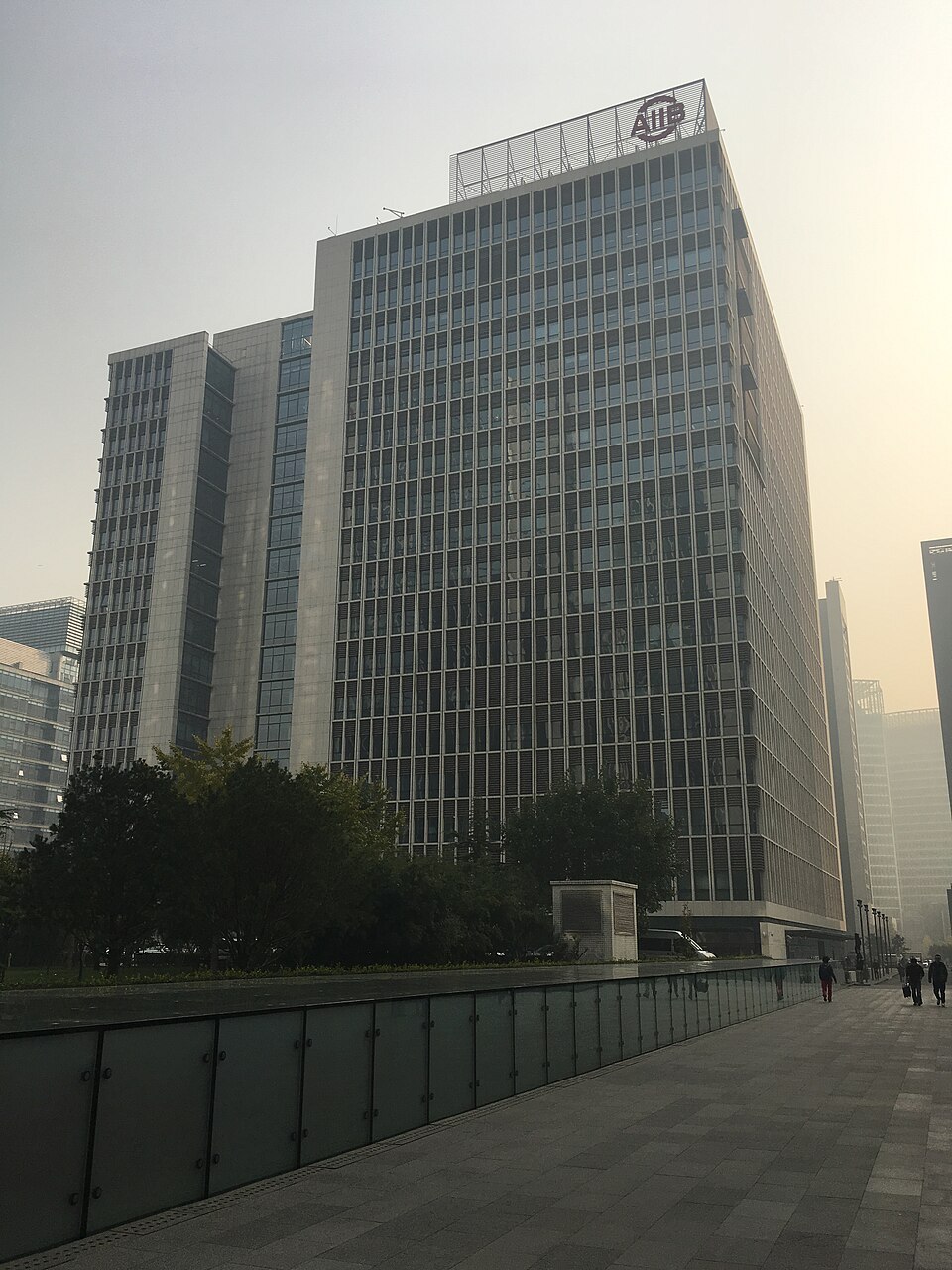
After 2008, the West began dealing with a very different, more assertive China. The Asian Infrastructure Investment Bank (AIB) was founded to challenge the western-dominated development institutions. The Belt and Road Initiative extended Chinese infrastructure financing across Asia, Africa, and Latin America on Beijing’s terms. Construction on islands in the South China Sea produced airfields and military installations[ET2] . Wolf-warrior diplomacy replaced the careful restraint of the ‘hide and bide’ era.

Today’s managed rivalry between the US and China did not begin in 2017. It began in 2008, when America’s financial system collapsed and Beijing drew its conclusions. US President Barack Obama’s formal ‘pivot to Asia’ in 2011 recognized the symptoms without fully grasping the cause. Trump’s trade war accelerated the trajectory without understanding its origins. Neither president created the dynamic – they inherited it.
What Beijing built after 2008 was not simply a more assertive foreign policy. Since then, China has been building a parallel set of systems, creating its own institutions and alliances, and carving out a future that’s independent of the West, and beyond the leadership – and pressures – of the United States.
The foreign venture capital funds that financed China’s consumer internet economy have been transformed. Today, startups are funded by government capital and state-owned enterprises that are tied to the party’s strategic objectives more than market returns. Investment targets are in areas blocked or restricted by the US – semiconductors, AI, aerospace, and quantum computing.
Foreign investment banks finally have their licenses, but very little business. Market conditions have constrained M&A activity and delayed initial public offerings (IPOs) and what business does exist flows to domestic banks that carry better regulatory relationships, deeper client connections, and an instinctive understanding of the Chinese political environment that no foreign institution can replicate from the outside.
Retail banking was always dominated by local players, but the most significant development in Chinese retail finance is one that foreign banks have been entirely excluded from: mobile payments and digital financial services. Alipay and WeChat Pay operate within a regulatory framework designed to keep them Chinese-owned and Chinese controlled.
For the businesses represented by AmCham in mainland China – operating inside that architecture every day – the practical implication is the one Ben Kinnas identified in that Beijing conference room in 2008, though none of us fully understood it at the time. The Party had decided that control mattered more than connectivity, and that decision was final. The financial liberalization we had been working toward and planning around was not delayed. It was cancelled.
Understanding that distinction – between a policy that is paused and one that has been deliberately reversed – is the most important thing any foreign business operating in China today needs to get right. The Lehman collapse did not merely shake the global economy. It settled, for the Party, a question that had been contested for two decades – whether China’s future lay in deeper integration with the West, or in building the capacity to do without it.
Beijing chose the latter. Everything since has been the execution of that choice.
Excerpts from The Fragile Dragon are reprinted with permission of the publisher, Earnshaw Books.
[i] Scoop News: “Cablegate: Shanghai Bankers On Rmb, Protectionism and the Future,” October 5, 2007.

Ker Gibbs is the author of The Fragile Dragon: China’s Strengths and the Limits to its Power (Earnshaw Books, 2026), available in Bookazine outlets in Hong Kong. He is the former President and Chairman of American Chamber of Commerce in Shanghai. He moved to Shanghai in 2002 as head of Asia Pacific for a Nasdaq-listed network security company, later becoming head of technology and media in Greater China for HSBC. He was a founding investor in the Crystal Orange Hotel Group, helping grow the company to 130 properties and 1,500 employees in China. He holds a BA in economics from University of California, Los Angeles (UCLA) and an MBA from the Haas School of Business at the UC Berkeley.