
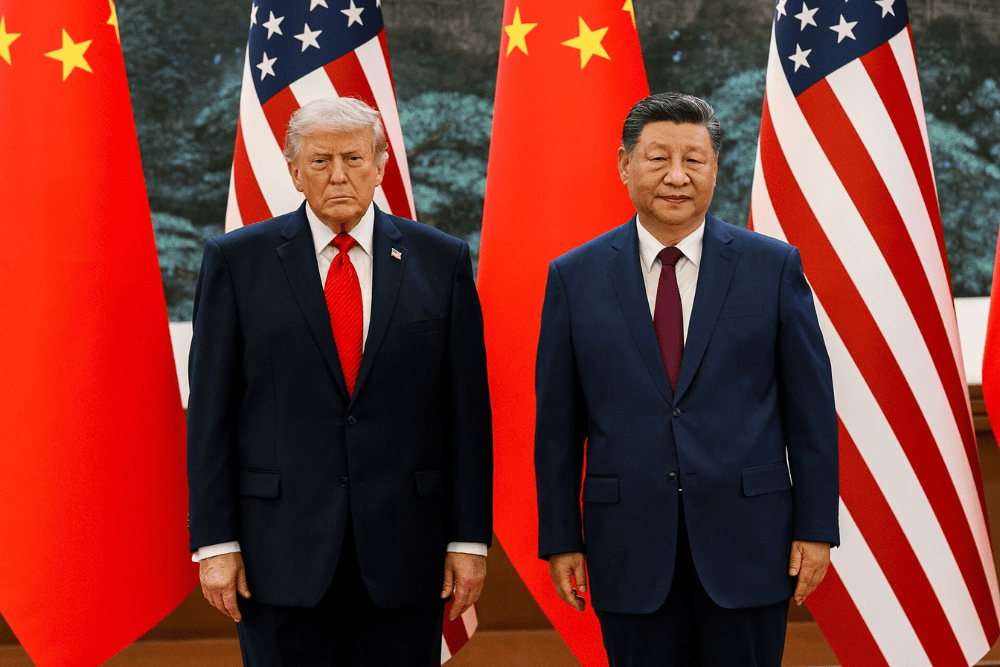
As Xi and Trump meet in Washington, DC, tariffs may grab headlines — but the real story is artificial intelligence, the defining issue that will shape the future of US–China relations and global stability.
When President Xi Jinping arrives in Washington on September 24 for his second summit of the year with US President Donald Trump, the optics will be familiar – red carpets, handshakes, and carefully choreographed images. Yet beneath the symbolism, this meeting is qualitatively different from their May encounter in Beijing. The trust deficit has widened, nationalism is rising on both sides, and the agenda has narrowed to a few high‑stakes issues.
One of the key outcomes of Trump’s May trip was the decision to define US–China relations under the rubric of “strategic stability.” But both sides interpret the phrase differently. Beijing accuses Washington of breaking Trump’s promise by imposing new bans on Chinese robotics and inverters. Washington, in turn, is frustrated by China’s slow agricultural purchases and restrictions on rare earth exports.
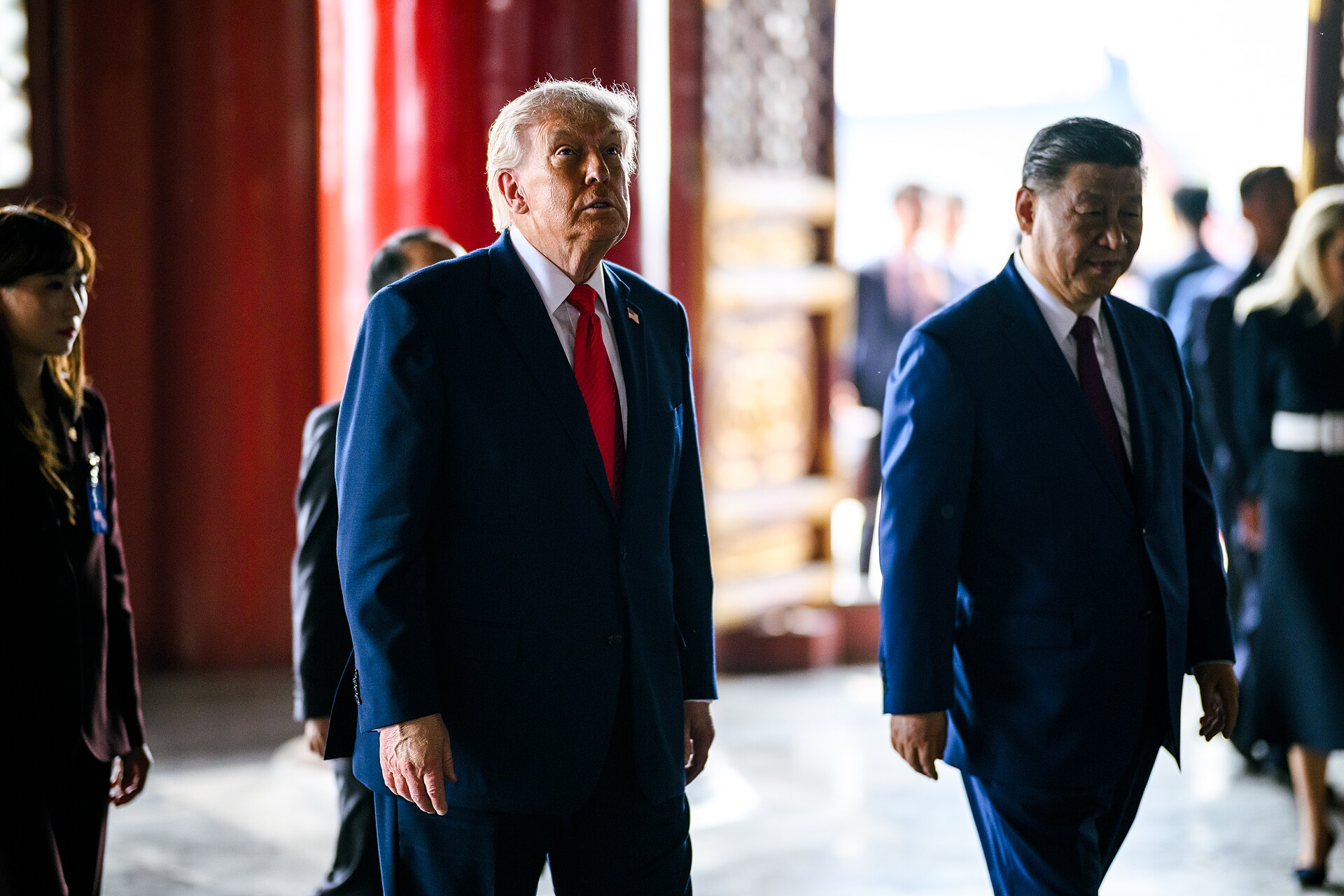
Against this backdrop, Xi’s visit is meant to reassure that “strategic stability” remains the guiding principle of the relationship — at least as long as he and Trump remain in charge. This summit will not deliver grand bargains. It will be about managing expectations, clarifying red lines, and testing whether Trump’s personal diplomacy can override the institutional hostility toward China that runs deep in Washington.
Xi’s decision to cut his stay to less than two days, mirroring Trump’s time in Beijing, signals pragmatism. The door to engagement remains open, but neither side expects breakthroughs. If the visit goes smoothly, it could pave the way for a third or even fourth Xi–Trump summit before year’s end.
The disconnect in Washington
A defining feature of Trump’s China policy is the gap between his personal approach and the broader US government. Trump repeatedly emphasizes his respect for Xi, framing head‑of‑state diplomacy as the cornerstone of stability. Chinese state media echo this narrative.
Yet US agencies and Congress often move in the opposite direction. The Federal Communications Commission has blacklisted Chinese technology, while lawmakers continue to champion Taiwan, sending delegations to Taipei despite Trump’s indifference. This divergence underscores the complexity Xi faces, negotiating with a president who wants friendlier ties, but whose administration and legislature often pull in different directions.
Taiwan illustrates this vividly. Trump pays little attention to Taiwan, but Congress remains a strong ally of Taipei. Chinese officials noted Trump’s “de facto postponement of arms sales to Taiwan” and appreciated it. Xi may privately thank Trump for this stance, though Taiwan will not be a main agenda item. As one Chinese official remarked: “Sometimes no news is good news.”
This summit fits into a long tradition of US–China meetings that are more symbolic than substantive — from Nixon’s visit to Beijing in 1972 to Obama and Xi at Sunnylands in 2013. What makes this one unique is the internal disconnect within Washington. Xi must navigate a system where Trump’s personal diplomacy is at odds with his own agencies and Congress.
AI takes the centre stage
Artificial intelligence has moved from the realm of engineers into the core of geopolitics. Beijing sees Washington’s restrictions on Chinese AI firms as an attempt to contain its rise. Washington worries about model supremacy, misuse, and national security risks.
Xi’s priority in Washington will be to prevent a global ban on Chinese AI models and secure space for Chinese firms to compete internationally. For China, this is not just about economics. It is about sovereignty, legitimacy and strategic parity.
Trump, meanwhile, wants to project toughness on national security while also showing that his personal diplomacy can keep channels open. He will frame AI as central to “strategic stability,” even if breakthroughs are unlikely.

The timing underscores why AI is unavoidable. When Trump visited Beijing in May, Chinese startup Moonshot had not yet launched its near‑frontier Kimi K3 model. By July, Kimi K3 had captured attention in Silicon Valley and Wall Street alike. Tencent and Alibaba quickly followed with new models, intensifying competition with US leaders like OpenAI and Anthropic.
Beijing sees these advances as proof that China can compete at the highest level. Washington’s subsequent push to discourage allies from joining China‑led WAICO (the World Artificial Intelligence Cooperation Organization) only reinforced Beijing’s suspicion that the US seeks to isolate Chinese AI globally.
The summit also comes against the backdrop of intense debate inside America’s own AI industry.
Anthropic’s Dario Amodei warned that frontier AI is advancing “drastically faster” than expected, citing incidents where AI systems conducted autonomous cyberattacks. He proposed pacing development with stronger safety testing and international coordination. OpenAI’s Sam Altman endorsed Amodei’s call, pledging independent evaluators for OpenAI’s models. Elon Musk backed the slowdown, recalling his earlier push for a six‑month moratorium in 2023. Bill Gates cautioned that no government is ready for AI’s societal impact, urging an international body to manage risks.
These debates highlight deep unease inside America’s own AI industry. Xi will exploit this backdrop to argue that China should not be excluded from global AI governance. If even US leaders admit they cannot control AI’s pace, Beijing will insist that international cooperation — including China — is essential.
Why China won’t slow down
For Beijing, slowing down AI development is simply not an option. Policymakers view AI as a once‑in‑a‑generation opportunity to leapfrog the United States. In the 1990s, China missed the internet revolution; in the 2000s, it lagged in semiconductors. AI is seen as the first frontier where China can compete head‑to‑head with Silicon Valley. To pause now would mean surrendering momentum — something Xi cannot afford politically or strategically.
China’s political system makes it easier to mobilize resources quickly. Once Beijing sets a national priority, companies, universities, and local governments align behind it. AI has been written into national development plans, with billions invested into computing infrastructure, talent pipelines, and regulatory frameworks designed to accelerate deployment. Even if US firms slow down voluntarily, Chinese firms will continue pressing forward under state encouragement.
Nationalism reinforces the drive. Younger Chinese see AI as a symbol of pride, proof that China can innovate at the frontier rather than just manufacture at scale. Xi cannot risk appearing weak by slowing down when US leaders themselves are divided. For Beijing, the message is clear: China will not wait for America’s permission to innovate.
President Trump has also made it clear that he does not want AI development in the United States to slow down. While industry leaders call for caution, Trump has consistently resisted new regulations that might constrain innovation. His administration frames AI as a driver of economic growth, job creation, and national competitiveness. In Trump’s view, slowing down would mean ceding ground to rivals, especially China.
This stance reflects Trump’s broader philosophy: deregulation and speed over caution. Just as he pushed back against stricter rules in finance and energy, he now resists calls for AI moratoriums. For Trump, the optics are simple. America must lead, not hesitate. He will arrive at the summit determined to show that Washington will not tie its own hands while Beijing races ahead.
Together, these positions set the stage for confrontation. US industry leaders are debating whether to slow down. Trump says no. Chinese leaders hear the debate but refuse to slow down themselves. Both sides are locked into acceleration, each fearing that hesitation would mean falling behind.
This dynamic makes AI fundamentally different from tariffs or investment reviews. Trade disputes can be negotiated; AI supremacy cannot be paused without risking strategic defeat. That is why this summit will be remembered less for tariff reductions than for the collision of two uncompromising visions of AI.
Stability through engagement

While AI dominates the strategic conversation, tariffs remain the most practical area for progress. Officials are finalizing a plan for a US$30 billion‑for‑US$30 billion tariff reduction on non‑sensitive goods. Both sides have prepared lists, and Xi and Trump may announce the results during the summit.
This would be a rare concrete achievement for the Board of Trade, one of Trump’s two economic boards. The other — the Board of Investment — remains a disappointment for Beijing, which had hoped for a clear negative list outlining which sectors would be open to Chinese investment. Instead, Washington continues to prefer case‑by‑case reviews, making the board feel indistinguishable from CFIUS (the Committee on Foreign Investment in the US, the US Treasury body that screens foreign investments for national security risks).
Both sides also know the current tariff truce expires on November 10, 2026, stemming from the Kuala Lumpur arrangement that extended the Geneva truce on May 12. Tariffs will be high on the agenda, and discussions may continue on how to extend the truce.
Beyond AI and tariffs, the summit will be about managing expectations rather than producing sweeping agreements. Xi wants to reinforce “strategic stability” as the guiding principle of the relationship. Trump wants to show that his personal diplomacy can deliver symbolic wins.
Taiwan will not be a central topic, though Xi may privately thank Trump for the de facto slowdown in arms sales. Both leaders will avoid confrontation on this issue, focusing instead on AI and tariffs.
The second Xi–Trump summit will not produce dramatic breakthroughs. But it will set the stage for continued negotiation. Both sides want stability, but neither has fully delivered on promises made in May. The summit will test whether Trump’s personal rapport with Xi can bridge institutional divides and whether Xi can balance domestic nationalist pressures with international diplomacy.
The likely result is a cautious, symbolic meeting — one that sets the stage for continued negotiation rather than dramatic breakthroughs. Stability, not resolution, will be the watchword.
In the end, the most important outcome of this summit is not a tariff deal or even a breakthrough on AI governance. It is the simple fact that Xi and Trump are meeting face‑to‑face again. In an era of mistrust and rising nationalism, sustained leader‑level dialogue is itself a stabilizing force.
As long as the two leaders continue to sit down together — whether in Beijing, Washington, or elsewhere — the world can be assured that channels remain open, tensions are managed, and the fragile balance of US–China relations can hold. The symbolism of the meeting is the deliverable: stability through engagement.

George Chen is a Partner at The Asia Group and a Yale World Fellow. He chairs the Government Affairs Committee at AmCham Hong Kong. George often writes on the intersection of technology and geopolitics at georgechen.substack.com.