
For decades, Hong Kong has been searching for ways to produce startups with global reach. Here’s one company that has a solution. AmCham HK e-Magazine meets Steven Chan, founder and CEO of Good Systems and its premier app, Goodnotes.
Can Hong Kong’s startup ecosystem rise above its limitations?
As early as 1998, one of the seminal figures of Silicon Valley, Dr. Ta-Lin Hsu, chairman of private equity giant H&Q Asia Pacific, planted the idea that Hong Kong might become “the Silicon Harbor of the Orient.”
Hsu made the remarks in a conference organized by the Chief Executive’s Commission on Innovation and Technology, but after many billions of dollars and despite the powerful flywheel of Hong Kong’s research universities, Hong Kong is still in the middle ranks of similarly sized startup ecosystems in Asia, although growing fast, according to dealroom.co.
Part of the problem is Hong Kong’s small market of 7.5 million; another is a relatively small venture capital community targeting home-grown startups. But these are challenges, not absolute barriers. One home-grown Hong Kong startup, Good Systems, has quietly run circles around its global competition and is now using Artificial Intelligence (AI) to develop a stable of new products beyond its world-leading paperless app, Goodnotes.
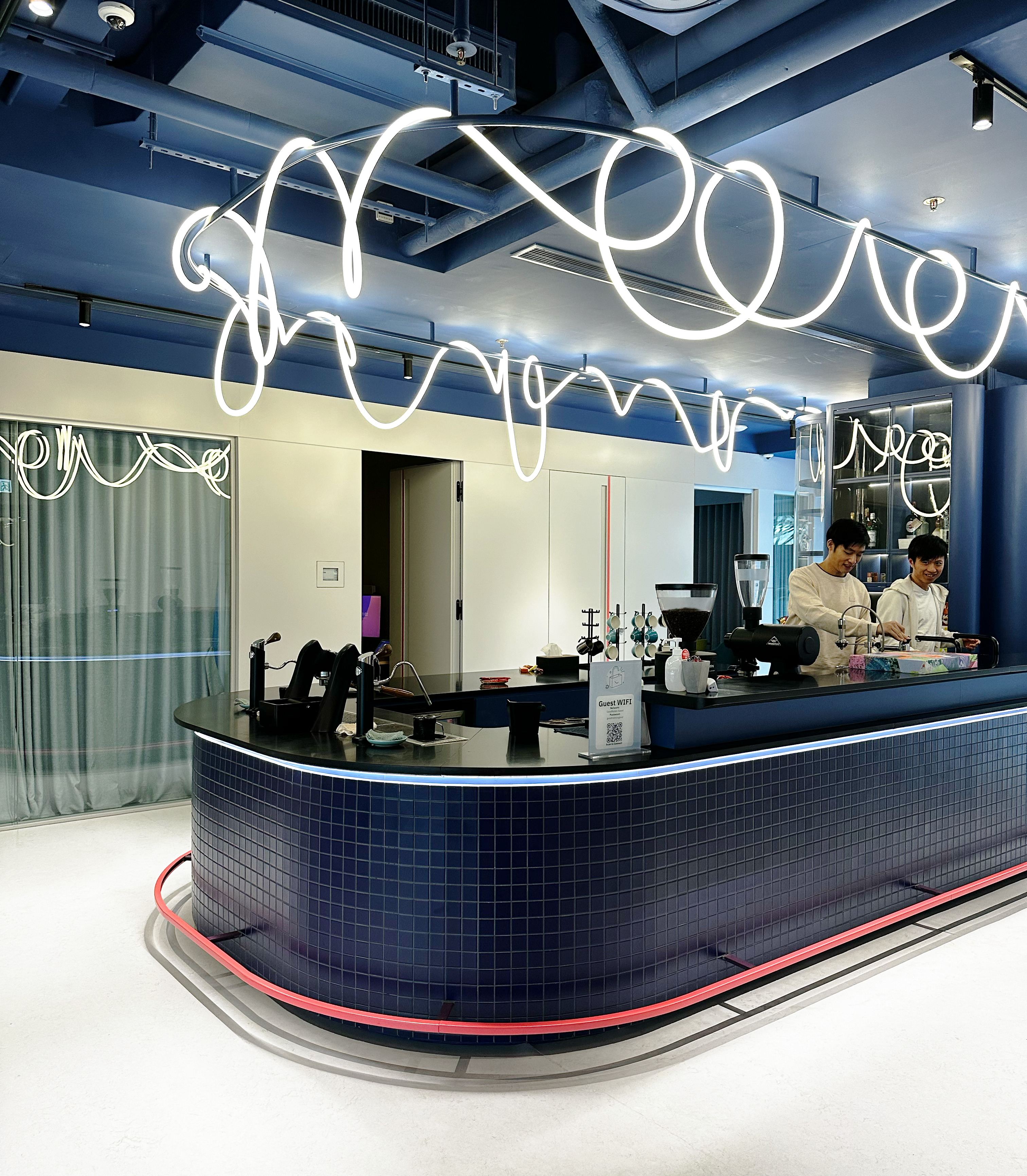
On a back street in Tsim Sha Tsui, the 13,000 sq.ft. Hong Kong office of Good Systems spreads across two floors that would look right at home in Silicon Valley, with open-plan seating, a restaurant grade kitchen, coffee bar and a social space, designed by high-end Hong Kong designers LAAB Architects.
The atmosphere is understated, which is also the personal style of the 36-year-old CEO, Steven Chan, founder of Good Systems, Goodnotes, Goodmeet and Good Future Foundation. Dressed in a dark sweat-suit jacket, black jeans and white trainers, Chan doesn’t look like he is running a team of 350 spread between London, Hong Kong, Singapore, Shanghai and 30 other countries, or that his app has more than 25 million active users across 170 countries.
His apps support 15 languages for recognizing and searching handwritten notes and 99 languages for cloud audio transcription, using an electronic tablet or smart phone and a stylus. It is one of the few homegrown Hong Kong startups that has a truly global consumer base. And while it has only one investor so far, that is because Chan isn’t looking for more. Good Systems has been bootstrapped and profitable since day one, Chan says.
The Goodnotes app may be Hong Kong’s first software export to go global.
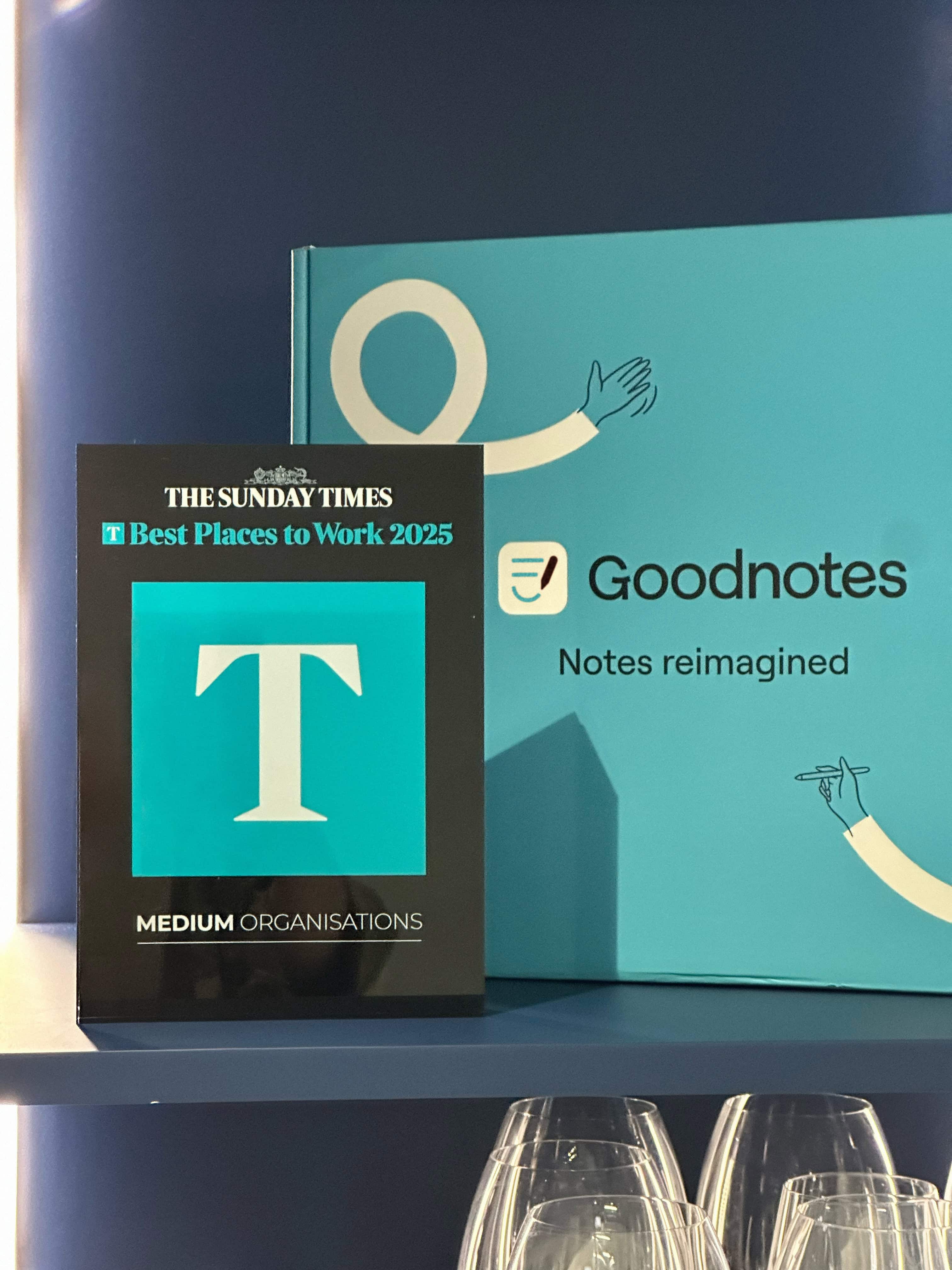
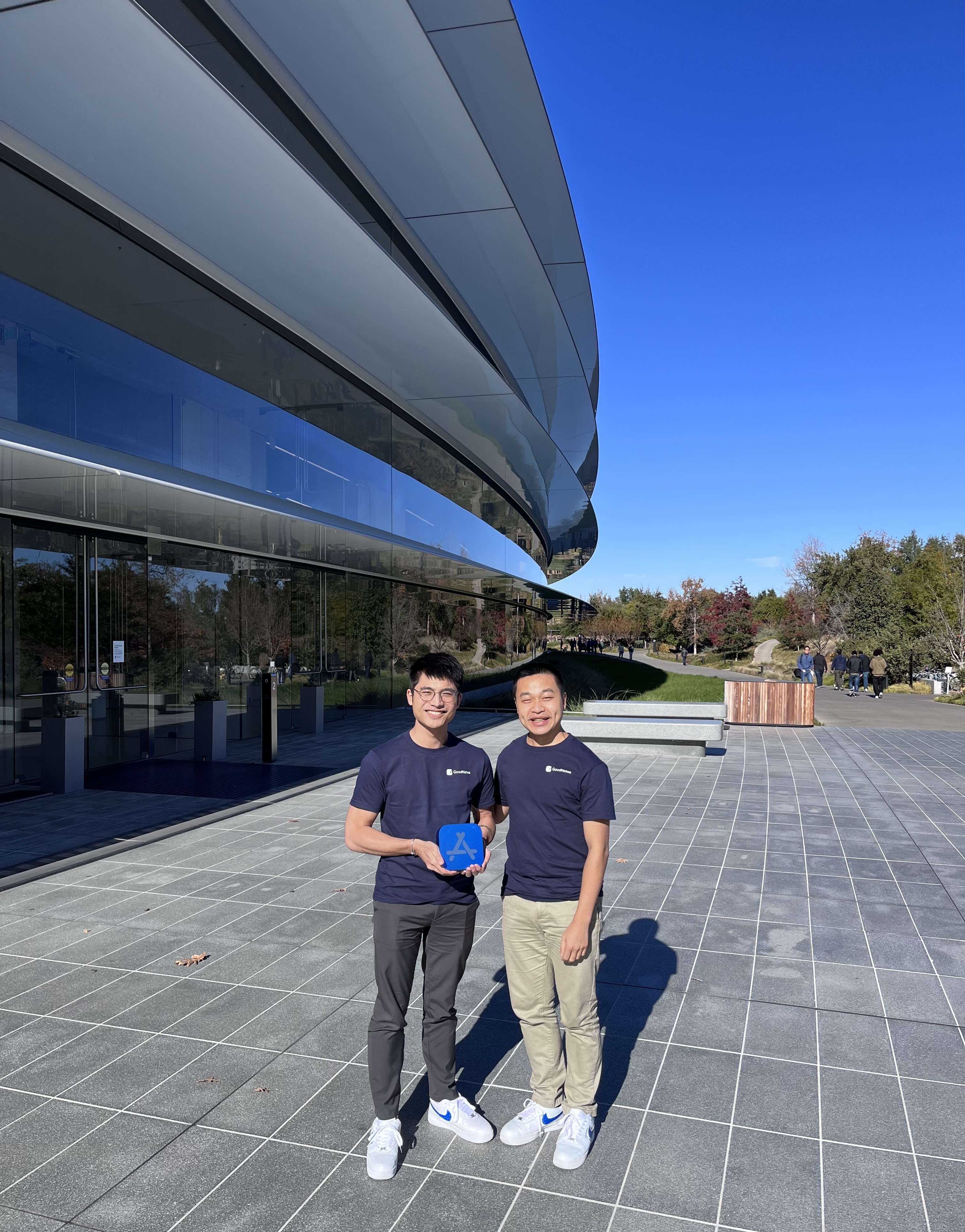
It has been downloaded more times on the iPad than either YouTube or Netflix. Apple named it App of the Year for iPad in 2022, and it won the Google Play Best of 2025 award for Best App for Large Screens. It is one of a portfolio of products the corporate umbrella of Good Systems.
Good Systems is looking for more hits. In August, it launched an AI assistant for encrypted transcription, Goodmeet, which protects users from data leakage to Large Language Models (LLMs), and is aimed at high-privacy users. Goodnotes has been releasing AI products for the past three years, but under Good Systems it will develop new products developed by a dedicated AI engineering team. Good Systems itself was part of a restructuring of the company where it became the parent brand of Goodnotes and Goodmeet.
From digital drawing to digital notetaking and AI-powered digital paper
Chan is unusual among Hong Kong his peers, who often work in banking or consulting before they take the risky dive into startups, and graduate from elite universities in Hong Kong and overseas.
Although he was born and brought up in Hong Kong, Chan was the opposite of an academic star. His grades in Form Three, the equivalent of eighth grade in the US system, were so bad that the family decided to send him to Australia. Otherwise, he would have ended up in the literature track in Form Four, instead of STEM (Science, Technology, Engineering and Math), which requires higher grades.
Instead of books, Chan was excited by computers. His father gave him his first computer at age 10, a PC. Initially, he used MS Paint, a standard Microsoft app, for drawing, and was so good at it that he was asked to produce the cover of the graduation book of his primary class. From drawing he advanced to animations and coding and began building computer games for his classmates.
“It was only when I started to make games that I got interested in math,” he said in an interview. “But at the time, my academic performance was so bad that I couldn’t stay in Hong Kong. I got really interested in math and physics because in games, if you want to simulate certain things, you need physics. After I got interested, I ended up doing quite well and ended up being first in my class in physics and math when I was in Australia.”
Before graduating from the University of Queensland in Brisbane in 2011, he put together the first version of Goodnotes. As a math and physics major, he used large numbers of paper notebooks to write formulas and had to make changes all the time. When the first iPad was released with a touchscreen in January 2010, he had a brainstorm. Users could draw on it with a finger, but there would be no customized stylus for another five years, in 2015, when Apple introduced the Apple Pencil along with the original iPad Pro.
By that time, Chan had already begun to explore the possibilities of the iPad touchscreen using a capacitive stylus, which conducts the body’s electrical charge to alter a screen’s electrostatic charge just as a finger does. “Not many people would have thought about using handwriting on an iPad” because it was so clumsy, he said. Apple Notes, a simple note-taking app, only used typed messages.

“When I saw the iPad,” Chan said, “whose size was almost exactly the size of my notebook, I realized that I could have all my handwritten notes on an iPad, and I wouldn’t have to carry around heavy textbooks and so many paper notebooks, which I threw away after every semester because there were so many of them.”
In his last five months at the University of Queensland, Chan skipped lectures and worked full-time on building the foundational version of Goodnotes, launching the product towards the end of the semester. His grades went down, but when he went back to Hong Kong, he didn’t need a job because he already was making the equivalent of a full-time salary.
Growing Goodnotes
At age 21, Chan grew the company by word of mouth, posting it on Apple’s App Store and sharing news about it on the MacRumors.com forum. “Within the first two or three months, I was already making a full-time salary, so I treated it as a serious business,” he said. “I just worked on it full time, and I was already getting a lot of email from passionate users. They told me about the features they wanted to see, and the bugs they were experiencing. It kept me busy for years.”
There were competitors, starting with Dan Bricklin, who created the first electronic spreadsheet while still a student at Harvard Business School. In mid-2010, Bricklin released Note Taker HD, an iPad version of an app he had developed a year earlier for the iPhone.
The problem with using a fingers or capacitive stylus to write is that the touchscreen quickly runs out of room. Note Taker HD added a pop-up box to allow lengthier text that then shrinks but never developed far beyond the original format.
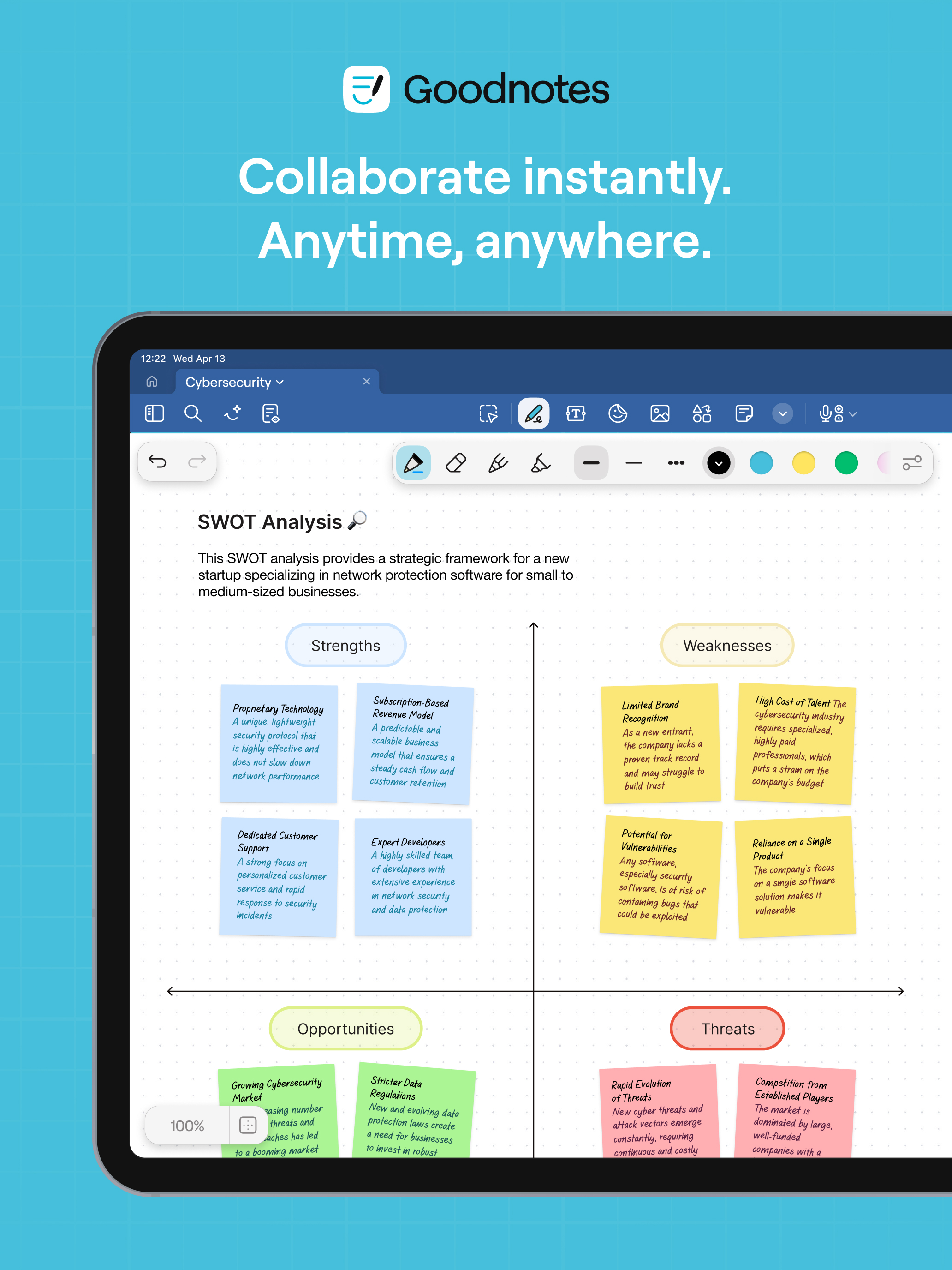
Meanwhile, Chan was responding to users asking for new features, and Goodnotes developed them. Some of its more popular tools include a lasso that moves handwriting text around on the screen, a collaborative tool and in 2023 the first generative AI for handwriting, that corrects spelling mistakes. The last “is a small feature powered by AI, but we were the first to do it,” said Chan. In 2024, Goodnotes expanded from its proprietary machine learning models for handwriting recognition and synthesis to use Claude and Amazon Web Service (AWS).
Silicon Valley takes note
The typical way that startup ecosystems are measured is through funding rounds and valuation, with so-called “unicorns” serving as the prize. A unicorn is a startup with a valuation of US$1 billion before its initial public offering. According to dealroom.co, Hong Kong has 20 unicorns with headquarters in Hong Kong, worth US$75.5 billion in total through August. The largest of these, Crypto.com, with a valuation of US$20 billion and close ties to the Trump family, was founded in Hong Kong in 2016 but moved its headquarters to Singapore in 2021.
Hong Kong’s stable of startups has grown slowly, from 1,065 in 2014 to 5,221 in 2025, according to StartmeupHK, an events program run by InvestHK, a government body. Among the most notable changes is that in 2014, Hong Kong locals represented 53% of startup founders. By 2025, Hong Kong founders made up 67% of the startups tracked by StartmeupHK.
Over the past ten years, the Hong Kong government has invested billions of dollars in supporting tech startups, including the HK$10 billion Innovation and Technology Industry-Oriented Fund, launched in January 2026, which is designed to recruit private capital as strategic investors as well as professional fund managers. There has also been a cultural shift, with young Hong Kongers becoming more accepting of the risks of entrepreneurship, according to Jack Lau, founder of one of Hong Kong’s first tech startups, Perception Digital, in 1999. Venture capital remains a constraint, however.
Chan didn’t need to turn to the Hong Kong government or venture capital for funds. Venture capital came to him, when Hong Kong-born Silicon Valley investor Alfred Chuang asked his son Brandon about the “magical” app called Goodnotes that he was using to take notes, draw diagrams and make notes in his physics textbooks.
“No other app has ever captured so much joy and attention of Brandon wanting to learn,” wrote Chuang in a note on his Race Capital website. “So I decided to buy an iPad just to try the app myself. This is when I realized I finally met the gold standard of note-taking tools.”
Together with his partner Edith Yeung, Chuang started HKFounders, a networking group linking Silicon Valley investors with Hong Kong startups. Chan was invited to join a session of HKFounders in 2019 and met Chuang although, characteristically, he wasn’t pushy about it. “I didn’t have a chance to talk to him [Chuang],” said Chan. “But somehow, he noticed our company. I think the reason he wanted to talk to me is that at the time, we already had a big user base of a couple of million active users globally. He got interested and we talked, and then he became my mentor.
When Chuang offered US$6 million in patient capital in 2020, Chan asked his employees whether he should accept the investment. He didn’t need the money at the time, because the company was profitable, but the relationship has helped him and the company grow. His employees agreed the outside insight would be helpful. “I really see him as my mentor, helping both the business grow, and me as a founder and CEO grow, and he is really investing in the long term. There’s no urgency to achieve certain metrics, or a timeline to exit.”

Race Capital remains engaged, and Good Systems remains private, but that doesn’t mean Chan would never consider more fund raising or an eventual initial public offering (IPO). You could say the same about Race Capital. It was an early investor in Databricks, a software platform for data analytics that in August had a valuation of US$190 billion and raised US$5 billion in its most recent funding round. Good Systems would almost certainly be in the billion-dollar valuation range if and when it decides to go public.
Hong Kong finally becomes too small
Nine years after founding Goodnotes, in 2020, Hong Kong finally became too small to serve as headquarters, and Chan moved to London. As the company expanded, he was having more trouble recruiting software engineers. “I think we have talked to most of the candidates we can talk to in Hong Kong, because it’s a small market.” He picked Europe because of the convenient overlap in working hours with Hong Kong, and London as the biggest tech hub in Europe. In June, the company opened its third office in Singapore, to serve as a regional hub for Asia-Pacific.
The biggest change, however, has been the acceleration into Artificial Intelligence (AI), which has had an impact on both headcount and business. 2024 was the pivotal year, when AI began to put downward pressure on headcount for the first time, both because of the increase in productivity for individual employees and the need to upskill. Chan’s team swiftly divided into AI skeptics and AI believers.
Chan solved the problem in his own unique way, by setting up a contest between the two camps, to see which could produce the best product. “It became a huge debate in the office,” he said. His team of AI skeptics reviewed each AI product, while the believers just let AI do the work and didn’t review it. He gave both teams three weeks, with criteria including feature completeness, user experience and performance to test the number of bugs.
The believers’ team won, and even one of the most senior engineers who had been a skeptic switched sides. A new AI unit is designing products, with Goodmeet the first to arrive in public Beta form. In his approach to AI models, Chan is equally pragmatic. “I think we are seeing the rise of two AI superpowers, China and the US, and I personally believe that will continue to be the case in the next decade,” he said.
Good Systems uses a wide range of models, from cheaper Chinese open-weight models to proprietary models like those of Anthropic or OpenAI. Tasks are divided into “multiple chunks” with models with a higher degree of intelligence coming up with plans and the cheaper models doing more hands-on coding work. “You don’t always have to use the most expensive western models to do the entire work,” he said. “You can divide it into smaller chunks.”
As a company founder and pioneer in applied AI, Chan sees both the potential and the risks with AI. “The big unknown is what jobs will be created by AI,” he said. “Is it the industrial revolution, or not?”
And if he set up his company today, would he still choose Hong Kong? “As you scale, and need to hire engineering talent,” Chan said. “I would probably put the engineering hub in Shenzhen or Shanghai, with the leadership team in Hong Kong to serve a global audience. I think Hong Kong still has a lot of advantages, but it has its limitations and then it’s about how we address those limitations.”
Meanwhile, his son, age 10, is using AI to invent games for his friends. If he had it to do all over again with AI, Chan says, “I would just create so much more.”
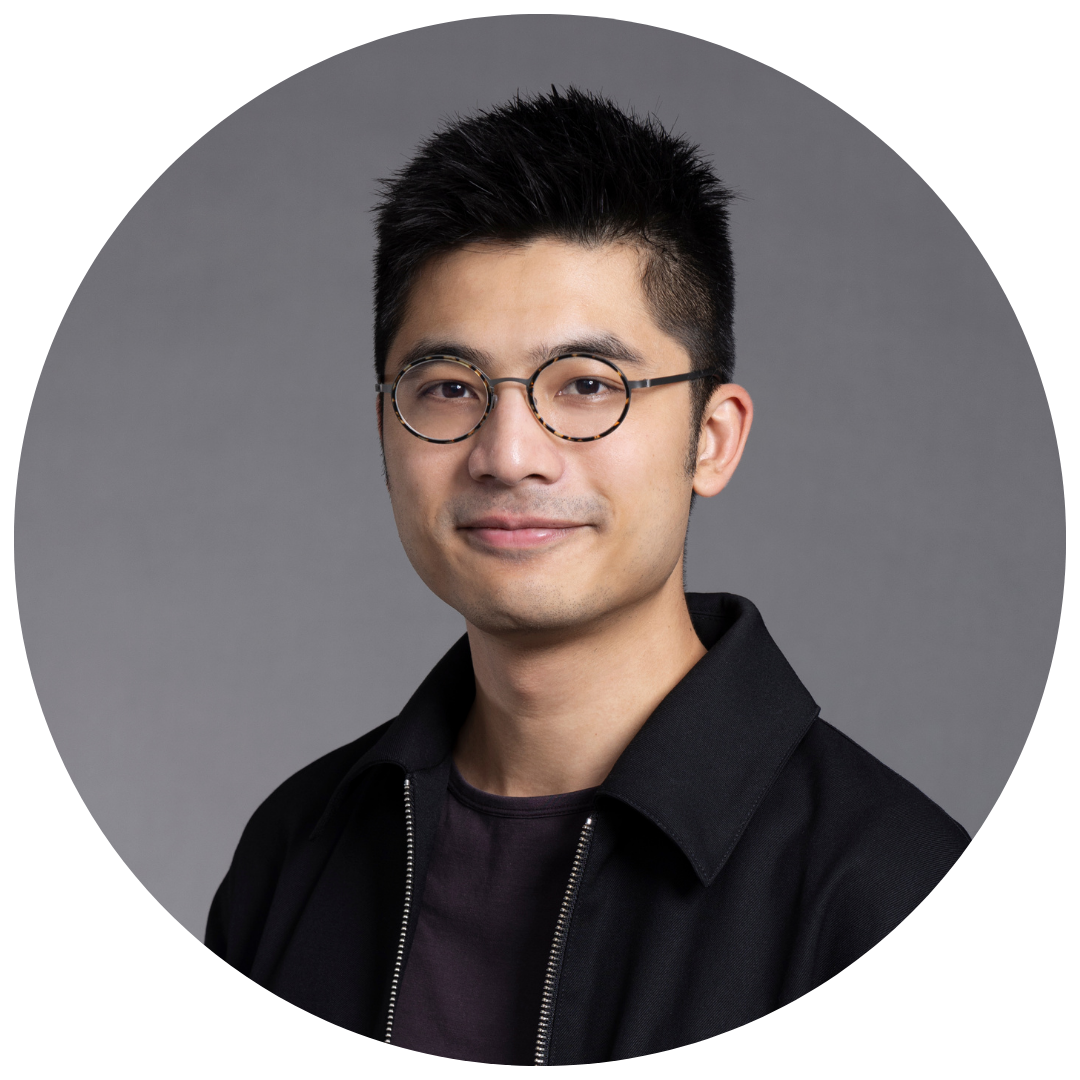
Steven Chan is the founder and CEO of Good Systems, the parent company of Goodnotes and Goodmeet, software apps that help users take notes using the iPad tablet and conduct encrypted meeting notes. He is a graduate of the University of Queensland, with a bachelor’s degree in mathematics.