
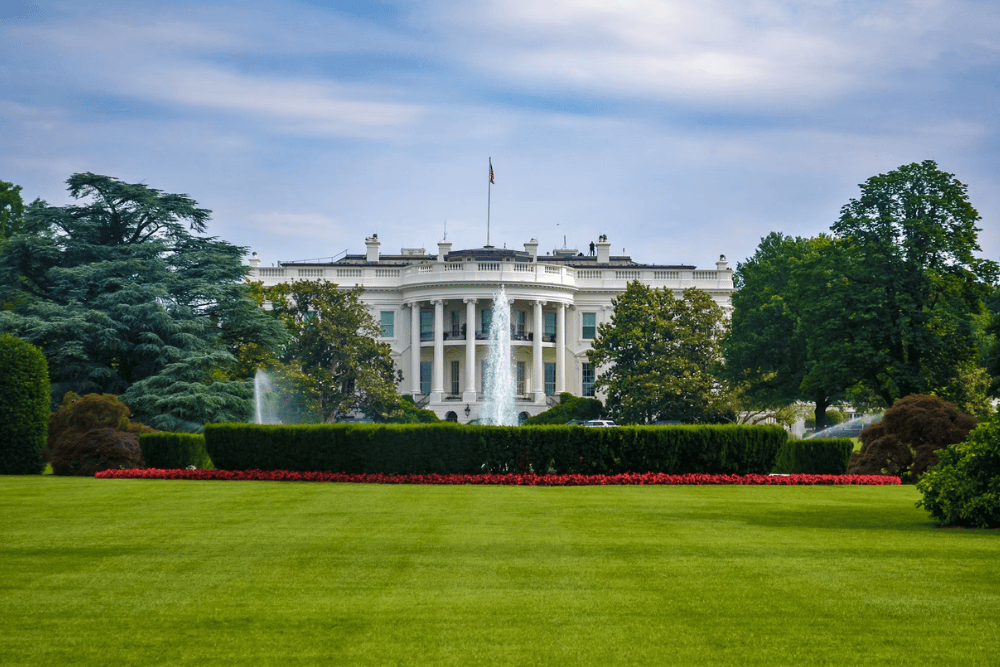
U.S. President Donald Trump and Chinese President Xi Jinping meet in Beijing, May 2026. (Official White House Photo)
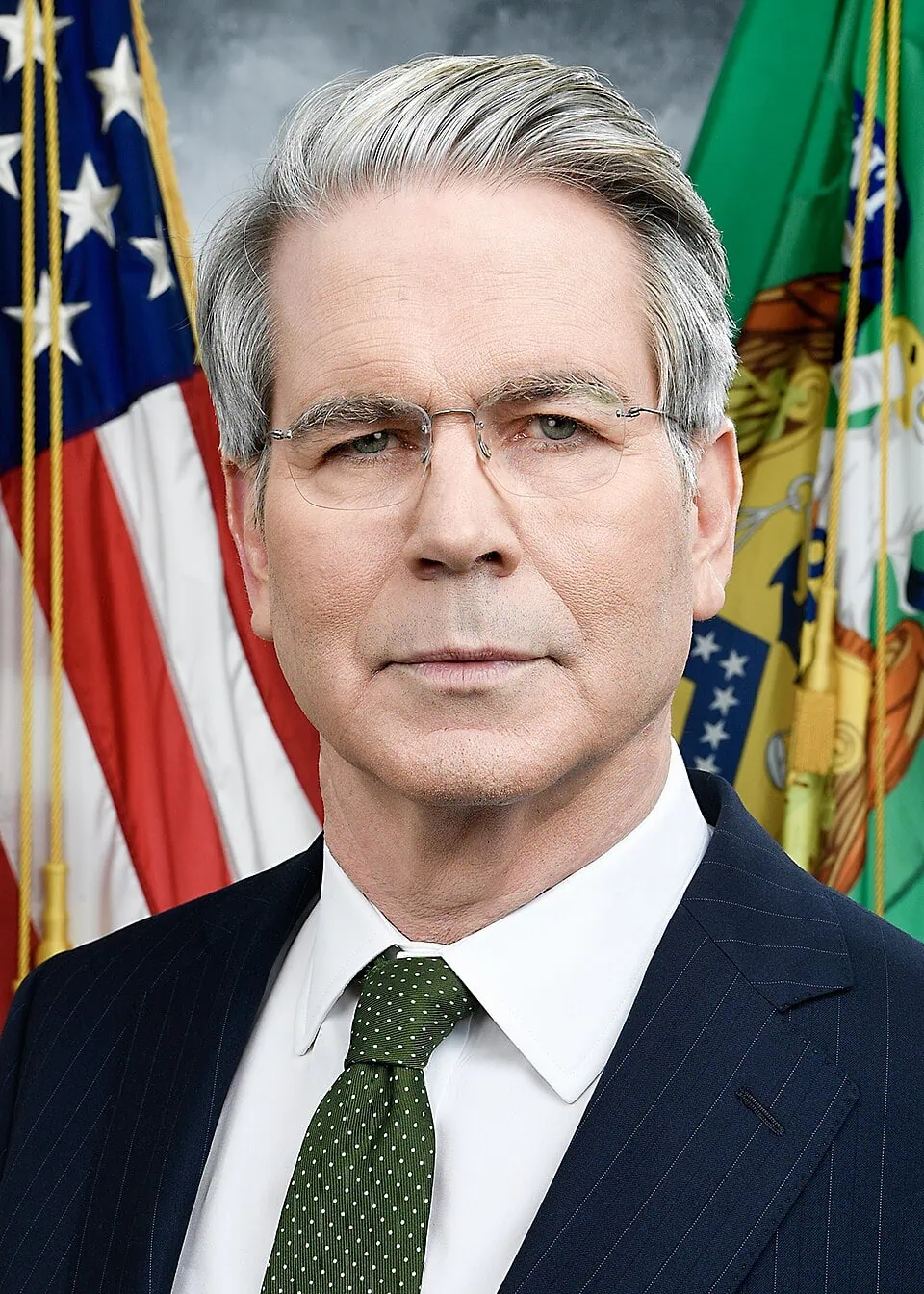
The first official US-China dialogue on Artificial Intelligence is planned for September 2026, with a US delegation led by Treasury Secretary Scott Bessant. Here technology policy expert Paul Triolo outlines the potential endgame and proposes an international organization with enforcement powers, similar to the International Atomic Energy Agency formed in 1957. The latter was proposed by US President Dwight D. Eisenhower in his “Atoms for Peace” address to the United Nations General Assembly in 1953 at the dawn of the nuclear age.

Triolo concedes that a long-term solution to the challenges of putting guardrails around advanced AI deployments will be difficult. It will require US China collaboration for technical solutions and standards, and support by both governments to coordinate policies across borders.
While the US struggles to define a China policy for the AI age, the time is now to set global governance standards
The United States and China have reached a critical crossroads in their head-to-head competition over the technologies of the future.
In the age of AI, and more specifically, the age of advanced machine intelligence, both sides will need to step away from some of the approaches of the past five to ten years and forge a new foreign policy for the age of super machine intelligence, if we are going to be able to avoid major risks. These risks are clear to anyone who cares to understand them – the disruption of supply chains, rising costs for business, lack of investment for innovation, and increasing potential for armed conflict, over Taiwan or the South China Sea.
Driving this need for a new approach on technology and bilateral relations in the new age are developments over the past four years, since the US imposed sweeping controls on China’s semiconductor, semiconductor manufacturing and AI sectors in October of 2022, and the huge changes wrought by the development of advanced AI capabilities since the release of ChatGPT a month later, in November 2022.
Four years of US export controls have failed to slow the ability of Chinese AI developers to keep pace at the frontier. In fact, the gap between leading US and Chinese models has narrowed during this period. More controls, as some are arguing, will only be more counterproductive, for example, making it even more difficult for Chinese AI labs to do safety testing.
At the same time, the mounting collateral damage from the US weaponization of critical supply chains to the economies of both countries is now quite evident. Semiconductors are “dual use” technologies but are overwhelmingly used for civilian applications, and the same goes for AI.
This requires a major rethink of the Biden era technology control approach based on “small yard, high fence” and maintaining an absolute lead over China, whatever that meant, and focusing on advanced compute, biotech and green tech. The US weaponization of advanced compute supply chains resulted in Beijing retaliating by imposing licensing requirements on critical minerals, rare earths, and related technologies, creating a huge disruption to global supply chains across multiple industries.
Now that both countries have demonstrated they can damage the civilian industrial structures critical to economic development by weaponizing choke point technologies and dominance of specific industrial inputs, the need to step back from this tit-for-tat exercise and focus on collaboration around broader issues such as AI and climate change has never been clearer.
While both President Donald Trump and Xi Jinping appear to want to keep the relationship on stable grounds, more than four years of intense technology competition have created constituencies in both Beijing and Washington that favor decoupling, derisking, and onshoring or friend shoring. Both countries now appear committed to developing self-reliance in key sectors, but neither can achieve full self-sufficiency, not in semiconductors and manufacturing, and not in rare earths and magnets. Proponents of decoupling are never clear about how much decoupling is sufficient, who will pay the costs of duplicating capabilities, and when we will know when an appropriate equilibrium has been reached.
The first step – avoid further escalation around the planned US-China AI dialogue
As I have previously written, there is a deal to be made that can enable both sides to step back from further escalation, around US export controls and licensing and rare earths and magnets and licensing approaches. This will be a critical issue to watch coming out of the September 24 summit between Trump and Xi in Washington, which will likely see a decision to extend the Busan agreement from last November, that saw both sides admitting that implementing further controls would be highly damaging to the economies of both sides and to the bilateral relationship – the US Affiliates Rule would have added hundreds of Chinese firms to the Commerce Department’s Entity List, and China’s critical minerals and rare earths rules, including extraterritorial controls.
The challenge has been the inability of both sides to build on this really important consensus, and roll back further controls to ensure no further damage happens to supply chains and to begin to return to some landing zone of normalcy that avoids the types of tit-for-tat escalation we have seen since Busan. This has featured most prominently with US actions drawing retaliation from China and accusations of violations of the Busan agreement, even against the backdrop of a willingness on both sides to continue a high-level dialogue.
What will it take to get out of this box? One of the most important new “deliverables” coming out of the May meeting in Beijing between the two presidents was a decision to launch a long overdue dialogue on frontier AI safety government.
None of this is unfolding in a vacuum of goodwill, however. In the weeks leading into the September 24 summit, both governments have kept adding friction even as they prepare to talk. The Federal Communications Commission has restricted imports of humanoid robots largely manufactured in China, the Pentagon and US Commerce Department have added more than 40 Chinese firms to various blacklists, barred Pentagon contact with two major Chinese universities, and imposed new tariffs and price floors on Chinese-made polysilicon. Beijing has publicly warned Washington against sanctioning Chinese AI firms and set its own ceiling on tolerable new tariffs. The leader-level relationship may be holding, but the agencies beneath are still trading blows, which is worth remembering before assuming the “landing zone of normalcy” is already within reach.
Washington finally recognizes the role of government in gating AI
Why the decision to finally take seriously the government’s role in gating the release of the most advanced AI models? This gets to the second major development over the past year – Washington’s extraordinary June intervention into Anthropic’s release of Fable and Mythos, the company’s most advanced cybersecurity-oriented models.
Days after their public launch, the US Commerce Department issued an export control directive ordering Anthropic to suspend access to both models for foreign nationals worldwide, after another AI company reported a technique for bypassing Fable’s guardrails that could be used to surface previously known software vulnerabilities. Anthropic disputed both the severity of the finding and the transparency of the process behind it, but complied, taking both models offline for all users globally for nearly three weeks before the directive was lifted in exchange for company commitments to monitor and disclose security risks and to coordinate with government on evaluation standards for future releases.
This was the first time Washington had used its export control authority to compel the live recall of a deployed commercial AI model, and it crystallized for policymakers on both sides of the Pacific that the current, ad hoc approach to gating frontier model releases is unsustainable. This episode makes the upcoming US-China AI Dialogue even more important, and the need for a new US foreign policy on China and technology that abandons the technology competition approach of the Biden administration and acknowledges the real national security challenges posed by transnational issues such as AI governance and climate change.
At the same time, the emergence of at least four Chinese frontier AI labs over the past several months, with advanced model releases from Zhipi (Z.ai), Alibaba, DeepSeek, and Moonshot have created a complex set of issues for US policymakers already grappling with how to introduce a clear process for government evaluation and approval of advanced model releases in the wake of the Fable/Mythos episode. Commerce’s decision to restore access to Fable and Mythos in late June came not from any single new guardrail added by Anthropic, but from a negotiated package of commitments – proactive security monitoring, coordination with government on evaluation standards, and disclosure of malicious use – that amounted to an informal, ad hoc version of the third-party oversight regime both governments now need to formalize.
The issue of what to do about Chinese open weight models is now front and center in US AI policy circles. Restrict or ban them? Or require that they undergo the same safety evaluations as closed frontier models? All of these issues are likely to be part of the US-China AI Dialogue, along with a broader discussion of the role of government in AI governance.
The Trump administration is also trying to develop and launch a new organization, potentially modelled on other so-called self-regulatory organizations (SROs) in other industries, which police the industry with support from industry players, but also report to a government organization for oversight and guidance. Such an organization has been proposed by leading US AI labs, and the concept has gained wide support within the US government. Over the coming months this organization, once established, will be responsible for deciding on issues around open weight models, and would likely eventually serve as the lead body for US China AI governance interactions.
Beijing, meanwhile, is not waiting on Washington to define the terms of AI governance. At the APEC leaders’ meeting, Xi Jinping used the platform to promote a China-based World AI Cooperation Organization (WAICO) positioning Beijing as an alternative venue for setting international AI governance rules and pointedly noting that the United States has resisted efforts to regulate AI through international bodies.
A bilateral US China dialogue on frontier AI safety and a Chinese-led multilateral initiative are not mutually exclusive, but they are also not obviously compatible tracks. We will almost certainly eventually need an organization similar to the International Atomic Energy Agency (IAEA), with IAEA style enforcement.
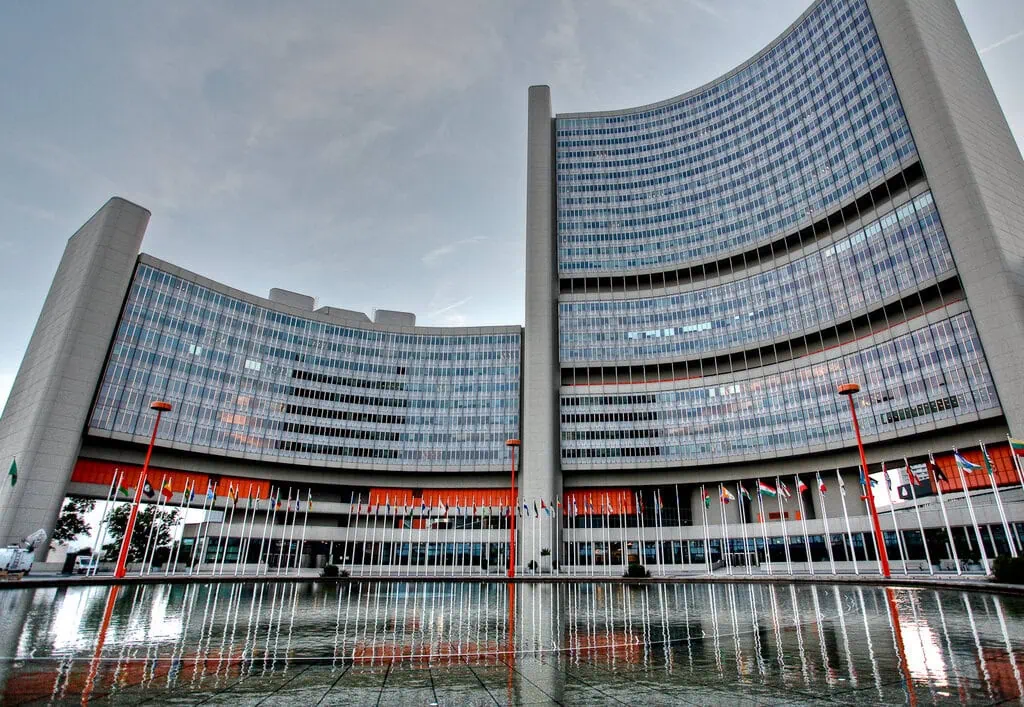
To be effective, it will need to reckon with whether that architecture gets built bilaterally, multilaterally through a body Washington does not control, or through some hybrid that the two governments would need to negotiate explicitly rather than assume.
Already, industry and the US government are coalescing around the idea of a new AI overseer, likely a “self-regulatory organization” (SRO) potentially styled along the lines of the Financial Industry Regulatory Authority (FINRA) that has significant industry input but answers ultimately to government.
Proposed in July by former Google DeepMind CEO Demis Hassabis, such an organization could form a model for a new international organization that would need to be heavily supported by both Beijing and Washington. At the same time, technological solutions to enable such governance, including scaffolding around agentic platform deployments that would enable real time monitoring and validation of agent interactions are also in the initial stages of discussion. Both top-down and bottom-up mechanisms will be required for AI governance.
Towards a new US-China relationship on technology for the AI age
All the pieces are in plain view for the development of a new model of US-China cooperation that accounts for both the huge risks that lack of cooperation on AI governance would bring, and a chance for both governments to at the same time step back from further ruinous economic conflict and weaponization of supply chains, particularly those across the AI stack. But getting to a new landing zone will not be easy, given the forces that the dark ages of US-China competition have spawned.
Those forces are not confined to Beijing. In Washington, a bipartisan bloc anchored by the House Select Committee on China continues to push legislation – including proposals modeled on the GAIN AI Act[i] – that would harden rather than relax the compute export regime, and the US Administration itself is not of one mind on China and AI policy.
The same months that produced the US-China AI Dialogue commitment also saw the Pentagon threaten to designate a leading US AI lab as a supply chain risk over an unrelated dispute, a reminder that different factions inside the US government are pulling in different directions. Any dialogue-driven rollback of controls will need durable domestic political cover on both sides, not just an agreement between negotiators, or it risks being reversed by the next controversy, whether that is a jailbreak, a GPU diversion case, or a shift in the political weather in either capital.
First, the US-China AI Dialogue should appropriately start with beginning to establish trust on a contentious issue. Some leading US AI labs, particularly Anthropic, hold that the biggest existential risk around AI is not loss of control leading to catastrophic outcomes for humanity, but rather China getting to advanced AI first. This largely unexamined concept has been driving US technology control policy, and overcoming this will be difficult, but not impossible, given the slim evidentiary base on which it rests.
In the AI talks, which will initially not be a negotiation, both sides should be able to agree on the need for government and third-party oversight of pre-release evaluations of the most advanced models. Eventually this dialogue will need to lead to concrete measures taken by both governments to ensure that real governance of AI models is put in place, even if both countries take slightly different approaches to a government body to oversee the process and use a different set of independent third-party evaluators with the necessary technical capabilities to test models and ensure they are safe before release. This process will have to form the basis of an international agreement eventually, and come with some level of enforcement, such as the IAEA and its monitoring functions.
At the same time, we may be in a situation where advances in agency AI platforms and the lack of capacity to fully test them, coupled with the slow rate of government progress on establishing clear oversight and processes for releasing advanced models will call for a different but complementary approach. There is increasing interest in key circles in the US and China in the potential for collaboration on a global monitoring system for agentic AI systems that would be based on hardware solutions and a hierarchy of standards that would allow for advanced AI to monitor advanced AI in ways that could keep up with the pace of technology change. Development of technology for this type of approach will require close cooperation between the US, China, and other countries with substantial AI capacity.
What it will take to put in place an IAEA-like model for AI
Making any of these approaches workable and durable will require more than a diplomatic communiqué. An IAEA-style model implies technical verification – some means of confirming compute usage, training runs, or AI hardware provenance – that neither government has agreed to in any other context. Technical experts will need to be empowered to act somewhat independently of political leadership on both sides, the way nuclear safeguards inspectors operate at arm’s length from foreign ministries.

It will also have to contend with the fact that the chokepoints that made US export controls possible in the first place – extreme ultraviolet (EVU) lithography from the Netherlands, leading-edge fabrication in Taiwan, memory and packaging capacity in Korea and Japan – sit outside Washington’s unilateral control. A bilateral US-China deal that unwinds controls without bringing Tokyo, Seoul, The Hague, and Taipei into the conversation risks looking to allies like a deal struck over their heads, using leverage they helped build, and it leaves unaddressed the flashpoints of Taiwan and South China Sea flashpoints.
It will take a one to two-year process to lay the groundwork for an agreed framework on testing and evaluation and potentially begin to consider collaboration on a broader technology solution for global monitoring. This process could also potentially be coupled with a step back from further export controls, particularly the failed US policies of the last four years, and Beijing’s agreement to stop weaponizing rare earths and magnets. This would begin to move the relationship towards the elusive landing zone of normalcy, while avoiding costly escalation, and build some level of trust on both sides that could be used to override the sure objections of the dark forces of decoupling.
Success in managing the real risks around one of the most if not the most important technologies humanity has ever developed would re-establish workable US-China relations for the age of AI and the age of climate change, with collaboration on AI leading to collaboration on climate change and healthcare and pandemic preparedness.
Removing the specter of Dario Amodei’s “authoritarian AI” – a concept relatively unexamined by serious China analysts – as the outcome of China winning some type of AI race would be the best possible outcome of this collaboration on AI governance. It is time, the risks are high and clear, and this may be the last opportunity for the two governments to “get it right” on AI.
It needs to happen before extreme factions on both sides push for even more decoupling and escalation would make getting back to a landing zone of normalcy impossible. The latter would make likelihood of armed conflict, driven by AI, swarms of drones, AI-driven critical infrastructure risks, and more, inevitable. No one should want this future, a preview of which we have seen in Russia’s invasion of Ukraine. The time is now to act, and the US-China AI Dialogue needs to be the catalyst.
[i] Guaranteeing Access and Innovation for National Artificial Intelligence (GAIN AI) Act, introduced in the US Senate on November 7, 2025

Paul Triolo is a Partner at DGA-Albright Stonebridge Group, a founding member of DGA Group, and is based in Washington, D.C. As a member of the firm’s China practice and Technology Policy Lead, he advises clients in technology, financial services and other sectors as they navigate complex political and regulatory matters in China and around the world.
A recognized expert in global technology policy, Mr. Triolo has worked closely with some of the world’s leading companies on AI, helping them track regulatory issues globally, develop long-term strategies on thought leadership and engage with regulators. Most recently, he was founder, Practice Head, and Managing Director of the Geo-Technology practice at Eurasia Group. Mr. Triolo spent more than 25 years in senior positions in the US government, analyzing China’s rise as a technology power and advising senior policymakers on technology-related issues. Prior to his government work, he worked as an engineer for a semiconductor testing firm in Silicon Valley.