
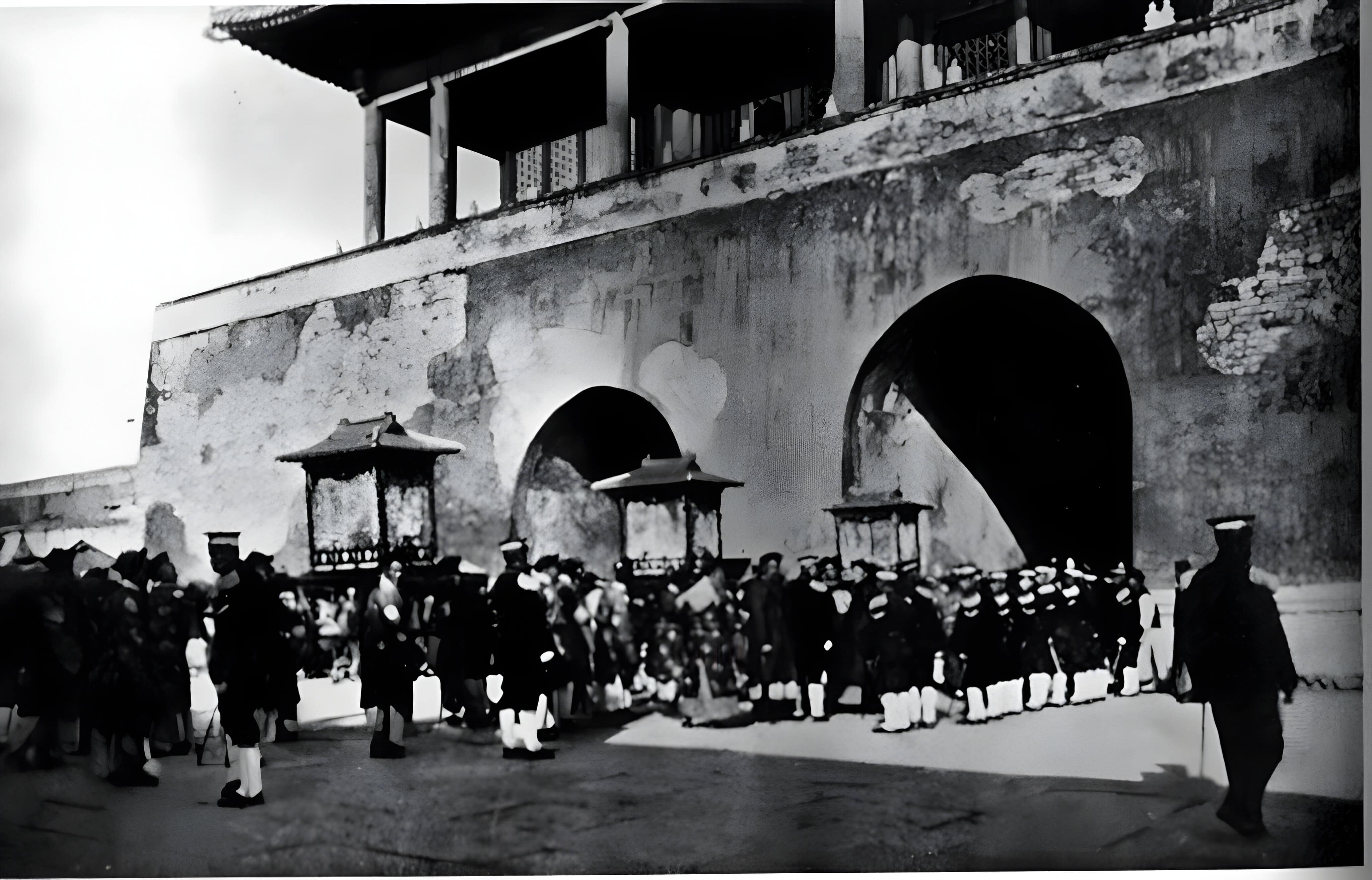
Wedding of Puyi and Wanrong
In his latest book, one of Asia’s great storytellers tackles the subject matter of Bernardo Bertolucci’s Last Emperor (1987). Filmed on location in Beijing, the movie relied heavily on the memoir of Emperor Pu Yi’s British tutor, Reginald Johnston. The fact that Empress Wanrong had an American tutor, Isabel Ingram, has largely been forgotten – until French stumbled upon her diaries in correspondence with Ingram’s relatives in Pennsylvania.
By Paul French
I’m sure you all know the broad outlines of the astounding — and ultimately tragic — story of Puyi. You may have seen Bernardo Bertolucci’s lavish 1987 epic, The Last Emperor. You’ll know that Puyi had a Scottish tutor, Sir Reginald Johnston — played by Peter O’Toole in the film — who became his closest adviser despite being considerably older than the young monarch.
And if you’ve spent any time in Beijing, you’ve probably visited the Forbidden City, home to China’s emperors from 1420 until 1924. You’ve undoubtedly marvelled at its extraordinary scale and ornateness, at this palace compound that sits as a massive piece of real estate at the centre of the capital.
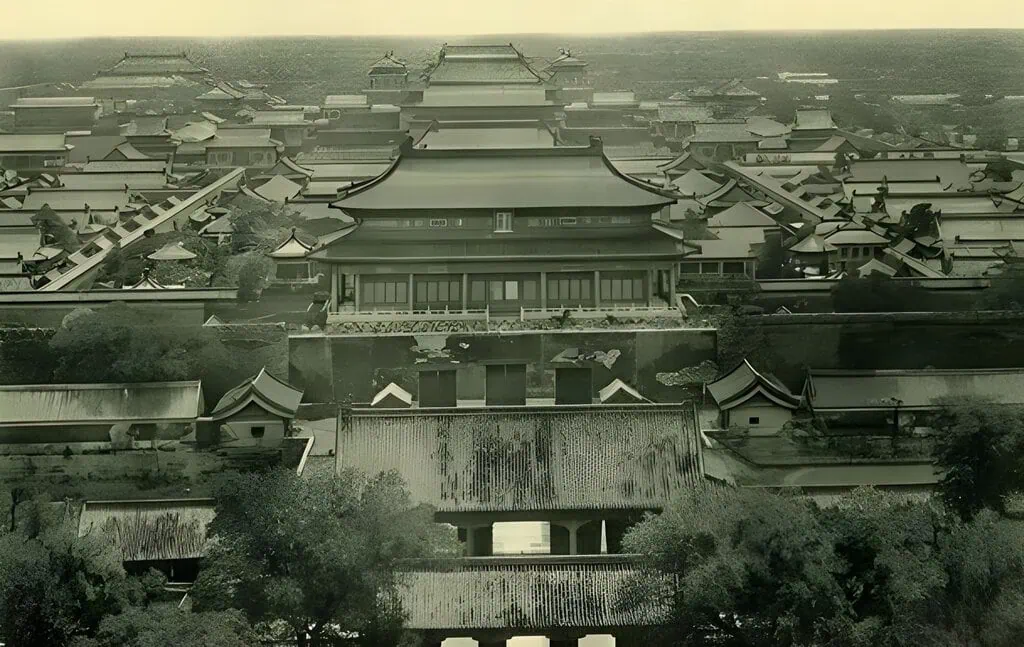
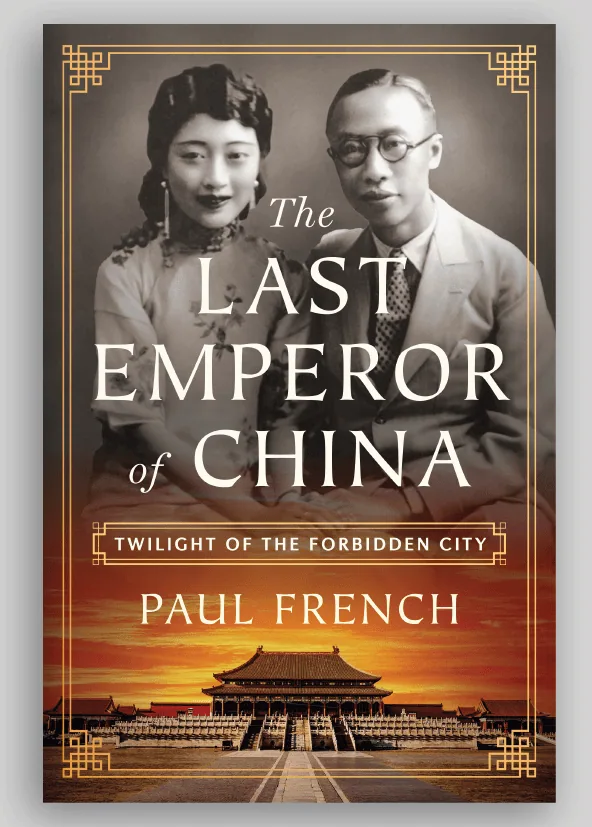
But like any great, sprawling story of one man’s destiny entwined with that of a nation in flux and peril, there is still much more to know. And, amazingly, largely forgotten by history, by previous biographies, and even by Bertolucci’s film, there is a crucial American angle to the story of China’s last emperor and I hope I’ve resurrected it for China history readers with my new book, The Last Emperor of China: Twilight of the Forbidden City.
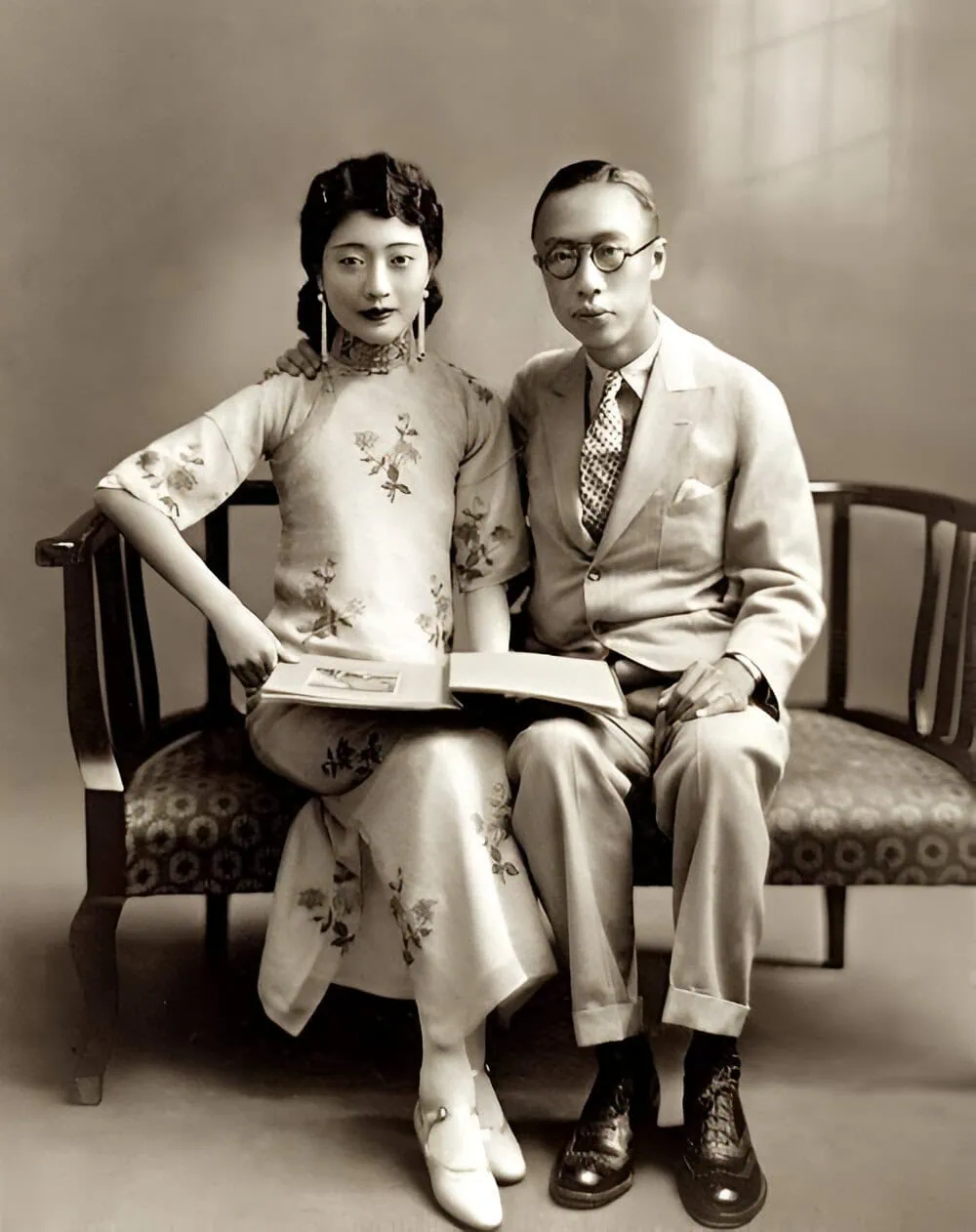
China’s last emperor and empress
But first, a quick reprise.

Puyi became emperor at just three years old in 1908, selected by the Empress Dowager Cixi, who died the following day. At five, he abdicated as the Qing Dynasty collapsed and the Republic of China was born under Dr. Sun Yat-sen.
For the next 15 years, Puyi lived almost entirely within the Forbidden City, an extraordinary, gilded cage at the heart of Beijing, as China’s fragile republic struggled to consolidate and northern China was wracked by warlord violence.
Then, in 1922, aged sixteen, Puyi married Wanrong, the beautiful daughter of a Manchu nobleman. Together they became the last emperor and empress of China. Their wedding was the last great display of imperial pomp ever staged in China.
And then, effectively, they vanished.
For two years, Puyi and Wanrong lived almost entirely behind the walls of the Forbidden City, until a warlord expelled them in November 1924. During those years, few outsiders were allowed in. Journalists were discouraged. Puyi’s world revolved around his Scottish tutor, Reginald Johnston — Peter O’Toole in the movie — and, crucially, around a woman who has almost completely disappeared from the story, Empress Wanrong’s young American tutor, Isabel Ingram.

Although she has been virtually erased from the story of Puyi and Wanrong — receiving just a single line in Johnston’s 500-page memoir and disappearing entirely from Bertolucci’s film — Isabel was with Wanrong throughout those extraordinary two years.
An American, the daughter of Philadelphia missionaries in northern China and recently returned from Wellesley College, Isabel was hired by Wanrong’s family as her English teacher. She spent two years at the last empress’s side, living within the Forbidden City.
And Isabel’s eyewitness account of that remarkable and unique period in Chinese history changes much of what we thought we knew about Puyi, Wanrong and the final days of the Forbidden City as an imperial palace.

Finding Isabel
I need to say a few words about how I came to hear about Isabel.
I had always been fascinated by the story of the last emperor. As a young university student of Chinese Studies, I sat wide-eyed in a cinema in 1987 watching Bertolucci’s The Last Emperor.
It blew me away. And I wasn’t the only one. At the 60th Academy Awards in 1988, the film achieved a clean sweep, winning every category in which it was nominated: Best Picture, Director, Adapted Screenplay, Cinematography, Art Direction–Set Decoration, Costume Design, Film Editing, Original Score and Sound. Only Ben-Hur, Titanic, The Lord of the Rings: The Return of the King and West Side Story have matched or surpassed that feat.
Anyway, a few years ago I wrote a piece for the South China Morning Post in Hong Kong about Wanrong, often overlooked as China’s final empress. I mentioned her close relationship with Isabel Ingram.
Thanks to the power of the internet, Isabel’s descendants in Pennsylvania saw the article and wrote to thank me for mentioning her — because, they said, she always seemed to get left out of the story.
Then came the question. Oh, and by the way, would you like to see her diaries from those years in the Forbidden City and her letters from Reginald Johnston?
Would I?
YES, PLEASE!
The Isabel Ingram archive
What I got to see was extraordinary: Isabel’s daily diary and her letters to her mother and sister, written from inside the imperial palace.
And they transform the picture we have of Puyi and Wanrong, long assumed to have been trapped in an arranged, cold and loveless marriage.
Isabel tells us something very different.

She describes a young couple working at their marriage and forging a kind of practical, private love. They played tennis, bicycled, took photographs, listened to records, went on picnics and planned a future together – despite the extraordinary forces ranged against them.
Isabel also reveals something that has long been obscured by gossip, hindsight and competing versions of the story – a Western tendency to exoticize the last emperor, and a Chinese tendency to portray the final feudal monarch and his consort as hopeless, passive and indolent.
In Ingram’s diaries, we see something much more human.
We see Puyi and Wanrong’s private and intimate life. Her diaries allow us to look again at the other sources – and at the final years of the Forbidden City itself – with fresh eyes.
Surviving in a halfway world
Puyi and Wanrong, and the mysteries and myths surrounding their final two years in the Forbidden City, form one of the great “end of monarchy” stories.
Their fate contrasts with that of the cruelly murdered Romanovs in Russia around the same time and other fallen royal dynasties. They retained their titles, court and considerable wealth long after the fall of the Qing, well into the era of China’s first republic. Their survival in this strange halfway world was extraordinary.
Within China, Puyi’s story remains a national myth, endlessly revisited in television dramas and the courtly historical soap operas of recent years.
But I also think that this newly detailed account of the lives of Puyi and Wanrong – and of Johnston and Ingram, whose story is brought together here for the first time – makes what happened after their expulsion from the Forbidden City, and their eventual capture by the Japanese in Manchuria, all the sadder.
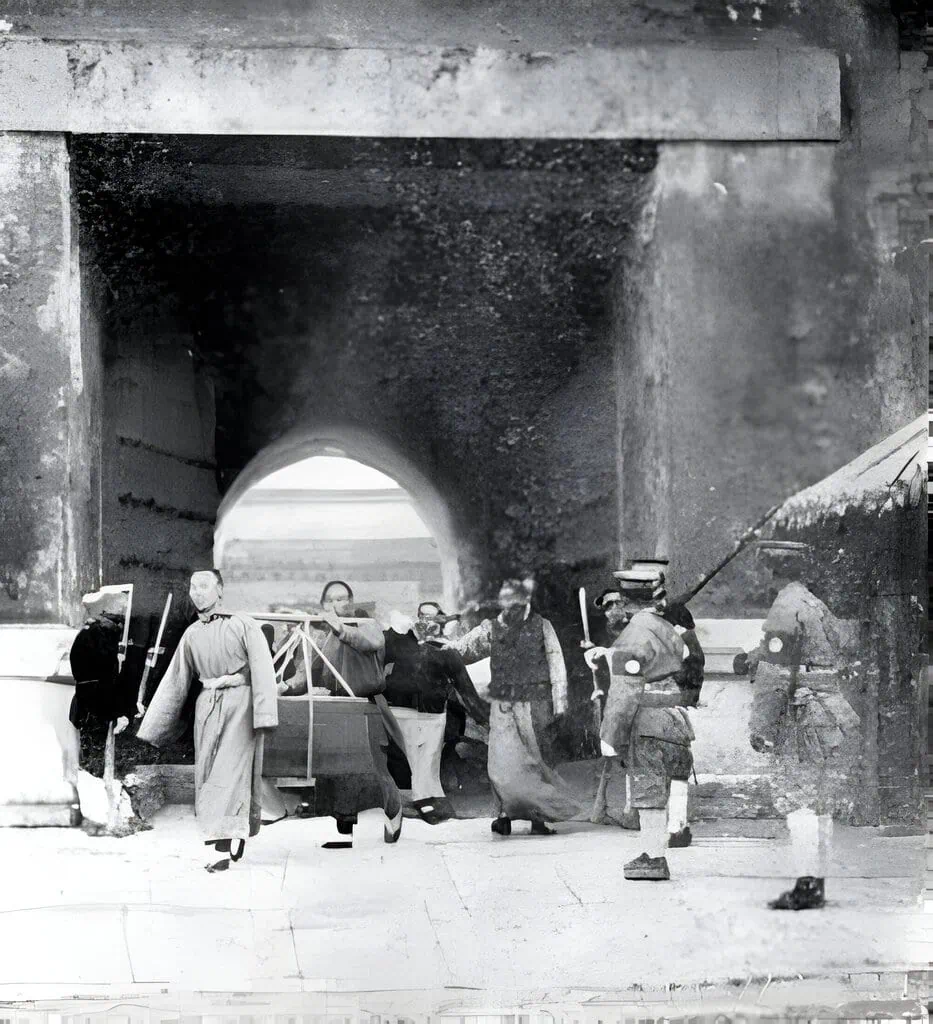
Puyi would become a pawn of the Japanese in Manchuria.
Wanrong would descend into opium addiction and die horribly and tragically young.
And the last emperor would survive into Communist China, become a gardener and spend his final years largely in obscurity.
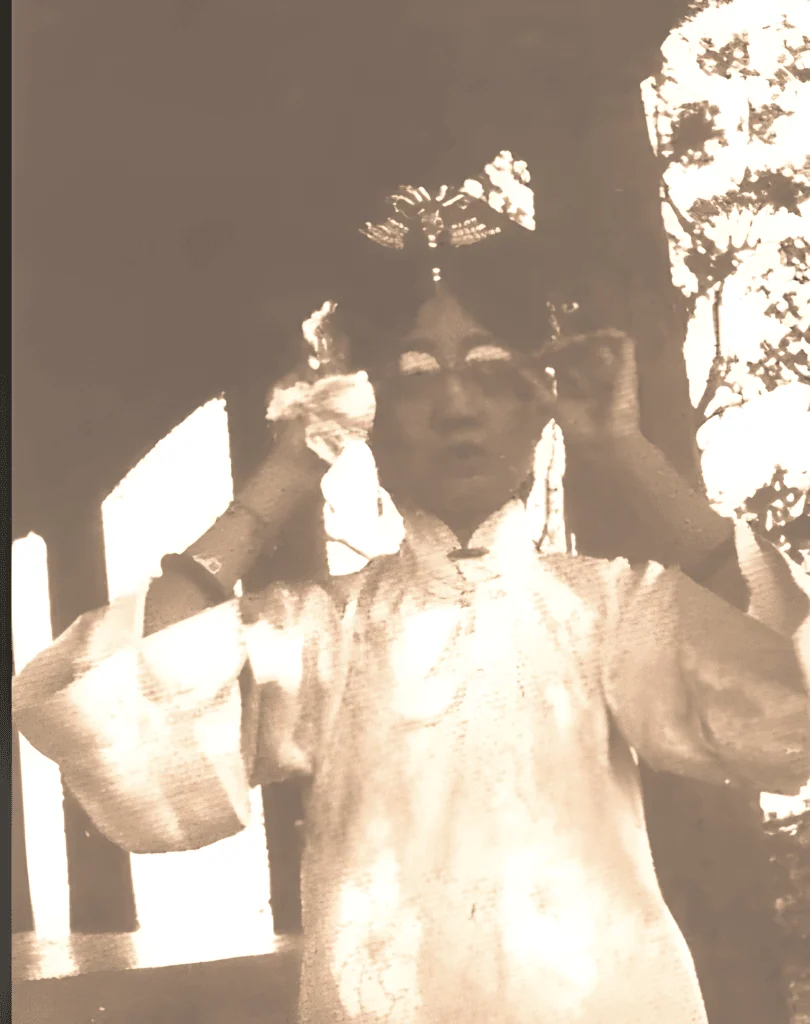
The last emperor and empress have been portrayed countless times. But perhaps only now are we beginning to see them as they actually were, not merely political symbols of a feudal past, nor exotic caricatures created for Western consumption, not simply victims or villains, but two young people trying to build a life amid the ruins of an empire.
And then there is Isabel Ingram.
After leaving the Forbidden City in 1924, she stayed in China and married a United States Marine stationed at the American Embassy in Beijing. Together they made regular collecting trips into the Chinese countryside. Today, many of the objects they collected – from ceramics to arrowheads – form part of the Chinese collections and archives of the University of Pennsylvania Museum of Archaeology and Anthropology.
Isabel’s letters and diaries give us a genuine insider’s account of the final years of the Forbidden City as a gilded cage, an impenetrable citadel that had been home to China’s emperors for five centuries.
She gives us details and gossip, personalities and private moments, insider information and context.
And hopefully, I’ve distilled all of that into The Last Emperor of China: Twilight of the Forbidden City – while also placing Isabel Ingram back where she belongs, at the heart of the story of the last emperor of China.

Paul French is a New York Times bestselling author, historian and China analyst whose most recent book, Her Lotus Year: China, the Roaring Twenties and the Making of Wallis Simpson (St. Martin’s, 2024) described a transformative year in the life of one of the 20th century’s most celebrated women. His latest book, The Last Emperor of China: Twilight of the Forbidden City, was published by St. Martin’s Press in August 2026 and should be available in Hong Kong at Bookazine locations. In addition to his ten previous books on China and North Korea, he co-founded the independent research firm Access Asia in Shanghai in 1997. Now based in London, he maintains a blog, China Rhyming. He has an M.Phil degree from the University of Glasgow.