
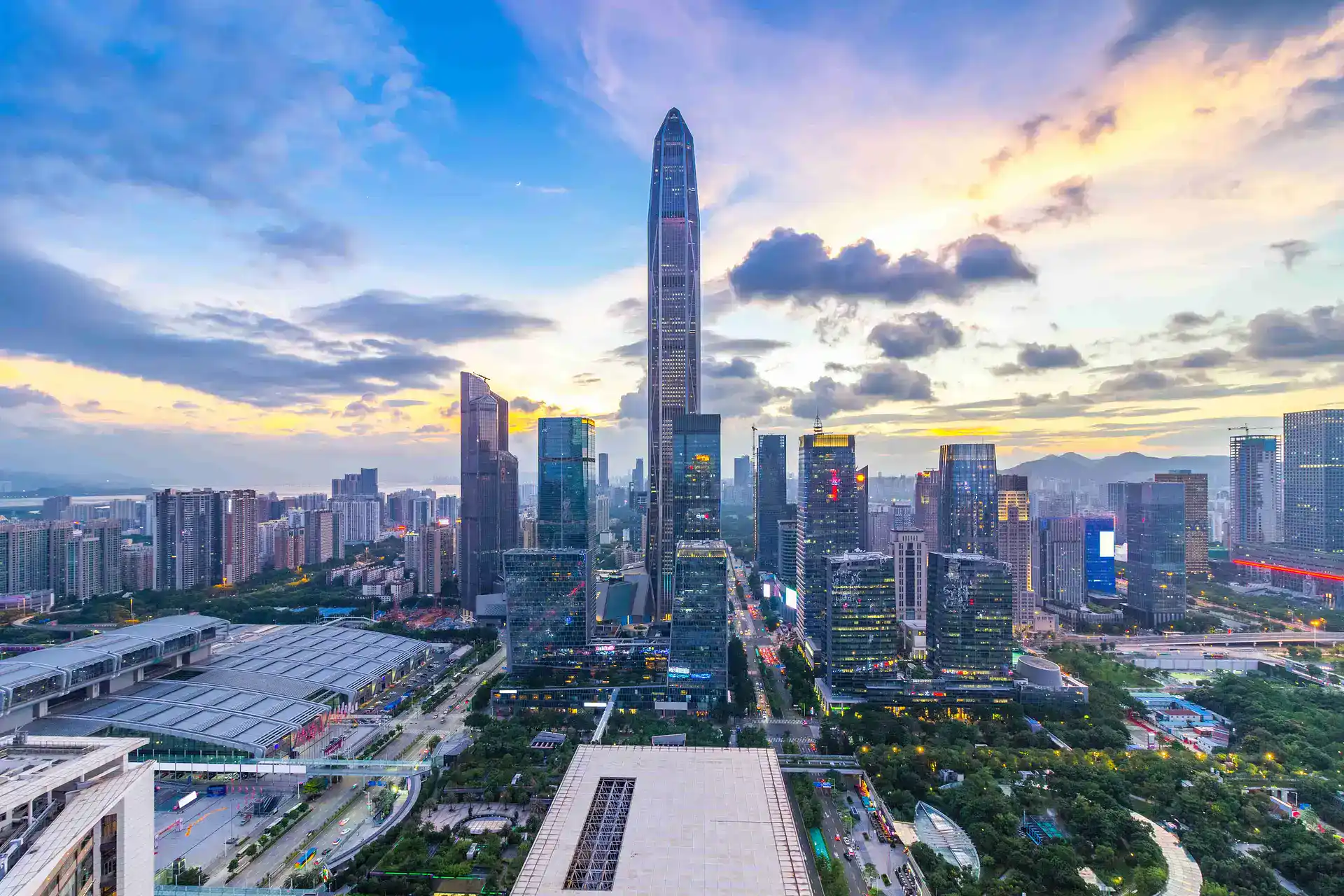
In a conversation with AmCham HK e-Magazine, Professor Lawrence Lau, the former president of The Chinese University of Hong Kong (CUHK), contends that as China confronts slowing growth and persistent structural problems, the GBA could inspire a “second opening” after the original economic reforms of 1978.
When Professor Lawrence Lau talks about the Chinese economy, people listen. The development economist has been watching China’s growth since the 1960s, starting when he was an undergraduate at Stanford University and later, as a professor of economics at Stanford.
In 1979, Lau joined the first delegation of American economists to China. It was led by Lawrence Klein, a 1980 Nobel Laureate in economics. After the visit, the ten members of the delegation made forecasts for China’s future growth rate. Lau’s estimate was the highest, at 8%, but looking back, even he was surprised by China’s average growth rate of 9% over the next 45 years.
China has plenty of upside for growth left, Lau thinks, but it needs a jumpstart. Holding it back are significant problems – structural weakness in aggregate demand and a more subtle factor, low confidence in the future, caused in part by the ongoing property slump. Where could the spark come from? Lau proposes a radical rethinking of the relationship between Hong Kong and its neighbors, Macau and the crescent of nine cities around the Pearl River delta, the ‘Greater Bay Area’ or GBA.
It has become a policy cliché, but the GBA, including Guangdong province as well as the eleven cities central to the GBA, has a population of nearly 90 million and GDP of US$2 trillion. It could provide the model for new institutions that China may ultimately roll out throughout the whole country, although not without creating winners and losers, Lau says.

It could be the testing ground for a “second opening, a second economic reform” for China, Lau said in an interview. He sees the region as a pilot zone for testing the relaxation of capital controls, now an almost unimaginable policy leap, and the free flow of goods and services, people and information.
“It’s a mini version of economic globalization,” he added. “You have places in which resources can move. All of a sudden, they are free to move to their highest, best use. It has to be good for everybody in the area, right? Because the way to think about it is that the 11 cities of the GBA have more choices. They can choose not to do anything, but they cannot be worse off.”
Pearl River Delta integration – a short history
So far, so good. The idea of combining resources across the broad delta of the Pearl River and its tributaries has been around since at least 1998, when Hong Kong’s first chief executive, Tung Chee-hwa sent a study mission to Guangdong, headed by Chang-lin Tien, NEC Distinguished Professor of Engineering at the University of California, Berkeley, as part of a task force on innovation and technology.
At the time, 70,000 factories were engaged in export processing in the delta region, many of them Hong Kong enterprises. Professor Tien recommended leveraging on these resources to strengthen cooperation. As it turned out, export processing became the trigger for explosive growth. After China joined the World Trade Organization (WTO) in 2001, it became the world’s factory, overtaking the United States and European Union to become the world’s leading manufacturer in 2011 and leading exporter in 2013.
The region has not only experienced dramatic social and economic changes but also a changing identity. Academics like Michael Enright began using the phrase “Greater Pearl River Delta” in the early 2000s, encompassing Hong Kong and Macau. That was followed by the “Pan Pearl River Delta” in 2003, and the most recent nomenclature, “Greater Bay Area,” coined in 2015 and formalized as policy in 2017.

The idea of a “Bay Area” was intended to evoke comparisons with New York, San Francisco and Tokyo. As far back as Tien’s 1998 study mission, one of its members, venture capitalist Dr. Ta-lin Hsu, chairman of H&Q, enthused about the prospects of a “Silicon Harbor of the Orient.”
Many mega-projects and decades later, economic integration remains, to a large degree, a fantasy. “The name Greater Bay Area is always a little puzzling,” said Lau. “They always compare it to the San Francisco Bay Area, the New York-New Jersey Bay Area, and the Tokyo Bay Area. But the big difference is that those three bay areas have no boundaries – no boundaries to goods and services, no boundary on labor mobility, no boundary on capital flows, and no boundary on information.”
Turning talk into action
“Here, you have constraints on everything,” Professor Lau continued. “It is not really yet a fully integrated economic unit. Honestly, the GBA is a long-term project and it will take a while for it to really develop to the point that you don’t feel that there is a border.”
Born in 1944 in wartime China while his parents were fleeing the invading Japanese army, Lau grew up in Hong Kong from the age of two. In 1961, he enrolled at Stanford University, did his PhD at the University of California, Berkeley, and remained in the US on the economics faculty of Stanford for 40 years until 2004 when he returned to Hong Kong as president and vice chancellor of CUHK.
His ideas are from sources as varied as his personal history, drawing from his career across Hong Kong, the US and China. Lau’s work on China began when he constructed one of the first econometric models of the country in 1966, as well as becoming a pro bono advisor to senior Chinese economic policy makers. Beginning in the mid-1980s, these included former premier Zhu Rongji, on how to restructure the Chinese economic system, which was then in the throes of reform. He also draws ideas from the US, like the Federal National Mortgage Association and two-tier wage structures used by US airlines in the 1980s as airline deregulation took hold after 1978.
To create a GBA without internal borders would entail structural pain, particularly in Hong Kong, currently with the highest income disparity in the world, according to the World Inequality Lab in Paris. Lau acknowledges that any robust application of the lessons he draws from China and the US would take bold leadership, yet the scale of opportunity is vast enough to chip away at the vested interest structures that stand in the way.
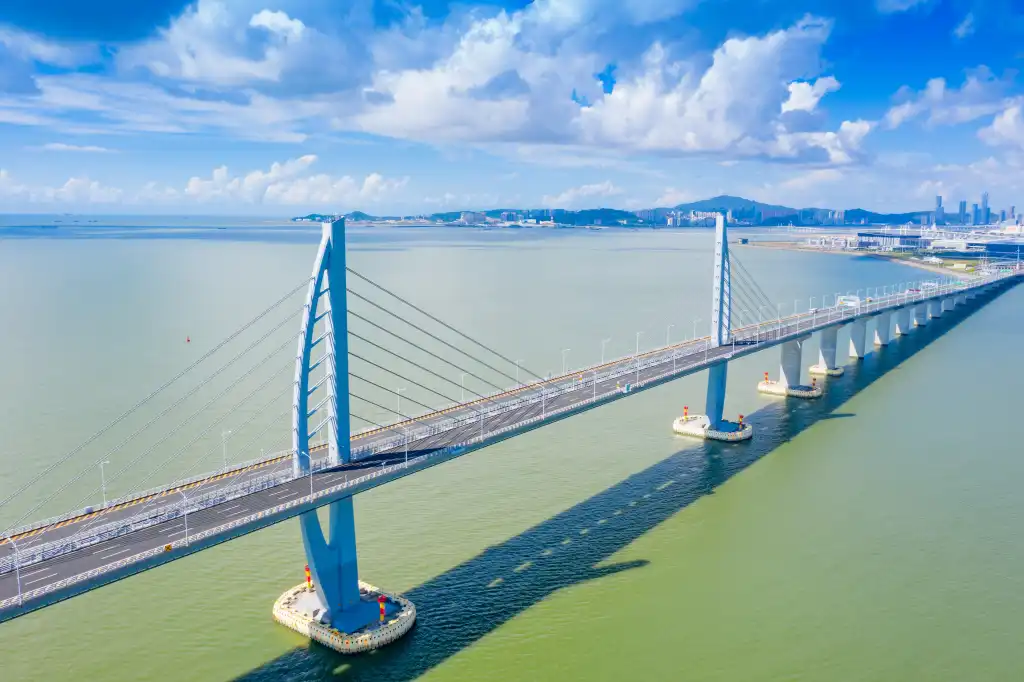
In 2024 US dollars, the US$2 trillion Guangdong-Hong Kong-Macau region would be the second largest after the New York-Newark-Jersey City metropolitan area with a Gross Domestic Product or GDP of US$2.35 trillion, and ahead of Tokyo’s US$1.2 trillion and the US$798 billion San Francisco-Oakland-Berkeley area.
To start with, the GBA needs to have “free circulation of factors, goods and services,” he said. This would have dramatic implications, create winners and losers and serve as a pilot case for the larger economy.
The risks are huge. It might lead to a rush of construction workers into Hong Kong, depressing the wages of existing workers, and continue pressures on small and medium businesses in Hong Kong, with its expensive land prices. Lau thinks the risks could be addressed with policy measures, some reflecting global experience.
But the benefits would also be immeasurable. The Guangdong economy, with its relatively high standard of living, could serve as a test case for using consumer demand to drive the national economy, although increasing household consumption is not on its own enough to stimulate growth. Investment and public goods consumption by the government would remain critical.
However, wage pressure would be positive, as professional and medical services expanded to reflect middle class needs. Technological innovation would benefit, as startups benefitted from the unwinding of border and capital controls between Hong Kong and the human and capital resources of Guangdong. Macau would have opportunities to diversify its economy, which is overly skewed to gaming.
From a Hong Kong perspective, you could still buy cheaper glasses or dental implants in Shenzhen, but policy fixes for property owners could help make small business in Hong Kong more sustainable.
Like Hong Kong, the GBA would become a free port, a huge factor in Hong Kong’s growth even after it outsourced almost all manufacturing to mainland China in the 1980s and 1990s. There would be no need for inspections, permits or tariffs between the GBA and the rest of the world.
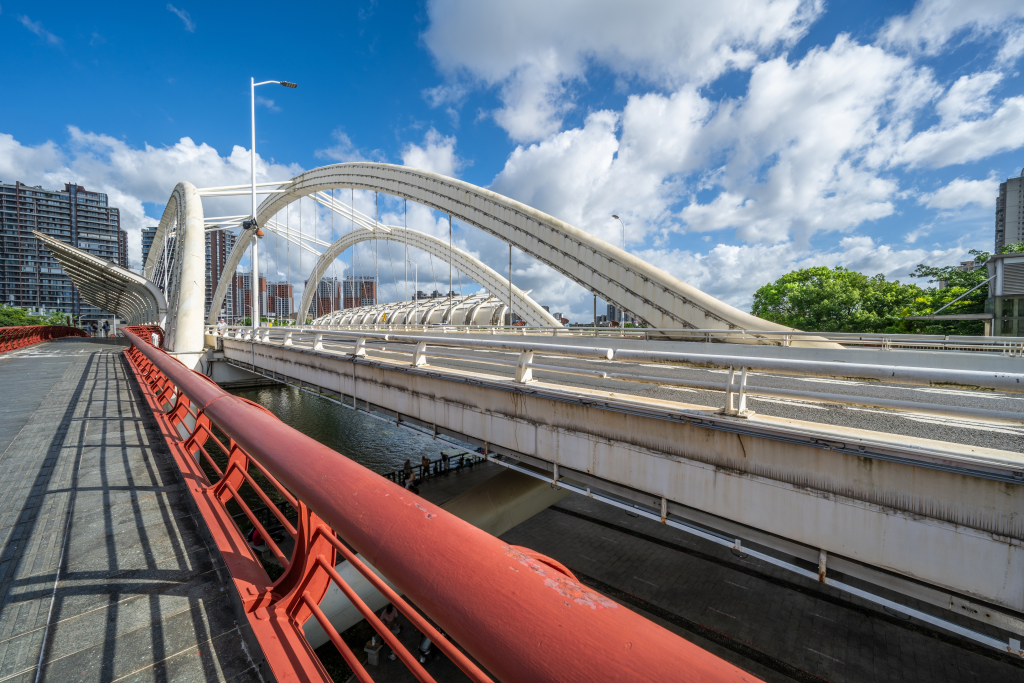
The GBA imports as much as Germany on an annual basis. Eliminating internal barriers would at a minimum make trade more efficient. Wage increases might put a dent in Guangdong’s exports, but it would also make the province a case study in more balanced trade, by reducing external surpluses. Since Hong Kong and Macau are already free ports, free circulation of goods and services within the GBA would mean free circulation to the rest of the world.
For imports, Lau thinks each of the 11 cities within the GBA should accept the lowest pre-existing tariff rate for each commodity and eliminate non-tariff barriers, which means imports from the rest of the world would be free with some exceptions. With the GBA’s average GDP per capita of US$23,310, and uniform prices, in theory demand would surge.
People and businesses should be able to move freely to live, work and study within the GBA, Lau says, with a border tax arrangement modeled on the European Union. Tax and social insurance would be based on the place of permanent residence rather than the place of employment. Safety regulations on goods and services would be harmonized to the level of the most stringent regulations among the jurisdictions, with professional standards following the same principle.
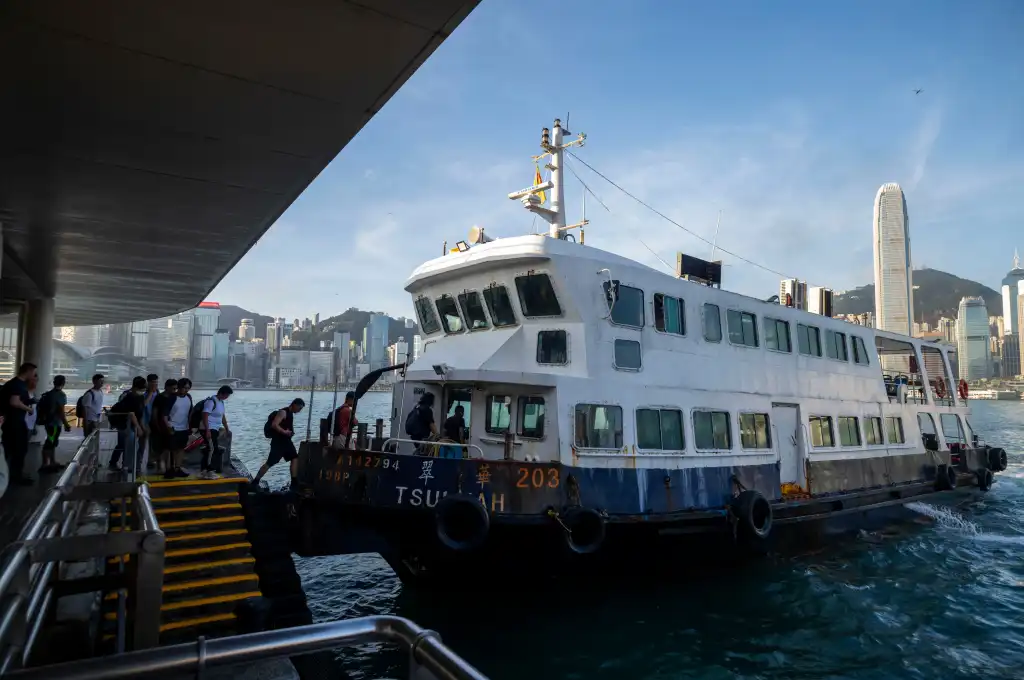
At the macro-economic level, Hong Kong is already the world leader in offshore Renminbi holdings and allows trading in Renminbi through dual counters in equities, Chinese government bond futures and Stock Connect. Lau thinks Hong Kong Exchanges and Clearing (HKEX) should promote the direct use of Renminbi in trade settlement, and that the Shenzhen Stock Exchange should offer Hong Kong dollar settlement.
Finally, Lau argues that money should be able to flow freely within the GBA, preferably based on digital central bank currencies. Since May 2024, Hong Kong has been experimenting with e-CNY, or digital central bank tokens that can be used for retail but not yet for person-to-person transactions.
Winners and losers
Unquestionably, without strong support from Beijing, none of this would work. To make his ideas practical, Lau recommends ringfencing both trade and capital flows between the GBA and the rest of mainland China.
Tariffs would remain between the rest of the mainland and the GBA, with exports to the mainland pre-assessed and inspected before transport using radio frequency identification (RFID) technology and bonded transport from GBA ports. Customs and checkpoints would still be needed for imports from the mainland.
Similarly, China would ringfence the GBA in terms of capital controls. Lau suggests using the model of Latin American countries that historically have imposed waiting periods for payments and repatriation of funds.
The use of blockchain, Lau says, makes it easier to track cross-border payments. He suggests imposing a limit of one year for both inbound and outbound transfers of capital between the rest of the mainland and the GBA. “The idea is that you have reasonably patient money, and that they would be willing to wait one year. If you have people who would transfer 200 billion yuan to Shenzhen with the intention of moving everything out the next year, I guarantee they will stop the program. The question is, you want to allow free flow of capital for legitimate purposes, so basically the problem is that people might abuse it.”
The free flow of goods, manpower, financial capital and information that Lau calls for would potentially lead to “factor price equalization,” according to textbook economics. Hong Kong residents are already spending weekends in Shenzhen for its cheaper food and services, and some are already opting to live in Shenzhen or other cities of the delta and work in Hong Kong.

“Many of the drivers of cars with dual license plates for Hong Kong and Guangdong already live on the mainland side of the GBA,” Lau says. “For the same rent, they have two or three times the space. So, since they are working on both sides of the border, why don’t they stay in the cheaper place?”
But what about the losers – the small businesses like restaurants, optometrists and dentists, or the Hong Kong construction workers who would suddenly face cheaper competition from Guangdong? “There will always be winners and losers, but the question is how we take care of the losers.”
Lau uses an example from the US to address the plight of construction workers. In the 1980s, after airline deregulation, US airlines created a two-tier wage structure in which existing flight crew kept their union-negotiated wages, but newcomers were hired at lower salaries, and nobody was allowed to join at the same pay grade as the older workers.
“It may not be fair, but everybody was better off,” he says. “The important thing is that everyone was reasonably happy.” He adds that the two-tier structure would need to be applied to everyone, even new workers from Hong Kong.
For Hong Kong, the most intractable problem is land. High land values are built into the government budget through the land auction process, in what Lau calls a residue of the British view that Hong Kong should pay for itself and not drain the colonial purse. Hong Kong needs to make more land available, but any change in land policy would be “revolutionary,” Lau admits.
Mortgage policy might be tweaked through Hong Kong’s mortgage-backed securities market. Professor Lau thinks one model might be the government-sponsored Federal National Mortgage Association, known as Fannie Mae, that was founded during the Great Depression in the US to provide affordable long-term housing credit at fixed interest rates.
But even generous lending terms might have little impact on the structural causes of Hong Kong’s property prices, the highest in the world. “I think it would take a huge change in the Hong Kong government to launch something that would lower land prices and allow small and medium enterprises to buy their own premises,” Lau says.
Meanwhile, people on both sides of the border between Hong Kong and Guangdong are voting with their feet. The cross-border flow reached a record high of 273 million in 2025, up 14% from 2024, with an average of 750,000 movements daily, one of the busiest border crossings in the world, with its seven checkpoints. With or without institutional change, the sheer volume of traffic tells us that we need to think more deeply about its implications.

Professor Lawrence J. Lau is the Ralph and Claire Landau Professor of Economics, The Chinese University of Hong Kong (CUHK), and the Kwoh-Ting Li Professor in Economic Development, Emeritus, Stanford University. From 2004 to 2010, he was president and vice-chancellor of CUHK. He received his Bachelor of Science degree in physics from Stanford in 1964 and his MA and PhD from the University of California, Berkeley, in 1966 and 1969. He was on the faculty of Stanford from 1966 until his retirement in 2006. His most recent book, Is the Chinese Economy a Miracle or a Bubble, a collection of essays, was published by The Chinese University of Hong Kong Press in 2024.