
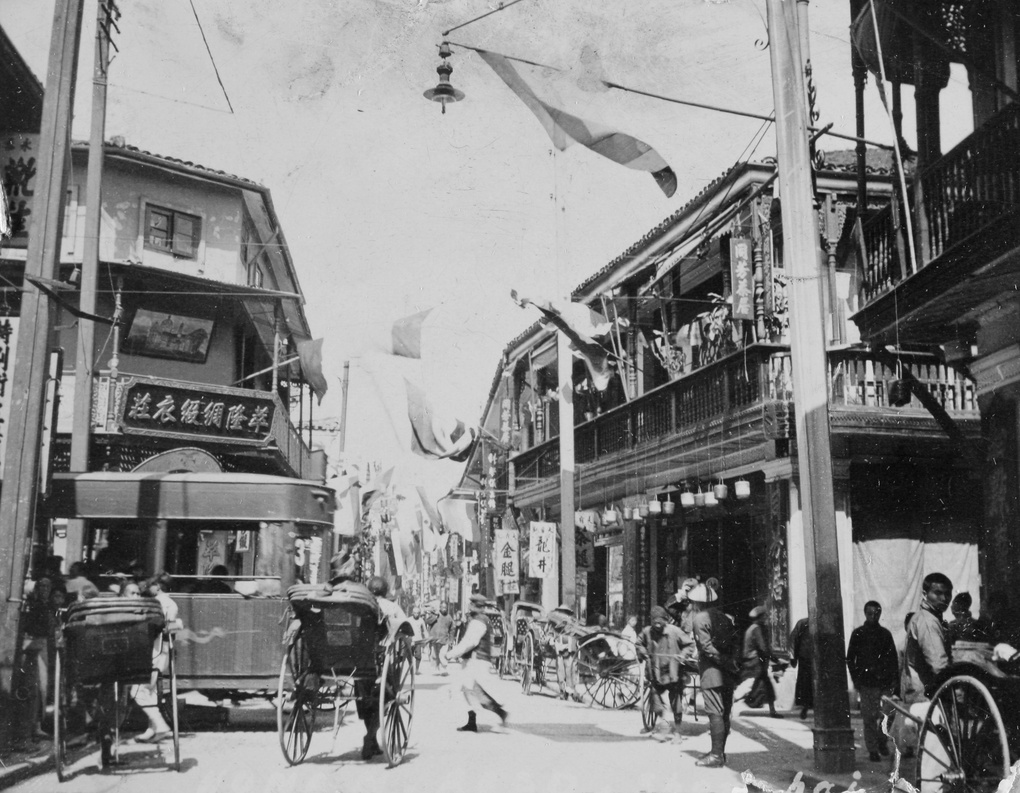
Photos: University of Bristol – Historical Photographs of China
American women have been coming to the China coast since Harriet Low, among the first, wrote in her diaries what it was like to live in Macau in the 1830s. Unlike their husbands, fathers, sons and brothers, expatriate women found constricted lives in the outposts of empire in the foreign concessions and Portuguese and British colonies. Not so Wallis Simpson, the later Duchess of Windsor, who immersed herself in Chinese style in the glamorous entrepôt of Shanghai in her Lotus Year, the subject of bestselling writer and historian Paul French’s latest work. Her first stop in Asia, however, was Hong Kong, and here French tells what it was like for the resilient and resourceful Simpson on her way to making history.
“Mrs E Winfield Spencer has arrived in Hong Kong, China, where her husband, Commander Winfield Spencer, is stationed.”
Society column announcement in the Washington, DC Evening Star, September 6, 1924
A century ago, on September 5, 1924, the grand ocean liner Empress of Canada sailed into Victoria Harbour. As usual the harbor was teeming with sampans, barges, tugs, and ferries. The floating confusion forced big ships, like the Empress of Canada, to blow their foghorns persistently to alert the small craft who risked being sunk in their wake. As the Empress moored, her passengers lined the decks waiting for lighters to take them and their luggage ashore. It was a luxurious ship boasting walnut-lined staterooms, vast dining rooms, a bar, library, and dancefloor.
One of the women aboard, gazing out at Victoria City (what we now know as Central), the majestic Peak, and the swarming harbor, had sailed for six weeks from her hometown of Baltimore via the Panama Canal, Hawaii, across the Pacific to the Philippines, and finally to Hong Kong. Unfortunately for her she had spent only three days on the Empress, sailing from Manila. Most of her voyage had been aboard the distinctly less salubrious USS Chaumont, a crowded and very basic United States Navy transport ship that moved officers and crew, their wives and families, around America’s various naval stations – from Honolulu to Saipan, to Guam to Manila, Weihai to Shanghai, and to Hong Kong.
On the way to China – first stop, Hong Kong
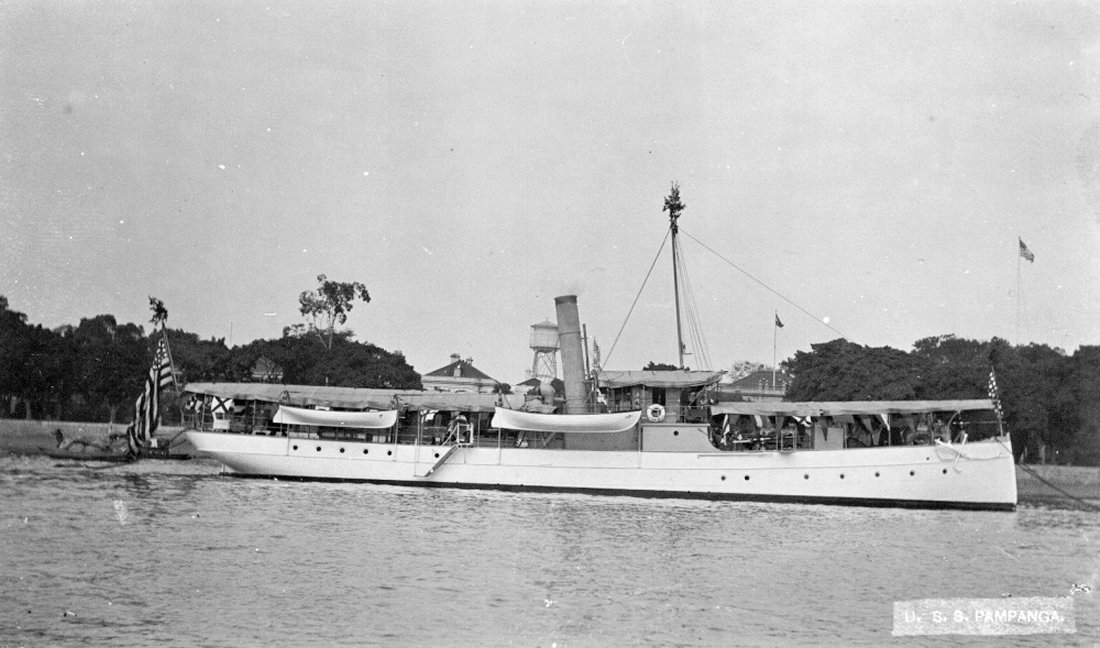
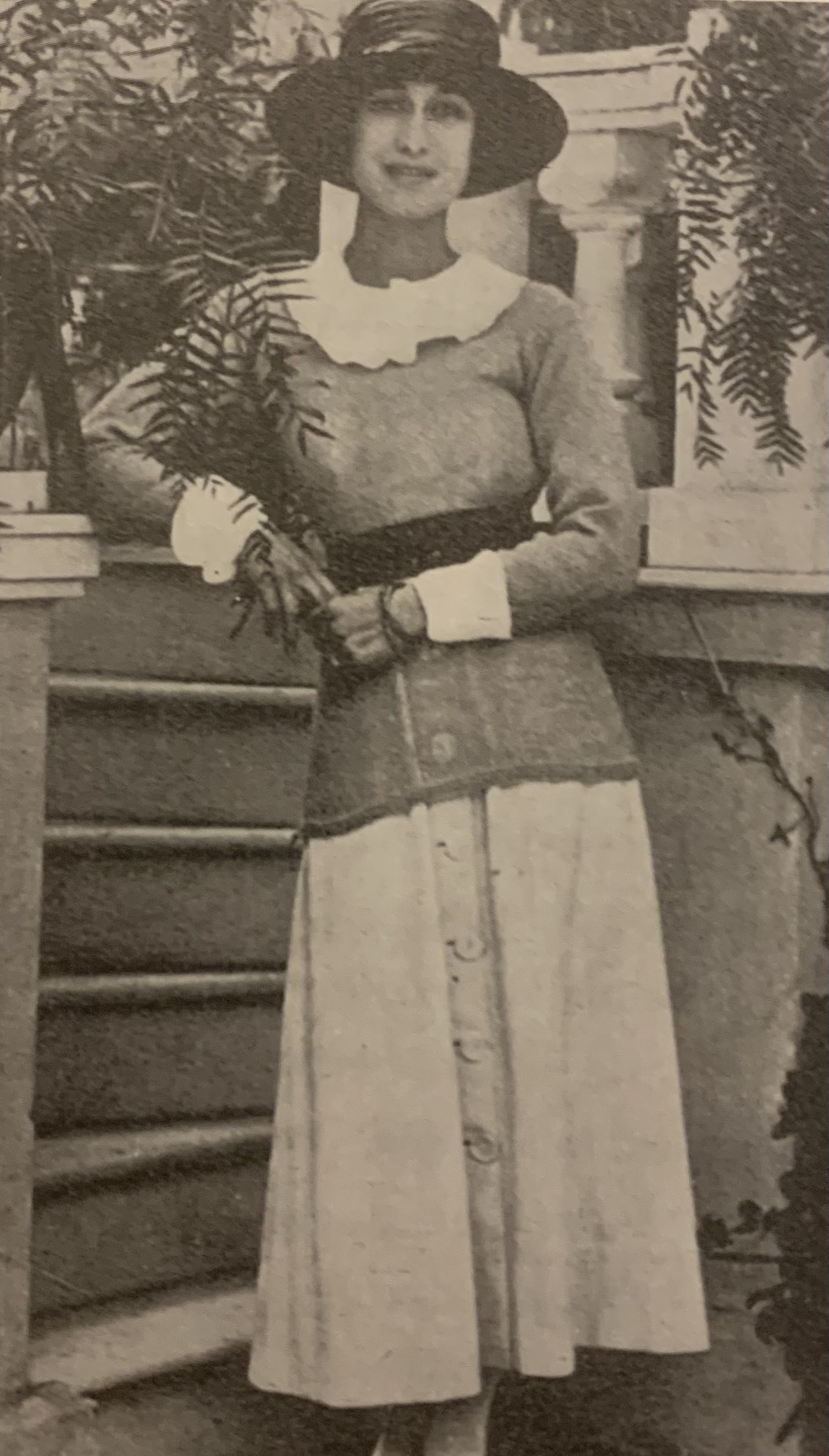
That passenger was Bessie Wallis Warfield (she dropped the Bessie quickly – “sounded like a cow’s name” she later said). She was travelling as Mrs Wallis Spencer, wife of Lieutenant Earl Winfield “Win” Spencer, Commander of the USS Pampanga, one of two rather dated vessels, both seized in the Spanish-American War, that composed the US Navy’s South China Patrol. Win sailed the waters between Hong Kong and Guangzhou protecting American lives and business concerns. Later, after a year spent in China, a return to the States, a second marriage and divorce, she would become Wallis Simpson, and then eventually of course, Wallis, the Duchess of Windsor after she began an affair with the Prince of Wales, later King Edward VIII of the United Kingdom, the Dominions and Emperor of India. Edward famously gave it all up, abdicating the throne, for Wallis. But that was all a tumultuous and scandalous dozen years in the future. In November 1924 Wallis Spencer, US Navy Wife, had arrived in Hong Kong on a mission to try and rescue her troubled marriage.
Later, Wallis was to move on from Hong Kong to spend time in Guangzhou, Shanghai and Beijing. It was a year-long sojourn she reflected on as her “Lotus Year” referring to Homer’s Lotus Eaters, who lived in a state of dreamy forgetfulness, never to return home. More than a decade later her “past” as a single woman in China would become mired in scandalous gossip, salacious rumours, and untruths intended to sully her reputation in the eyes of the British royal family and the upper classes. But for now, Wallis was rather unhappily married, living in Hong Kong and trying to repair the tempestuous and combustible relationship she had with her husband.
Win was handsome, dashing, looked great in uniform. He was one of the US Navy’s first ever “Top Guns”. But he was a drinker, and when he drank became morose, insulting, and physically abusive. Wallis had thought to leave him before, in America, but her family told her good Baltimore girls didn’t divorce. Win was posted to Hong Kong while she remained in a small apartment in Washington DC. He wrote promising her he was off the booze and lonely without her. She decided to try again.
Second honeymoon at Repulse Bay
And, at first, Hong Kong looked like just the tonic Win needed. He met her dockside, looking tanned, smiling and most importantly, sober. He whisked her off for a romantic second honeymoon at the beautiful Repulse Bay Hotel. Right on the beach and one of the most luxurious and romantic hotels in the Far East. The rooms surrounded by beds of fragrant flowers lining the twisting footpaths throughout the hotel’s secluded grounds. There was nothing to disturb the peace at night but a few fisherman’s lanterns out at sea and the sweep of the occasional car headlights on the road above. Maybe everything was coming right at last? They breakfasted on the beach in private cabanas and feasted at night on the hotel’s famous curries.
But the idyll was short lived. Win had to put to sea again and Wallis had to cope with life ashore and alone. US Navy digs in Tsim Sha Tsui were a wake-up call after Repulse Bay. The couple were assigned rooms in the Kowloon Hotel on Hankow Road, a dingy establishment run by a fierce Scottish landlady. Wallis tried to make the most of it.
Cramped, utilitarian, dank and dismal, their rooms faced the alleyways at the rear of the building. Wallis had to keep the windows closed to prevent malodourous smells wafting in – residents in-the-know kept camphor-scented handkerchiefs at the ready. Human waste was left out in buckets for the night soil collectors. It would be over the border and fertilizing the fields of Guangdong by dawn. Wallis later admitted that the smells weren’t all bad. There were the more enticing aromas of coriander, anise, soy sauce and BBQ-ed pork – all new culinary delights to her.
Wallis sought out local produce in the markets she could cook on hot plates to avoid her landlady’s stodgy Scottish fare. When Win was in port the couple sometimes went out for dinner, but the British-heavy Western cuisine (everything boiled to within an inch of disintegrating) served in gloomy dark-wood-lined hotel dining rooms became tedious.
“A special experience”
Aesthetically, Wallis reacted strongly to Hong Kong, her first taste of China. She recalled in her memoirs her first glimpses of Victoria Harbour and the Peak rising up behind as a ‘beautiful vision.’ She also wrote that ‘life in China in the mid-1920s, before China became a modern nation, was for foreigners like me a special experience.’
Wallis wrote that ‘in later years I was to reflect on how I missed China.’ But Hong Kong was a tough start to her China year. As an American Wallis found the rigidities of the British class system that epitomised the colony stifling and impenetrable. 1924 was a turbulent time. Labor strikes in Hong Kong, political faction fighting and rampant warlordism in southern China all kept Win and US Naval Intelligence busy leaving Wallis to fend for herself. She admitted she was lonely and felt isolated in Kowloon. The American community was small; there were only one or two other Navy officer wives for company and the occasional Bridge game.
Still, perhaps Wallis could have brightened the place up, toughed it out, been a good service bride, a dutiful Navy wife? But Win began drinking again. He started staying out at night, being brought home unconscious from dive-bars and bordellos. The abuse started again too – first verbal, then locking Wallis in the bathroom overnight when he went out. When she pleaded with him to stay home and stay off the bottle, he got physical – Wallis realised she needed to extricate herself from the intolerable situation.
And so she made a momentous decision. She would leave Win, take a coastal steamer north, and try to get a divorce in the International Settlement of Shanghai. It was a courageous thing for a woman to do in 1924 – abandon her marriage and flee into a China wracked with bandits, typhoid epidemics and warlord skirmishing. But she plucked up the courage and dived headlong into a new life.
The plot against the future Duchess
And then in 1936, a dozen years after Wallis’s Lotus Year, as the British monarchy went into the biggest crisis it has ever faced, a plan was devised by the Establishment to blacken the character of the woman whom the Prince of Wales had determined to marry. The so-called “China Dossier” was said to contain evidence of Wallis’s amorous and immoral activities in Asia, exposing her as sordid, debauched, influenced by foreign agents, and wholly unfit to marry a king.
To me, as an historian of China and a long-time resident of Shanghai, none of the gossip in the China Dossier (of which no copy has ever surfaced) stacked up. No matter how many times the rumours regarding Wallis’s time in China have been repeated in biographies and trotted out ad infinitum by Fleet Street’s notoriously salacious tabloids, right up to this day, they never rung true.
So I decided to retrace her steps, from that day in November 1924 when she stepped ashore in Hong Kong, through a strike-ridden and violent Guangzhou, and trapped in the tiny foreign quarter of Shamian Island. Then her time in cosmopolitan Shanghai where, for all the nightclubs and horseracing, she couldn’t ignore the trainloads of dead and wounded warlord troops as battles were fought just outside the International Settlement. From there to Tianjin where typhoid was raging out of control, and finally to warlord-besieged Beijing.

Photos: Authors Collection
Her Lotus Year reveals a completely different picture of Wallis than the one we usually see. It portrays a younger woman of some courage who may have acted as a courier for the US government, undertaking dangerous undecarcover diplomatic missions for US Naval Intelligence and the State Department in a China torn by virtual civil war.
Despite the many challenges she faced, from the breakdown of her brutal first marriage to epidemics, bandit skirmishes, and anti-foreign riots, it was in Hong Kong and China that Wallis established her confidence and independence, developed her unique lifelong fashion sense that was always inspired by China (her form-hugging dresses evocative of qipao or cheongsam, chignon hairstyle, and love of jade jewellery), and forged friendships that would last a lifetime. She emerged from her Lotus Year as the elegant, stylish, cosmopolitan, and worldly American woman for whom a King-Emperor gave up a throne.
Wallis’s post-China transformation into the Duchess of Windsor was to make her one of the most glamorous women in the world for the next 50 years. Her classic style was always grounded in Chinese style. Philadelphia artist Man Ray photographed her next to a Chinese God of War in Paris; the New York couturier Mainbocher designed cheongsam-inspired dresses for her in her own signature colour, “Wallis Blue”. Society photographer Cecil Beaton described her chignon hairstyle as “…brushed so that a fly would slip off it” while her hairdresser of 30 years Alexandre de Paris said “she learned about her hair from her days in China.” She doused herself in the Asian inspired scents of Jean Patou, while her homes were filled with Chinese silk screens, lacquerware boxes, jade and ivory tchotchkes. And of course, the Duchess always had that most Chinese of dog breeds, the pug.
And that transition from timid and put-upon Baltimore Navy wife to Duchess and celebrity sensation, began in 1924, in Hong Kong.

British author Paul French has lived in Shanghai since the mid-1990s, where he established the independent research firm Access Asia in 1997. After selling Access Asia to the London-based market research firm Mintel in 2011, he became a full-time writer. His book, Midnight in Peking, about a murder mystery set in 1930s Beijing, was a New York Times bestseller and sold 600,000 copies. He has also written about the pre-World War II underworld in Beijing and Shanghai and features regularly as a speaker at Hong Kong’s International Literary Festival. His latest book, Her Lotus Year: China, the Roaring Twenties and the Making of Wallis Simpson is published by St Martin’s Press and is available at all good bookshops in Hong Kong and online.