
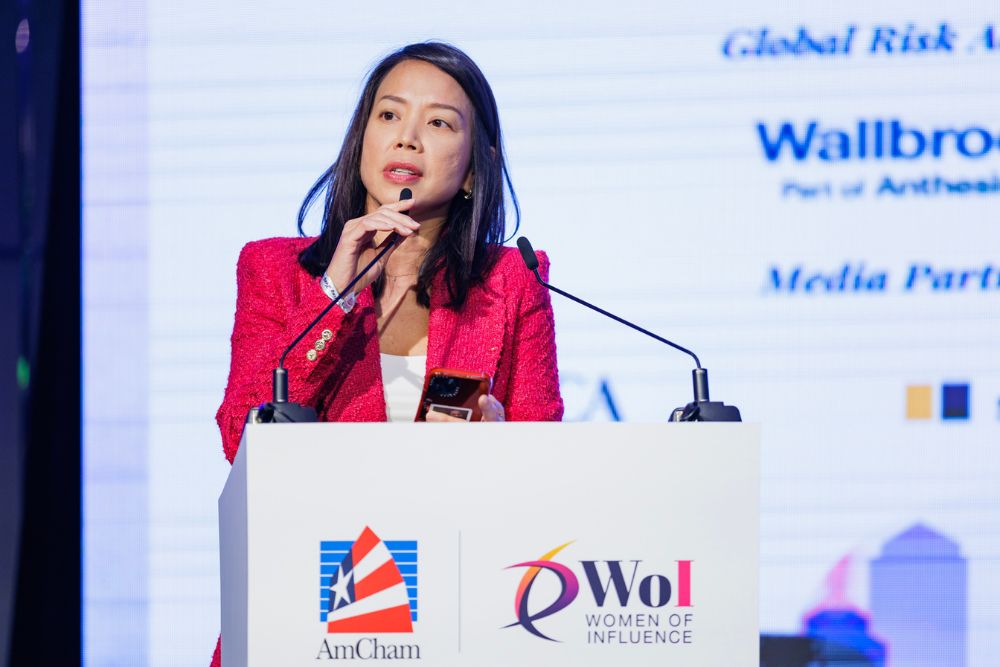
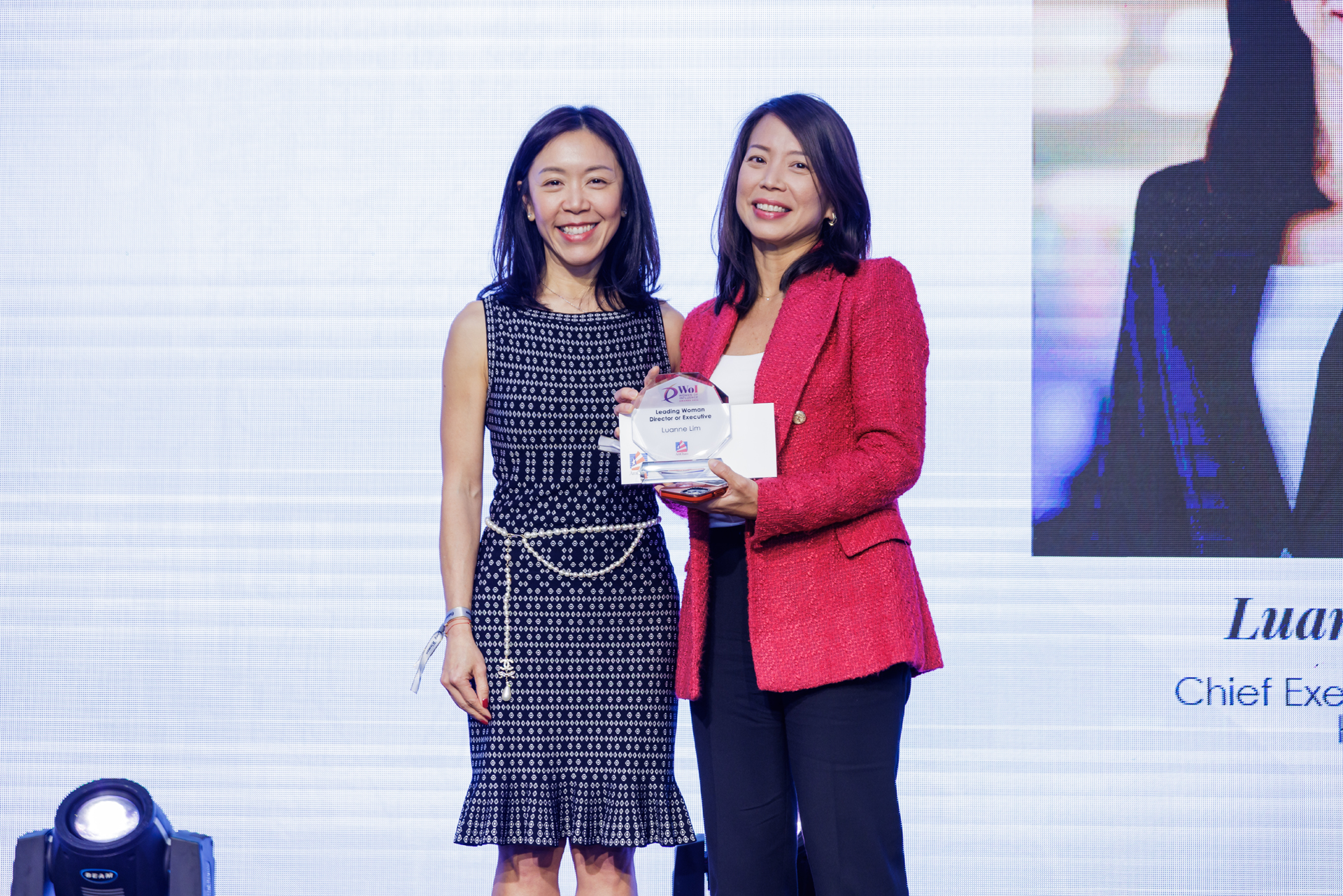
The CEO of HSBC Hong Kong, Luanne Lim leads a team of 20,000 employees and oversees HSBC’s wide range of financial services. She has championed gender diversity within HSBC, through female talent development initiatives and employee-led advocacy groups actively supporting a gender-balanced and diverse workforce. She has also been vocal about Hong Kong’s strengths as a financial centre. Luanne is a member of the Board of Directors of the Hong Kong Government’s Financial Services Development Council and the chairperson of the Hong Kong Association of Banks. On International Women’s Day, March 8, she was named “Leading Woman Executive” by AmChamHK’s annual Women of Influence Awards. Here she shares with AmChamHK e-Magazine some of her life experience as a 25-year veteran of the 159-year-old The Hong Kong and Shanghai Banking Corporation Limited, and a member of the American Chamber of Commerce in Hong Kong.
Q. Can you talk about the role your grandmother played in your life?
A. As a second-generation Singaporean, I grew up in Singapore and was raised mainly by my grandmother, who was born in Xiamen, in Fuzhou province, China. It was in the 1930s when she and my grandfather left for Singapore to have a better life there. My grandmother used to watch over me and my cousins after school. And there was never a time where she ever alluded to the fact that there was anything that I should not or couldn’t do, because I was a girl, and they were boys.
My grandmother did not have the opportunity to go to school but was very progressive for her time. She was not your typical overprotective parent, and she gave me a lot of freedom growing up. But the one thing she always insisted on was an education. She said, what you do with your education is up to you but get one. She instilled in me a strong sense of independence and encouraged me to make decisions for myself and understand the consequences of those decisions at a young age. I learned very early on that independence came with huge responsibilities.
To give her credit she was one of the biggest influences in my life.
I graduated in economics from the National University of Singapore in the 1990s. I thoroughly enjoyed my time in college and university and have very fond (and fun) memories.
I didn’t plan on being a banker, but I graduated just as the Asian Financial Crisis hit so after countless job applications, when I was offered a role as a management trainee in a local bank, I took it.
Q. Can you tell us about your 25-year career at HSBC?
A. HSBC was my second employer. I joined as a relationship manager in 1999 and ran a premier wealth center shortly after. I have also worked in Shanghai, Vietnam, Indonesia, and Malaysia, and landed here in Hong Kong as HSBC’s Chief Operating Officer in 2017. Doing the math, I now have worked and lived in Hong Kong longer than anywhere else since graduation.

I loved the variety of roles I’ve taken up in different markets, in terms of business model, client base, levels of development, and culture. I think if I were to summarize my time in HSBC, it is just the depth and breadth of opportunities that I’ve been given across geographies, across domains and across different types of projects. Every role has been so unique, and a lot of times, an adventure. The exposure, the experiences, and the friends I’ve made along the way have been invaluable.
I left Singapore 20 years ago for Shanghai, where I had never been, and lived there for four years. In Shanghai, we were setting up a joint venture with a local bank. We were a startup of eight people sitting in a rented room. You had to think about things like where to build a new office, how to convince 1,000 people to join a brand-new startup and how to roll out a new system in multiple cities. When you work at large organizations, you turn up and it all works, and you just worry about doing your job. But the Shanghai experience was about trying something very different. It tested me in different ways.
In 2008, I moved to Vietnam, where again I had not been before. HSBC Vietnam was going through an exciting transition at that time as we were working on our local incorporation and I’m very pleased to have been part of that. Today I sit on the board of HSBC in Vietnam and still visit regularly.

My time in Jakarta was also very memorable. I was running a project to integrate HSBC Indonesia and a local bank that we had purchased some years back. You learn with these transformations that beyond great project management and technical skills, it’s also about the hearts and minds of people that are key to successful outcomes.
There are so many more stories and lessons learnt as I grew with HSBC over the last two and a half decades, more recently from leading the largest bank in Hong Kong through the period of social unrest and then Covid. I’m ever so grateful for the incredible journey.
Q. What is HSBC like for women at the bank?
A. HSBC has a long history. We’re very proud of being a bank supporting customers, being there for the community that we operate in, being a bank that people can always trust. I have mentors, both male and female. As females in our pursuit of gender balance, it’s important that we take our male colleagues along the journey with us. I couldn’t be where I’m today without male allies and male mentors, as well as females.
Let’s talk about a few things. First of all, at HSBC, we set a goal of senior leadership roles held by women at 35% by end of 2025, and we are currently at 34.1%. But in Hong Kong, that progress is a bit faster, where we have 38.7% female representation in senior roles.
And there are a couple of things that we do that contribute to that favorable statistic. First, education and awareness. Gender is one of the many diversity strands that we care about at HSBC. We have training programs and awareness campaigns. One of the most successful things we have in this regard is the Employee Resource Groups. We call them ERGs. These are totally employee driven. Employees form a committee, they recruit colleagues to join, and then they organize campaigns and programs around a cause, such as gender diversity, pride, cultural inclusion, divergent abilities. I always give our ERGs so much credit because they are all volunteers who are so passionate about the causes they champion.
Our second pillar is making sure we get the right recruitment and hiring practices. Hiring managers need to go through training to make sure that they understand unconscious bias.
The third pillar is governance and feedback. We have group-wide goals, which we made public and said, “This is what we want to get to.” And those goals get translated into objectives for the leadership. My boss has a target. I have a target, and my management team has a target. Everybody is working towards a goal. And that’s quite important. And we take feedback. Every year, we do an employee survey, and we take feedback on how our employees feel.
The last one would be in terms of policies, such as flexible working and support to employees. In January, we introduced 20 weeks of paid maternity leave, up from 16 weeks. We introduced 40 days of what used to be called paternity leave, but now we call gender-neutral parental leave, up from 10 days previously. We allow colleagues to take time off every month for personal time. It used to be two hours, now it’s four hours, because we recognize some people need time for caregiving.
Are we where we want to be? There are things that we could do to improve always. And we’re constantly looking for them. Achieving gender balance is a journey. First you may look at senior representation, then we look at the layer below. And then you think, we haven’t developed them enough yet, or done enough at recruitment stage. At some point, you might even have to think about the pipeline at universities and encourage people to take on a certain curriculum, so that they can fit into the pipeline where we need more female representation. What can come across as a piece of statistic at a certain point of this journey might need to be solved many steps before that.
Q. How does corporate Hong Kong stack up in terms of gender balance?
A. In the banking and finance industry, we are doing better in terms of female leadership than many other places. We have a Women’s Chief Executive Group (WCE) which now has more than 50 members. It is an informal group, starting with a few people several years ago. I’m proud to be part of a cohort of amazing women.
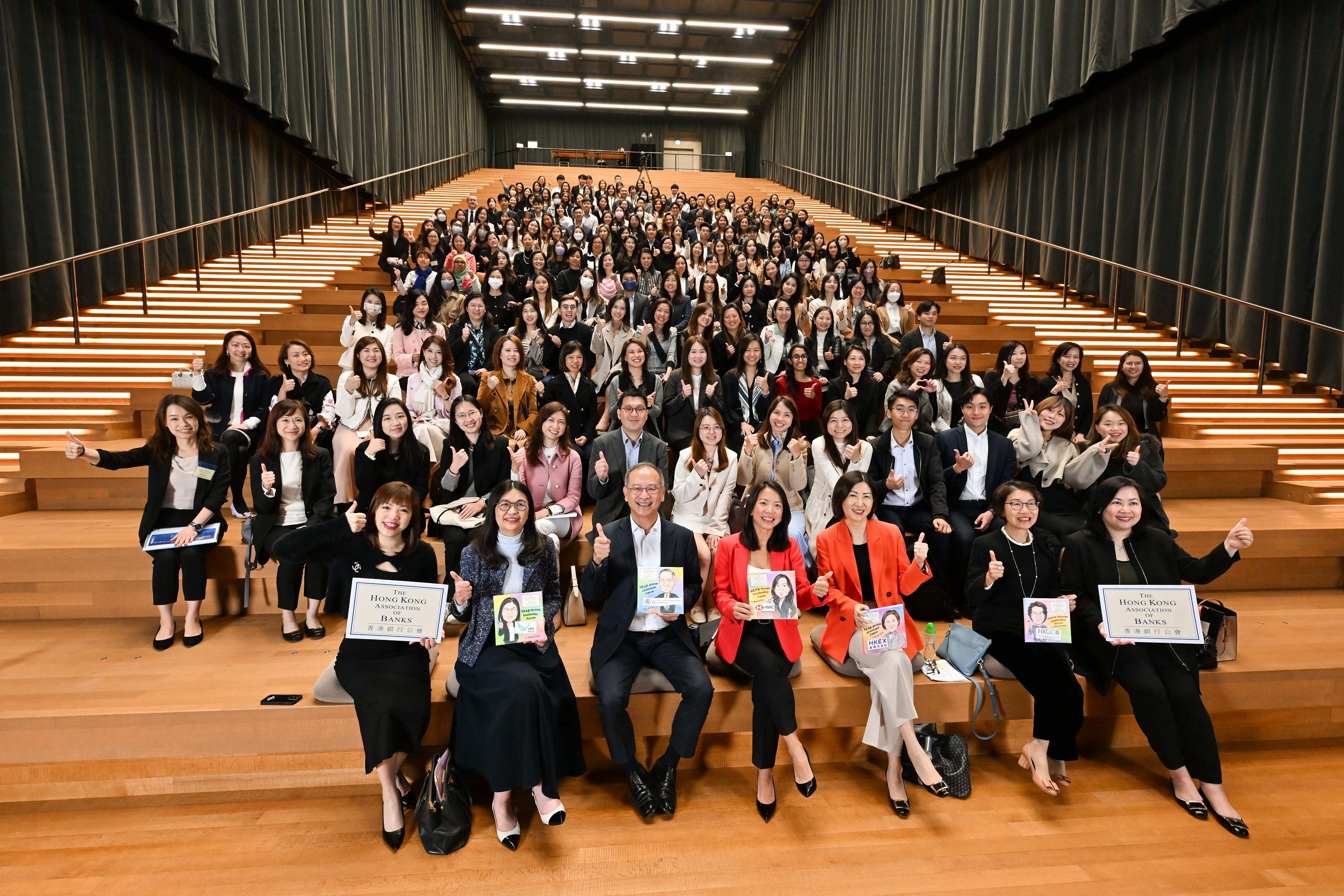
I’m also the chair of the Hong Kong Association of Banks. Ahead of this year’s International Women’s Day, on March 7, I invited Julia Leung, CEO of the Securities and Futures Commission, Bonnie Chan, CEO of Hong Kong Exchanges and Clearing, and Betty Yuen, Chairman of CLP Power Hong Kong Limited (at the time she was chair of the Hong Kong General Chamber of Commerce) to join me for a leadership panel for the first time. It was moderated by Eddie Yue, CEO of the Hong Kong Monetary Authority, who was the only man on stage, because we wanted some diversity. The audience was university students and young bankers – because, as I mentioned, we need to intervene at various stages of people’s career. It was very well received.
The Hong Kong Exchanges and Clearing is looking at having no single gender boards. In 2021, when the consultation on board diversity was underway as part of a policy on environment, social and governance (ESG) standards, 850 out of 2,550 companies, over 30% lacked women on their boards. Today the number is closer to 400, but there is still a long way to go. But it was a big step, right? I think we are doing quite a bit in that space. And you, know, companies need to drive this from the tone at the top.
Q. Would you say that diversity helps the bottom line?
A. There are many, many studies that have already proven the commercial value of diversity and inclusion at the decision-making level. It’s not a nice-to-have, it’s a must have. Otherwise, it’s really herd mentality. Having diversity of opinions, diversity of backgrounds really helps broaden discussions – not just gender but overall diversity, bringing in different views and different areas of expertise. Leaders also need to be comfortable hiring people that are different from themselves and from the rest of their team. We should reflect the communities we serve.
Q. How do you see Hong Kong’s role as a financial hub?
A. First, if I look at global growth, the engine is Asia. Within Asia, there needs to be a clearinghouse of financial services. And to me, nowhere else besides Hong Kong offers the kind of connectivity and openness, the entrepreneurial spirit, and the position to be the heart of what I would call the most dynamic region of the global economy now, and that is Asia. You can’t box it in. We recently hosted the inaugural HSBC Global Investment Summit in April, right after the rugby Sevens. It was hugely successful. We had more than 3,000 delegates, with more than 5,000 meetings between companies and institutional investors arranged during the three-day event. There is significant interest in continued investment into Hong Kong and Mainland China.

And, you know, Hong Kong is the connector. It’s where the world comes to do business. If I look at trade, despite the trans-Pacific tensions, China is the third largest trading partner of the US. And China is now ASEAN’s largest export region. Where Hong Kong is in relation to global trade is a perfect location.
With Asia as the engine of growth, Asia wealth is also growing. HSBC Global Research estimates that by 2025, wealth in Asia ex Japan could surpass the US, while China’s share in the region has climbed to nearly 46%. Another statistic suggests that 500 million people are defined as part of China’s middle class. A study by Boston Consulting Group says that Hong Kong will be the biggest booking center in the world, with Assets Under Management of more than $3 trillion. And just for context, we are currently number two, behind Switzerland. A recent report using the International Monetary Fund forecasts suggests that China will contribute 20% of global growth in the next five years and will be the largest contributor. These are all data driven studies.
And in Asia, Hong Kong is where you get deep capital markets, access to a wide range of wealth products, talent, and access to the second largest economy in the world – China. And in terms of progress, Hong Kong has a forward-looking agenda in digital currency and in green and sustainable finance. Hong Kong is the top issuer of green bonds in Asia; more than one-third of Asia’s green and sustainable bond issues were arranged in Hong Kong. We have more than 200 ESG funds with $159 billion in Assets Under Management were authorized by the Securities and Futures Commission as of September 30. The Hong Kong Government has pioneered the sale of green financial instruments to prime the market, including tokenized green bonds issued in 2023 and 2024. It’s also the first Asian jurisdiction mandating climate related disclosures by 2025, as well as the first market working to operationalize the Common Ground Taxonomy on ESG developed by China and the European Union. We have many traditional strengths, but also have clear ambitions for emerging trends.
Q. Finally, how do you spend your free time?
A. I try to practice yoga twice a week. I like the outdoors, like going for walks or hiking. There’s nowhere like Hong Kong – 15 minutes away from the city and you’re in a landscape that’s not urban. The easy access to nature is brilliant.
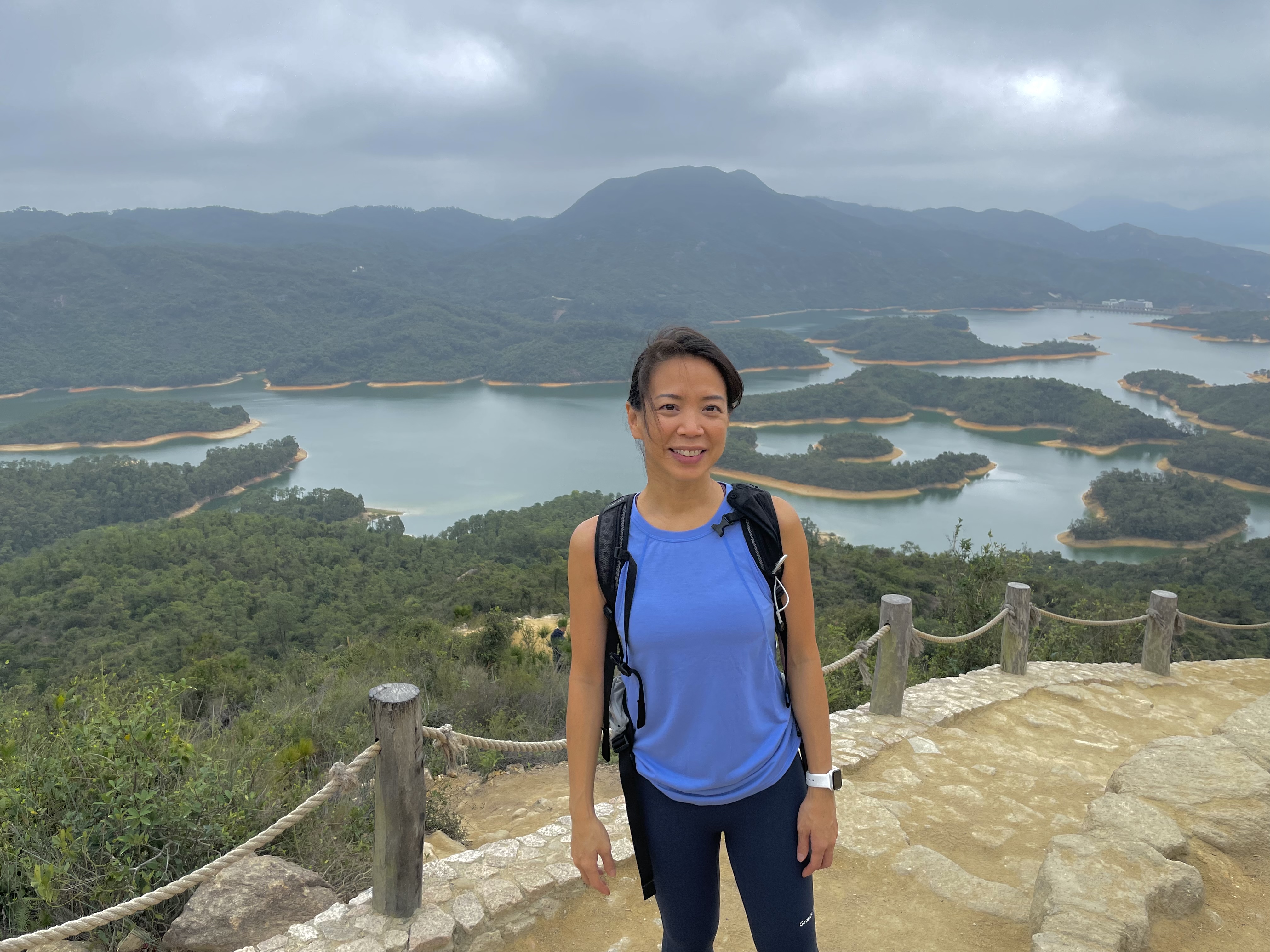
And I just love that because we have four seasons, and they aren’t extreme. So, in the summer you can do water sports; in the winter you go hiking. I love the variety.
I enjoy reading but would admit I do struggle to find time. So now I turn to podcasts. And this is a plug – HSBC global research has got a great podcast on a variety of industries and topics. Just go search for it. Actually, that reminds me of another topic I’m very passionate about – technology and digitization – one for another day.
Luanne Lim was appointed chief executive, Hong Kong, of HSBC in 2022, having previously served as chief operating officer, Hong Kong, from 2017. Ms Lim has more than 25 years of banking industry experience. Since joining HSBC in Singapore in 1999, she has held leadership roles across HSBC’s key markets, including mainland China, Vietnam, Malaysia and Indonesia. She is currently a board member of HSBC Bank (Vietnam) Ltd. She is chairperson of Hong Kong Association of Banks, and sits on the Banking Advisory Committee and Financial Infrastructure and Market Development Sub-Committee of Hong Kong Monetary Authority.