
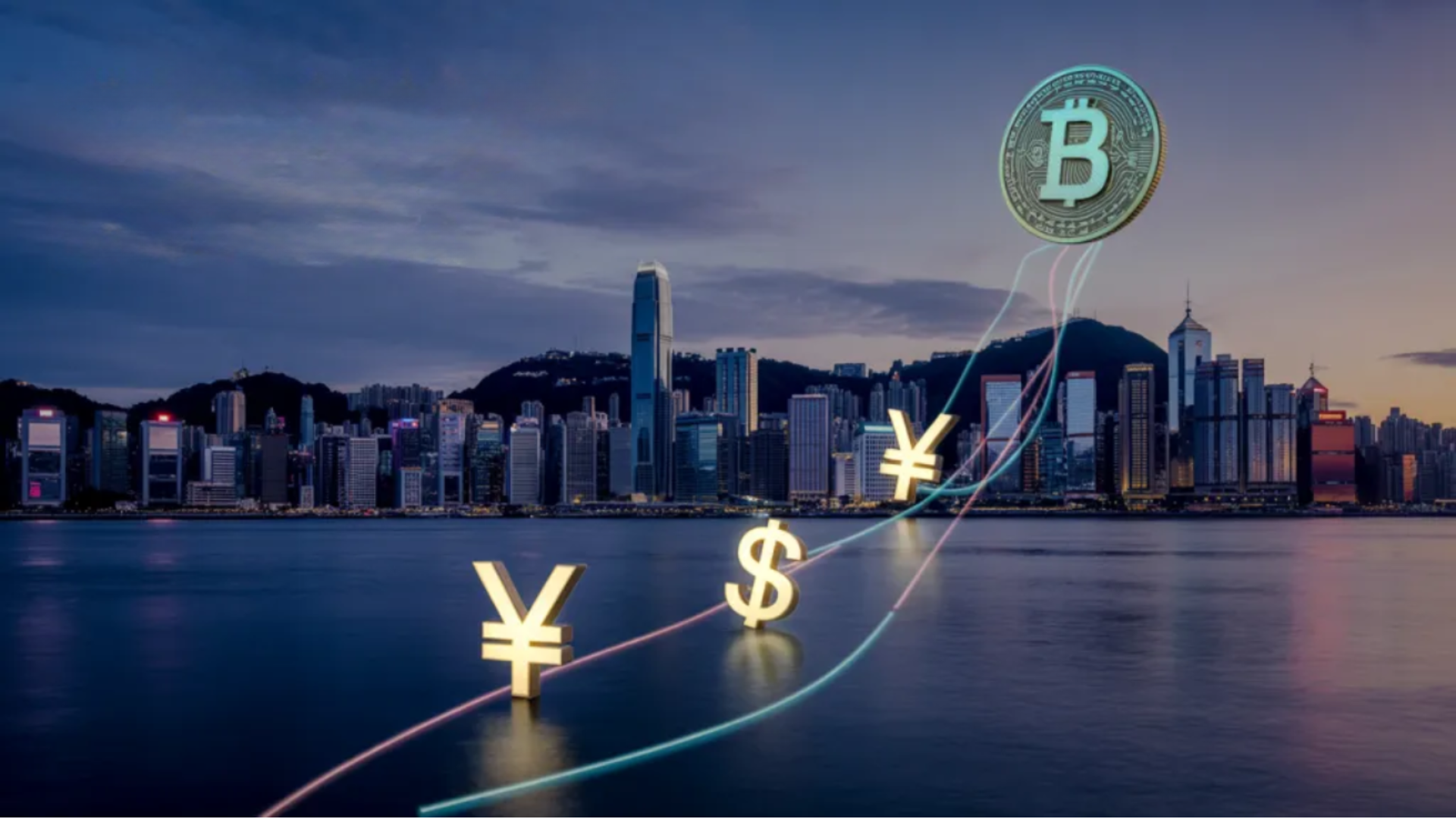
A decade ago, Hong Kong was a society that largely distrusted digital assets. Now it is licensing a form of cryptocurrency that few understand, stablecoin. It could serve as a big step forward if it includes a stablecoin underpinned and backed by China’s Renminbi, among the fiat-backed stablecoins permitted to be issued in Hong Kong. But its cautious opening shot leaves doubts about its utility against giant stablecoins like Circle Internet Financial’s USD Coin (USDC) and Tether’s USDT. To learn more, AmChamHK e-Magazine turned to Syed Musheer Ahmed, an ex-virtual assets regulator and self-described “fintech ballerina”, who is the founder of FinStepAsia, an advisory firm for fintech and digital assets, and co-founder of the FinTech Association of Hong Kong.
What is a stablecoin?
The concept of a stablecoin is simple. It uses blockchain infrastructure, which makes it different from physical or digital bank currency. Its payment guarantees are typically based on equivalent asset reserves, cash or otherwise, that are pegged to an underlying asset that is expected to be stable in value, hence the name, “stablecoin”. A form of cryptocurrency, stablecoins are backed by fiat currencies, commodities like gold, other cryptocurrencies, like Bitcoin and its successors, or multiple asset ratios backed by algorithmic formulas. The last are not allowed in many jurisdictions.
“The main element of a stablecoin is that each stablecoin, let’s say one with a value of HK$1, is backed by a reserve of HK$1 held by the issuer,” says Musheer. “Typically, this means the cash is in digital format or otherwise, or government-backed bonds, long or short-term. When you look at stablecoin issuers in the United States, most use United States Treasury securities as their underlying assets. Once you add the element of redemption, you also need regulation, because you need guarantees and consumer protection that says, when the issuer states you can have this HK$100 of Hong Kong dollar stablecoin asset, there is also HK$100 worth of liquid assets to back it. Redemption needs to be timely, and market movements can have implications for the underlying currency, which means central banks need to review and supervise the risks.”
Major US dollar stablecoin issuers are now among the top holders of US Treasuries. In July, they held US$182.4 billion in US Treasury securities, most of that by USDT, with US$125 billion, and USDC, with $55.2 billion. That was more than the dollar reserves of Saudia Arabia, with US$133.8 billion, and just below Norway, with US$195.9 billion.
The Genius act, which is currently in a 180-day rulemaking process, makes it mandatory to hold US dollar reserves for stablecoin issuers, and gives the US dominance over a relatively new, decentralized financial system. Hong Kong’s stablecoin issuers, which ultimately may have Chinese Renminbi-pegged stablecoins, alongside the Hong Kong dollar and US dollar, could challenge that dominance through China’s role as the world’s largest trading economy. From that perspective, Hong Kong’s stablecoins could serve as a gateway for Renminbi internationalization much as it once served as China’s major import and export gateway. Today, the global stablecoin market capitalization is only about US$247 billion, according to crypto data provider CoinGecko, but according to an estimate by Standard Chartered Bank it could grow to US$2 trillion by 2028.

Revolution in the making
Mao Zedong once famously said: “A revolution is not a dinner party.” Hong Kong’s Monetary Authority (HKMA) launched a stablecoin ordinance on August 1, after the bill passed the Legislative Council on May 21. The city thus became one of the first major capital markets to legitimize use of a “stable” form of fiat-backed digital currency, joining the United States with the Genius Act[i] and the European Union’s Markets in Crypto-Assets Regulation (Mica).
So great was the buzz in the market in late July that Hong Kong Monetary Authority (HKMA) chief executive Eddie Yue Wai-man tried to cool things off in a blog post. “We need to guard against excessive market and public opinion speculation,” he wrote. The first licenses are not expected before early 2026, and the regulatory hurdles, including an upfront capital requirement of HK$25 million (US$3.2 million) limits issuers to larger firms. Two units of Alibaba Group, Ant Financial and Ant Digital, have both said they will apply for the licenses. Citigroup has also said it was exploring stablecoins and welcomed regulatory developments in Hong Kong.

Stablecoins and cryptocurrency have the same roots. When the semi-mythical Satoshi Nakamoto, a pseudonym, introduced the concept through an academic paper in 2008 and built the first blockchain database, cryptocurrency was born. Says Musheer: “With privacy of wallets and Bitcoin holders being highly limited, cryptocurrency became a popular conduit for money laundering and illicit activity on the Internet in the early days of Bitcoin before chain analytics and transaction monitoring became prevalent.”
As Bitcoin was primarily created to disintermediate banks, given the laundering implications, banks and traditional payment rails placed severe restrictions on payments and transactions related to cryptocurrencies. The first stablecoins, BitUSD, NuBits and Tether were created in 2014 to solve payment issues, and were theoretically backed by sovereign, or fiat currencies. Tether was the only one of the first generation of stablecoins that used hard reserves of US dollars and equivalents backing each unit of USDT.
HKMA has designed its licensing regime around a similar model, with fiat currencies including the Hong Kong dollar, which is pegged to the US dollar, as well as the US dollar as reserves, but with more stringent rules. “The rules do not explicitly restrict the fiat currencies to be only the Hong Kong dollar or US dollar, and theoretically, it could be any fiat currency,” notes Musheer.

Hong Kong authorities are still mulling the controversy over cryptocurrency trading platform JPEX in 2024, and are keenly aware of the risks, although the risks are very different. Circle’s USD coin lost its dollar peg in 2023 when it revealed that 8% of its US$40 billion in reserves were tied up in the collapsed Silicon Valley Bank. Earlier this year it finally regained the market value it lost after the Silicon Valley Bank episode, and US crypto markets have been boosted by the crypto-friendly administration of US president Donald Trump.
Says Musheer: “JPEX was a fraud and an unregulated platform. The USDC fall was due to systemic risk from the collapse of a traditional financial institution, not fraud or unregulated activity. The regulators have to ensure they not only prevent frauds and illicit or unlicensed activity, but are also able to address any systemic risks that may arise due to interaction of traditional finance with decentralized finance.”
How stablecoin evolved
“If we look at stablecoins, they largely came into being because when crypto trading started, if you wanted to purchase Bitcoins and other cryptocurrencies, it became very hard with traditional banking and even credit cards,” says Musheer. “Most banks and others would not touch or provide services to on-board you with cryptocurrencies. Stablecoins provided crypto investors and traders a way to on-off ramp in a stable value largely pegged to the US dollar.”

By January 2025, transfer volumes of stablecoins reached US$27.6 trillion, 7.7% more than the combined volumes of Visa and Mastercard, according to a report by crypto exchange CEX.io, amplified by the increased use of bots on Solana and Base, high-performance blockchain platforms.
“As they have grown, they’ve gone beyond just on- and off-ramps. They are also used as financial products, as a hedge for individuals and firms in certain economies to hold a US dollar access, where accessing the US dollar is challenging, while local economies maybe faltering. And they can be used for programmable use cases as a means of enabling financial transactions, because they come with the advantages of blockchain through the use of smart contracts,” adds Musheer.

Musheer sets Hong Kong’s new stablecoin regime in the context of the growth of de-centralized, digital finance. “You could go back over 150 years ago or so, when the telegram was invented, as one of the early examples of tech enabling fintech,” he says. The real pick-up in fintech started with Nairobi-based Safaricom’s M-Pesa, a financial transactions platform founded in 2007 that now serves some 70 million customers, Latin America’s Nubank and Europe’s “neobank” Revolut. Most of these services were start-ups or did not exist when Apple Inc launched the iPhone in 2007, and Internet connectivity improved just as smartphone adoption exploded globally.
The fintech world has gone through several distinct phases since then, according to Musheer. Banks and financial institutions initially were reluctant to invest and saw it as an existential threat to traditional banking, especially retail banking and payment providers.
The narrative has changed now, Musheer says, in a mixed world where fintech players are integral to the payments landscape, or companies like Stripe, Inc, the largest privately owned global fintech company with a payment volume of over US$1.4 trillion in 2024. Most banks have also developed their own mobile banking, often collaborating with fintech players, and a handful of fintech players who have emerged at a scale to challenge traditional finance players. “I often say, fintech is dead, long live technology-enabled banking,” Musheer observes.
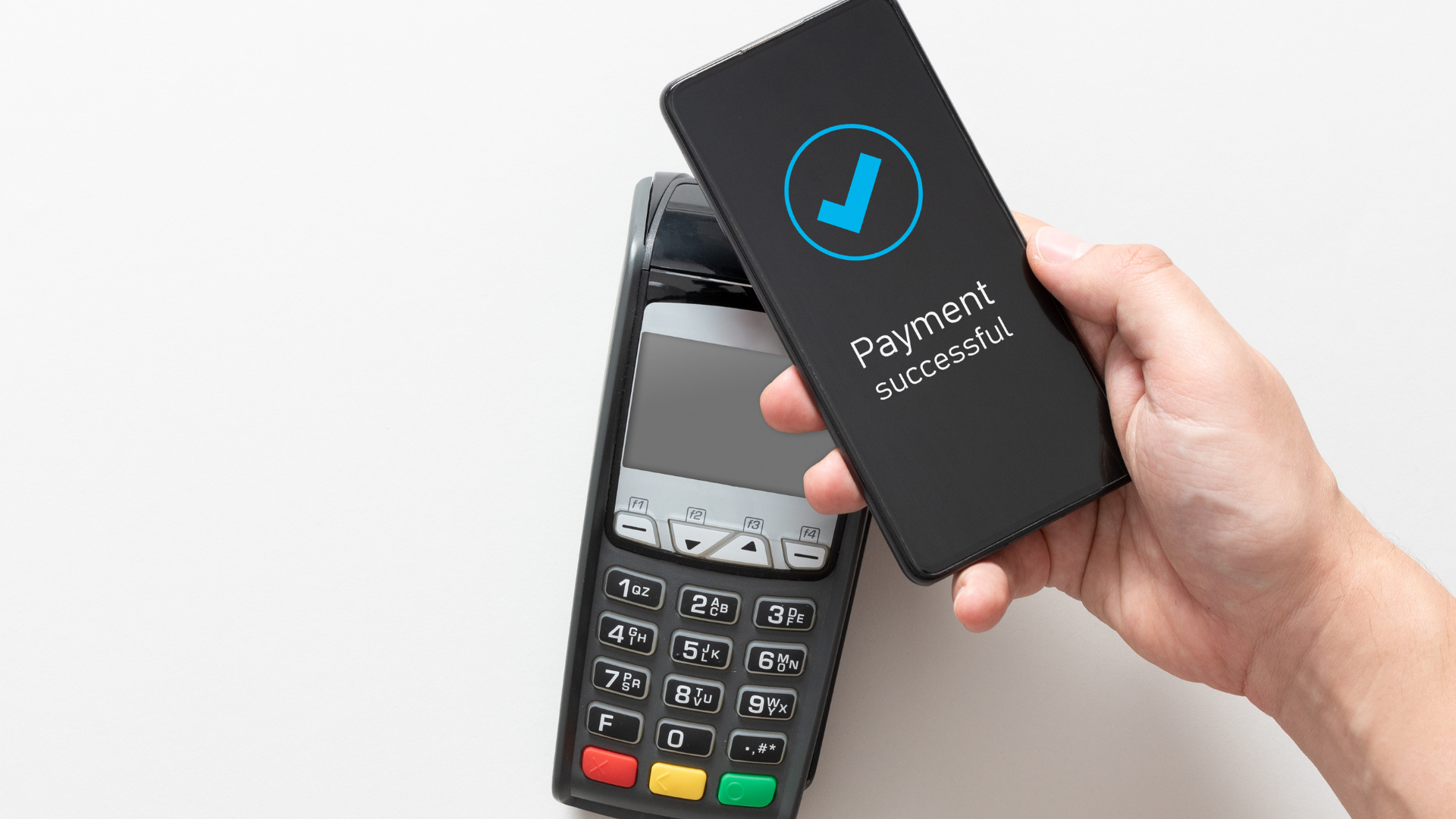
In the past ten years, the Hong Kong public has become more digitally savvy, and regulators have caught up with fintech, ranging from rules for digital banking to stored value facilities and faster payment systems, which are both faster and far less costly than checks. As virtual banks began offering competitive savings rates, businesses began to embrace Quick Response or QR codes and digital payments, well beyond Hong Kong’s own Octopus stored payment card, which was first adopted in 1997. “When the other apps came in, and they started having incentives and engaging with users, that helped shopkeepers and others also start the transition to digital payments, and now we see a more dynamic Hong Kong fintech ecosystem,” says Musheer.
By July 2024, there were more than 1,100 fintech companies in Hong Kong, compared to 13,100 in the Americas, 11,000 in Europe, the Middle East and Africa (the EMEA region), and 5,900 in Asia Pacific, according to a March 2025 report by the Fintech Association of Hong Kong. With revenues projected to reach US$606 billion by 2032, and an anticipated growth rate of 28.5% between 2024 and 2032, fintech had become a robust ecosystem.
Leading the charge in decentralized finance

Blockchain and digital assets are now leading the next disruptive phase in decentralized finance. Hong Kong was among the early adopters of Bitcoin, and although Asia’s first bitcoin conference was held in Singapore in 2013, it was organized by a Hong Kong-based entrepreneur, Eddy Travia. Bitcoin Magazine’s first Asian conference was in Hong Kong in 2024, and it returned from August 28-29, with second son Eric Trump as a keynote speaker. “Many major exchanges were either born in Hong Kong, or used Hong Kong as their first major base, or built up in Hong Kong before going to other markets. The HKMA was among the first regulators globally to categorize Bitcoin as a digital commodity in 2015 when it reminded the public that it was not legal tender at that time.
Of the 1,100 firms surveyed by the Fintech Association of Hong Kong earlier this year, 175 were blockchain applications or software, and 111 digital assets and cryptocurrency.
In addition, Musheer says, “You have a significant number of people who work in investment banks or payments and other financial institutions who are looking at blockchain, and even if they are not involved in the crypto world professionally, they have a decent understanding of the industry”.
“Hong Kong’s financial industry and professionals are well known for coming up with complex financial models and dealing with them. When you have talent and professionals that understand crypto, digital assets and blockchain, it enables a deep conversation about different models in the ecosystem. It’s a smaller ecosystem than the financial services ecosystem, but if many people working in major banks and other corporate institutions have a good understanding, it helps in progressing and making Hong Kong a major center for Web 3.0 globally”. Web 3.0 is the next generation of the Internet, decentralized, open and ‘smart’, giving users more control over their data and the way they use it.
With the new stablecoin ordinance, it means that “traditional financial institutions who want to engage in this business can also participate and issue stablecoins. The regulatory moat exists because banks want to conform and stick to what is allowed,” Musheer says. “Once regulations come in, it becomes possible for them to engage in these activities”.
Opening a new path for Renminbi internationalization?

The speed with which the global landscape is changing means that Hong Kong’s new stablecoin regime could provide an alternative to domination of decentralized finance by the US dollar on a global scale. According to the Bank for International Settlements, US dollar transactions account for 99% of global stablecoin supply.
Key to this would be using Hong Kong as a testing ground for offshore Renminbi stablecoins with commercial banks and licensed payment providers, focusing on cross-border transactions. This idea was recently floated by Jiaying Jiang, an associate professor of law at the University of Florida, in an opinion piece in the South China Morning Post. Huang Yiping, an advisor to China’s central bank, has also said that an offshore yuan stablecoin was “a possibility”. According to Reuters, China’s State Council is reviewing a plan to catch up with the US on stablecoins.
Meanwhile, for Hong Kong, stablecoins will be a new step forward in the ‘blockchainification of finance’, Musheer says. It will use blockchain to increase efficiencies and deliver financial products in new ways. Hong Kong’s new rules on stablecoins are aimed at reducing the risks of decentralized finance while allowing room for innovation.
“Payments in traditional finance over SWIFT** or other rails have their own perils,” says Musheer. “If I were to send money to India, if I haven’t mentioned the right name or spelling, my money is stuck. It can take days or months before my money comes back, and there are huge fines”, he says.
Hong Kong’s new stablecoin regime may be more of a dinner party than a revolution, but that may be a banquet in itself.
* “Guiding and Establishing National Innovation for US Stablecoins Act of 2025”
** The Society for Worldwide Interbank Financial Telecommunication (SWIFT) is a cooperative established in Belgium in 1973, and owned by the banks and other members firms that use its service. SWIFT provides the main messaging network through which international payments are initiated.

Syed Musheer Ahmed is the founder and managing director of FinStep Asia, an advisory and venture building firm for Fintech and Digital Assets. He was co-founder and inaugural general manager of the Fintech Association of Hong Kong, and a member of the founding team of the Virtual Assets Regulatory Authority of Dubai (VARA). He MBAs from the University of Hong Kong London Business School as well as a Bachelor’s of Engineering from the RV College of Engineering. He calls himself a “Fintech Ballerina” for his ability to pivot in his career as a fintech entrepreneur.