

Educator, author and journalist Esther Wojcicki – “Woj” for short – is known as the godmother of Silicon Valley for the number of entrepreneurs who passed through her program at Palo Alto High School, where she taught media studies between 1984 to 2020.
One of her teaching fundamentals is to “just do it” and then revise. This became the inspiration for “fail fast, fail often”, the mantra of the Valley’s start-up culture. She applied these lessons to her own daughters, Susan, the late CEO of Youtube, Janet, a professor of pediatrics at the University of California at San Francisco, and Anne, co-founder and CEO of genetic testing company 23andMe. There are numerous other former students who were shaped by her course in journalism, including basketball star Jeremy Lin, actor James Franco and Oliver Weisberg, CEO of Blue Pool Capital and alternate governor of the Brooklyn Nets and New York Liberty, soon to play a much-awaited exhibition match at the Venetian Arena in Macau in October.

Wojcicki’s philosophy is based on Trust, Respect, Independence, Collaboration and Kindness (TRICK), sometimes described as panda parenting in contrast to the Tiger Mom approach of Yale Professor Amy Chua. AmChamHK e-Magazine caught up with Woj to find out more about her views on parenting, journalism and democracy in the age of Artificial Intelligence.
Your book, How to Raise Successful People: Simple Lessons for Radical Results* has sold in 31 countries and is a bestseller in mainland China. Can you explain some of its key messages and why it has inspired so many entrepreneurs and professionals, starting with your own daughters?
The number one skill that I teach and that kids take away from the program is the philosophy of “just do it” and then revise. You don’t need to be afraid of making a mistake. You can always revise and revise and revise. That’s how I taught writing, publishing, math and social studies. Most people, and especially in Asian countries, are only given one shot at getting the answer right. If they don’t get that answer right then and there, it’s bad for them. It’s embarrassing. They don’t get into the programs they want. It’s a humiliation. “Fail fast and fail often” was a re-interpretation of my philosophy, because that philosophy went to companies all over Silicon Valley, because my students were everywhere.
Can you tell us about your parenting app?
I started an app called Parenting TRICK. I’m using AI and my both of my books as a way to train Artificial Intelligence (AI) to answer parents’ questions on how to respond to issues that they’re dealing with, with their kids, from birth to age 18. It is customized to your child and their age or even multiple children. You can find it on the Apple sore or Android store. The price is US$6.95 per month but there is a free introductory trial period.
I’m trying to help parents avoid helicopter parenting and help them have very successful children. I would like to help them avoid difficult times with their children when those children do something that they consider wrong. Most kids, when they do something wrong, have parents who get very upset. It’s a traumatic experience for the child, and it impacts their self-image growing up. Many adults point to a lot of their own problems today as coming from childhood trauma that was the result of their parents yelling at them or punishing them or doing something to them.
I’m trying to avoid that happening to kids. Instead, I’m saying, have a discussion with your child. Talk to them about what they did wrong. Have them come up with a solution with you, instead of dictating to them.

Based on these ideas, how did you structure your program at the Media Arts Center (MAC) at Palo Alto High School?
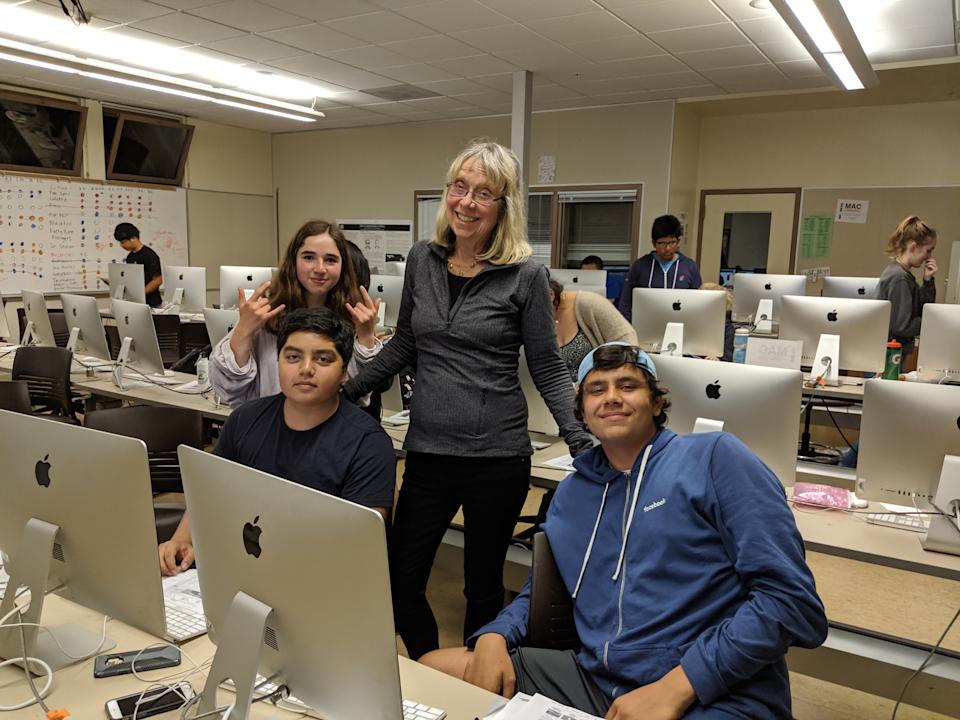
Even though I retired in 2020, my classes are still very popular. It’s the most popular program at Palo Alto High School, and it’s probably the most popular program in the school district. There are about 500 kids taking media arts courses, which involves newspapers, magazines, television, podcasting and filmmaking. And then also we have something called entrepreneurial journalism, where you can start your own publication, and we teach how to get support for it.
The philosophy behind the whole program is innovation. “Try it, work hard, if it doesn’t work, do it again. Revise it. Figure out what part of it didn’t work.” Unfortunately, the school system around the world was developed more than 100 years ago. Students had to memorize facts. Well, today you don’t need to memorize the facts. You just need to know where to find the facts, and you can find them on your phone, 24/7, and AI will even do the research for you if you know how to ask the right questions.
How do you learn to come up with the right questions if you don’t know the facts? Isn’t this a crucial weakness of AI, with its tendency to “hallucinate” or make things up if it’s data base is incomplete?
I’m not saying you don’t learn the facts. You learn the facts. You just don’t memorize them. Or if you memorize them, and then you get them wrong, you just revise it, do it again to get them right. We’re not ignoring facts. It’s just that you don’t have to be a walking encyclopedia. My husband, who was chairman of the physics department at Stanford, was a very unusual person, because he was like a human computer. He memorized everything, and he could answer questions and solve problems in a minute. He could tell you historical facts. He could multiply large numbers in his head. Very few people have that gift. If you don’t have it, it doesn’t mean that you’re going to be a failure in today’s world.
One of the things you need to be able to do us ask ChatGPT or Perplexity or Google AI questions. For example, if I’m trying to find more information about building a house in Los Altos and I don’t know anything about building a house, you can ask AI to come up with the questions.
And how does this approach work in the classroom?
What I’m working on now is how schools should work with AI. The number one rule is that all AI work should be done in groups, in groups of two or three, one computer, one question, and then they debate it. If they all have a computer then they should stop every few minutes and discuss the responses to their questions. That eliminates loneliness and helps stimulate more questions. In most schools, the computer is one to one, one computer, one student but if they discuss the answers, that is key to understanding.
If the class is quiet and everybody’s doing their own work and there’s no interaction, and no collaboration, no sense of community. That’s not good. That is one of my main messages to schools: let the kids work in groups, and if the room is very noisy, that’s good. The ideal classroom, 50 years ago, was a group of students quietly working or quietly listening to the teacher and never interacting. You would come into a class and see kids writing something and not talking to each other. That was awful, because you could go through seven classes a day and never talk to anyone, and then you wonder why the kids are lonely. Conversation and collaboration are noisy.

It’s important to ask a lot of questions, to read, understand, and then ask more questions. The AI apps give you an answer, and then they have additional questions at the bottom that they recommend. And you can use those questions or modify those questions and use other questions.
Most of my journalism students have to do basic research because they’re doing stories about what’s going on in locally, and they cannot find the answers online. AI is not going to have an answer to local questions about the school, the students’ opinions or what is going on. Students still have to do all the reporting themselves.
The only information they might be able to get from AI are the facts about the school and the city. But if they do articles about local issues, they won’t be able to use AI, because there won’t be any AI sources.
Your book, How to Raise Successful People, sold over 1 million copies in China. Why do you think it was so popular, especially given the reputation that China (and Hong Kong) have for memorization as the basis for learning?
I think it was because I’m from Silicon Valley, that I’m known as the Godmother of Silicon Valley, and the fact that my students have been very successful.
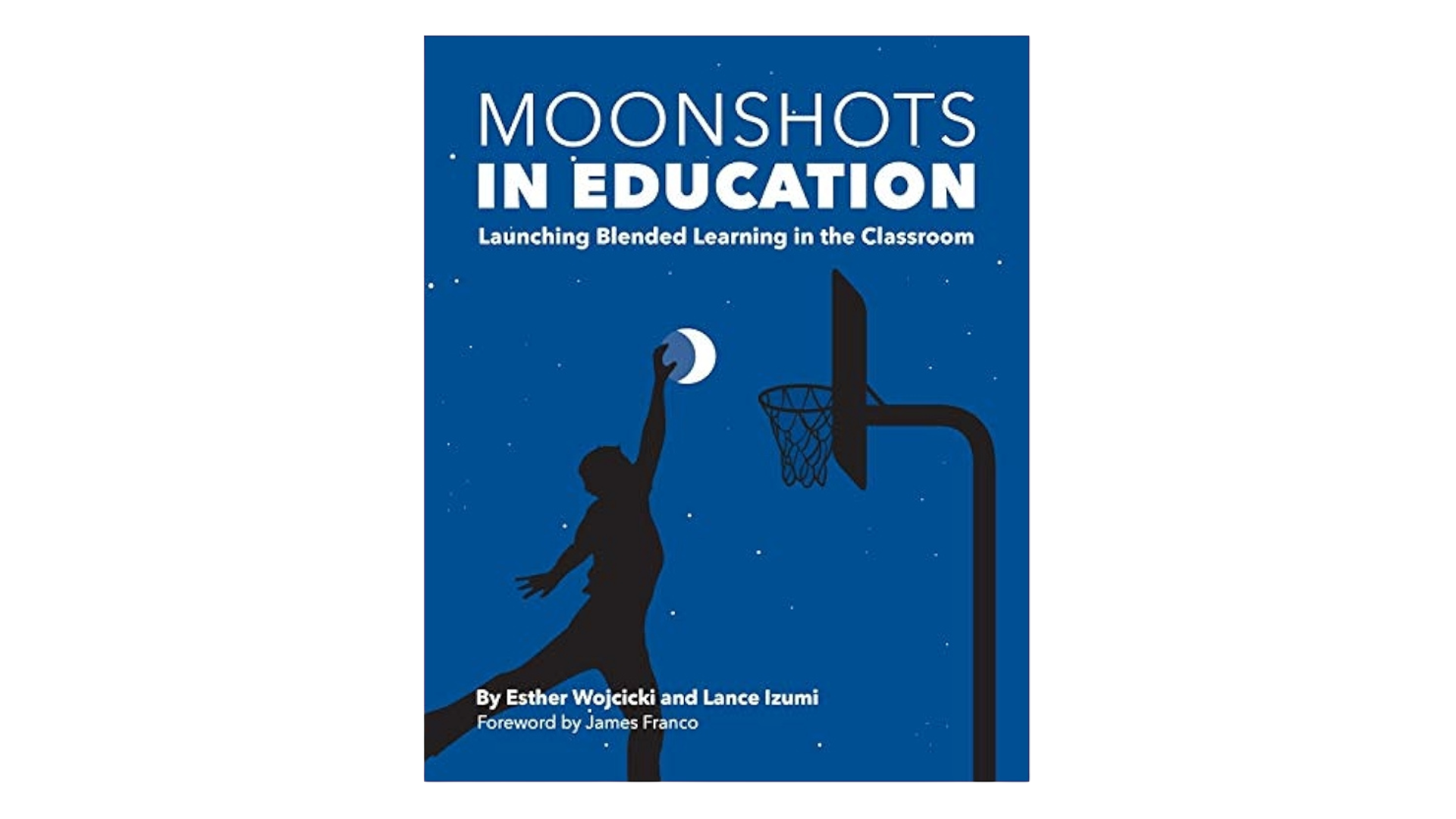
Chinese people are particularly interested in education. They’re interested in any kind of education program that’s going to make their kids get ahead. My first book published in 2014 was called Moonshots in Education. It was about digital education and online education in the classroom and that was also very popular in China. When I was in Hong Kong in March, I did an interview with the South China Morning Post, and it got thousands of hits, which I attribute to the fact that everyone is interested in education.*
What do you think the key lessons are for audiences in Hong Kong and China?
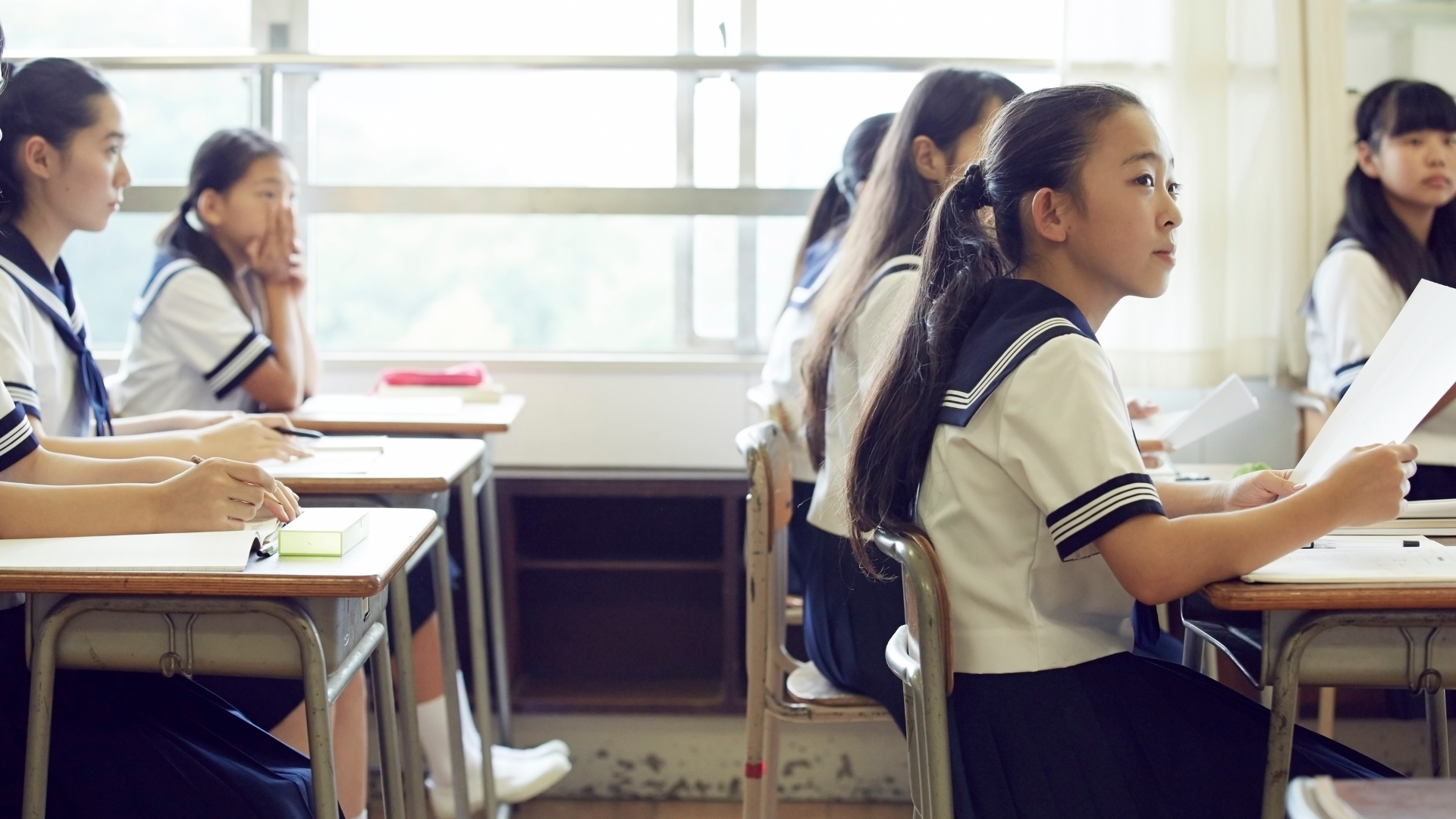
One other characteristic of Chinese culture is that, at least in schools, kids are afraid to ask questions. They just sit there. That’s because the culture is if you ask a question that other people think is stupid, it’s probably the worst humiliation you can have. I talked about that, and I talked about how it’s okay to make a mistake. I think that was probably the most interesting thing that they heard and that they latched on to, because they want to understand. They all want their child to be number one. And I reminded them, there’s only one number one in the whole class. What about the other 99 students?
The Chinese kids are ultra smart. They’re just afraid to ask questions. They’re afraid to make a mistake, and you cannot be creative unless you’re willing to be vulnerable and make a mistake. And they’re not willing to be vulnerable. I’m trying to get that message out so that there could be a place in the school, or some place in companies, or a workspace where it’s okay to come up with some wacky ideas and have other people understand that it’s not a disaster if you come up with an idea that doesn’t work.
That’s the main thing I think they need focus on is stop being so critical. If their child doesn’t do well, they should not jump to the conclusion that their kid is not going to be smart. That’s not true. I don’t know what it’s going to take for them to have a cultural shift to allow for creativity which requires the freedom to make mistakes.
Your view seems to be the polar opposite of Amy Chua in Battle Hymn of the Tiger Mother, which was also popular in China. Or at some level, are the messages similar, that independence of thought and “grit” using your word are essential for children to become successful adults?
If you go online and search my name and her name in Puebla, Mexico, you will see that we debated each other in public, and she lost. The audience voted with their applause. A lot of Chinese parents follow her, because she was doing something familiar to them, something that she learned from her heritage; her parents and her grandparents treated her that way. The most challenging group I had to work with at Palo Alto High School were Asian students. They would say nothing. They just listened. I had to encourage them to speak up and not be fearful.
Fortunately, most of them stayed in my program for three years and they learned to be creative and became leaders. It took a lot of work. The number one thing Amy Chua and I have in common is that we’re both pursuing excellence. And she pursues excellence by forcing kids to study non-stop, and I pursue excellence by giving kids an opportunity to revise until they do it perfectly and collaborate with their peers.

Can you talk a bit about Moonshots in Education?
The reason I wrote it was because I was trying to teach other teachers how to teach. My program was so successful, and I thought, well, it doesn’t just have to be confined to me. Anyone can teach like this, as long as they stop forcing kids to have the right answer right away.
It was targeted at teachers, how to set up your class, how to work with your students, how to be an effective teacher. That was the main goal of that book, and it had the TRICK philosophy. The reason I put TRICK in there is because it was so powerful in my class. I would trust my students in ways that other teachers never did. And the fact that they were trusted was shocking for them. They were grateful and then they would never violate that trust because they didn’t want to lose it.

Trust was kind of a miracle. And I wish other teachers would know about it, because most teachers don’t trust kids one bit, and they think they’re going to cheat. They think they’re going to hang from the chandeliers if given any freedom, but I found it an incredible way to work with my class, 70 teenagers between the ages of 15 and 18, self-organizing. The way I did it was by having them come up with the rules themselves and enforce them themselves. I put the kids in leadership roles.
And my theory was, I’m a great leader already. I know how to speak and organize people. I know how to do all this. Why don’t I give those kids that opportunity? It’s like swimming. You can’t learn to swim by watching. They have to be in the pool to learn to swim. And I gave them the opportunity to be leaders.
At Palo Alto High School from 1984 to 2020, you taught journalism and have argued that the practice of journalism is close to the practice of democracy. How would you teach journalism today, when the media is so polarized?
With a polarized media, it is important to have people who can think. That comes from students who learn to think critically, not just memorize. You cannot have an efficient democracy if you don’t have an educated electorate. That’s number one, and number two is you cannot have a functioning democracy if people are uninformed. We need a literate population and an unbiased press.
One of the problems the US has now is low reading abilities nationwide. The average reading level in the central and southern parts of the US is fifth grade. The east and west coasts have a reading level of eighth grade. Only 13.9% of Americans have a four-year college degree. Most of the students drop out.
Techniques for teaching reading are not working well. In general, the country is going back to teaching phonics as a reading pedagogy, which is more effective than the traditional unstructured approach sometimes called “whole language”. Lack of good readers is a problem. Uneducated people are easier to fool and manipulate.
In spite of low reading levels, there are still many students who do read well and there is a lot of competition to get into the Ivy League Schools: Harvard, Yale, Princeton, Stanford.
Switching topics to journalists, a lot of people don’t trust journalism now. Journalists are having a hard time. They don’t earn the money that they should be earning, because newspapers don’t earn the revenue they used to earn. So, if people don’t trust the press, then how do they get their news? The majority of Americans don’t have the reading skills to read the New York Times or Washington Post.
Most Americans are getting their news on Tiktok or Facebook or Instagram, and they’re not reading reliable news sources. Journalism is failing the readers.

What do you tell journalism students?
The main thing that they should do is check multiple sources. They can’t rely on official sources anymore. I read different publications. I tell them that they need to get the news from multiple sources and then try to figure out which one is reliable.
Fortunately, at Palo Alto High School, most of the time the kids are writing stories about what’s going on in the city of Palo Alto, which is not as politically charged. But they are also writing stories about international events and about climate, which is political, and frequently fake. It’s awful, just crazy.
Occasionally, I speak at classes at the Media Arts Center, even though I’m not teaching, and I talk to the kids about reporting, especially on climate. They need to know that the news is biased in all directions, and their sources can also be biased. And they need to make sure they get reliable sources.
The journalism profession is suffering worldwide. Fake news is everywhere. And there are also the deep fakes. As long as we cannot trust our news sources, as long as there are deep fakes out there, and as long as people are not reading at adult levels, it’s a serious challenge for democratic countries. It is hard to make decisions without reliable information.
* “Acclaimed educator Esther Wojcicki on how to raise successful children,” March 29, 2025, South China Morning Post, YouTube channel, https://www.youtube.com/watch?v=Zd6LUqbs-Hg (35,256 views)

Esther Wojcicki is an educator and author of the 2019 bestseller, How to Raise Successful People. She is Chief Education Advisor at Knack, helping higher education institutions scale peer-to-peer tutoring, and founder of the Parenting TRICK app, available in both the Android and Apple stores. She founded the Media Arts program at Palo Alto High School, in Palo Alto, California, and is vice chair of Creative Commons. She has been involved with GoogleEdu since its founding and helped establish the Google Teacher Academy. She is an expert in blended learning, the subject of her 2015 book, Moonshots in Education. She has a Bachelor of Artsand Master’s in Journalism from the University of California, Berkeley.