

Earlier this year, the economist Stephen Roach, now teaching at Yale University’s School of Management, wrote a controversial article in the Financial Times asking the question, “Is Hong Kong Over?” in the Financial Times of London.
The article caused an uproar in a wounded Hong Kong, in part because Professor Roach had been a resident of Hong Kong from 2007 to 2012, as chairman for Asia with Morgan Stanley. He wrote a follow-up article that was published in the South China Morning Post, explaining why he thought of the article more of a call to action than a death knell, and AmChamHK e-Magazine reprinted both articles, with permission, in its March-April issue.
One of the critics is Kin Chan, partner of Argyle Street Asset Management. Here he is in conversation with AmChamHK e-Magazine editor Edith Terry to talk about his views of Hong Kong’s future. Spoiler alert: He thinks the diverse community that Hong Kong attracts will need a different mindset and skill set than his own, which is impressive enough, with degrees from Princeton and Wharton.
Can you tell us why you are both an optimist and a pessimist about Hong Kong? It’s an unusual combination.
I was born and raised in Hong Kong. I left Hong Kong to work or study three times. I am glad that I came back three times. I have no desire to leave again. It would be my biggest blessing if I depart from this planet from Hong Kong.
I am incredibly optimistic about Hong Kong, but incredibly pessimistic about people like me, native Hong Kongers, who have not been adequately prepared for the future of Hong Kong. Someone like me, who is 58, and was brought up in colonial times, is not prepared in terms of our skill sets and mentality to be productive citizens in the future Hong Kong.
But if you are coming from, say, China today, someone with all the requisite skill sets, to take advantage of what Hong Kong has to offer, for your career, and how you can contribute to Hong Kong or the future Hong Kong, it is very different.
Why do you think of yourself as out of date?
Hong Kong has changed. A dear friend of mine, Alan Smith [a former chairman of the Jardine Fleming Group] told me that when he first came to Hong Kong in 1970, Hong Kong was an agricultural society, and then it became a manufacturing society. And what we say we are today, that we are a financial centre, this came relatively late in in his experience in Hong Kong.
The people who were in Hong Kong in the 1960s were made completely obsolete. And many of them left and I’m sure found better lives. And I think the same is happening in the current scene.
Challenges are being presented to people like me, and if you cannot adapt, you are going to be made obsolete. And in a way that’s not that different from any other major city, London or New York where you have the same dynamics.
Hong Kong has been many things, but most recently as perhaps the world’s most global city in a trading system dominated by the US. Where do you think it is going next?
You really need to step back and look at what Hong Kong is. Hong Kong is a platform where China meets the rest of the world, and trades with the rest of the world. Then the question becomes trading with whom and what do they trade? In 1842, it was trading opium.
Somewhere along the way, it became trading of financial services, and I think in the future, when that ship has sailed, it will be something else. I think decoupling between China and the US is only going to get worse, and or it’s not going to get better. The role of Hong Kong as the intermediary between China and the United States will become diminished.
And I am confident that Hong Kong will find new things to intermediate, and new partners and counterparties. And I think they’re going to be in the Middle East, and ASEAN (the Association of Southeast Asian Nations). ASEAN is already China’s largest trading partner. Indonesian and Thai businesses have no issue with expanding their commercial relationships with China.
Recently, I met a Hong Kong kid who’s studying at the London School of Economics, learning Arabic, and it brought tears to my eyes. He’s minoring in Middle Eastern studies. I told him, you’re going to be so prepared for the future of Hong Kong, if you want to come back.
Hong Kong’s reputation has been damaged by the years of protests, Covid-19 restrictions, and the National Security Law. One survey in October 2023 found that over half of Hong Kong professionals were considering leaving Hong Kong. Isn’t that a huge loss?
We all have friends who have left but they have been replaced more than 100% by people who have moved here. You can obviously make the point, rightly, that these are all Chinese. To which I will say Hong Kong is a Chinese city, just like Tokyo is a Japanese city, and New York is an American city and Paris is a French city.
We love Tokyo, New York and Paris. And, you know, if you don’t like China, Chinese culture, you cannot possibly like Hong Kong, going forward. But if you are going to do business with China, Hong Kong is probably the best place to start, and is going to be the most international city within China.
I’m very sad that we have lost brothers and sisters, but I’m not sure it would have been a good thing for them to stay. I think many of them are making the right decision. They just don’t have the requisite skill set or the mentality to take advantage of the future of Hong Kong. It’s as simple as that. The argument that Hong Kong has no talented people left is just not true.
I interviewed a student from Chinese University recently who’s from Indonesia. He told me, at Hong Kong universities, the local student population used to be at 90% and now it’s only 60%. And the non-local students are from mainland China and from ASEAN countries, and from countries like Kazakhstan and India. I think that’s wonderful. The problem for our city as I’ve been saying for years is we’re becoming too Chinese. We should have a diverse ethnic and cultural society, which makes us unique, a special Chinese city.
Can you share your views on Stephen Roach’s article in the Financial Times, that created such a stir.
Of the points that Stephen Roach made, I totally agree with him on two, and I disagree with him on this on the third point.[1] I think he failed to realize the influx of talented people. Hong Kong has always been a city that people describe as resilient. What does that really mean? Resilience means that the people of the city at the time, you and I, are recreating ourselves. OK, and how are we going to be recreating ourselves? I think the future is new Hong Kongers and returnees. Instead of crying for the 350,000 who have left, we should be happy for the 400,000 that have come.
Of the two points where I agree with Stephen Roach, number one is decoupling. I mean, I think decoupling is going to be hugely detrimental to Hong Kong. The second point is the slowdown in China, which I think is also going to be hugely detrimental to Hong Kong. And if we’re really as good as we claim, if we are resilient as we say that as we are, we should go out and try to figure out ways to reinvent ourselves.
We never relied on the government when Hong Kong was the world’s largest toy manufacturer and the world’s largest watch manufacturer. I assure you that it wasn’t an industrial policy, like US President Biden is doing with chips, it wasn’t some smart British guy planning it. It was a bunch of entrepreneurs who came up with the idea. I don’t even think it was smart people in Hong Kong Club or Jockey Club, or Hong Kong colonial government, figuring out the financial centre strategy like Singapore did with its casinos as integrated resorts.
The point that I disagree with Stephen Roach is about is his point on the National Security Law. Of course, like everybody, I would rather not have the National Security Law, I would rather not have Article 23. But we have them now.
But does it make us horrible people? Does it make Hong Kong unlivable? No – I’d rather be here than in Dubai and Singapore. This is not to criticize Dubai or Singapore, but most people realize we have more freedom here. The day that I perceive that I have no more freedom, I will leave, but that is not the case today.
The point about the National Security Law being hurtful, I think it’s a wishful narrative. For businesspeople, it really is not high up on the agenda.
What are the prospects for US-China trade, and within that, Hong Kong’s role as a trans-shipment center?
The drive for decoupling is not only coming from the US. It’s also coming from China. And there’s nothing Hong Kong can do. But we are not a city for America to deal with the rest of the world – that would be Miami, New York, or San Francisco – we are a city for China to deal with the rest of the world and for the rest of the world to deal with China.
We have to think about which country China is going to be trading with. And it’s going to be ASEAN and the global south minus India, and it’s going to be the Middle East. ASEAN is China’s largest trading partner, which is something that you and I would find it hard to believe five years ago. It was the US and then Europe and then Japan.
If we could be friends with the Americans, we absolutely should be. But I really think that ship has sailed. American politicians call our government in Hong Kong repressive. They’re not going to be kind to us. That’s not to say we shouldn’t do our best to repair that relationship, but we also should not be naive to think we could.
Looking ahead, I see Southeast Asian companies trading with China and doing business with China using Hong Kong as a hub. I was told by my Indonesian interviewee from Chinese University that the number of ASEAN students has doubled between his senior year and his freshman incoming class. And just as the people in Hong Kong in 1970 couldn’t have foreseen Hong Kong becoming a financial hub, I think people today may not really appreciate going forward, we’ll be doing a lot of business for China, with people coming to Hong Kong from the Global South because of China.
What should Hong Kongers (and for that matter people of other nationalities) be doing to prepare themselves for the future, as you see it?
I lived in Singapore for seven years and have lived in both Europe and North America. And even with Singapore, which is in the middle of ASEAN, their education of their kids about the history and dynamics of the region could be improved, because their whole world revolves around the West. Hong Kong was worse. I learned European history in my high school in Hong Kong, and my favorite subject was World War I from a European perspective. We learned European history in my high school history here in Hong Kong. We were not taught Mandarin or much of Chinese history and culture.
We in Hong Kong, if we’re going to be serious about our place in the world, should start educating our people about China and critical parts of the Global south. But if we’re not able to do that, bring in talent with the requisite skill sets. If we have mainland, Middle Eastern and ASEAN students coming to study in Hong Kong and stay on and become involved in business, that would be perfect.
One of the few things that we have done right, as a city, and I hope we will continue to do is our freedom in terms of movement of labor. I don’t think there are many places like Hong Kong people where can just come. As long as you can find employment it is relatively easy to set yourself up.
One of the Indonesians I hired in the last few years, I was going to hire for the Singapore office. He would have preferred it because his family owns an apartment in Singapore. But I couldn’t get a work permit for him because he’s a fresh grad. And then we applied for him to work in Hong Kong. He’s now working in Hong Kong, and it’s been four months. Singapore’s loss is our gain.
[1] In the second article, Professor Roach summarized his points as follows: “I cited three reasons for saying Hong Kong’s glory days may now be over: a distinct loss of its high degree of political autonomy in the aftermath of the massive demonstrations of 2019-20; a weakening of Hong Kong’s economic underpinnings as a result of a protracted malaise in the mainland Chinese economy; and a squeeze from US centric friendshoring that has forced Hong Kong’s East Asian trading partners to choose sides in coping with the crossfire of the Sino-American conflict.”
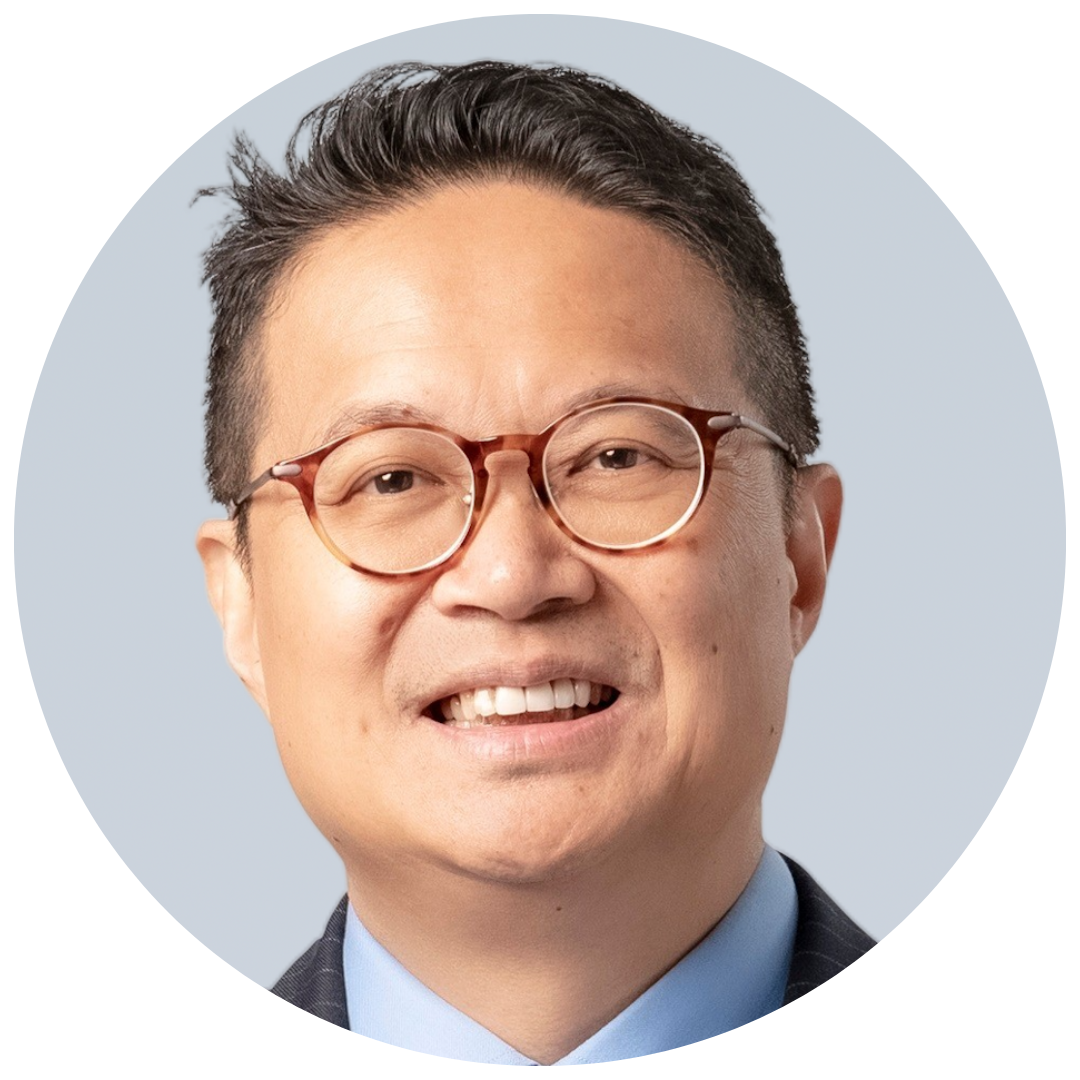
Kin Chan is the founding shareholder of Argyle Asset Street Management Limited, and has been the Chief Investment Officer since its inception in 2002. He was CEO and managing director of Lazard Asia Limited from 2000 to 2001 and executive director at Goldman, Sachs & Co. from 1992 to 1999. He has completed transactions, in aggregate worth $15 billion, in China, Hong Kong, India, Indonesia, South Korea, Singapore and Thailand. He earned his BA degree from Princeton University and an MBA from the Wharton School of the University of Pennsylvania.