

In conversation with the co-founder and CEO of Splash Foundation, we learn that Hong Kong has one of the best public pool provisions in the world, but that they are under-utilized by two specific, marginalized communities – Hong Kong’s 300,000 domestic workers and 59,000 special needs children. The benefits of swimming for these groups include a transformational sense of community and confidence, as well as safety in the water. When Alexander and Splash co-founder Simon Holliday began, they found the demand so huge that applicants have had to wait as long as four years, due to a limited number of pools and resources. In January, 350 spots for helpers filled up in 12 minutes.
I grew up in Maine, and majored in Latin at Franklin & Marshall College, in Lancaster, Pennsylvania. I worked on the business side of Sotheby’s in New York in 1994, right out of college, and moved to Hong Kong in 2010. At Sotheby’s (2023 revenue: $7.9 billion). As a Business Director, I worked with every specialist department. Sotheby’s is really a bunch of small businesses, and I did every kind of role for them – finance, marketing, public relations, contracts – everything. My husband was with Sotheby’s too, on the specialist side, in wine auctions, which is what brought us to Hong Kong.
The origin of Splash was in 2014. Simon Holliday put a post on an open water swim group about his idea of helping domestic workers learn how to swim. I was the first to reply. Neither of us had any background in teaching swimming, but we found a pool at Hong Kong International School (HKIS), put together flyers, and quickly found 30 helpers who wanted to learn how to swim.
We ran our first class on March 1, 2015. It was an eight-week program, and at the end of the eight weeks, most women could swim the length of the pool. More special was watching their transformation, in terms of their comfort level, confidence and how they bonded as a group. Some of them travelled up to two hours from the New Territories to join the class and made this a key commitment. At the end, out of 30 women, 28 said, let’s sign up again.
We didn’t anticipate that. One class became two classes, and two classes became four. After the first six months, we realized that we had stumbled on something. There was a problem and we saw that we could solve it. We applied for section 88 status (under the Inland Revenue Ordinance, for tax exemption of non-profits). And we kept adding classes. Our costs were relatively low, and Simon, a marathon open water swimmer, provided most of the funding from fund-raisers (such as his swim from Hong Kong to Macau in 2014 and around Hong Kong Island in 2017).
Among the challenges we faced was cultural. In the Philippines, many helpers told us that swimming was only for rich people. This is not unique to the Philippines. Half the world’s population doesn’t know how to swim, and two-thirds of those are women. The US has its own history with segregated pools, which has left African Americans with lower rates of swimming. Indonesian helpers thought that women just couldn’t swim. Their brothers swim but wearing bathing suits was an issue for women in a Muslim country.
We had to convince them that swimming was a skill you could keep for your entire life, and that being immersed in water had so many benefits. Our goal is to give them 20 hours of free swimming, then encourage them to keep practicing together. At the end it’s not really about swimming, but about building a social network. I don’t think I realized how difficult it is for them to form networks. Splash became their family.
So far, we have taught 4,648 adults how to swim, along with 2,093 kids, including 567 kids with special educational needs. In terms of our Sec. 88 status, we are trying to fund ourselves 50% through grants and 50% through fund-raising events, such as Edie Hu’s 2019 swim around Hong Kong Island, which raised HK$700,000 for Splash. We have a small core team, and we run the adult program through 150 volunteers, mostly people we’ve taught how to swim and then people we’ve taught how to teach swimming. With the kids’ program, we only hire professionals. We conduct 40 hours of classes per week in 10-12 different locations. It’s a pretty big machine, with lots of moving parts. Now we’ve reached a scale where the biggest problem is finding pool space.
Some pool space is donated by international schools in Hong Kong, but others require payment. Ideally you need the whole pool, but if the pool can only give up one lane, we’ll take it. The cost of booking a private pool is HK$300 to HK$500 per lane per hour. There is also a big range of fees for coaching, from HK$100 to HK$500 per hour, and the some of the prices at private schools and swim schools are more than that. We’re trying to build a network of professional coaches for the kids’ classes as well as volunteers for the adult classes. 25% of our trainees in coaching programs are returning volunteers who we taught how to swim. They know how nervous the students are, and they speak their languages.
During Covid, we started a competition between Simon and me to swim in the open water every day. We did that for fund raising for three years starting in 2021, when most of the pools were closed. We did it to raise awareness about the benefits of swimming in the open water and in cold water. We also put together a video called “Learn to Swim” that so far has 2 million views for the first episode on Youtube. Comments on Episode 1, Building Water Comfort, reflect the enthusiasm of the Splash community. “Why I love Splash, Only Splash coaches are very gentle and friendly. They teach with love and dedication. Without splash I will never learn to swim.”
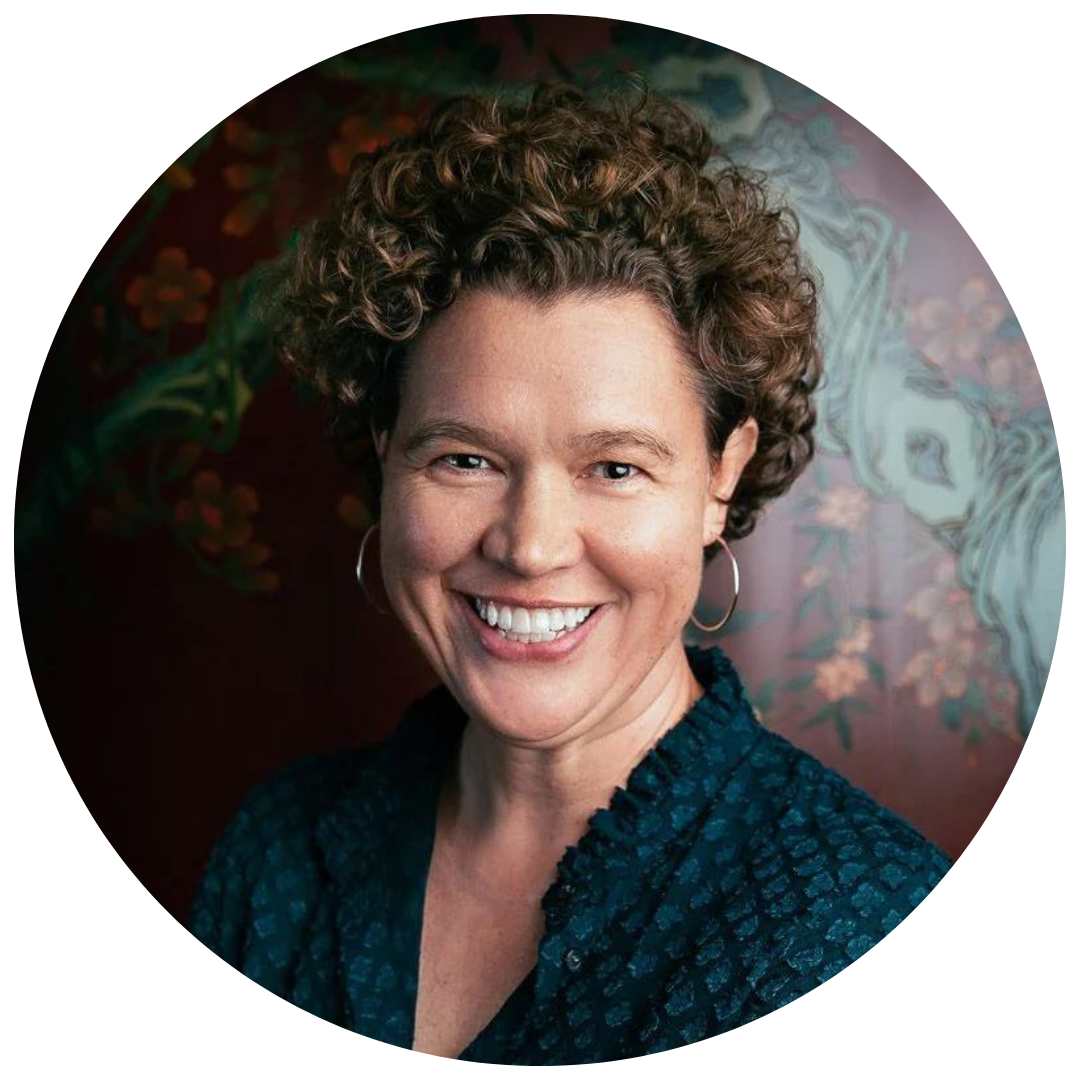
Libby Alexander has been the CEO of Splash Foundation since 2017. Before that she was an art advisor and consultant based in Hong Kong, after an 11-year career with Sotheby’s in New York and Chicago.