

by Dr. Kurt Campbell
The level of geopolitical tension between China and the US has waxed and waned in the months since US President Donald Trump took office, most recently subsiding as the two countries agreed to a cancellation or 90-day suspension of most tariffs on each other’s goods on May 12. The deal, reached by US Treasury Secretary Scott Bessent and China’s top negotiator, Vice Premier He Lifeng in talks in Geneva, represents a thawing of relations, although the suspension is temporary. In advance of the deal, one of the top Asia experts in the US, Dr. Kurt Campbell, on his first trip to Asia following his departure from the State Department in January, spoke at AmCham Hong Kong’s annual China conference on April 24. Below are excerpts from his speech as well as thoughts on how business should respond to the ongoing policy and diplomatic volatility of the new US Administration.
You have said these are extraordinary times. How should business navigate these hazards?
From trade wars and supply chain disruptions to shifting alliances, economic sanctions, and armed conflict, geopolitics and the ways in which governments are rewriting the rules of global commerce are the driving force of the extraordinary times that are fundamentally reshaping the way multinational firms operate, invest, and compete.
In this unprecedented moment, corporate leaders must think not just about mitigating risk – although that will remain a priority as businesses face choppy waters ahead. Companies will need innovative approaches to treat geopolitical events as both a risk vector and a lever for opportunity. For instance, anticipating how countries are retaliating, negotiating, or adapting to ongoing tariff negotiations will create both risks and opportunities, and companies that can build geopolitical knowledge, empower teams to anticipate geopolitical shifts, and calibrate their response accordingly are more likely to succeed.
What kind of risk calculus should companies make under these conditions? Double down and hold tight? Wait and see? Disinvest?
The size of China’s economy and its geopolitical prominence in both the Indo-Pacific and beyond mean that China still offers opportunities – and not just risks. Even amid heightened US-China competition, interdependence makes full decoupling and divestment extremely difficult. Moreover, as your readers know well, many manufacturing processes are hard to replicate outside of China for the same cost and efficiency. There will be areas of increasing challenge – notably around technology – but other areas of commerce will continue to thrive.
The enduring positive aspects of Chinese markets notwithstanding, China’s risk landscape has changed considerably. The bottom line is that there are no easy options in China anymore. Tariffs, export controls, data localization requirements, and other challenges that we would have struggled to conceptualize a decade ago are now baked into doing business in China and here to stay. China is an exceedingly hard market to operate in.
Operationally, this means the risk calculus for China-invested firms must be fluid and recognize that policy disruptions do not affect all sectors in the same way. Divestment decisions that could make sense for some may be impractical for others, so it is not a matter of “double down” or “hold tight,” but “remaining flexible.” A good China strategy anticipates alignment between the goods and services provided and the issues important to both Washington and Beijing while creating options for redundancy.
What role should business play at this perilous point in relations between the US and China, as well as Indo-Pacific more broadly?
While many private sector leaders have indeed become less vocal about US-China business engagement, I haven’t observed that the voice of business has completely “gone silent.” AmCham is a key example of this – especially its work advocating for the value of US-China business ties despite strategic competition and heightened pressure for decoupling from policymakers on both sides of the aisle.
Caveats aside, there are several important factors that have caused the conversation to shift. Many have to do with China’s economic challenges, as well as perennial issues like intellectual property and equal treatment of foreign and domestic businesses. But other significant drivers moving the conversation away from China are independent of China itself – such as the growth of emerging markets in South and Southeast Asia, Latin America, and the Middle East.
With that in mind, I would advise the business community to remember that its voice still matters, but that voice must also evolve. Businesses should keep reminding stakeholders that stable commercial ties with China need not come at the expense of – and could directly contribute to – US prosperity and leadership.
Yet as other markets appear increasingly attractive, this messaging must also align with today’s strategic realities and be more firmly anchored in US interests (especially security, technology, and resiliency) that were not part of the conversation a decade ago.
Transcript of Dr. Campbell’s speech at the China conference on April 24
I’ve devoted my entire career to the Indo-Pacific. I believe that this is the dominant arena that will play out in the 21st century, and it is critical for the United States to play an important and constructive role in the region. That has been what I’ve tried to dedicate the last 35 years to.
When you travel as a deputy secretary of State or a representative from the White House, often you spend more time talking than listening, and that’s just part of the deal. One of the wonderful things about coming on this trip is that I spent most of my time in my various stops trying to listen carefully what my counterparts in government and business.
So I’m going to at least leave you, I hope, with a couple of things that might be helpful as you try to guide your path through what everyone has said is an extraordinarily challenging environment. I’d love to tell you that those challenges are easing, that somehow in the distance, the fog is lifting, and that you can see the way forward. I do not believe we are at that stage yet. I think we’re still in a very complex arena that is going to require dexterity, maneuverability, the ability to make decisions quickly and take appropriate counsel and advice.
We know what has happened with tariff negotiations with China. What about the other Indo-Pacific countries?
We are already seeing early signs in the negotiations between the United States and various countries in the Indo-Pacific. There are five that are now underway, between the United States and Japan, South Korea, India, Indonesia, and there’s one other that’s perhaps not yet fully developed. What we’re seeing in these discussions is a very complex set of interactions. And for those of you who don’t understand how trade or structural negotiations take place between the United States and other governments, these are often extraordinarily challenging sets of interactions that take years.
When we think about the most complex discussions and negotiations that the United States has undertaken in the trade and economic realm, it is not the Trans-Pacific Partnership (TPP), although those were challenging. The most difficult were the structural impediments talks between the United States and Japan the 1980s and 1990s. Everyone who works in Asia understands the challenges that we are facing are not just tariffs, they’re structural issues and a variety of other issues, and it’s hard to resolve those in a couple of hours or days.
And so, what the Trump Administration has underscored is their desire to essentially complete somewhere between 18 and 25 major negotiations over a 90-day period. I cannot begin to tell you how difficult and challenging that will be. And all the governments that are involved in these are sending their absolute best and brightest officials, and they are burning the midnight oil coming up to them. What’s the appropriate strategy? How to engage the Trump team? Is it important to go first in your negotiations in order to conclude first? Or will the conditions become easier over time?
Most of the governments are studying the early stages of diplomacy of the first Trump Administration, although everyone acknowledges that the conditions now are so much different than they were during the first term. Lots of them are looking at the role of Prime Minister Abe, the first leader to get in to engage President Trump, to try to shape his views on a variety of things.
Other countries have tried to replicate that, most importantly, Prime Minister Modi in India. You see India taking steps, taking a page from the Japanese playbook during the first Trump Administration, rather than waiting for President Trump to raise the structural challenges and the trade imbalances in their bilateral meetings. It was Prime Minister Modi who said, ‘Look, this is a problem, we have to address it. We’re prepared to buy more energy from the United States, more natural gas, invest in certain capabilities to allow our economy, an economy that’s largely based on coal, buy more defense articles and to also perhaps oil and gas and investing in the United States’. It almost caught President Trump off guard that India was so forward about how they were prepared to address those issues.
These initial negotiations are literally in exchange of views. They last 90 minutes to two hours. And that’s enough time for the US side to lay out our position. Here’s our way forward. But the actual negotiations will take a substantial period of time, and it’s hard for a government that’s still getting up and running to devote the appropriate attention to just one negotiation, let alone to do nine or 15 or 20 or 25 at the same time. I cannot begin to tell you how challenging that is, as well as the idea of suggesting that we’re going to get this done in 90 days. Actually, it puts the timer on us more than it does on our counterparts.
Competing teams in the White House
There is one group that believes that these higher tariffs are essential to seed certain kinds of investments in the United States in manufacturing, but not manufacturing of the 21st century, more the kinds of manufacturing that, frankly, our leaders, our older leaders, were familiar with in the 1970s, TV sets and the like, and it’s not clear whether these are actually going to come back.
It is also clear that what is missing in a lot of these interactions is almost no discussion around services. And so that has been a challenge. They have been almost singular in their focus on trade in goods.
One group is very focused, largely led by Mr. Navarro on the desire to somehow reverse de-industrialization in a very short term in the United States. There was a period of three or four weeks in which he was dominant. I don’t need to tell the group of people assembled here what the market reaction has been since then, and again, I will say all governments, and particularly the United States, have groups that vie for power and are trying to catch the attention and the focus of the leader, probably more in the Trump Administration than other administrations.
More recently, high-level people like the Treasury Secretary and others have gained more a foothold in the attention of the President and are arguing, of course, Mr. President, we have a long-term goal of re-industrialization, but we also want a better and fair playing field so that American exporters can work more constructively in the Indo-Pacific. They appear at this juncture to have a high ground in terms of maneuvering more directly for influence in the Trump Administration more generally.
But I would simply say this is an extraordinarily fluid period. There is not as much of the sort of careful deliberative process in the national security process or the National Economic Council. Most of this is decided in ad hoc sessions. At the very top, information flow is complicated. I would love to be able to reassure you that this will be a careful, deliberate process. I think it will be challenging for communities across Asia.
The most important thing is to be able to track what’s taking place. Each of these negotiations reveals something interesting. The negotiations in India are the most elaborate and in-depth. They will take the longest period of time. The Vice President was in India to try to help advance that and follow through. These are taking a lot of time away from other issues as well.
Role of technology
The second thing I’d like to underscore for you, is that one of the dominant issues that animate this entire collection of issues is around technology. This is one of the things that we saw early in President Xi’s term in office. Rarely has a leader been so clear about the role of technology in global aspirations. And I think President Xi understood that the dominant technologies of the 21st century, Artificial Intelligence (AI), semiconductors, quantum computing, robotics, synthetic biology, will be determinative in terms of national power. And China has put in place very, very robust programs, not only to advance their interests, but frankly, to try to hobble and disable other countries, not just the United States, who have aspirations with respect to technology.
It is absolutely clear that we have areas of advantage. Some of those areas we have squandered. We have not invested enough. One of the things that took place over the last four years is a series of bipartisan investments in technology, particularly AI and semiconductors, to try to keep that edge. President Trump has campaigned on reversing almost all of this legislation, including some of the most important, broad and frankly substantial legislation on investing in technology in the United States. And almost all of that has actually gone to red states, which has not gotten as much attention and is fascinating.
So even though President Trump has campaigned about moving away from a lot of these investments, he’s not put in place a program or a set of technology plans that would replace them and instead is basically saying we’re going to repeal most of these major investments. Technology policy is going to be critical. One of the biggest shifts in American politics over the course of the last four or five years, is that almost all the big tech firms in the past supported Democratic candidates and now are supporting the TrumpA. They are quite anxious and uncertain.
If you talk to senior tech officials, they say the most important thing we need in the market is a degree of predictability, because these are long-range investments. They will take decades to come to fruition, and they are basically hanging back from making the necessary investments, particularly in and around AI and semiconductors. This is going to be a central feature of American decision making.
One of the troubling things is that President Trump appointed a couple of very good people at the National Security Council and the White House who were expert on technology. For reasons that are not yet publicly clear, both of them were dismissed.
It’s not clear who are going to be the technology advisors around the President, around the Chief of Staff to help make these decisions, but this is an area that bears watching closely.
US-China relations
One of the advantages historically of the American system is that the process of running for president involves a series of steps at the convention to develop a policy platform on a range of issues, whether it’s military policy, or how to think about China, or how to conduct yourselves on the global stage. For a variety of reasons, this time around, the Trump Administration decided to have no platform whatsoever. He basically came to power without a real consensus about what the Administration wanted to accomplish.
The most interesting thing about China policy in the US system is that the biggest difference on China policy is not between the parties. It’s not between the Republican or Democratic Party. It is inside the two parties.
There are debates inside the Trump Administration. There are probably the hardest line people one can imagine, who believe that China is a future enemy of the United States and we have to get prepared. The interesting thing about this group, however, is that they are intent on going it alone. There is not as much focus on working with allies and partners. I believe that is a major detriment to our strategy. I do not believe it is possible to think about being effective on the global stage without working with allies and partners. I’m proud of the work that was done, again, very bipartisan, of working with allies like Japan, like Australia, like South Korea, like India, like Europe, bringing Europe more into the framework of discussions in the Indo-Pacific.
And I think the issues the Chinese took the most notice of was our ability not only to invest in technology but work with allies and partners. And as a result, I think at the beginning of the Biden Administration, in quiet councils in China, there was a view that the United States was in absolute decline. We were able to reverse some of that thinking, and I think there are probably more careful judgments on the way forward.
The challenge right now among these various factions inside the Trump Administration, again, you have very hard liners. But you also have people who believe it is central to cut a deal of some sort and to work constructively with China. And they believe that is important. And there are groups that think this should just be on the economic and financial issues, others who believe it should be more comprehensive, involving other issues.
I will tell you, coming from other parts of Asia, the issue that is most concerning to other countries is not just the lack of predictability, the chaos in some areas that persist, but the idea that there would be more comprehensive discussion that would involve not just economics, but other issues that could compromise the interests of countries around Asia more generally.
These groups are vying for attention and power inside the new incoming Trump Administration. I don’t mind telling you that we counsel the incoming team. The importance, even in a period of intense competition, of keeping lines of communication open to be able to discuss issues that arise, is a central feature of diplomacy. I was proud of the work that our national security advisor, Secretary Blinken and others did in regular discussions with their Chinese counterparts, particularly Wang Yi and others, and we encourage the Trump Administration to continue those discussions.
For a variety of reasons, they were not continued, and there’s debate about who would be the right person to be the interlocutor on the US side with the Chinese side. That really hasn’t been decided. And so what we have seen instead are a few people have tried to play the role as intermediary between the United States and China, I think, in important ways. Senator Steve Daines took an important trip, to try to make sure that there was a degree of communication between the two sides. Other senior financiers who are close to President Trump have also tried to do that, but to date, there has not been as much pickup or traction here.
I think some of the big challenges that I think have yet to play out is that there are many people inside the Trump Administration, actually matching the hubris that China had four or five years ago about American decline, who believe that the US position is incredibly strong and that China is weak for a variety of structural problems like an aging society.
In my own view, that is a dangerous set of assumptions. China is a powerful player, and it will be for decades, with a huge military and massive investment in technology and manufacturing. Those who seek to somehow diminish that accomplishment are putting us at a substantial disadvantage. There is also I think, a tendency on the US side to underestimate if we head down the path that we are on, that somehow China will be hurt more in the economic retaliation than the United States.
I would quarrel with that substantially. I would underscore, first of all, there are no two economies that are more interdependent than the United States and China, and you’ve got to keep that squarely in mind. There are also no two countries more uncomfortable with that interdependence, and we just need to recognize that that is a fact. But now that we’ve started down this path, a prudent government would take a number of steps with respect to stockpiling, whether it’s magnets or critical minerals. None of those steps have been taken.
If this continues, in a very short period of time, we’re going to be facing not just price increases, but critical shortages, particularly in technology. And our Chinese interlocutors and friends have been very careful, while we’ve done broad brush steps, 50%, 100%, 160%, raising tariffs on a daily basis, and lowering them the next day. They have been very targeted in a couple of areas to understand what pain to inflict on the American consumer and American technology producers.
Need for open lines of communication between the US and China
I personally believe that it is absolutely essential to establish lines of communication right now. And the hard thing is that, frankly, neither country has the ability right now to back down politically.
The Chinese side has basically indicated, look, if we’re going to have diplomacy between our two countries, we have to prepare for it. I was involved with dozens of meetings between the United States and China. Preparation is essential. And when I mean preparation, I mean preparation. Every single issue has to be addressed, how you walk on stage, who will shake hands, what are the issues that will be raised, how they will be discussed. In many respects, it’s almost a choreography. The Chinese are insisting on that preparation. I think it is a prudent way to go.
I think that on the US side right now, President Trump is prepared to just sit down directly with President Xi. For a variety of reasons, I think President Xi and the Chinese team would have some anxiety about that. First, would President Trump say something that would cause President Xi to lose face? Clearly, that has happened in a couple of countries so far, and that could happen again. Although it doesn’t seem to happen to authoritarian leaders, it happens mostly to our allies. But the Chinese are worried about that. They don’t want that to happen, and they also want to have outcomes that are understood in advance.
And so there is a little bit of a loggerheads now about whether to go to high-level diplomacy or to prepare in advance. My own sense is that we will probably arrive in a situation where there will need to be a degree of preparation. But ultimately this is a relationship that requires high-level diplomacy between the two leaders, but you have no idea how much pressure that puts on a very narrow layer of discussions between officials. When two leaders sit down, the stakes are unimaginably high, and we can’t have a situation where that set of interactions goes off the tracks and we find ourselves in a set of circumstances in which we have a full-blown crisis.
The biggest risk currently in US China relations is not the bolt from the blue conflict that is preordained, like World War Two and Pearl Harbor. Our biggest risks are inadvertence and miscalculation, whether militarily or in the trade arena, which suddenly begins to escalate, and there are no appropriate lines of communications or channels that can mediate some of those interactions.
One of the things I’m grateful for, with our forward deployed diplomats and others, is they are arguing about the importance of diplomacy at this critical time. I would love to be providing to you with an unbelievably encouraging, positive set of comments. I cannot do that in good conscience. I can only tell you that it is important, I think, for all of us, to recognize that finance and business continue to be the ballast in our ship, not just in US-China relations, but in US relations in the Indo-Pacific.
I’m left with the view that no matter what, one of the things that I want to build more into the future is a political consensus in the United States that recognizes that an open, optimistic, engaged, economic and commercial diplomacy is essential for American success, and that we cannot fall behind walls of protectionism. We cannot pretend that connectivity is somehow a bad thing. We have to embrace the world, most specifically in the Indo-Pacific.
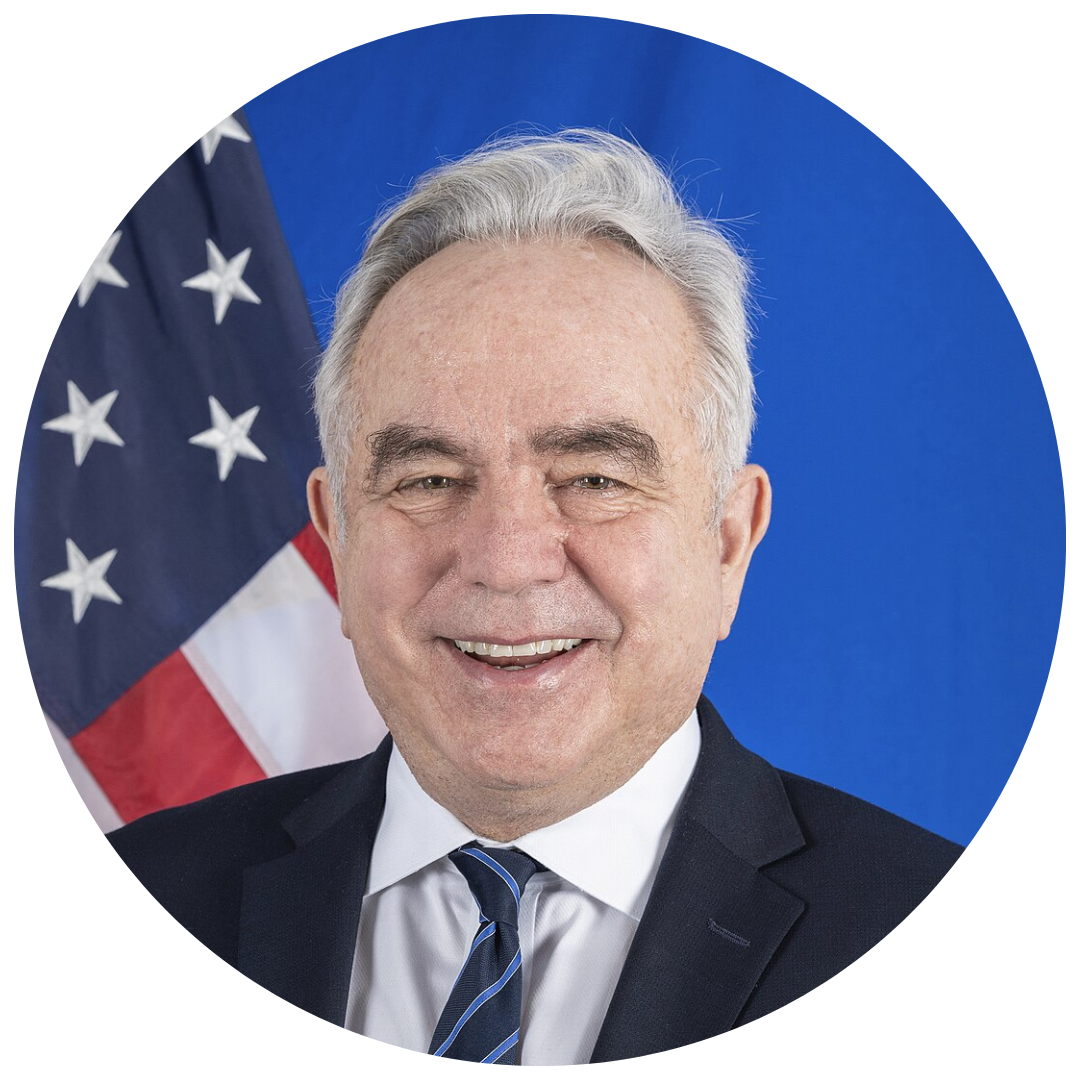
Dr. Kurt Campbell is the chairman and co-founder of The Asia Group, a geopolitical and strategic consultancy based in Washington, DC. He was previously the 22nd deputy US Secretary of State. Before assuming his role at the State Department, he served as the inaugural Indo-Pacific coordinator at the National Security Council and deputy assistant to the President at the White House from 2021 to 2024. He is widely credited as the key architect of the “pivot to Asia” during his tenure as assistant secretary of State for East Asian and Pacific affairs under the Obama Administration. He has a doctorate in international relations from Brasenose College at Oxford University and a bachelor’s degree from the University of California, San Diego. He is the author of ten books, including most recently The Pivot to Asia: The Future of American Statecraft in Asia. He is married to Dr. Lael Brainard, and together they have three daughters.