

By Andy Rothman
The fourth plenum, a key meeting of China’s leadership, outlined recommendations for China’s 15th five-year plan, which will begin next year. Here veteran China watcher Andy Rothman looks at priorities for China’s economy as it tackles the next round of geoeconomic headwinds and its own pressing domestic issues.
Recent media reports have focused on the meeting between US President Donald Trump and China’s President and General Party Secretary Xi Jinping, but the more important China news has been domestic: Xi’s outline of his economic policy objectives, with a focus on promoting consumption and tech self-reliance.
Following a meeting in late October of the Chinese Communist Party’s leadership (formally, the Fourth Plenum of the 20th Central Committee of the Party), Xi and other senior officials issued statements explaining that in the coming years their economic strategy will be focused on promoting domestic demand, innovation, technological self-reliance, entrepreneurship, renewable energy and “green production and lifestyle.” Xi signaled that he is comfortable enough with the current growth rate that he isn’t planning a major stimulus or bold policy changes, including for the struggling property sector.
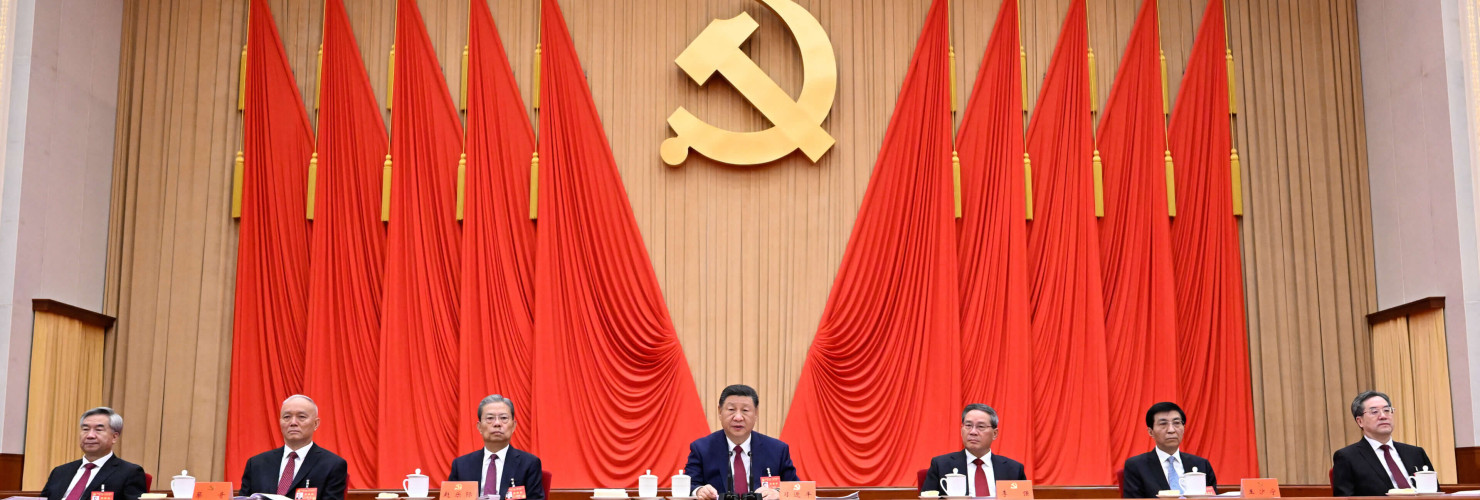
The overall message: there is no sense of urgency to fix problems such as falling house prices, and a belief that the transition underway from an economy driven by investment, real estate and traditional industry to one based on consumption, innovation and renewables will continue to be “arduous” but will make adequate progress. Xi indicated that the current pace of growth is acceptable.
Economy is on a “solid foundation” so no bold policies
In a statement published on October 28, Xi declared that the economy is on “a solid foundation,” and he did not suggest an urgent need for major stimulus or bold policy changes.
A much longer document published on the same day by the Party’s Central Committee, which Xi chairs, did, however, acknowledge a long list of economic challenges: “The task of shifting from old to new drivers of growth is arduous; effective demand is insufficient; employment and income growth are under considerable pressure; and changes in the demographic structure pose new challenges to economic development and social governance.”
Xi barely mentioned one of the biggest challenges, a collapse in new home prices and sales volumes, simply calling for the promotion of “high-quality real estate development.” The Central Committee report added only that this means accelerating the development “of a new model for real estate development and improve the basic systems for commercial housing development, financing and sales.”
This is consistent with what I heard in my meetings in Beijing in September: the leadership believes that while a recovery in the housing market will take a long time, the worst has likely passed, the high level of required cash downpayments has meant that the sharp fall in prices has not led to a financial sector crisis, and the state-controlled banking system has worked to make foreclosures rare. Major new initiatives to boost the property sector are unlikely unless a new crisis surfaces.
“Domestic demand the primary driver of economic growth” – President Xi Jinping
Xi and his team emphasized the role of domestic demand, with Xi stating that China “must vigorously boost consumption,” and that his government would “persist in strengthening the domestic circulation” and use domestic demand “to offset the uncertainty of the international” economy.

In a media event following last month’s fourth plenum, Xi’s top economic planner noted that “major economies are all domestically demand-driven” and said that “a strong domestic market is the strategic foundation for Chinese modernization.”
Xi said his policies, including in the forthcoming 15th five-year plan, will be designed to boost consumption and for “strengthening the role of domestic demand as the primary driver of economic growth.” Xi did not, however, propose any significant new government programs to stimulate consumption.
The Central Committee report did suggest that government investment would be increasingly focused on people rather than on hard infrastructure, including by expanding the social security system, with an intention of raising “the proportion of residents’ income in the distribution of national income.” No details were provided, although that may come in March, when the new five-year plan is set to be released by the National People’s Congress. Hopefully this will include more spending on pensions, health care and education, which would, over time, reduce precautionary savings and expand consumption.
Strengthening original innovation and self-reliance” – President Xi Jinping
Xi continued to emphasize the role of science and technology in his economic planning, calling for “strengthening original innovation and key core technology research.”
In a nod to Washington’s attempts to use export controls to slow China’s technological progress, Xi wrote, “The most important factor in promoting high-quality development is accelerating high-level scientific and technological self-reliance” in order to achieve “breakthrough progress.” The minister for science and technology set a goal of producing “more original, landmark outcomes,” and the commerce minister said China would become a “global testing ground” and “profit center for innovation.”
The science minister described Artificial Intelligence (AI) as “a new engine of growth,” and the Central Committee called for full implementation of China’s “AI+” action plan, designed to integrate artificial intelligence in a broad range of industries and services. The Central Committee also gave shout outs to specific tech fields, including quantum computing, biotech, semiconductors, software and high-end manufacturing equipment.

Xi called for “construction of a new energy system and the formation of a green production lifestyle.” His planning minister said they will “actively promote . . . low-carbon lifestyles and products.”
At a time when US President Donald Trump is promoting fossil fuels, the Central Committee said it will “continue to increase the proportion of new energy supply, promote the safe, reliable and orderly replacement of fossil energy” and decarbonization.
Modest support for entrepreneurs
Xi’s personal statement offered only indirect support for China’s private sector, which already employs about 90% of the urban workforce and is responsible for most innovation. Xi said he would continue to promote “new productive forces,” which include the leading tech industries. He surely understands that all eight of China’s top AI companies are privately-owned, and the majority of the larger battery and EV producers are private companies.
The Central Committee report was a bit more direct, calling for implementation of the new law promoting the private sector, to “develop and strengthen the private economy” and “stimulate the vitality of private investment.”
For more on consumption, innovation and entrepreneurship in China, please see my recent note, What Is Xi Thinking?
Internationally, “profound changes not seen in a century”
Xi and his colleagues did not directly mention the United States in their plenum statements, but they did acknowledge the turbulence in China’s relationship with the world’s largest economy.
In addition to the previously mentioned calls for tech self-reliance, the Central Committee of the Party noted that “the international balance of power is undergoing profound adjustments . . . the competition among major powers is becoming more complex and intense.”
The Central Committee said its objective is to “maintain overall stability in relations between major powers.” The commerce minister said, despite the rise of unilateralism and protectionism, “economic globalization remains the general trend,” and China “will continue to pursue openness” which “has become a powerful engine for China’s economic growth.”
“Never relent until corruption is eradicated”
There were no signs of a letup in the long-running anti-corruption campaign, which is slowing spending in restaurants and squeezing corporate margins as everyone obsesses about cutting costs to avoid attention from investigators. Xi called for “resolutely fighting the tough, protracted and comprehensive battle against corruption.” The Central Committee said it would “maintain the sober determination to fight corruption forever.”
Anti-involution may be working
The more recent “anti-involution” campaign, which is designed to reduce industrial deflation, didn’t receive much attention from the fourth plenum but appears to be working.
Xi only indirectly mentioned this issue, calling for “everyone to proceed scientifically, rationally, and pragmatically, and to prevent a rush into development.” The longer Central Committee document simply said that “involutionary competition” should be “rectified.”
There are tentative signs that the anti-involution campaign is having some impact, and it is likely to continue. The producer price index (PPI) rose 0.1% month-on-month in October, the first increase this year. In recent months, prices have been strengthening a bit in sectors such as photovoltaic equipment, lithium-ion batteries and semiconductor manufacturing.
“Peaceful reunification”
Xi did not discuss Taiwan issues in his plenum statement, and the Central Committee said only that the Party will “promote the peaceful development of cross-Strait relations and advance the great cause of national reunification.” No timeframe was discussed.
In an October 25 speech about cross-Strait relations, Wang Huning, a senior Party official responsible for Taiwan policy, did not break any new ground, and did not suggest Beijing is preparing to use force:
“The One-China principle will never tolerate Taiwan independence . . . will never tolerate external interference . . . Compatriots on both sides of the Strait are bound by blood and affection, and are family of the same flesh and bone. . . We will adhere to the policy of peaceful reunification.”
A tentative truce in the trade war
The Xi-Trump meeting in Busan, South Korea, shortly after the fourth plenum, resulted in a tentative truce in the trade war. If the truce holds, it will boost confidence among Chinese entrepreneurs, consumers and investors.
The most important outcome of the meeting was a better tone about China from President Trump. He described it as “an amazing meeting . . . on a scale of 0 to 10, I’d rate the meeting at 12 . . . There is enormous respect between our two countries . . . We get along great.”

A few days later, asked by a reporter “How big a threat is China?”, Trump declined to take the bait and replied, “I think we can be bigger, better and stronger by working with [China] as opposed to just knocking them out.”
President Xi did his part by declaring that “China’s development and revitalization goes hand in hand with US President Donald Trump’s vision to ‘Make America Great Again.’”
Both sides have been taking steps to fulfil the agreement reached by the two leaders. There are, however, plenty of opportunities for misunderstanding and disagreement, as a joint statement has not yet been published, and Beijing’s public commitments have not mirrored all of the detailed claims by Washington, on issues ranging from soybean purchases to steps to further curtail the flow of fentanyl precursor chemicals.
The best-case scenario is that both sides remain content with the truce and refrain from provocative policies and rhetoric, providing an opportunity for a more detailed set of trade and investment agreements when Trump visits Beijing next spring.
Four longer-term trends
Regardless of how the US-China tensions play out, four trends are likely to continue:
– China will remain the world’s second-largest and fastest-growing consumer market
– World-class competitors will continue to come from China
– China will remain a key part of global supply chains, and
– China is likely to continue to account for more than 20% of global economic growth, larger than the combined share of growth from the US and its G-7 developed nation partners.

Andy Rothman is founder and CEO of Sinology LLC. He provides advice to institutional investors and companies on the opportunities and risks presented by China’s economy, and on the impact of changes in US-China relations. Andy first went to China as a student in 1980, and he returned as a US Foreign Service Officer in 1984, with his initial assignments at the US consulates in Guangzhou and Hong Kong. Andy’s 17-year diplomatic career included serving as the Taiwan desk officer at the State Department, and his final posting was as head of the macroeconomics and domestic policy office at the American embassy in Beijing. In 2000, Andy began his private sector career, helping institutional investors and companies understand China’s rapidly changing economic environment, first as China macro strategist for CLSA, an institutional brokerage and investment group, then China strategist for Matthews Asia, one of the largest, active, US-based investors in China’s equity markets. He founded Sinology LLC at the start of 2025.