

Among the most original thinkers to tackle the question, ‘What makes China tick?’ is 41-year-old Keyu Jin, an associate professor of economics at the London School of Economics and Political Science. The daughter of former World Bank economist and head of the Beijing-based Asian Infrastructure Development Bank, Keyu Jin moved to the US at age 14 to study at the Horace Mann School, followed by an undergraduate degree and PhD from Harvard University.
Her 2023 book, “The New China Playbook: Beyond Socialism and Capitalism” (Viking) moves beyond traditional economic frameworks in describing China as a “political economy” in which politics and economics are tightly inter-twined, and the “mayor economy” at the local level has been responsible for both innovation and over-capacity. She spoke to AmCham HK members at the 2024 China Conference on April 8. Here she is in conversation with AmCham e-Magazine editor Edith Terry about the readjustments China needs to make to survive its first economic recession, as well as its enduring source of strength. The transcript has been edited for length and clarity.

Living between two worlds
I live in between these two worlds of China and the United States. And I admire both countries and both cultures for different things, sometimes for overlapping things. I think there’s more commonality between the US and China than many other countries. It’s the belief that one can work hard and become successful that is very, very real in both China and the US in ways that are much deeper than in other countries. If it were not for the geopolitical competition, when we look at Chinese and American businessmen together, they can do wonders. And they really understand each other.
I’m grateful to the US because they were very open to me and to so many international students. They really want to educate people from around the world to make the world a better place in the long run. And that is very admirable because they put their own resources to work. Their amazing science and technological ecosystem is something I deeply admire.
But of course, China is my home country. And I’ve seen it go through being the most backward economy when I was born to the most connected component in a world where my friends, when we were growing up, didn’t even have money to buy a coke. Now they have achieved their American dream, in China. And that’s what a successful economy can bring, you can change somebody’s life and the lives of generations. Economic liberalization, good policies can do that. I think it is one of the most remarkable economic success stories in modern history, or in all of human history.
There are important cultural differences between the US and China, for instance, the relationship between authority and people. There are also fundamental differences between the US and China when it comes to our political views. And I think that it’s important to see both views and both perspectives and not only use one lens to assess the world. If we cannot do that, we will never see eye to eye, and we’ll never be able to talk through things and solve problems if we only adopt one lens. There will always be clashes and misunderstandings. And these two countries might talk past each other, which we know is increasingly a dangerous thing to do.
What I was hoping to do, along with my generation of people with similar backgrounds, was to reconcile some of these views and say that these are just different points of view, different backgrounds, different cultural upbringings, different cultural contexts and different cultural constraints. And there’s no one model that works, despite what we’re taught in the textbooks.
Will China repeat Japan’s recent history?
China needs to avoid the policy mistakes that Japan made in the 1980s. Back then, Japan believed that it had a structural economic problem, rather than a short-term demand problem, and it did not come out with a sufficiently powerful stimulus package. A shorter-term problem then became a longer-term problem. My fear is that if a deficit in demand is not properly taken care of, then it becomes a longer-term problem for China. I also fear, although I don’t think it’s necessarily going to happen, that the pro-growth agenda will be given up.
What gives me confidence is still the resilience of the system and the tenacity of the Chinese people, figuring out how to adapt, how to adjust, and how to adapt to the circumstances.
China’s new playbook
We are living in a very different geo-economic era, where all the major powers are rebalancing economic considerations and security concerns. This is not only national security, but social stability, stability of supply chains, climate, and pandemics. All the major powers are rethinking or redesigning their international economic strategy. It’s not just China. I think China is striving to avoid the kind of massive inequality and corrosive linkages between politics and business, as is perceived to exist in the United States, for instance. Now, whether it’s possible to achieve this without giving away too much on growth is an unknown question.
That’s the biggest question. How do you engender more fairness and inclusiveness without forsaking too much growth? It is something that all countries are trying to figure out. I don’t think China has given up its pro-growth agenda, and it comes back in cycles. Throughout history, we’ve seen countries when they reached a certain level of income, they start thinking about other things. This is when populist governments start to rise as they begin to think about inequality but without the proper solutions to tackle inequality while not giving up growth.
Whether China is going through that cycle is a question, but I think that because of the pragmatism of the Chinese state, they do adjust their policies in real time. In the last few years, we’ve seen other things being orchestrated. Let me just put it this way: I think that the biggest change is that economic growth is not the only objective of the nation. It has to balance growth with environmental considerations, social stability and national security. These go into the mix of objectives for the government, a wider range of goals that are more complicated, and more complex to assess than the current quantifiable targets of GDP growth.
China’s first economic recession
Although I’ve called this China’s first economic recession, it’s important to recognize that China’s size is enormous. Even if the growth rate slows down, compared to the previous decade, the contribution to the global economy is still huge. If China was to grow five percentage points slower than India, until 2030, it’s still going to contribute something like $130 trillion more to global GDP. The larger a country is, naturally the slower the growth rate tends to be. Second, in terms of contribution to global growth, China is still the second fastest growing economy in the world, after India and before Indonesia. And it’s still very much the central part of a global supply chain, along with Germany and the US.
China’s strategic economic plan is to move from quantity to quality. The actual growth rate is not as important as what China produces, how it produces it, and whether it’s ascending the value chain. A lot of the lower skilled manufacturing jobs have already moved to Vietnam, Mexico and Bangladesh, but you never hear in Chinese newspapers, about the Vietnamese stealing Chinese jobs, as you hear about the Chinese stealing American or European jobs in western media. And the reason is that they take this as given. It’s a cycle of renewal, that the baton of manufacturing gets passed along as China moves us on to another mode of development. And what you do hear is how do you transition, you hear about changing sectors, increasing productivity.
If the government has chosen a more financially sustainable, environmentally sustainable, and more value-added approach, it is possible that we won’t have as rapid growth as we had before. It’s not inconsistent with the fact that there’s a deficit in aggregate demand in the short run. And here, I believe that more aggressive, expansionary policies would do good for the Chinese economy and hence for the world as well. My view is that in theshort term, there are some cyclical issues with the Chinese economy, but in the longer term, it’s a transition, that takes time. And we’re not going to see the kind of exorbitant growth numbers we saw before. And that’s just a new reality.
China still has huge potential to grow more, if policies and reforms are well chosen and executed. Why? Because if you just look at the gap between China and the United States in terms of productivity, organization and education, it is still very sizable, and there’s a substantial amount of growth potential. If we look at the United States, over time, the 50 states have converged with one another, even if the GDP gap between them was initially very large. There are substantial barriers to movements of people and goods within China. If that reform takes place, how will it impact prospects for growth?
Beyond tech
A handful of Chinese cities have reached rich income status, which makes me believe that China can become a rich income status country. If you look at these cities and their capacity to innovate and technology, they are close to South Korean levels.
The problem in China is massive geographical disparity and a lot of income inequality. In other countries, income inequality exists within cities, but in China, it’s across provinces between the urban and rural. Part of the geographical disparity is due to a massive rural population that is still significantly under educated and under employed. That’s already a force of convergence that could be addressed through higher education and better social infrastructure for the rural population, especially with China’s ambition to be the next generation manufacturer of the world.
China really needs a lot of technically skilled workers and vocational school graduates. There are a lot of jobs available, but workers have to be equipped with the right kind of educational skills. Education is number one. And number two is of course, social security. Migrant workers without the proper social security protection spend at about one-third of the consumption levels that an equivalent urban worker spends. Pension reforms have improved over time, and the coverage is more expansive than it was before. But the degree of social protection is still low for the rural population.
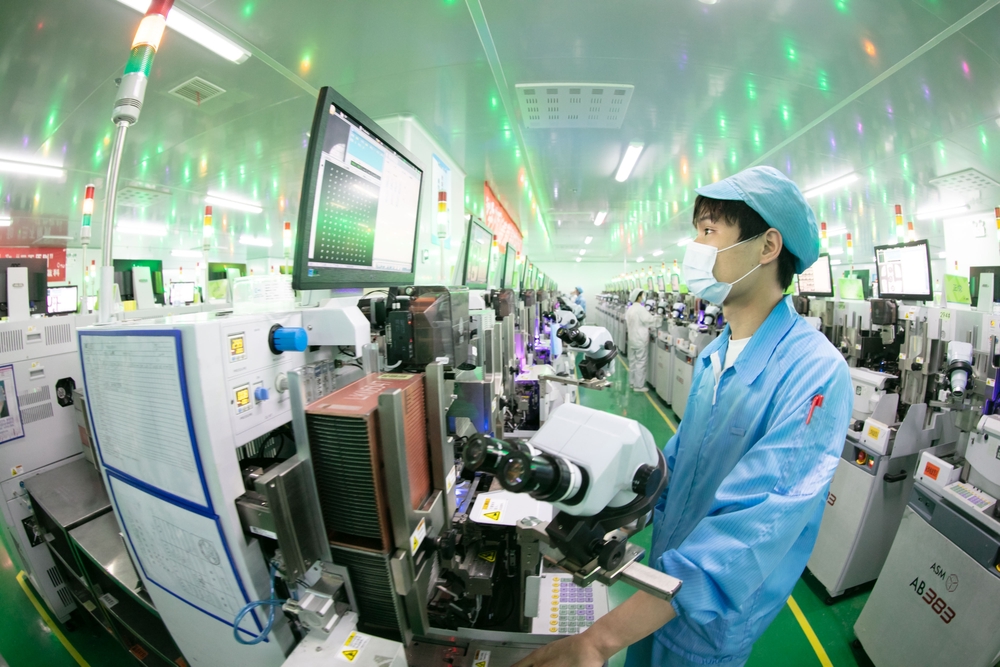
And third, there are significant barriers to movement of both goods and people. As one simple example, there is a substantial amount of local protectionism and local trade barriers to movement of goods within China. China’s internal trade is more than the trade with outside China. If you lower these internal trade barriers, there are also substantial productivity improvements.
Misallocation of people and resources are important in a country like China. You can improve or reduce the misallocation of people which will also represent a significant increase in income, productivity and efficiency and hence, a reduction in geographical inequality. Why this is not happening goes back to the mayor economy. Mayors need social stability in their own local jurisdiction. They think, do we want immigrants in our cities and how many. It’s also a political and social issue, not just an economic issue. But it comes back also to a greater urban configuration. Does China want to build mega cities, where there are lots of people in dense populations, and people get higher incomes because they can move to urban areas that needs agglomeration effects, or does it want to build satellite cities, around which there are a vast network of rural communities.
These are two different models of urbanization. And they have different implications. But both are meant to produce greater number of jobs, and more opportunities to raise consumption because you’re affiliated with an urban area.
The fourth area is services. Now, services only account for 52% of employment in China. That’s just way too low. It’s about 80% in all other major advanced developed economies. This is an enormous area of opportunity. I don’t believe that developing services can make you rich, but rich countries also have very large service sectors. So if China can lower the barriers to entry, the service sector will not only create more jobs, but will employ a third more of the higher skilled labor force than manufacturing. And that also gives opportunity to a lot of the young people who are very highly educated today.
These are all reforms that can be done. It comes down to better social security protection. The second set of reforms, which are important, but it’s also difficult to do, is the financial system. Markets are too deeply regulated could be problematic. But financial markets that are too controlled, also sometimes defeat the purpose of the benefits of capital, which is that it will search for the projects in the best returns.
The financial system is problematic because the real economy is driven by the private sector, and to have a vibrant private sector, you need small and medium sized companies to thrive, and to have a thriving innovation ecosystem. The private sector, especially the small medium sized companies need to be able to obtain financing much more easily than they do now. And if you look at the institutional setup, in China, there are so many layers within the financial system that credit doesn’t really trickle down into the private sector. And when they do get credit, the cost of capital could be double that for the big SOEs, because we don’t have a financial system that’s capable of accurately assessing risk.
Where 80 percent of credit comes from capital markets in the US, in China 80 percent is coming from the banking system. And the banks inherently don’t want to lend to more risky enterprises. It’s not that there’s discrimination; in fact, it’s the opposite. But some of these institutional constraints mean that there’s implicit discrimination against the private sector in the financial system. And I think that this is key to getting a vibrant innovation ecosystem. Why America is so successful in technology, I think a lot of it also has to do with the vibrant financial system. There are mergers and acquisitions, and all kinds of channels for investors to exit, and if you don’t have that, then the investment cycles will be substantially impacted.
China’s next wave is about Chinese companies going global
I think the next wave is about Chinese companies going global, which will be met with substantially newer challenges, and especially geopolitical challenges. That wasn’t really the case before, and was not really a concern for Japanese companies, to the extent that they are for Chinese companies. But for companies to export, to have an international presence, they must already be pretty big. And they must already be successful domestic players. That’s number one. Number two is that going abroad requires a substantial amount of fixed costs, local networks, breaking cultural barriers and so forth, which is not easy for domestic Chinese companies.
We’ve seen that the largest companies like Alibaba Group Holding Limited (BABA.NYSE, 9988.HK) and Pinduoduo, or PDD Holdings Inc. (PDD.Nasdaq), because of the resources they have and the network they have, are now making a significant foray into foreign markets. But most companies are not able to do that, because of the substantial barriers and fixed costs that are involved. The question really is whether domestic champions could be international champions. And I think that some of we already have some evidence of that happening.
There are innovative business models like TikTok (owned by ByteDance), Shein, the fashion company, and BYD Company Ltd (1211.HK). We’ll see more and more of these, but they do have significant geopolitical challenges, especially when it comes to the US and potentially also in Europe. I think they have a lot less challenges and are much more welcome in the rest of the world or in developing countries in Africa, the Middle East and in Latin America, because Chinese products have the benefit of being perceived as high quality and lower cost, which is very suitable for these economies.

But to compete at the very high end is a greater challenge for domestic companies because of the brand that they need to build and the softer aspects of doing business. That takes time and a substantial amount of awareness. It takes a country that is already getting into the phase of enjoying higher quality or luxury products. Japan was already at a higher income level when they were doing that. So that’s also a part of that cycle that China is still getting into. But there’s absolutely no question that Chinese companies even more than the Japanese companies had, is the ambition to go global.
The hidden costs of industrial policy
Currently, there’s a race not only in technology and technological competition but a race of industrial policies. I always say to myself if the China model is so bad then why are the Americans following the China model now, with the CHIPS and Science Act and the Inflation Reduction Act? And it’s not just the US but Europe with its green industrial deal and Japan aiming to revive its semiconductor industry.
Why countries are competing with each is that there’s a sense in which technologies such as AI and quantum are new general purpose, game changing technologies. Based on the triangle of data, communications and AI, they will shape all future technologies. Countries like China believe that this is a once in a lifetime opportunity to jettison into the very frontier of economic and technological power. There’s no incumbent, and you have a chance to shoot straight to the top. This is why there’s also this extra effort in investment and state coordination and creating an innovation ecosystem that links industries and universities and government.
Now, the question is, what’s the cost? Leaving aside the benefits, that’s always been a tricky issue with China. You cannot look at the whole picture by just looking at the achievements without looking at the cost. And you also cannot just look at costs. I look at the achievement – one can argue these new industries have been a real success in China. In 2005, if you looked at the map of China for solar panels, it was a desert. Ten years later, China was at the very frontier of solar panel production and innovation. Cities that have had these industrial policies are able to produce thousands of new solar-related patents every year. And that’s the same with EVs (electric vehicles). We’ve also seen industrial policies where it’s pretty much failed. How you do it is very important, and the softer aspects of development are also important.
You can’t think about China as a whole. There were successes and there were failures. With the ones that were more successful, local governments provided a much better climate, through a whole range of policies. The emphasis purely on financial subsidies is really missing the fundamental point, which is that for jumpstarting new sectors, the right kind of state coordination is not just the face value of subsidies. It’s obviously not just throwing money at the problem itself that matters.
With all the major strategic plans, it’s almost always been a method of first, trial and error and second, pilot cities before you roll it out throughout the nation. That strategy has not changed. And second, part of the reason that China’s good at these strategic new sectors is that it’s a very fast way to market test. It’s a very big market to be able to have fast customer feedback loops. And learning by doing is extremely rapid. And because you have this vast market and because you have competition, it may turn into what we call overcapacity. I think overcapacity is a short run phenomenon. And in some ways, that degree of competition which fosters successes, failures, and rapid innovation, is a very important way to test the markets.
This is why things happen very fast in China, even though there are a lot of inefficiencies. Over time, the market will adjust.

Keyu Jin is a tenured associate professor of Economics at the London School of Economics and Political Science. She is the author of The New China Playbook: beyond Socialism and Capitalism, which was a Financial Times Must Read of 2023. Her op-eds have appeared in the New York Times, the Financial Times, the Wall Street Journal, Time Magazine and many more publications.