

Following the APEC leaders’ summit in Gyeongju, South Korea, Ambassador Kurt Tong spoke with AmCham Hong Kong on the outlook for US-China relations and the global trading system. Tong was US consul general in Hong Kong from 2016 to 2019. His tenure featured a “USA Loves Hong Kong” campaign even as the city’s politics veered into acrimony and protest. His US State Department positions included stints in Tokyo, Beijing, and Seoul, as well as ambassador to the Asia Pacific Economic Cooperation (APEC) organization.
How would you describe the US-China relationship following the summit meeting in October between US President Trump and President Xi Jinping?
We’re currently in a situation where I would use two metaphors. One is arm wrestling, where the US has discovered via its intensive application of direct, bilateral economic policy pressure on China that China is an equal match for the United States. Contests between two hefty people can go on for hours, and neither side wins if they’re equally matched.
That’s where we are in the US-China space. China has enormous leverage over some aspects of the US-China bilateral economic relationship, and the United States has enormous leverage over others. Both have tried to apply those levers. After responding to the shock of the so-called Liberation Day “reciprocal” tariffs, Beijing came to the realization that it can hit back with equal and opposite force, and that such an approach will result in a better outcome for China than trying to downplay and stall for time and deter further US action. The new action-reaction cycle has led, essentially, to a draw.
The other metaphor is a roller coaster. Let’s say that the high point on the roller coaster is high tension in the relationship, and the low point is a lower equilibrium level of tension. On a roller coaster, you go up, you go down, you go around some turns. Hopefully things don’t go off the rails, but you eventually end up where you started.
The roller coaster is one way of thinking about what’s happened in US-China economic relations this year, with the US raising tensions and China, in return, responding with very strong measures, and then the two leaders stepping in and bringing things back to an acceptable level of economic leveraging and counter-leveraging that has less destructive impact on both economies. That seemed to be the pattern this year.
Will 2026 be another roller coaster year?
Looking into 2026, I think the question becomes whether the highs and lows of the roller coaster cycle are as extreme as they were in 2025 or if they are moderated by the promises of diplomatic interaction and communication that presidents Trump and Xi made in Korea. I’m optimistic that in 2026, at least, for that one year, perhaps we’ll see relative calm compared to 2025 because of the desire of Trump and Xi to present a thoughtful approach to the relationship – which both men want to project to their peoples – as well as their shared desire for less impact on the economy. There are various geopolitical factors as well.
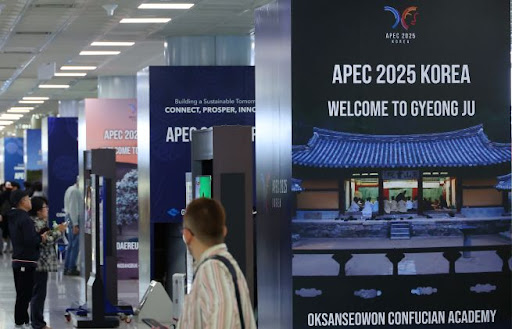
The expected trip of President Trump in the first half of the year to China, plus the possibility of a meeting at APEC in Shenzhen late in the year, and the prospect of President Xi visiting the United States for the G20, and the distinct possibility that President Xi will accept an invitation to come to the US even before the end of the year for a bilateral session – all of these, perhaps, will put a damper on tension and lead to a chance for some deliverables and positive motion in the relationship.
The Trump presidency is rather uniquely a top-down presidency and the number of people involved in shaping the direction and content of US China interactions to date has been extraordinarily small. It’s a very tight circle of very few people all very much aligned with President Trump. I don’t think that’s going to change during this administration. Because of that, I’m not hopeful for “normalization” of US-China relations if “normalization” means reopening of lots of working level, detailed bilateral channel discussions in the form that we saw reach a peak during the Obama years.
What could happen is “regularization” of communication at the highest level, which could then triage and choose among various positive measures that the two sides could take for win-win deals, as well as triage and choose among the punitive measures that each side can take. This could result in greater stability, especially in 2026 before the US mid-term election.
You’ve suggested that the impact of President Trump’s approach to tariffs should be viewed in the light of the game of weiqi, or go, as it’s called in Japanese, rather than the kings and pawns of chess.[1]
The weiqi metaphor assumes that the US and China both want to have influence in the region, and the idea is to have as much space on the board as possible. It’s a multifaceted playing field and a long-term game.
In April, when the President was applying tariffs rather indiscriminately on a lot of Asian countries, it really looked like the US would lose a lot of “territory” on the Asian diplomatic gameboard. Now, a lot of bilateral agreements have been reached – even though those agreements are mainly accommodations with US demands to have a higher tariff regime, rather than actual “win-win” negotiated outcomes.
But the basic point still holds. The United States, by over-emphasizing tariffs, is hurting itself diplomatically and in terms of its economic reach. I think it remains useful to think of the situation as weiqi, or go in the Japanese version, since that is played as a long game. It takes a long time to play it, if you play it well, and it unfolds over time and has a lot of twists and turns. Looking at it from that perspective, the United States is undermining its own influence through unilateral actions and through an emphasis on transactional win-lose approaches to economic relationships, rather than crafting win-win gains.
This will certainly undermine US standing in the region over time, both as a thought leader and an economic leader. Of course, there are other aspects of American power besides economic relationships, and trade and investment patterns. The US political and military stance towards the region has not been fundamentally altered by President Trump’s approach, and that is hugely important. But these transactional, unilateral tariffs, and the “my win, not your win” approach to economic relationships is going to undermine American influence.
How do you read the impact of “reciprocal” tariffs on specific US relationships in the Asia-Pacific?
I would separate the Asian economies into two categories in response to the current circumstances.
First, your typical Southeast Asian country is being confronted with US protectionism, but still very much wants strong economic and political engagement with both the United States and China. Each nation has different feelings about engagement with Washington and Beijing on the political front, of course, depending on their geography and history. They may have a positive view of the US as a political ally over the long term, alongside positive impressions of China’s growth potential and impact on their economies in the medium term.
But they very much want to have good relations with both sides, avoid conflict, continue creating bridges and stabilizing the situation, because their fundamental goals are economic growth, development and good governance in their societies. The way to achieve that is to avoid conflict with either the United States or China and avoid commitments to one that preclude commitments to the other.
Now there’s a great deal of variety among Southeast Asian economies and countries, you know, from the Philippines to Cambodia to Thailand to Vietnam, but they’ve been successful for decades in navigating this dilemma by accommodating pressure and maintaining strong relationships with the United States, while also building workable relations with China.
Overall, the anxiety created by the Trump administration’s trade protectionism have been less dire in Southeast Asia than in Northeast Asia. One of the reasons is that the United States has taken a blanket approach to tariffs that keeps them all roughly in the same boat in terms of their competitive standing vis-a-vis one another, as well as in their competitive trade standing vis-a-vis China. If access to the US market is the measure of competitiveness, they’re all in the same place, and that has made it easier to swallow this shift in US policy towards a protected import regime. And China still has a higher tariff imposed on it than Southeast Asian countries, which helps make this something they can weather.
Southeast Asian countries were quite happy that President Trump came to the ASEAN-hosted summit meetings in Kuala Lumpur from October 26-28, which, to be honest, kind of surprised me and was a very smart thing for the United States to do. The US signed a trade agreement with Malaysia that set tariff rates and other conditions. Trump’s intention is to use that framework as a model for solidification of terms with the Southeast Asian countries. Hopefully those agreements will come together and tensions will be reduced.

In Northeast Asia, the laydown is different, and I would include Australia in this as well. For Japan, South Korea, Australia, and to a lesser extent, the Philippines, a deep political and military relationship with the United States is an existential requirement for stability, growth and survival, given the rising capabilities of the of China and their perception, at least, of China’s hostile intent in developing a powerful military capability and throw-weight.
In that context, those economies have had to do more to handle US demands. South Korea and Japan have deeper economic relationships with the United States than Southeast Asia. They are heavily invested in the US economy, and have deep trading relationships with US businesses, and they’ve had to make deeper adjustments to handle President Trump’s unilateralism. But they’ve been successful in doing so, by wearing down some of the US demands over the course of the year, through patient, steadfast, unemotional negotiation, seeking frameworks for their economic relationships with the US that will reinforce their political and military relationships with Washington.
How did President Trump’s visit to the region in October affect these dynamics?
The net result of the visit was to pull all these countries closer to the United States – because they must be close to the United States. Some of what they’re doing is paying the price of keeping things warm with the US. But they’re also making their own self-generated adjustments in terms of defense spending, in terms of overall alignment, spurred on by this new, more demanding US partner, and perceived threats from China. This trend has also, for the moment at least, added to a certain degree of balance and stability.
Japanese politics is complex, and they’ve got a big resource problem with a mismatch between what they want to spend money on and what they have in terms of revenue. That’s going to be a real problem. But the intention is to continue to internationalize their economy, invest heavily in the United States, both economically and politically, and expand their military capability. Those intentions are quite clear. There’s strong public support behind all of those. Delivering policy success is going to be a challenge, because the government needs to find a way to pay for all that.
Given US unilateralism in trade and economic relationships, what is the future of regional economic institutions, like APEC, or global ones like the World Trade Organization?
There are two wrecking balls in the in the region. One is the United States and the other is China. The US is upsetting the direction of the region by taking a transactional, America-first, unilateral approach to trade in goods. The United States pulled out of the Trans-Pacific Partnership (TPP), which it helped create, and has provided little in the way of leadership towards APEC. It had a failed initiative with President Biden’s Indo-Pacific Economic Framework (IPEF). The US has generally pulled back and been moderately destructive towards regional economic integration initiatives.
The other wrecking ball is the PRC, which through its over-capacity, its inability to reform its domestic economy, and its inability to change the fundamental balance between the cost of capital for services and for manufacturing, is upsetting trade relationships and internal economic balances in nations around the world. China has continued its huge over-investment in manufacturing, despite the best advice of economists from inside and outside China, which has led to the destruction of opportunity throughout the region.
I don’t necessarily believe China’s actual intentions toward the region are destructive, but its over-investment and under-consumption has had a negative impact on economic growth potential in Asian economies as well as other parts of the world, by concentrating manufacturing resources in one location. That trend could continue and deepen, given the investments that China is currently making, both in manufacturing and in artificial intelligence, which will be a major driver of future products and services.
Globally, most middle-power economies want to continue with “Plan A” – meaning regional and global economic integration, bringing down barriers, the opening up of their borders to movement of people, capital and goods, and creating more economic opportunity and growth. The United States is pulling back from that, specifically in goods trade, through its strong desire to bring manufacturing back to the United States.
I both think and expect that the rest of the world is going to go ahead with globalization and liberalization without the US or China, and that’s the pattern that we’ll see. Currently the WTO is inoperable, because you can’t have a global system without the two largest economies participating. I expect to see continued proliferation of free trade agreements and other kinds of relationships in the Global South, but also in the Global North, including Europe and the Northeast Asian economies.
I would posit that the current scope of “like-minded trading partners” could mean the entire planet except the US and China, which are the two countries that are big enough to be more selfishly oriented and get away with it.
In a recent article in the Financial Times, former US Trade Representative Robert Lighthizer speculated that if the Republicans win the next presidential election, there will be a new global trading system. [ii]Do you agree?
Mr. Lighthizer was positing that there’s a permanent shift toward an across-the-board high-tariff, protectionist approach to international economic relationships. I am not confident that he’s right. In fact, I think he’s probably wrong. Let me explain what I mean.
President Trump has expressed, in one form or another, four reasons for his enthusiasm about tariffs. One of them is to raise revenue. A second is to balance trade deficits. A third is to bring manufacturing back to the United States in greater proportion, and the last is to have a leverage tool for selective intervention on economic and geopolitical concerns – or matters of personal concern to the president like Brazilian politics.
I don’t think the American public writ large is interested in having their imported goods taxed heavily over the long term as a form of raising revenue. Using tariffs to gather revenue was US policy throughout most of the 19th Century, in the absence of other taxes. But tariffs are a very inefficient, regressive form of revenue raising. You see that in US politics already, where public support rates for tariffs are not high at all. There is only a few people saying they support tariffs – because they unequivocally support the president.
Meanwhile, economists tell us that high tariffs won’t have any impact on trade deficits. The consensus view of economists is that achieving a rectification of the overall US balance of payments through a border tax is not going to work.
So, what about the other motivations? I do believe that tariffs will now become one of the tools that the US uses to try and bring more manufacturing onshore. But the way to do that effectively is to do it in very selective fashion. If you want to protect a sunrise industry or recovering industry in your own country using tariffs, it needs to be done in a targeted fashion. Because if you do it across the board, all you’re doing is raising the cost of inputs and labor at the same time as raising the cost of competing goods, and you are defeating yourself.
Finally, I think using tariffs as a targeted international punishment measure is similarly effective to other forms of economic and political sanctions, and those have historically had very mixed results. The US has been a broad user of economic sanctions over the years, but they only occasionally work – and not very often. The same is true with tariffs.
Look at the current tariff imposed on India for importing Russian oil. The US, for a long time after Russia’s attack on Ukraine, winked at India for buying that oil, but then suddenly applied an additional 25% tariff on top of “reciprocal” 25% tariffs, as a punishment, even though it has not taken similar action against China, which also imports lots of Russian oil. The net result has not been any change in India’s stance. The main impact has been to blow up the political relationship between Delhi and Washington to the detriment of the United States.
Economic sanctions are a mixed bag, and a complex business. We talk about this for hours in my course at Georgetown University.
Lighthizer’s point is that tariffs can help bring manufacturing back to the United States. I agree with him in part. And I do think the US will now use tariffs for that purpose going forward, including with a Democratic administration, or another Republican one. But they will no doubt do it more narrowly than President Trump’s “Liberation Day” approach. Mr. Lighthizer’s vision of broad and widespread high levels of tariff protectionism is not sustainable either economically or politically in the United States.
I do think a lot of foreign companies are going to invest in the United States in the coming years. Some of that is because the US is the best place in the world to invest in artificial intelligence. There’s also a ton of investment focused on the biotech revolution that’s happening in both the United States and in China.
You left Hong Kong as consul general just before the 2019 protests became violent, making a strong pitch to retain the distinctions between Hong Kong and China under ‘One Country, Two Systems’. Would you do the same today?
I continue to believe that Hong Kong’s strengths come from both the fact that Hong Kong is part of China, and the fact that it’s different from the rest of China. That formula is the main source of competitiveness for Hong Kong as a location to do business. That will continue to be true in the future.
This formula was key when I lived in Hong Kong, and I think it’s true now. I do think that many thought leaders in Hong Kong are addressing that formulation in a straightforward manner now that the conversation is a bit unpacked between economic policy questions and political autonomy questions. Hong Kong is still a bridge into China and out of China. It is the main location for Chinese businesses to gather non-RMB capital and for foreign businesses to tap into ownership – indirect or direct – of China’s manufacturing juggernaut, using non-RMB capital.

Hong Kong also continues to be an excellent melting pot and communications point for culture, tourism, media, logistics, and everything else like that, taking advantage of the free port aspects of Hong Kong, as well as the freedom of movement. I believe that freedom of movement is absolutely critical to the future of the city, including the ability for people to come and work there who are not PRC or Hong Kong passport holders, which is an extraordinarily important part of Hong Kong’s competitiveness.
This business environment is why The Asia Group, my company, has invested heavily in Hong Kong as the nexus for our Chinese speaking, China-focused operations. I think many other businesses will continue to do this as well.
The overall political relationship between the US and China is framed very negatively in both capitals. In that context, the US Congress and almost everyone I talk to in Washington views Hong Kong after the events of 2019 and 2020 as a cautionary tale rather than an opportunity, and I don’t see that changing anytime soon.
But I would also posit that the main impact of US government distancing measures with respect to Hong Kong have been psychological and symbolic rather than substantive. The major change in actual US policy towards Hong Kong has been on the tariff front. Hong Kong is not a manufacturing center. It’s not even an important transshipment center anymore, making tariffs less relevant. Hong Kong is trying to be technologically relevant, and perhaps it will succeed in things like biotechnology, but currently it’s a bit player at best in matters related to technology.
US measures have been punitive, in the sense of treating Hong Kong the same as the rest of China. But the material impact has been small because the more important pieces around travel and movement of people and money have not changed.
As long as the Hong Kong situation is viewed as reasonably stable, and not a raging disaster, I don’t anticipate that the United States will apply greater measures to try and decouple the financial and human movement aspects of the US relationship with Hong Kong. At any rate, I’m hopeful that Hong Kong’s international policy environment will be stable, and through my company, I’m personally making a bet on Hong Kong’s continued relevance.
[1] “The aim of the two-player game, played on a square board with white stones against black stones, is to surround and control the most territory by deftly arranging your stones in tight formation. In weiqi, stones are just stones. In the real-world analogy, the United States and China are duking it out by linking nations, territories, or coalitions around shared ideas.” Kurt Tong, Tariffs diminish America’s position on Asia chessboard, Hinrich Foundation, April 22, 2025
[ii] Aime Williams, “Former US trade chief Robert Lighthizer: ‘Economists have been wrong on everything!’, Financial Times, October 10, 2025

Ambassador Kurt Tong is Managing Partner at The Asia Group, where he has led the firm’s work in Japan and Greater China for six years. Before joining The Asia Group, Tong was an American diplomat for 30 years. He was Consul General and Chief of Mission in Hong Kong and Macau in 2016-19, and Deputy Chief of Mission and Chargé d’Affaires at the US Embassy in Tokyo in 2011-14. Tong also served as Principal Deputy Assistant Secretary of State for Economic and Business Affairs, the most senior career role handling economic diplomacy, and was Ambassador for Asia-Pacific Economic Cooperation (APEC) in 2009-11, including when the United States chaired the organization in 2011. Tong worked on Asia issues in the Bush White House from 2006 to 2008. In addition to Hong Kong and Tokyo, Tong’s overseas postings have included Beijing, Seoul, and Manila. Tong speaks and reads Japanese and Mandarin Chinese. He holds a BA from The Princeton School of Public and International Affairs, studied economics at Tokyo University and the US Foreign Service Institute, and was a student in Taipei, Beijing, and at International Christian University in Tokyo.