
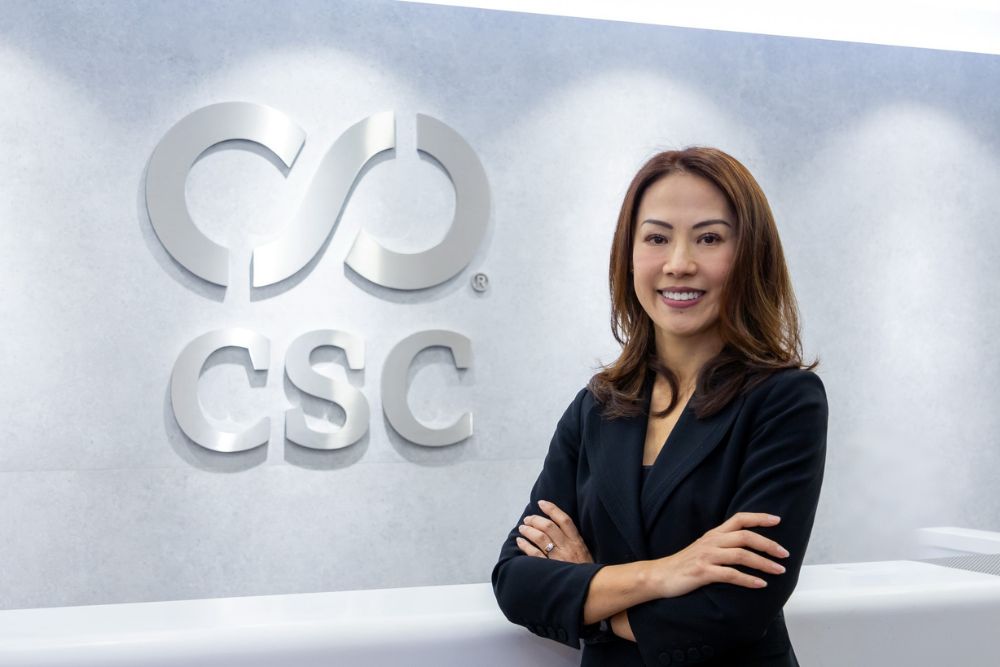
Among the key players in Hong Kong’s corporate and financial services ecosystem is CSC, a company that takes pride in being the world’s leading provider of global business administration and compliance solutions. Serving as the “business behind business,” CSC comprises more than 8,000 employees who operate in more than 140 jurisdictions on five continents. In 2022, CSC expanded its footprint in Asia Pacific (APAC) through its acquisition of Intertrust Group, a Dutch peer that has had an office in Hong Kong for more than 50 years. CSC, headquartered in Delaware, was founded in 1899 and is privately owned.
The acquisition put CSC in a position to serve the fast-expanding private credit industry alongside its traditional clients. According to McKinsey, by the end of 2023, this asset class totalled nearly $2 trillion and had grown ten-fold since 2009. APAC-originated private debt assets grew by more than 70% between 2020 and 2023, according to ADM Capital, to $99.3 billion. Only 4% of the deal flow was allocated to Asia, but it is substantial enough to have attracted heavyweights to set up APAC funds including Blackstone, KKR and Apollo Global Management. Here CSC’s Sarah Chao talks with AmCham HK e-Magazine editor Edith Terry about the inner workings of APAC’s private credit sector.
Q. What is your day job like, as managing director of APAC capital markets and country leader for CSC’s Hong Kong office?
A. Our Hong Kong office now has 200 professionals providing corporate, fund, and capital markets solutions to our local and global clients doing business in this region. Our clientele ranges from small and medium enterprises to large global companies including financial institutions, asset managers, private equity firms, fintech companies, and government agencies. We provide expert service and technology solutions for every phase of the business and investment life cycle, helping to form entities, maintain compliance, execute secured transaction work, and support real estate, mergers and acquisitions (M&A), and other corporate transactions.
Wearing two hats as managing director of APAC Capital Markets and Hong Kong country leader since the CSC acquisition in 2022, my day job ranges from forging strategic partnerships within the industry to delivering client services while fostering a highly engaged and motivated team. One of our key priorities is to build our CSC brand name in this region with our global business strategy. Regardless of where our global clients are located, we are committed to delivering seamless, unified services via our integrated global platform.
While our capital markets business in APAC is growing, it is important that we leverage our collective expertise to build a best-in-class platform and really drive the growth of private credit investments in this region.
I spend a lot of time making connections internally making sure we leverage our extensive industry and jurisdictional expertise. In addition, I spend time connecting with external business partners and industry experts to ensure we are up to date on where the opportunities are. At the end of the day, our goal is to ensure our clients are happy with our services and that we grow with our clients as their trusted business partner for the long term.
CSC currently services over $1 trillion in assets, which is significantly higher than it was four or five years ago, driven by organic growth and by the acquisition of Intertrust Group. There is an increasing trend by private equity companies, venture capital, and real estate fund managers to outsource back-office functions to a third-party provider so they can focus on investing. Furthermore, fund structures are increasingly complex, and there’s a lot of demand coming from investors that fund managers may not be able to handle in house.
Q. How does CSC help private credit businesses expand?
A. CSC is positioned to be part of the private capital ecosystem. We provide expert service and technology solutions for every stage of the business and investment life cycle. During the capital investment process, we can help companies set up entities and maintain their compliance with these entities. We can execute secure transactions and support real estate and M&A transactions.
We collaborate with all our business partners within this ecosystem to facilitate growth in the private capital space, offering tailor-made services based on dynamic client needs and technology-based solutions. In today’s world, the work of alternative asset managers is becoming complex across jurisdictions and asset types. CSC provides services to hundreds of thousands of clients and boasts more than 125 years of business under common ownership.
We’re the engine behind the business, so they can focus on what they do best, which is managing these private investments on behalf of their investors. You don’t really see the engine day to day, but it has to be running for the car to go on the road.
Q. Can you explain the “increasing complexity” of the fund structures behind private credit?
A. Private credit has not been as prevalent in this region compared to the US or Europe, but now there’s a lot of demand from investors to diversify into this asset class. Private credit funds may need to manage a diverse array of loan structures, adding to their complexity. These credit structures may require loan servicing between borrowers and lenders, loan performance tracking, managing defaults, and handling default and non-performing loans in addition to more demand for investor reporting.
This is where a third-party provider such as CSC with state-of-the-art systems and economies of scale can make a difference. We have a tried-and-tested platform, and expert teams on the ground who can customize services based on clients’ needs.
Q. How do you deal with market complexity in APAC, with its different regulatory and compliance requirements?
A. Capital markets are not an assembly line type of business. Each deal is structured very differently depending on the jurisdiction, investment location, asset type, and security holdings. We execute our transactions with care on a deal-by-deal basis. For example, we use our own streamlined internal Anti-Money Laundering (AML) framework to assess the risk of doing business with a particular client in each jurisdiction. We look at all the risk factors, including but not limited to, products we’re servicing, their location, and all the parties involved (including lenders, borrowers, sponsors, and outside counsels). Our goal is to make the right risk and commercial assessment before onboarding a client and do so in an efficient and effective manner.
One of the key challenges of doing business in APAC, especially in private credit, is navigating the diverse regulatory frameworks across each country and the complexities of bankruptcy enforcement. We have specialized experts in each area to deliver tailored insights and guidance.
Q. How would you describe the potential of the private credit market in APAC?
A. APAC still accounts for a small percentage of private credit Assets under Management (AUM) compared to North America and Europe, but this percentage is growing. There are many reasons for this. In APAC, most businesses still rely on traditional banking to borrow money; in fact, 79% of credit is provided by traditional banks. In the US, only 33% is provided by traditional banking.
Furthermore, only 4% of AUM generated in APAC is allocated to APAC, because a lot of private credit investments structured in Hong Kong and Singapore are deployed globally, especially to the US and Europe.
In APAC, each country has its own laws governing private lending, bankruptcy, and enforcement. However, as the Asian private credit market matures, these regulatory frameworks are becoming more attractive. I’m now seeing a lot more demand for financing for infrastructure projects, real estate, and climate control initiatives in this region that will drive up the opportunities for credit.
Artificial intelligence (AI) is another huge factor, which has created the need for data centers and data storage that can deal with the growing computing demand. This will increase the demand for different capital investments to support the infrastructure for AI.
Today, private credit has gone beyond traditional loans into infrastructure and real estate sectors. This has generated greater collaboration with insurance companies to finance these large-scale projects, because private credit funds provide the flexibility in capital solutions that insurance companies are looking for. Insurance companies also offer substantial reserves as well as risk management expertise that the private credit funds need. And in APAC, with all the regulatory changes, there is a growing emphasis on sustainable investment that is also driving insurance companies toward private credit opportunities and contributing to market expansion.
Hong Kong’s government is actively enhancing its appeal as a leading finance hub for APAC. The most recent proposal from last November aims to exempt private funds, hedge funds, and family offices from capital gains tax on cryptocurrency, private credit, investments, and other alternative assets. This is a significant change, designed to create a very conducive environment for asset managers to attract capital inflow into this region.
Q. What were some of the challenges of the acquisition process itself, between CSC and Intertrust Group?
A. I’ve gone through a few mergers and acquisitions throughout my career, and I have to say that CSC’s acquisition of Intertrust Group was a scenario of “one plus one is greater than two.” We’ve combined our strengths to create a truly global offering.
Our client bases were naturally aligned, with complementary geographic coverage, services, and solutions. Now, with a unified platform and streamlined processes worldwide, we are delivering greater consistency, efficiency, and scalability to better serve our global clients.
Q. Can you share where you were born and grew up?
A. I was born in China but lived in the US for over 30 years prior to moving to Hong Kong. I grew up in Madison, Wisconsin where my parents worked as visiting professors in the Mechanical Engineering Department of the University of Wisconsin, Madison. I graduated from West High School and went to UW-Madison for college, where I met my husband. I felt I had an identity crisis at that time, trying very hard to fit in. It was not until I moved to San Francisco after college that I rediscovered my Chinese heritage. I ran for the Miss Chinatown Pageant one year, winning second princess, and this gave me an opportunity to get to know the San Francisco Chinese community and the culture. It made me proud to represent the culture I came from. I moved around quite a lot within the US from the Midwest to the West Coast, to the South and to the East Coast. I feel I’ve become a very well-rounded person after living in different parts of the US with very different cultures and perspectives. I have learned to work with people from vastly different walks of life.

My family moved to Hong Kong eight years ago due to job relocation. This move allowed me to connect with a whole new dimension of my Chinese heritage, while also connecting with people from different countries, because Hong Kong is such a cosmopolitan city. I quickly fell in love with Hong Kong, which I now consider my second hometown. Both of my daughters attended and graduated from Hong Kong International School. I have done things since my move to Hong Kong that I would have never done had I stayed in the US. For example, I have become a more serious long-distance runner with the goal of becoming a Six Star Finisher in November of this year, which means to complete the six original marathons – Tokyo, Boston, London, Berlin, Chicago and New York. You get a big trophy at the end. I also ran the Standard Chartered Hong Kong marathon when I first arrived in 2018 and the Lantau 70 ultra-marathon. My husband and I have spent a lot of time with friends we developed in the sailing community here and have participated in many exciting sailing races. I have also become a dragon boater and love being part of the Hong Kong dragon boat community.

Q. How have you experienced this rather turbulent time in Hong Kong (2018 to present)? What do you do for fun in Hong Kong, and what has it brought you personally?
A. The COVID-19 pandemic took almost three years out of our time in Hong Kong. But one thing I did during COVID was a lot of running outdoors when gyms were closed. I have discovered so many amazing running trails in Hong Kong that are all connected via steps and roads if you know the way. This really helped me with my long-distance performance and endurance.
Sailing also became one of our favorite pastimes during COVID, especially when travel restrictions made it difficult to leave Hong Kong. Sailing races were cancelled for quite some time, but we enjoyed sailing to nearby fishing villages to have their fresh seafood and to hang out with friends.
Since moving here, my professional and social network has expanded globally beyond my imagination. I have made friends for life not only from Hong Kong, China and Singapore, but also Australia, Europe, India, and other Southeast Asian countries. Joining he American Chamber of Commerce in Hong Kong was one of the best decisions I’ve made on behalf of our company over four years ago. Much of my professional network has been built through the Chamber events which have made a difference in this community in many ways. One of the most amazing events the Chamber puts on each year is Women of Influence (WOI) with the mission of championing women leaders of today and empowering more women to become leaders of tomorrow.
To reflect on my eight years in Hong Kong, I have grown personally and professionally. I’m forever grateful to have been stationed eight years in Hong Kong, and for the vast opportunities this region has to offer.
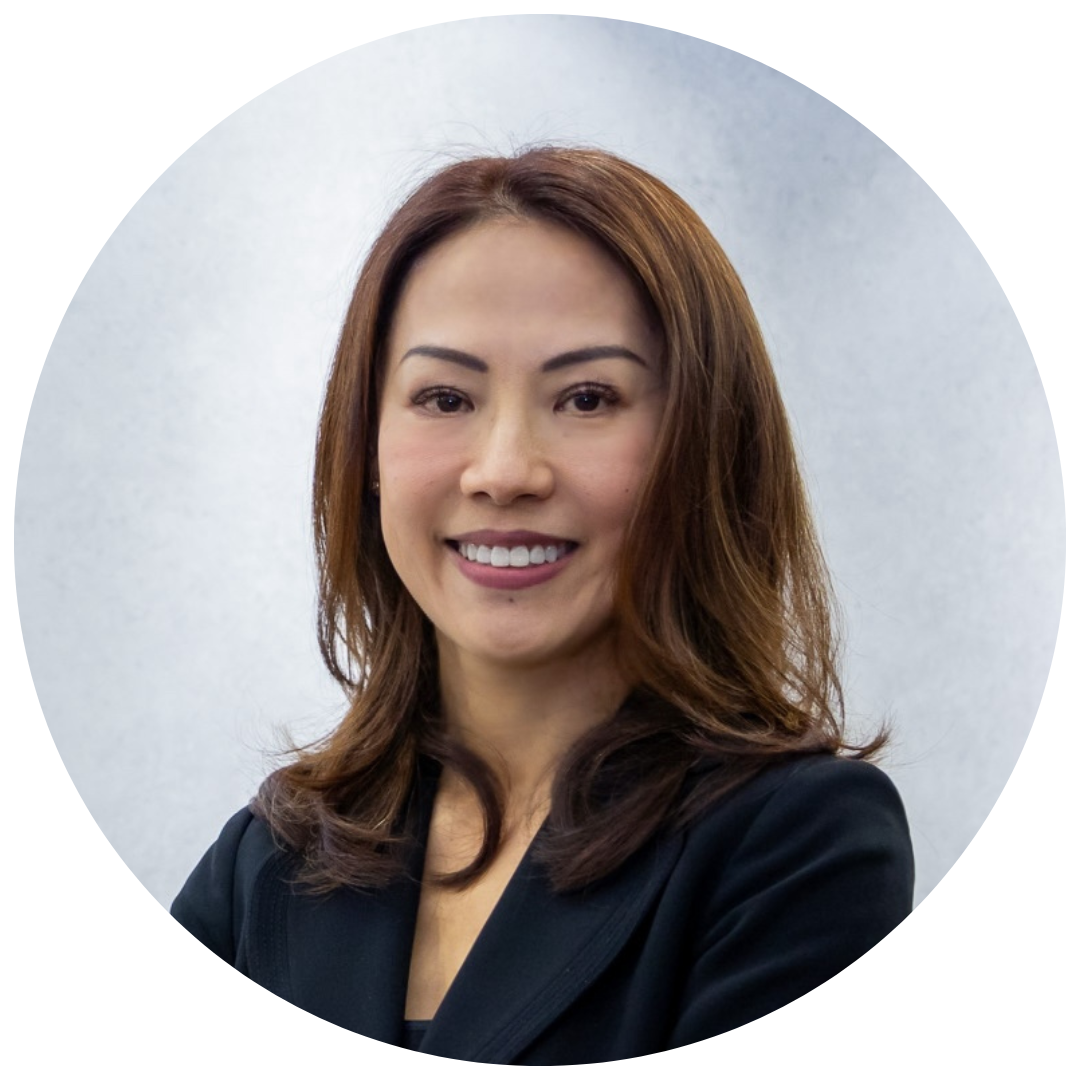
Sarah Chao has spent more than 30 years in the financial services industry in roles ranging from senior compliance analyst with the Federal Reserve Bank of San Francisco and director of accounting and administration for Fannie Mae to vice president for commercial wholesale international businesses for Wells Fargo. She has been managing director of APAC Capital Markets and country leader for CSC since February 2021. She has degrees in business administration and finance from the University of Wisconsin-Madison, the University of San Francisco, and Columbia Business School. She is also a Financial Times certified Non-Executive Director (NED).