
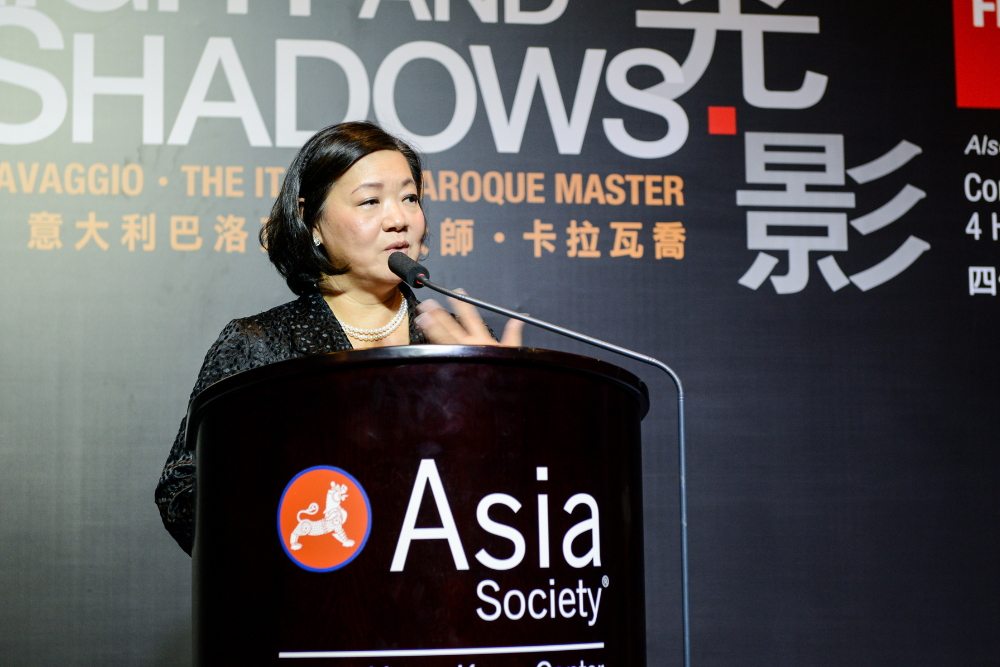
Since Chinese satirist Lu Xun wrote in the 1920s, “Hong Kong is not a cultural desert,” it has often been considered just that. Perceptions are slow to change, but in terms of museums, auction houses and galleries, the city has become one of the most vibrant in Asia. As the city gears up for its twelfth Art Basel Hong Kong, with 240 galleries from 42 countries and territories, and the 10th edition of Art Central, both at the end of March, it’s hard to deny that Hong Kong has become one of the most important platforms in Asia in the visual arts, let alone the performing arts.
The artists, musicians, curators and auctioneers behind this transformation are legion, but the Asia Society Hong Kong Center (ASHK) and its president, S. Alice Mong, stand out as among the early movers in arts and culture. Hong Kong was the first branch of the New York-based Asia Society outside the US when it was founded in 1990 and the first to draw art blockbusters to the city after it moved into its permanent home in 2012, in part of the restored Victoria Barracks in Admiralty.
At age 62, Mong has produced some 40 exhibitions and over 2,000 programs in art, culture, business and politics over the past 13 years, with a team of 30, down from a pre-Covid peak of 50. Here AmChamHK e-Magazine editor Edith Terry talks with Mong about her journey, and how Asia Society Hong Kong has helped shape Hong Kong’s arts and culture in a turbulent era.
Growing up in Taiwan and Ohio
People ask me where I’m from, and I tell them I’m from Ohio, and they get stunned. The reason I say I’m from Ohio is that I’ve lived in Ohio longer than anyplace else. But I was born in Taiwan. My family immigrated to the United States in 1973, the year after Nixon’s trip to China, when I was 10. I have wonderful memories of growing up in Taiwan with my maternal grandmother, and I kept up my Chinese by writing to her after we moved to the US because I was a dutiful granddaughter.
When we went to the States, it was in the 1970s, and there were no Chinese schools. The first character I learned to write was my last name, Meng, in Mandarin. We’re part of the Mencius clan [the fourth century BCE philosopher known as China’s “second sage” after Confucius]. We’re in the 73rd generation. So, I always knew who I was as a Chinese, and when we went to the States I was really happy to be there because schools got off at 3 o’clock and I thought it would be like Disneyland.
Growing up in the US in the 1970s and 1980s, we lived in Virginia, Maryland and later on, Ohio. My father was in the restaurant business. Ohio was where I was in high school, university and my first job. So, I was in Ohio for 13 years, and that’s the longest place I’ve lived continuously, although I think Hong Kong will now surpass Ohio. I am proud of my Ohio roots, and proud of growing up in Taiwan, and proud to be a first-generation Chinese-American. My mother is from Taiwan, and my father is from the mainland. So, I’m of all those cultures, and very proud of them. At home, we would speak Chinese with my parents and English with my siblings. So, I grew up bi-culturally and bi-lingually, and when I got to Ohio State, I decided I would major in international studies, and wanted to be a diplomat, but I took the [US State Department] Foreign Service exam, and didn’t pass, so I went to work for State of Ohio instead.”
From Columbus, Ohio to Hong Kong
Having the knowledge of Chinese language got me my first job, as an intern for the State of Ohio in the 1980s. By the time I left Ohio, I was running the state office here in Hong Kong.
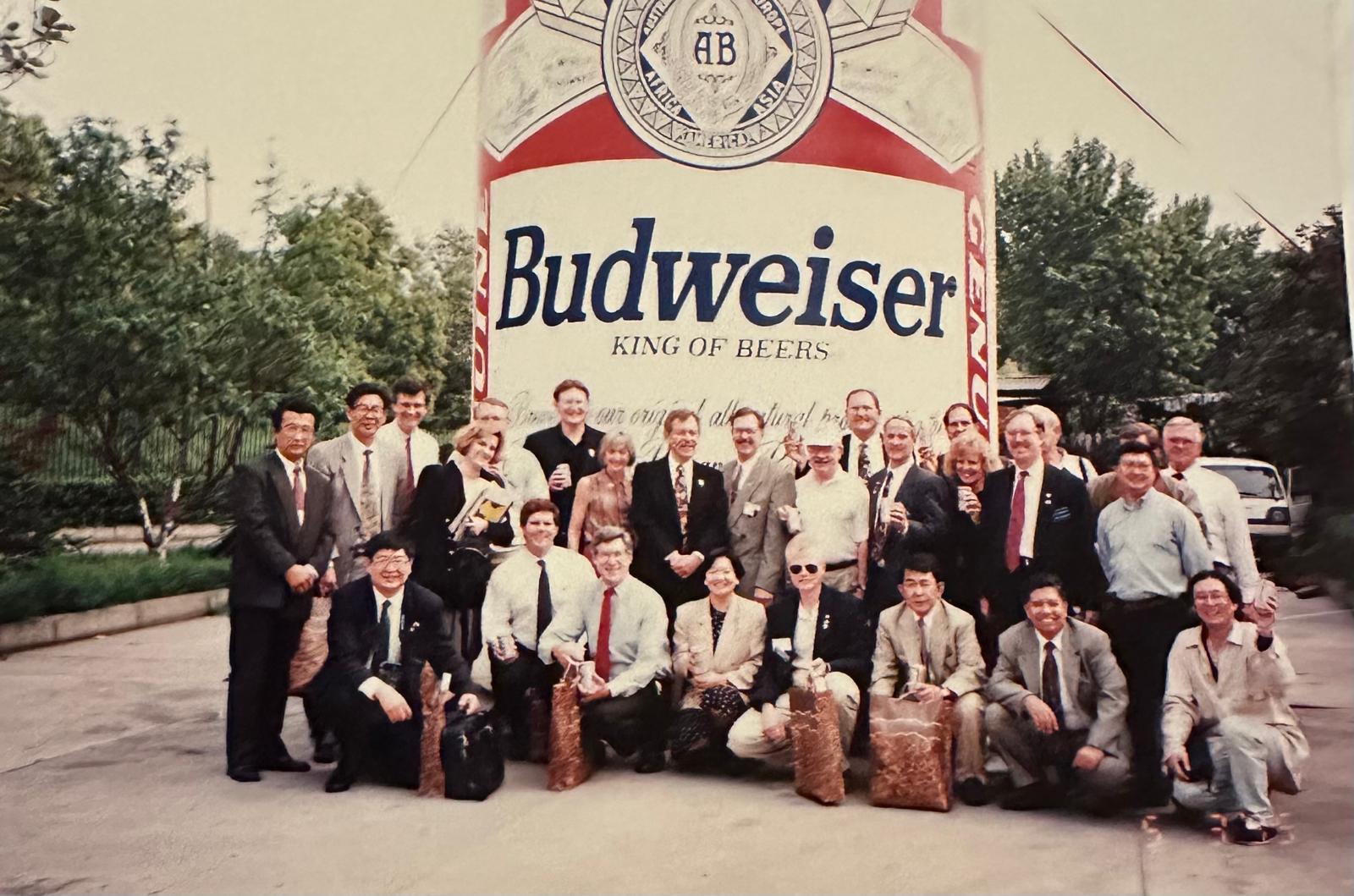
I graduated in the mid-1980s, when Ohio was experiencing an investment boom from Japan. My office, the International Trade Division of the Ohio Department of Development, was handling trade and development mostly from Japanese companies. We had over 200 Japanese companies, including Honda, investing in Ohio. On the trade side, Ohio had one of the first sister state-province relationships, with Hubei province in 1979, established by Governor Jim Rhodes, a Nixon Republican. Working as a Trade Specialist for Ohio Dept of Development was my first job, and living in Ohio was also the reason I became very politically aware, because every four years we would get a presidential candidates coming through Ohio to run for president. Ohio was a swing state and that’s how I became a political junkie, and why I consider myself an Ohioan when my siblings and the rest of my family do not.”

Governor George Voinovich appointed me as the youngest managing director of an international office, to run the office of East Asia and Southeast Asia for the state of Ohio, when I was 29. From 1992 to 1995, when I left, there were about 12 states with offices in Hong Kong, and we met regularly. Then they all left, either to China or other parts of Asia.
In 1995, I joined Ronnie Chan Chi-chung, chairman of Hang Lung Group and Hang Lung Properties. Part of my job was to be liaising with Asia Society Hong Kong. And also, as an American, I was helping him to handle a lot of his American philanthropic as well as his non-Hong Kong board commitments.
I joined the American Chamber of Commerce in Hong Kong in 1992, and in 1997 I went to a talk that Steven DeKrey helped arrange with Professor Donald Jacobs, Dean of the. Kellogg School of Management about what Kellogg was planning to do in Hong Kong, which was to establish a joint Executive Master’s in Business Administration program with Hong Kong University of Science and Technology. And that talk changed my life. I decided I could apply for my US MBA without going back to the US. And so, in 1998 I became part of the inaugural class of the program, and in 1999 graduated in the first class.
After I graduated, I went back to work for Hang Lung, during the dot.com boom, when all the property firms felt that they had to do something non-property related. I was part of the team that created Hang Lung’s non-property division. [After the dot.com bubble burst] Hang Lung decided not to keep that division, and I was ready to move on, and ended up joining the Committee of 100 in New York [founded by I.M. Pei and Yo-Yo Ma] as their first non-member executive director.
Asia has talent
In 2009, I became director of the Museum of Chinese in America (MOCA) for two years. One of the reasons I returned to Asia in 2011 was I knew Asia was booming, I knew it was dynamic, and I wanted to be part of it. Hong Kong is both an Asian city and an international city. It’s a wonderful hub to promote Asia today, including China.
Asia’s always had talent. I remember growing up watching a lot of movies from Hong Kong. For me, coming back to Hong Kong and Asia was to be part of this, the changing, evolving dynamism of Asia today, rather than watching it from the US.
I agreed to help open the Asia Society Hong Kong Center in 2012 in its new home because I had already helped MOCA move into a new space as the Museum of Chinese in America [MOCA began as the New York Chinatown History Project in 1980, moving to its new site designed by Chinese-American architect Maya Lin in 2009]. I knew I could help because of a soft spot for Asia Society Hong Kong as a member. I was not planning on staying because after nine years in New York working for non-profits, I came back here planning on returning to the for-profit world.
But then the executive director resigned in March, and I was asked to be the interim director. I used that couple of months to decide whether I wanted to work for Asia Society Hong Kong. And what attracted me to it was that I had a blank slate, and so I built up the programming and then, with the help of my colleagues, recruited all but one of the staff. I basically had the opportunity to build a team.
And what really fascinated me was the arts and cultural programming. We had some of that before when Gillian Tso was director of programming, and she did a great job. But now we could do more of the arts and cultural programming which Asia Society Hong Kong had only dabbled in before. Our first exhibition was on Buddhist art, Transforming Minds: Buddhism in Art, with Buddhist works from the Mr. and Mrs. John D. Rockefeller III collection along with contemporary works, curated by Dr. Melissa Chiu, Asia Society’s vice president and museum director in New York. To be able to run a gallery as well as the programming – I’m not the curator, we have a gallery team – that was fascinating.
I said yes to becoming the Executive Director, but I didn’t realize I was going to stay around for 13 years. But being able to build up the programming and the gallery team, to bring a Caravaggio to Hong Kong in 2014, those are things I would never have been able to do in New York. And remember, when we opened in 2012, there was no M+ Museum, no Hong Kong Palace Museum, no Tai Kwun, no PMQ, no Oi! Gallery. We were the first in terms of having a space of our own in arts and culture, to be able to do programming and exhibitions, so that was exciting.

When I was at MOCA, we had some great exhibitions, but to bring a Caravaggio to New York—they already have a few, that’s no big deal in New York, but in Hong Kong and in this part of the world, it is a big deal. So far as I know, no Caravaggio has left to come to Asia before. MOCA was also kind of a new thing, but there was no brand-new arts and cultural space in New York at the time. The Metropolitan Museum of Art has been around for 150 years, and even MOCA has been around since the 1980s.
Another thing was to have this kind of East-West connection, which was also unique. This was an arts and cultural start-up, and we were still doing our business and policy programs.
How Asia Society Hong Kong has evolved since 1990
“Asia Society New York was started in 1956. They were initially the headquarters, so for the longest time, it was just them. Asia Society came into Hong Kong in 1990, so this year will be our 35th anniversary. In the beginning, we were small, and still just part of Asia Society in New York. But that all changed when we became our own separate legal entity because we were getting ready to build the Asia Society Hong Kong Center.
The planning for it started in 2000 but the legal formalization was about 2006, when we were getting ready to construct the site. And one of the reasons was that the Jockey Club was one of our key financial supporters, and it can only support Hong Kong entities.
Between 1990 and 2012, most of the programs were about business and policy, and maybe 10% of the time we could do arts and culture. I became a member of Asia Society in 1993, shortly after I arrived in Hong Kong. That and AmCham were the two organizations where I went to learn and also to network. Programming began to change a lot at ASHK in 2012, with the opening of the new center, on February 9, 2012, almost exactly 13 years ago. [Besides the Chantal Miller Gallery] we also have the Miller Theater, and the Jockey Club Hall, which can seat about 350 [in theater style] and 200 for lunch or dinner.
Now, we can use our own venues for programs and rent them out to corporates and organizations when we are not doing our own program. So that’s how we’ve changed in these 35 years. When we were designing the center, we very much modelled it after New York, which has a theatre, gallery space, a restaurant, a shop and offices. When we were talking to architects for the design competition, the request was to have all the amenities and space that Asia Society has at Park Avenue and 70th.
There are six centers in the US today, and the network has grown to 16 around the world, two in Europe, and eight in Asia. Europe just happened in the last decade, first Zurich, then about three years ago, Paris. In Asia, Hong Kong is the only one that has a permanent home. The other centers in Asia are Melbourne, Sydney, Seoul, Tokyo, Manila, and Mumbai, with a policy fellow in Delhi.
We interact as a federation, as former Asia Society president Kevin Rudd calls it [2021-23, Australian ambassador to the US and former prime minister and foreign minister]. There’s no funding that comes out of Asia Society in New York, despite what people think. We have regular monthly calls among the centers.
We are considered by some as the Asian headquarters of Asia Society, thanks to Richard Holbrooke for introducing that idea, when he was chair of Asia Society [2002-2009, and former US ambassador to the United Nations]. We were the first in Asia when we were established in 1990, and the first outside of the United States. And we have helped the establishment of some of the other centers, for example, Paris, Zurich, Korea, Japan and India.
One of the founding board members in Zurich is Uli Sigg. He was coming to Hong Kong a lot, and negotiating with M+ Museum about his collection of contemporary Chinese art. When we were opening in Hong Kong 13 years ago, it was also the first year of Art Basel Hong Kong, and we did a series on collectors, with Uli as one of our speakers. And as the former Swiss ambassador to China, North Korea and Mongolia, he felt the mission of Asia Society and Asia Society Hong Kong Center could and should be replicated in Switzerland. He got together some of his friends and set up Asia Society Switzerland in 2016.
Most of the centers are in offices. Only New York and Houston have their own buildings, like us. Some centers share office space with other organizations. Asia Society Japan is in the International House in Roppongi. And we were like that too, initially in an office on Duddell Street. The programming was never done there, always outside at hotels or other venues.
Our first executive director was former US ambassador to Myanmar, Burton Levin, who had also been consul general in Hong Kong. Burt was retiring from the State Department and Asia Society Hong Kong Center was just opening, so he was recruited by ASHK founding Chairman Lee Quo-wei.
Asia Society’s role in US-China relations
Asia Society’s role has not really changed much since 1990, which was seven years before the handover in 1997. The business and community leaders who founded Asia Society Hong Kong in 1990 wanted to make sure that Hong Kong continued to be a vital international city, whether it’s finance, business or maritime. It was very important for the business and community leaders that Hong Kong continued to play that kind of bridging role between East and West.
What I loved about Asia Society Hong Kong when I joined as a member in 1993 was the great line up of speakers, academics, journalists and film makers. I remember going to Burt and Lily’s house for evening programs, and in 1993 listening to a professor I had never heard of before, Andrew Nathan from Columbia University. I didn’t go to Columbia, so I didn’t know who Andrew Nathan was [editor and translator of The Tian An Men Papers]. Lily, Burt’s wife, was a really wonderful cook. So, I remember that evening had good food and great content. A few years ago, my former colleague, Helen Chen, and our Chairman Ronnie Chan and I were talking, and we realized that we were all at that same dinner that night but didn’t know each other then.
For me, the Asia Society Hong Kong Center mission then and now is the same, bridging, connecting and focusing on what we can do together to promote understanding.
The membership has evolved based on the demographics of Hong Kong. We still have American corporates, fewer British members, and more Hong Kong Chinese and more mainland professionals. The people who come to our programs are still interested in Hong Kong’s role as a global financial center, and are, like me, very interested in lifelong learning.
And right now, the news is changing constantly. People also want to know, because of a lot of fake news, what’s real. People come to our programs because they want to hear directly from the source.
What’s next is making it stronger. We are not going anywhere. Stay tuned. In our 35th year, we want to celebrate what we have achieved but also look forward. I’m glad to be part of the global network, but we want to make sure that the voices of Hong Kong, China and Asia are heard. It’s important for all eight of our centers in Asia to reflect what’s really happening on the ground. Regardless of who listens, these are the authentic voices of Asia. We need more organizations like us, and like AmCham, which are reflecting the voice of American business. It has to be authentic, and it has to be real. It can’t just be through tweeting.
I hope, despite what’s happening in Hong Kong, that we can still get the real pulse of the city and share it with the rest of the world. I think people sometimes think we’re dead, or that we’re very much crippled by what happened in 2019, or by the National Security Law. But I think Hong Kong and Asia are alive and well, and that’s the message. I want to continue to use Asia Society Hong Kong to tell our story of Asia.
Alice Mong’s ‘favorite things’
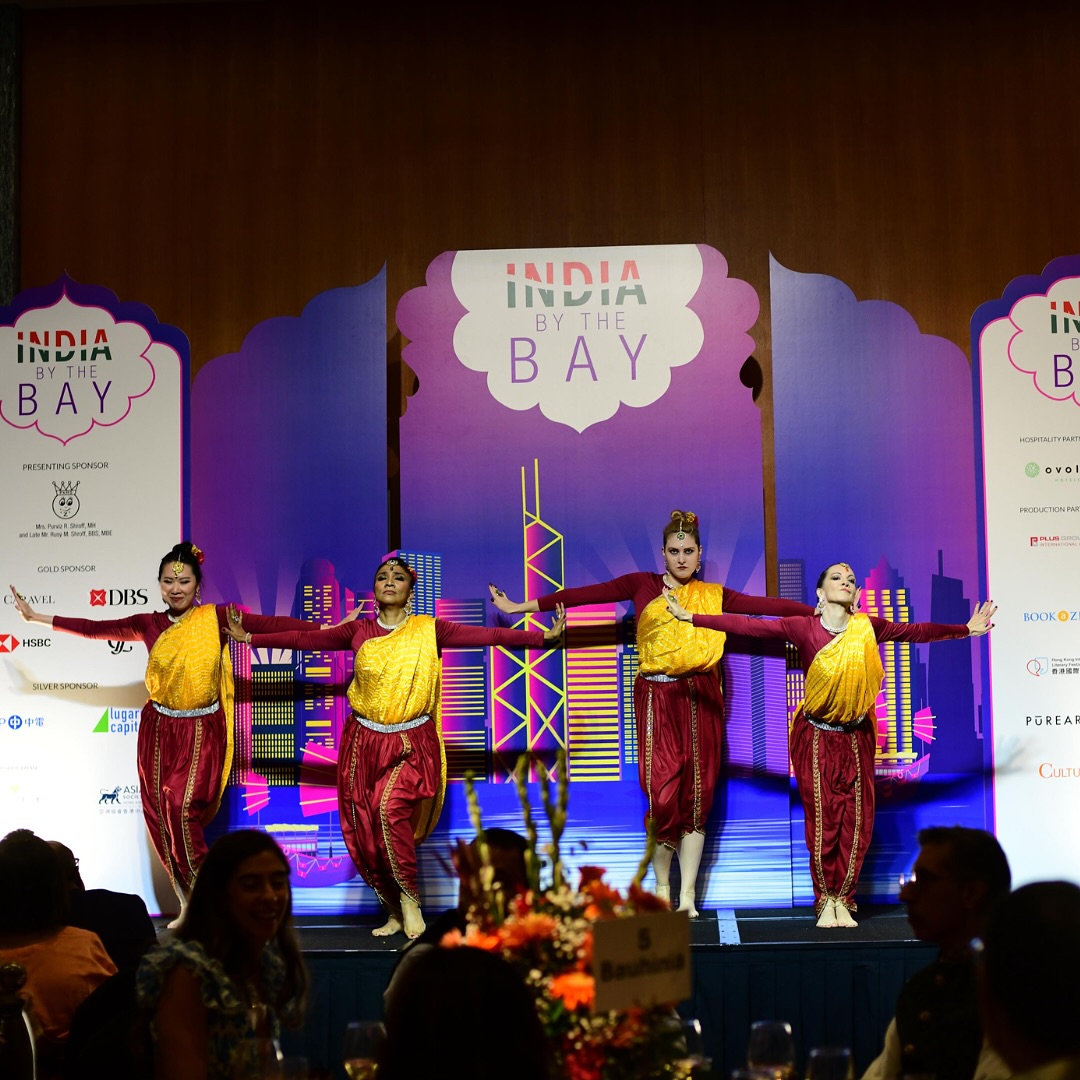
I asked Mong to pick out a few of her most memorable programs. First was the Caravaggio show in 2014, that brought Michelangelo Merisi da Caravaggio’s 1606 painting, Supper at Emmaus, from the Pinacoteca di Brera in Milan to Hong Kong for one month. Next came the chamber opera, Mila, commissioned for Asia Society Hong Kong Center’s sixth anniversary in 2018, featuring the life of a domestic worker in a dysfunctional Hong Kong family. Nobody had done a chamber opera before in Cantonese, English and Tagalog. The opera went on tour in New York and San Francisco in 2019, just before Covid. Third was India by the Bay, a series that began in 2015, bringing some of India’s foremost writers, performing artists, and thinkers to Hong Kong.
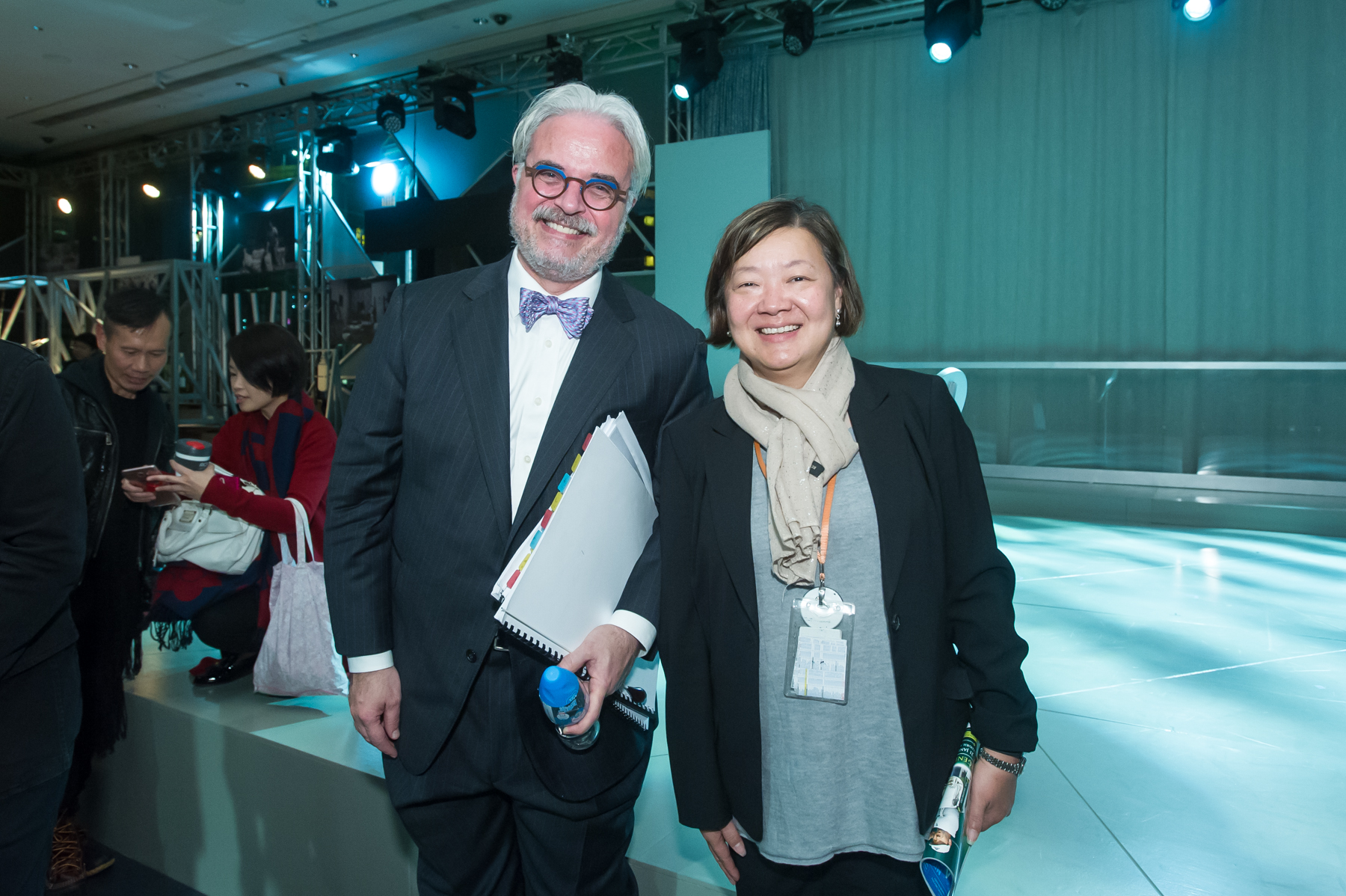
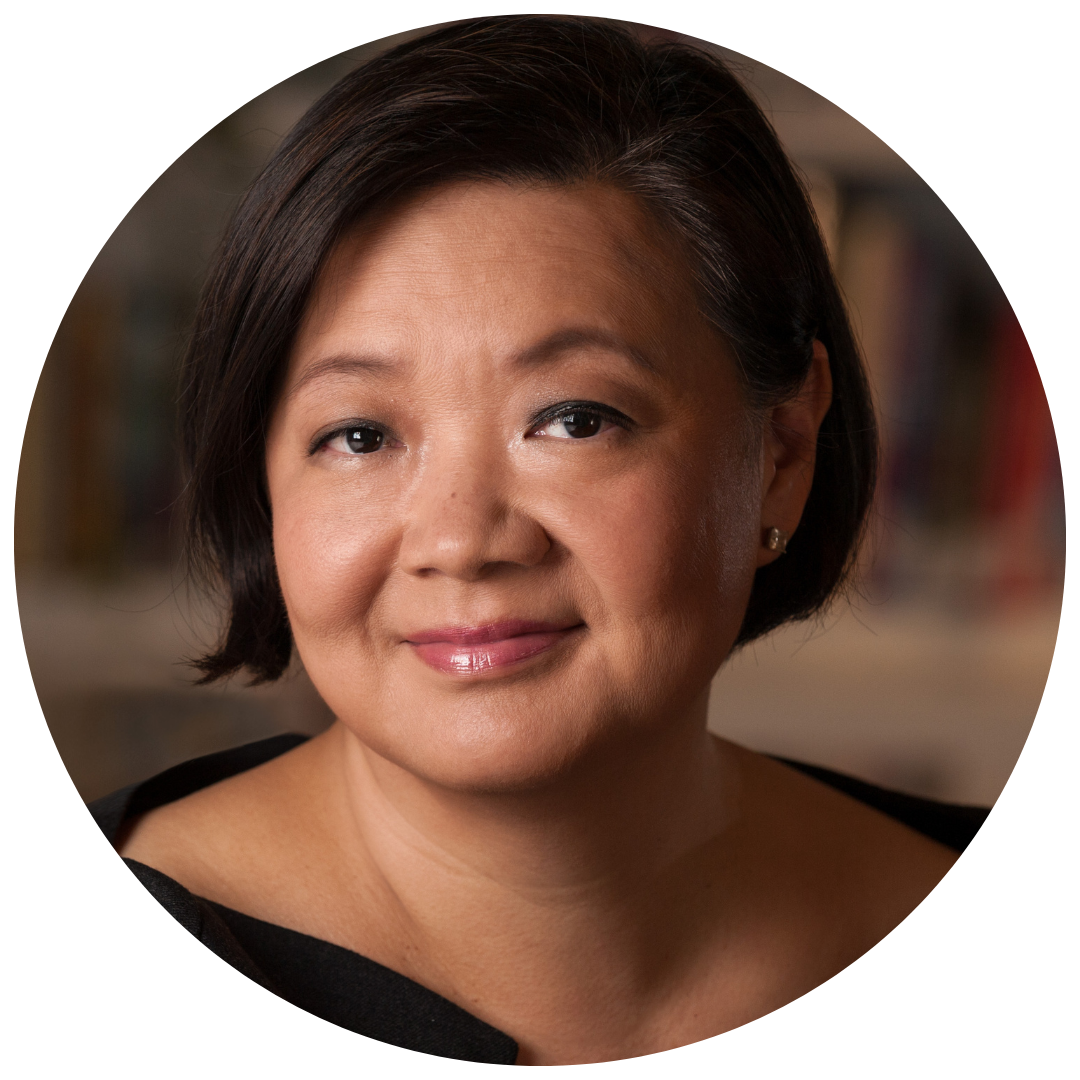
Alice Mong is a Chinese-American business leader and professional with a successful track record in expanding and launching associations and non-profits focused on Chinese and American business and cultural exchange. She has been president and executive director of Asia Society Hong Kong since 2012; director of the Museum of Chinese in America from 2009 to 2011, executive director of the Committee of 100 from 2003 to 2009; investment specialist and assistant to the chairman of Hang Lung Group from 1995 to 2002; and managing director of the Ohio Office of East and Southeast Asia from 1992 to 1995. She is a1999 EMBA graduate of the Kellogg School of Management of Northwestern University and the Business School and a graduate of The Ohio State University in 1986. She was invited to join the board of the Ohio State University Alumni Association in 2023.