
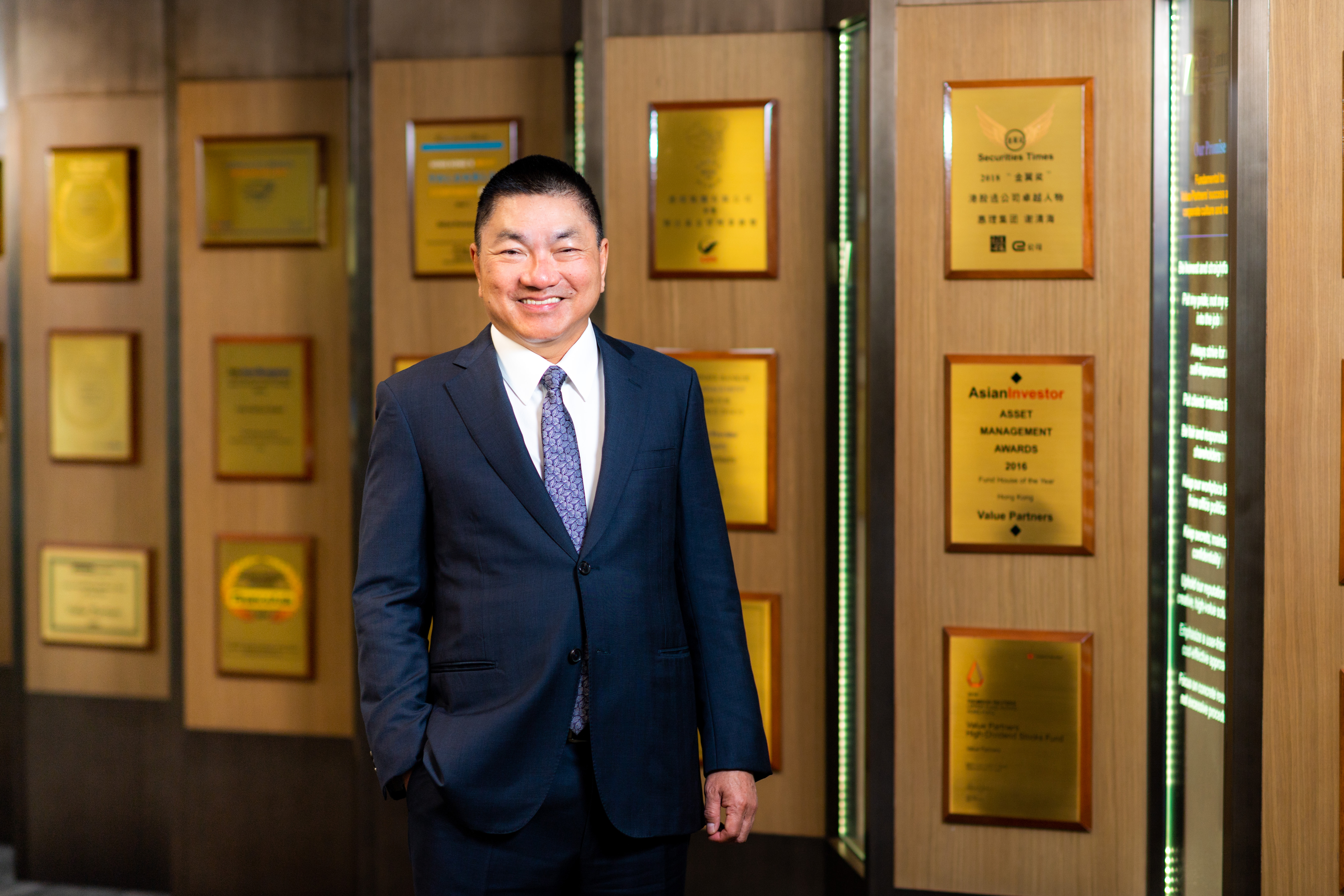
Hong Kong’s equity markets are in a steep rally, and AmChamHK e-Magazine turned to one of Hong Kong’s foremost stock experts to find out why. As an investor, Cheah Cheng Hye is legendary. He co-founded and ran Value Partners Group from 1993 until he retired in January 2025. It was the first publicly listed asset management firm in Hong Kong and currently has US$5.9 billion in assets under management. Before entering finance, he was a journalist with a reputation for high-profile investigative and financial journalism.
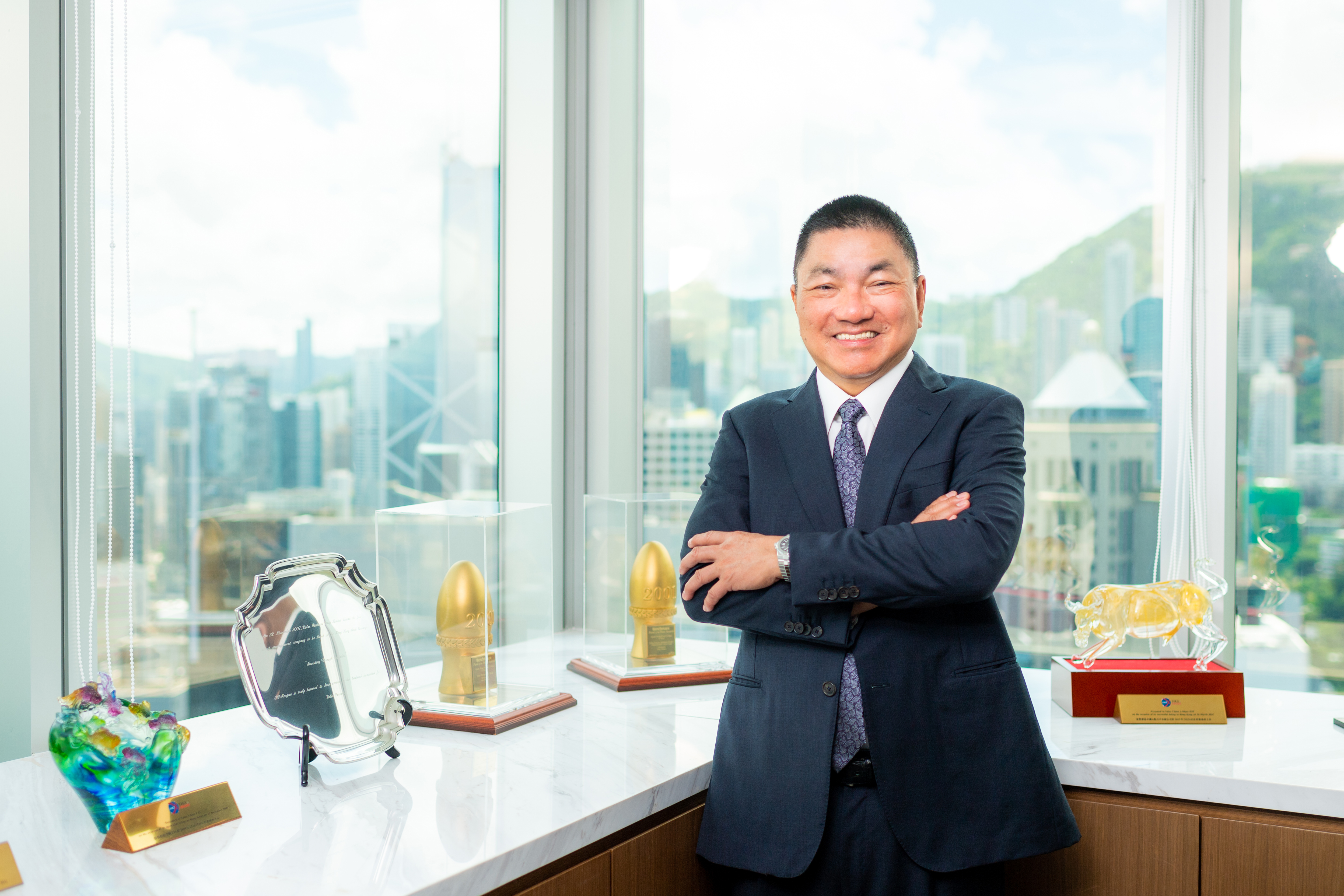
And you could just call him a legend, period. His father died when he was nine, leaving the family in poverty, and Cheah worked as a part-time pung mee or hawker’s assistant and as a pineapple stand delivery boy after school hours in his birth country, Malaysia, receiving his secondary education on scholarship at the Penang Free School. The Star of Malaysia was his higher education. Sometimes known as the ‘Warren Buffett of Asia’, Cheah is a proponent of value investing and now runs Cheah Capital Ltd, a single-family office that manages his personal assets.
We asked Dato’ Seri Cheah Cheng Hye how and why Hong Kong’s stock market rally came about, and if there is an end in sight?
Last November, Vice Premier He Lifeng was in Hong Kong at the Global Financial Leaders’ Investment Summit. After he went home something interesting began to happen. Suddenly the floodgates were open. At the summit, which was hosted by the Monetary Authority of Hong Kong (HKMA), it was clear that Beijing would move decisively to boost Hong Kong’s status as an international financial center (IFC).
This was two weeks after the United States presidential election that brought Donald Trump into office a second time. And the central government saw that Hong Kong’s capital markets could potentially rival New York, for depth and volume, if Hong Kong could unleash the massive savings of Chinese households looking for an alternative to property investment. The amount of money held by Chinese households is staggering – roughly 137 trillion yuan (US$19.2 trillion), or 110% of China’s GDP. About 47% of that wealth is parked in low-yield deposits, a figure that has risen as confidence in real estate on the mainland declined.
What has been the result? Literally, an explosion of mainland Chinese listings on the Hong Kong Exchanges and Clearing (HKEX). including flagship Initial Public Offerings (IPOs) from Contemporary Amperex Technology (3750.HK), Hengrui Pharma (1276.HK), Haitian International (1882.HK) and Zhejiang Sanhua Intelligent Controls (2050.HK). In May and June, these four companies alone raised HK$70 billion (US$9 billion), respectively HK$9.8 billion, HK$10.1 billion and HK$9.18 billion respectively.

The first six months of 2025 saw 44 new initial public offerings (IPOs) on HKEX. These raised HK$1.094 trillion (US$14 billion), putting Hong Kong ahead of Nasdaq, which raised US$9 billion and the New York Stock Exchange, with US$8 billion over the first six months of the year. This was the best first half since 2021 and the first time Hong Kong made global number one in IPOs since 2019. The years since then have been disappointing ones for Hong Kong as well as the Hang Seng Index and IPOs, but this year we have a shot at being number one globally, with more than 200 IPOs in the pipeline as of July.
Could HKEX become a rival to NYSE and Nasdaq, and if so, how?
The New York Stock Exchange and Nasdaq remain the largest of global stock exchanges, with a combined US$61.6 trillion in market capitalization and 5,411 listed companies as of January 2025. Hong Kong, by contrast, had a market cap of US$4.5 trillion and trailed Shanghai, Japan, India and Euronext exchanges, according to the World Federation of Exchanges (WFE).
HKEX grew 47% during the year through August, however, to a market capitalization of HK$46.6 trillion (US$5.9 trillion). The Hong Kong bourse raised HK$368.8 billion in funds according to HKEX, an increase of 322% compared to August 2024. This was during a year when capital raised by IPOs in the Asia Pacific region actually declined by nearly 30% for the first six months, according to WFE, the global trade association for regulated stock exchanges and clearing houses.
The way Hong Kong could come to rival New York is by tapping into mainland demand, specifically the many trillions of yuan held by households. Although Hong Kong’s investment community is distinctly global, increasingly demand has come from the mainland. Mainland flows via Stock Connect accounted for more than 23% of turnover in the first half, according to HKEX. Hong Kong valuations averaged 11 times price to equity, compared to 14 times in the mainland, making Hong Kong shares attractive to Chinese investors.
The strong performance created a virtuous cycle in the aftermarket, with Hang Seng’s 30% gain so far this year sharpening the appetite for IPOs even more. According to research from Nomura, sharp declines in household deposits in July and August pointed to an acceleration of flows from bank deposits to stocks behind the current rally.
Hong Kong’s daily turnover of HK$200 to 240 billion (US$25.6 billion to US$30.8 billion) far exceeds Singapore’s US$1 billion turnover. The Shanghai Stock Exchange is large, with a market capitalization of US$7.3 trillion and 2,284 listings, but transactions are carried out in domestic Renminbi, which is not a freely convertible currency. Hong Kong can comfortably absorb mega IPOs. The bottom line is that Hong Kong offers the largest capital pool, strongest investor diversity and unique access to China.
In recent years, China was labelled “uninvestible” by parts of the international investment community. Now the situation is reversing, with growing allocations to China-related stocks and bonds, as the China story regains its former appeal. The international trend towards rising capital flows to Chinese markets is starting from a low base and is very promising for both Hong Kong and mainland markets.
What are some of the ways to build on the success of HKEX?
The Hong Kong stock exchange and Hong Kong government agencies have worked hard to enhance Hong Kong’s competitiveness in finance. Innovative markets reforms have been implemented one after another. How can we up our game? First, on the demand side, the channels that enable mainland investment – Stock Connect, Bond Connect and Wealth Connect – have expanded and could expand further still. The strategic logic is that Hong Kong is China’s offshore service center for raising fully convertible funds while keeping capital account discipline domestically, allowing China to internationalize the Renminbi and deepen its capital markets while retaining capital controls.
Capital controls remain central to China’s fiscal and monetary system. The southbound and northbound channels of Stock Connect and Bond Connect allow China to lower its capital barriers gradually – “crossing the river by feeling the stones,” to use Deng Xiaoping’s famous metaphor.
Beijing wants to promote Hong Kong as an international financial center because it’s the only IFC that is within Chinese territory, but it doesn’t want Shanghai and Shenzhen exchanges to suffer. And the lesson of China’s opening and modernization going back to 1978 is that they will cross the stream by feeling one pebble at a time.
A next channel might be an “IPO Connect” allowing two-way investment in IPOs. The idea of an IPO Connect might take time to realize, just as the first direct channel for north and southbound investors, the companion channels, Qualified Foreign Institutional Investor (QFII) and Qualified Domestic Institutional Investor (QDII) programs began in the early 2000s with relatively small quotas that gradually expanded. It’s not a primary focus for either the central government or Hong Kong, but it is time to start thinking about the practical steps it might take to make it happen.
At some point, it should happen, because it would really make Hong Kong a financial center that could rival New York. If Hong Kong gets access to this mountain of savings, it will attract foreign companies not because of Hong Kong, but because they can get access to Chinese investors. Everybody wants their IPOs to be successful, and one way to do that is to create lots of demand for your paper, and the world’s biggest pool of savings right now is in China.
We can envision a next phase if and when an IPO Connect is introduced, giving investors from the mainland and Hong Kong access to each other’s primary markets. There is speculation about a “Real Estate Connect” and other ideas to capture the growing trend for China to become a major exporter of capital, not just manufactured goods. And there is interesting gossip that Beijing may eventually abolish or reduce certain taxes faced by mainland buyers of Chinese companies listed in Hong Kong. It is all in the future, of course, as we haven’t seen any concrete proposals on these ideas.
But with China on course to become the world‘s largest economy within a decade or so, Hong Kong is positioned strongly, as China’s gateway IFC and in its increasingly robust partnership with Shenzhen.
As an ‘elder statesman’ you are increasingly expressing views beyond the markets. What does Hong Kong need to do to move past the trauma of the 2019 protests and aftermath?
Hong Kong is a city, and innovation for a city is not necessarily just about scientific and technical innovation, but also about social restructuring and reform. At this point, Hong Kong is still suffering from the social unrest of 2019.
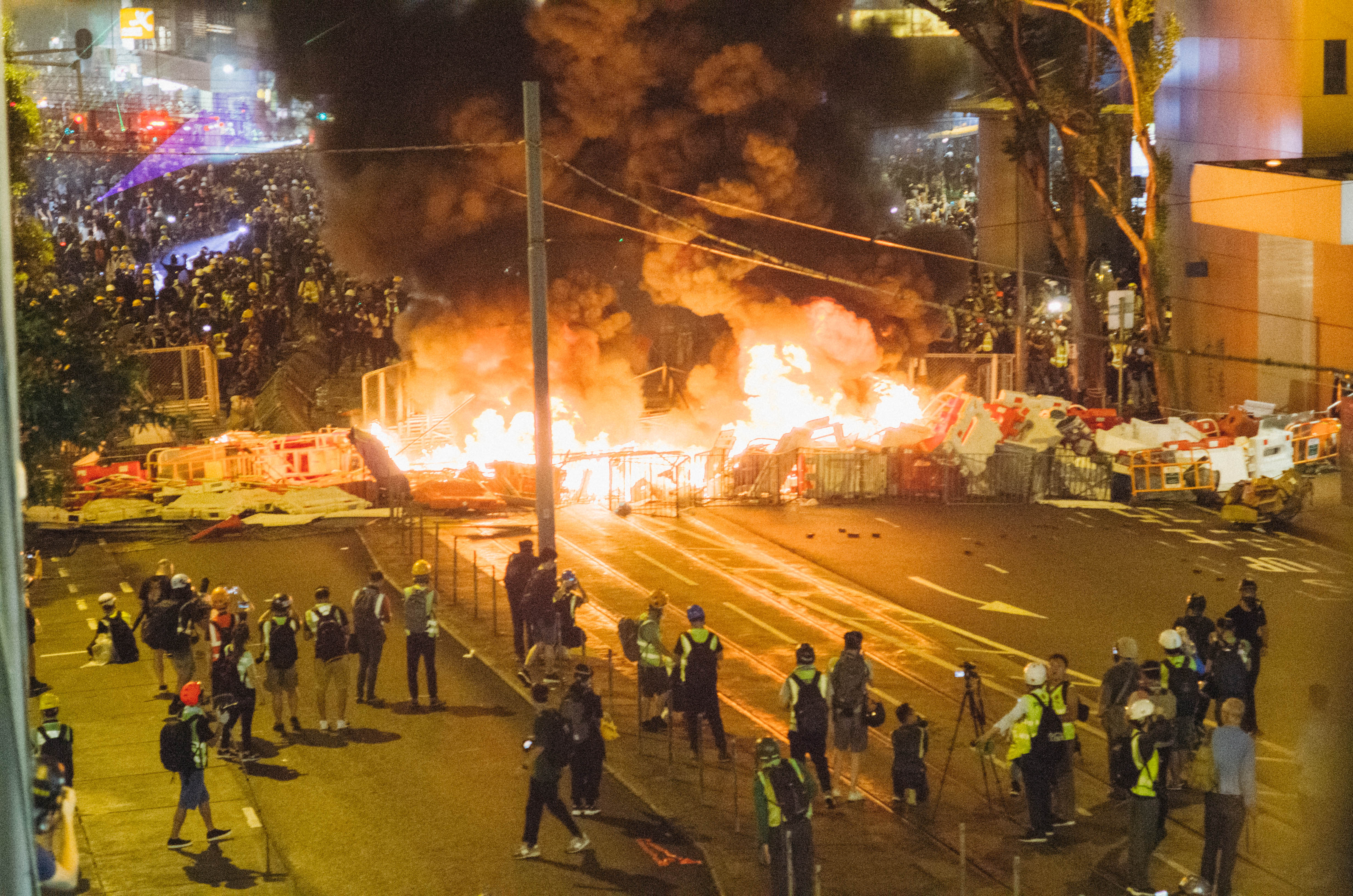
In my view, the underlying question in Hong Kong is about social cohesion, a sense of identity and an inclusive society where all the people of Hong Kong get together and say, “We are Hong Kongers, a Special Administrative Region of China with its own distinctive identity, and we are going to make it work.”
We need a sustainable business model. On the mainland, President Xi Jinping is famous for his pro-people policies, summarized in Common Prosperity. But in Hong Kong, we have a society where now, because of the social unrest and the collective trauma suffered by Hong Kong society, the government is sometimes slow to reach out and talk to ordinary people to understand the realities at ground level. It was a great tragedy in Hong Kong history, but it’s not too late. We can get over our collective trauma and come back.
We all know that social stability and people’s sense of satisfaction and well-being are two sides of the same coin. You can’t have one without the other. Hong Kong needs to work hard to ensure that the coin is well-balanced.

Dato’ Seri Cheah Cheng Hye is a professional investor and entrepreneur who co-founded and chaired Value Partners Group Ltd., one of the leading asset management firms in Hong Kong. He was in charge of Value Partners’ asset management and business operations from the firm’s founding in February 1993 until January 2025, when he retired with the title of Honorary Chairman, remaining a substantial shareholder and retaining his Board seat. In 2016, the government of Penang State, Malaysia named him Darjah Gemilang Pangkuan Negeri, an honorary degree which carries the title Dato’ Seri.