

It’s a Sunday afternoon, and Michael Maddess is off to Kazakhstan to finish marking a 100 km mountain course for the next Action Asia three-day ultra-marathon. He’s been part of the adventure racing marathon company Action Asia Events since 2000, after stints with Formula One in mainland China and Hong Kong Commercial Broadcasting in the 1990s. Almost anyone in Hong Kong engaged in the sports of trail running, mountain biking, kayaking, and rock-climbing knows the Vancouverite by face or by name, and like many of Hong Kong’s expatriates, an initial taste of Hong Kong in 1989 turned into decades. The 25-year-old found himself immersed in an entrepreneurial whirlwind that combined his passions for marketing and the outdoors. Here he talks with AmCham HK e-Magazine editor Edith Terry about how Hong Kong has become a center for extreme adventure sports in Asia (some call it the Chamonix of Asia, after the iconic ski destination in France) and the potential Hong Kong’s outdoors has for transforming its image.
What is adventure racing?
Adventure racing is a multi-discipline sport that usually combines several sports together in one race, for example, trail running, mountain biking, ocean kayaking, abseiling off a cliff, rock scrambling along a coastline or upper river gorge, together with mental strength tests to push the team outside its comfort zone. Ideally, the team works together to solve problems and learn from them.
Trail running only really requires running shoes, a hydration system, and these days, possibly a watch with a Global Positioning System (GPS) tracker. Some races around the world are making it more challenging, where you load a GPS track onto your telephone or watch and follow a virtual course without physical markings.
Normally, the trails are marked, and it is very much an organized event. Action Asia Events uses biodegradable silk ribbons, recycle signage and martials at checkpoints and train emergency rescue staff for one-day and three-day races. But we did some virtual races during the Covid-19 pandemic, and I have some great photos with myself and others on top of a peak in Sai Kung on a rainy day, with nobody else around, and we’re wearing masks, because I didn’t want to get caught breaking the law.

How and when did adventure racing start in Hong Kong?
Adventure racing in Hong Kong started two years before I arrived in 1990. They did two races a year. After I arrived, the amount increased until today, there are over 15 races a year in Hong Kong, including adventure racing, short sprint races, the Lantau 2 Peaks race, technical sky running races and our Hong Kong 50 series that spans Hong Kong Island, Lantau Island, Sai Kung and Tai Mo Shan country park together with Action Asia 50 trail events across Asia. Amazing that we have now organized over 300 events. And that’s not including our three-day events that go to Kazakhstan, Mongolia, Lijiang in Yunnan Province, Nepal, and previously Vietnam and Laos.
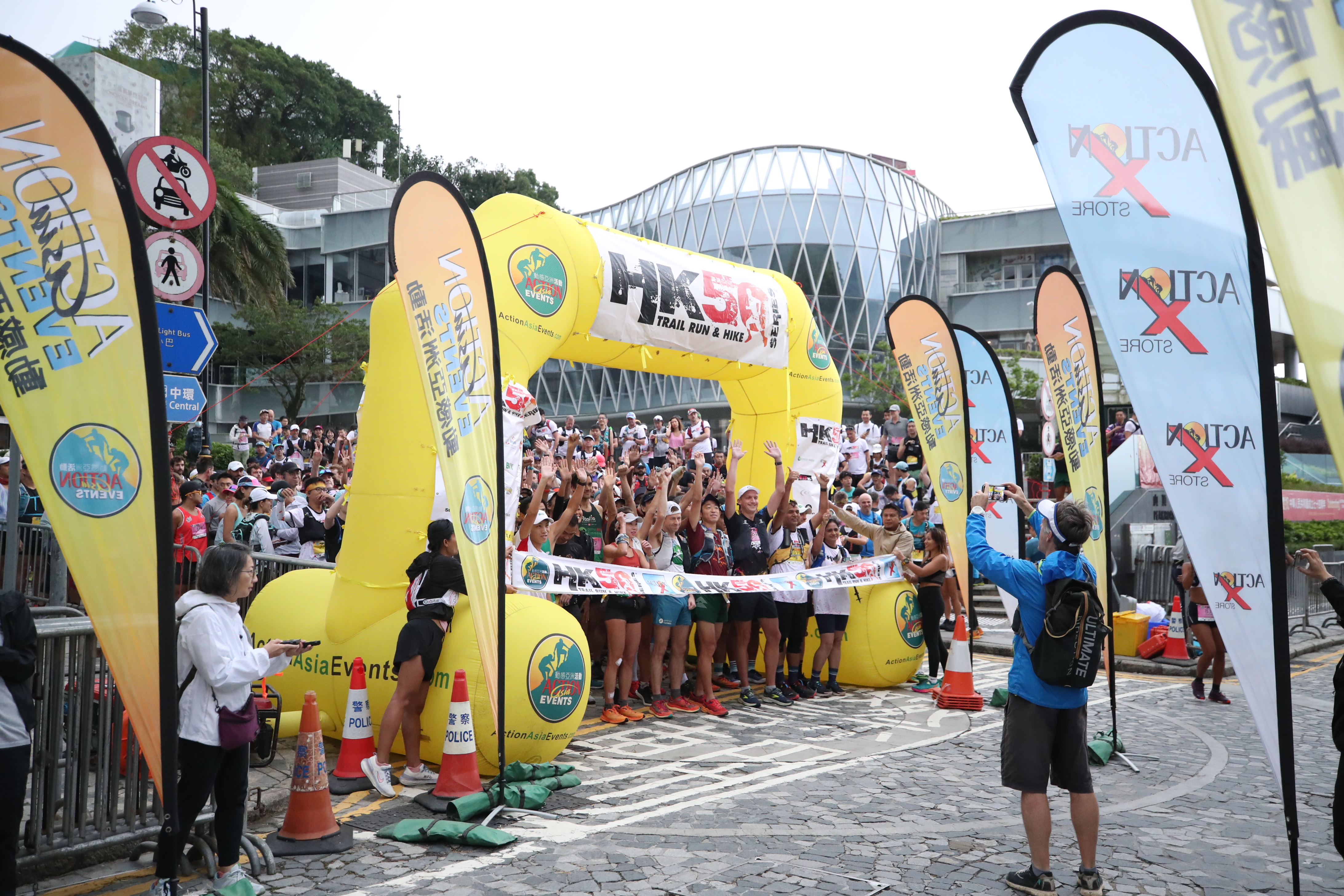
If you’re promoting a multi-discipline sport like adventure racing, people must own or rent a mountain bike. A lot of our race participants have their own mountain bikes, kayaks and all the gear for water sports, the climbing harness for abseiling with carabiners, figure eights and so on. We found that some of the sports that were more team-oriented and involved more than one discipline were more popular or easier to promote in countries where people had big apartments. In a place like Hong Kong, it’s not easy to keep a mountain bike when you’re living in a 300 sf apartment, or less than that, for some people.
We had that issue, and the other issue was having three people on a team. A lot of people just don’t have the time to train together. We decided to switch from teams of three to teams of two and had immediate success. Then people started craving solo entries because they were just so busy. A lot of people don’t have the time to get a teammate, or they just don’t want the burden. They want to enter something solo, pay for it, and train by themselves when they have free time. We’re talking about weekend warrior, endorphin junkies who are very busy.
At that point, we realized the multi-discipline type of adventure racing was just getting too expensive to organize, and we saw the passion increasing for more trail running and hiking. We started doing more and more trail running events. Then people would say – that 10 km or 20 km events are too easy. Can’t you make it 30, 40 or 50 km?
That’s why we decided to do three-day events. The first one was in Vietnam in 2009. A lot of people who are living in Hong Kong as expats are only here for a few years and look at companies like Action Asia Events to make it easy for them. All they do in Hong Kong is train, and they can take off and have a marked course around a bunch of cool people who share their passion for the outdoors, and be back in Hong Kong Monday or Tuesday morning at the business they work in. Because of the three-day packages, we were able to keep in business during the pandemic, even though Hong Kong opened later than most other places in Asia. It’s been a balancing act where you’re constantly looking at new channels to survive in a very competitive market.
Hong Kong’s events go regional and global
Like a lot of companies after the Covid pandemic, expats left, and more and more locals were doing our events as well as other Asians. In 2024, during our Sai Kung 50, we had 70-plus participants from Singapore coming to Hong Kong. I asked a few, ‘Why are so many of you coming to Hong Kong?’ And they all said the same. Hong Kong’s got the mountains, Hong Kong’s got the oceans. There are not many places where you can hike on a beautiful trail, cresting a mountain top, seeing the ocean and going right down to a beach and climbing back out. They don’t have this in Singapore.
We’ve been knocking on the door for 20-plus years, and it’s great that now both Cathay Pacific Airlines and the Hong Kong Tourism Board are doing a little, but there’s so much more they could do to promote the outdoors of Hong Kong.
What is your next big thing?
Sky Running. If in running you go around a mountain, in Sky Running you go up to the top of the mountain and come down, which makes it much more technical. Sometimes you’re not on a trail, so it’s much more extreme, and it’s not going to be as popular as an easier sport, but it’s fascinating for hardcore mountain athletes that want to push themselves farther than a basic trail running events and great for social media. Some of our Action Asia events qualify for the Sky Running World Championships. The Hong Kong China Sky Running Association grooms mountain athletes and pushes them toward the Asian Championships and the World Championships.
Safety is a big issue. As a side gig, I was asked to travel around mainland China on a volunteer basis to different mountain events to check on safety, as a referee. I did that for 10 years in North Asia and was the only Asian Sky Running referee for some time. When the mainland China organizer was doing a Sky Running race in Siguniangshan, the “four sisters”, three hours from Chengdu, they wanted someone with my qualifications to make sure they had ample safety on the course and could brief the participants. Among other things, the course had to be 85% natural dirt and no more than 15% cement. One of the mainland associations stepped in and said they could do the job, and I said ‘No problem’ as I was only a volunteer. Three years later and 21 people died in a Gansu mountain event for a host of reasons I won’t go into, but you have to make sure safety is looked after including backup plans.

What has been the effect of adventure racing on travel?
More than 10 years ago, I was told by one of the advertising agencies in Hong Kong that looked after Cathay Pacific that over 10% and as many as 13% to 15% of travelers were doing some form of health, wellness or fitness on their travel, as opposed to the pre-1990s model that you saw in advertising of people sitting on a beach with an umbrella. People in Hong Kong have maybe two weeks of holidays a year, and those two weeks are spread between international hiking and running events cross Asia and Europe. They’re not going to beaches any more, especially the younger generation.
Times have changed. And I think that Cathay, among other airlines, realized that the percentage of people who crave a hiking holiday, or scuba diving, kayaking or outrigger canoe paddling or surfski has increased. More and more the reason people travel is to do something in the outdoors, something healthy. We’re being asked by some people, can we extend after the third day or the last day after the finish and do a yoga retreat, or something like that?
I’d love to see some of the big multinationals and banks send their staff to outdoor international events as team building exercises whether they do it to reward their management or focus on employee health, to build a stronger, more resilient workforce with less absenteeism. There are numerous benefits. You look at a lot of companies across Hong Kong getting involved in sports and the outdoors, and they’re not just doing it for branding, but to motivate and inspire their staff to take health and wellness more seriously.
CBRE Group (CBRE:US) is into their fourth year as title sponsor for the Lantau 2 Peaks and sometimes sends up to 50 of their staff, to do both distances, the 15 km and 24 km, which goes over both of the Lantau peaks, Sunset Peak and Lantau Peak. We also have a Hong Kong Island hike and run, supported by Hysan Development in Causeway Bay. We have 6 km, 15 km, and 24 km races. The six-kilometer race is very popular with children and families. We always try to reach out to different demographics and fitness levels.

Has adventure racing changed perceptions of Hong Kong?
Over the years, I’ve had a lot of participants come up to me personally and say, you know, Michael, the reason I’m staying in Hong Kong is because of Action Asia. We’re among some of the businesses that brings the community together. There are tremendous opportunities for networking, socializing, finding training partners at all levels, and inspiring and motivating people to get off their butts, because they have a carrot dangling in front of their heads to aim and train for. And the events are always exciting and well organized. We raise funds for different non-profits and they like that, as opposed to just working, working, working, trying to make money.
They could do that in almost any city around the world, for some of these senior bank executives with impressive CVs. But a lot of them will stay in Hong Kong because they really treasure Hong Kong’s outdoors. Often, that’s why they stay, not because they’re making $5,000 more in their job each month.
As to how we could do a better job changing perceptions, I’ve seen social media videos on Facebook, YouTube and Instagram put together by friends that are much better than the TV commercials by the Hong Kong Tourism Board to promote Hong Kong. Someone living in South Lantau could climb up Lantau Peak, do some 360-degree filming, descend a stream, film the ocean waterfront, head into Mui Wo, catch the ferry with a beer in their hand, and produce a nicer video than some of the Tourism Board videos I’ve seen. Or Sai Kung, with its beautiful Tai Long Wan beaches, to Sharp Peak and Chek Keng, to the surrounding islands and Double Haven. There’s beautiful scenery out there, and there’s so much more that can be shown.
When I brought Stevie Kremer, the mountain “marathon queen” to Hong Kong to do our Lantau event, she said, she’s never been to a place where the mountains just bolt out of the ocean so dramatically. As a runner from the US, raised in Colorado, she was just totally blown away.
When I say there’s more we can do, number one is to be more creative. Why couldn’t the Tourism Board do a 30-second commercial with six people on an outrigger canoe, with two or three of them wearing GoPro cameras, just smashing the waves? In the morning, with the sun coming up, from the dramatic seas to the coastlines, to the colors of the sky and the mountains jetting out. Or running down a technical peak in the morning, or mountain biking down Tai Mo Shan or some of the new trails built by the Agricultural, Fisheries and Conservation Department?
Show them off! Plenty of people will come to Hong Kong if they can rent a mountain bike. That’s just an example of a few different ways you could produce some dramatic, epic outdoor visuals and change the perception and thinking so that people want to visit Hong Kong to help our economy.
What first brought you to Hong Kong?
I was always a go getter as a kid, shoveling snow off driveways, washing people’s windows, cutting grass lawns. I was hitchhiking to go skiing and got picked up by a guy who worked for the Vancouver Sun and offered me a job driving newspaper bundles around town. I was only 15 years old, and didn’t have a driver’s license, but I said, ‘Oh yeah, I’ll do it’. And I went out and bought a car and taught myself how to drive, and immediately got the job. I was there for three years, and at the same time was always running and doing triathlons. I was always very strong at endurance running, living up in the mountains in Vancouver. North Vancouver is all mountains and forest.
There were deer and bears right across the street from our house as a kid growing up. And running up this huge hill delivering newspapers, maybe 20 kilos minimum, makes your legs very strong for endurance. I was always strong on the hills, same with mountain biking.
I was at Pacific Press Newspaper, which owns the Vancouver Sun and Province, for five years, part-time and full-time, in circulation and eventually advertising. After five years, they offered me a one-year sabbatical with my job guaranteed when I got back. That meant I could do triathlons full time, as I was winning and receiving podium finishes for my age categories, but never in the race outright. I decided to take off the year and to go to Hawaii, Japan, Australia and New Zealand, where I did three Ironman triathlons and about 30-plus Olympic distance triathlons. And I came back through Hong Kong, which was only supposed to be a three-day layover and I was offered work within hours of getting off the plane. To cut a long story short, in 1990 I went to work for the three Commercial Broadcasting radio stations in Hong Kong, in Cantonese and English, which I didn’t realize were the most profitable radio stations in the world.
My father was very upset. In his generation, it was very difficult to get a union job. To lose your job in a union is almost impossible. My father asked if I had been drinking. And I said, no, I just love the adventure. The pace in Hong Kong is phenomenal. There are so many opportunities. Everybody was hiring in 1990. I looked up an old friend from the Vancouver Sun and asked if he had time for a drink. We met at the Foreign Correspondents Club, and the next thing I know, I had a job.
What a learning curve. I was taking a tape recorder to do interviews for Formula Three Macau Grand Prix broadcasts, together with the Rugby Sevens while selling advertising. Then an opportunity came up to set up a distribution company for Formula One in mainland China just as the tobacco ban was hitting China in 1993 to 1994. I moved to Beijing, Shanghai and Guangzhou for a few years, and we produced over 200 television programs that were distributed to over 67 TV stations.
Action Asia had just done a deal with National Geographic to produce an adventure race, and they had a need for someone with both a sales and TV background. They made an offer to come on board. That lasted a few months, then a few years, then basically I put my hand up and said, this is not fair and eventually just before the pandemic got control.
At Action Asia Events, we raise money for disadvantaged children in Hong Kong, Ocean Park Conservation Fund and schools in Nepal. In our Singapore Action Asia Challenge back in 2004, we were the first to convince Singapore to allow kayaks on MacRitchie Reservoir.
That was an interesting story. It was totally banned up until then. I got hold of the guy in charge of reservoirs at the Public Utility Board in Singapore, equivalent to the head of the Water Services Department in Hong Kong. I got him to go on an inflatable kayak with me. He had never actually been on a boat on the reservoir, and I finally talked him into it. He was just blown away by the environment, the nature, how beautiful the outdoors was. And he granted us at Action Asia Events permission to be the very first adventure race with permission to kayak on the reservoir, and eventually they opened it to the public.
They were thinking that all these Iron Man type participants would show up. But instead, they found children from five years old to grandparents were coming to rent kayaks. That really opened thinking in Singapore to take outdoor sports more seriously, to mass groups, rather than thinking it was for Olympic athletes only.
And Malaysia and Taiwan were the same. We worked with the tourism boards and were granted money to produce television programs with National Geographic. I worked with all the top producers for television material that we distributed on National Geographic, ESPN, Star Sports, Fox Sports and numerous other television networks. And remember, this was before social media started. It was very difficult to negotiate. For Action Asia to have our adventure racing sandwiched between Formula One and premier soccer like Liverpool playing Manchester United at 6:30 or 7:00 pm, prime time across Asia, was phenomenal – 53 countries and 80 million plus households broadcasting Action Asia. Nobody could believe it. This tells you, if you put your mind and heart into something, and you truly love what you’re doing, you can succeed at anything.
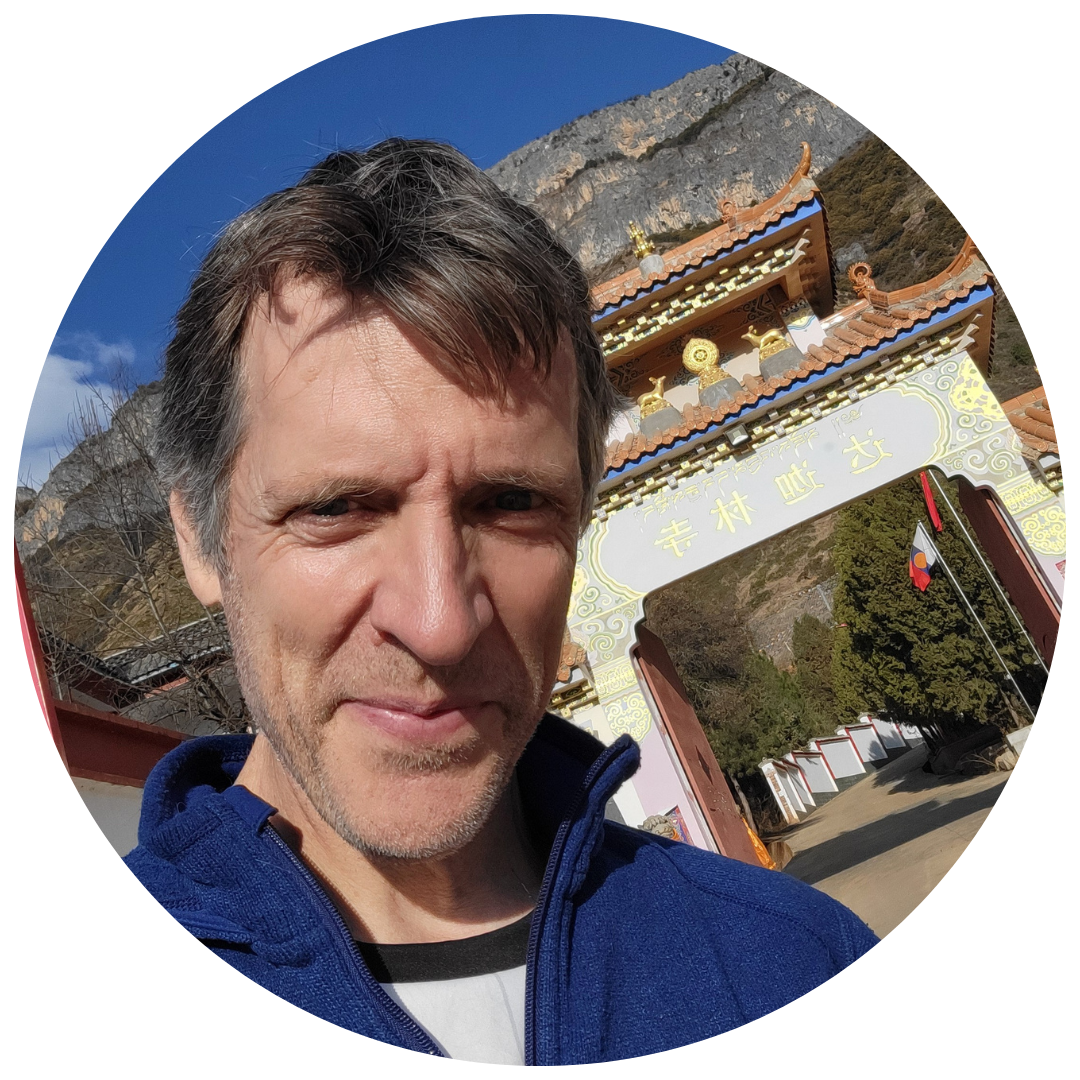
Michael Maddess has been a Director of Action Asia Events since 2000, and director of the Action Asia Sports Academy since 2020. Action Asia Events runs spectacular, extraordinary trail running, hiking and remote ultra marathons across Asia. Its Facebook page has 37,000 followers. Action Asia Sports Academy raises funds for underprivileged youth through funding health clinics, schools and activity centers, youth development through outdoor sports, developing permanent facilities for youth adventure training. Before the pandemic, he came to an agreement with other partners of Action Asia Events to take control of the business. From 1994 to 2000 he was partner and co-founder of Asia Motor Sports, producing broadcast content on motorsports for an international audience across up to 67 TV stations, to an audience ranging from 15 million to 120 million.