

In The New Geography of Innovation: The Global Contest for Breakthrough Technologies (Simon and Schuster, 2026) author Mehran Gul writes about technological innovators across three continents and eight countries, arguing that culture is a key dynamic in triggering success. Here we provide an excerpt from his chapter on China, looking at the corporate history of Tencent as an example of how the geography of innovation has shifted from an era when the United States dominated technological innovation and investment.
“America is the teacher, China is the student when it comes to great technologies; but China’s now a precocious student who is learning from the teacher but also maybe outexecuting the teacher, right?
Expansion
In the summer of 2000, David Wallerstein, a fresh-faced twenty-five-year-old consultant at Naspers, a South African conglomerate, flew out to Shenzhen to meet Ma Huateng, then a twenty-nine-year-old cofounder of a Chinese internet startup that ran an online chat ser-vice called QQ, the Chinese variant of ICQ, AOL’s PC-based messaging service. QQ, released in 1999, had been hugely popular with China’s newly connected youth and grew to a million users within a year of its launch at a time when the entire country had only about 22 million people connected to the internet. Wallerstein was sitting on a cash pile of $100 million, a huge sum at the time, that Naspers had put aside to invest in China’s nascent internet economy. He was making his way to Shenzhen with what he thought was a pretty convincing offer to buy Huateng’s young company.
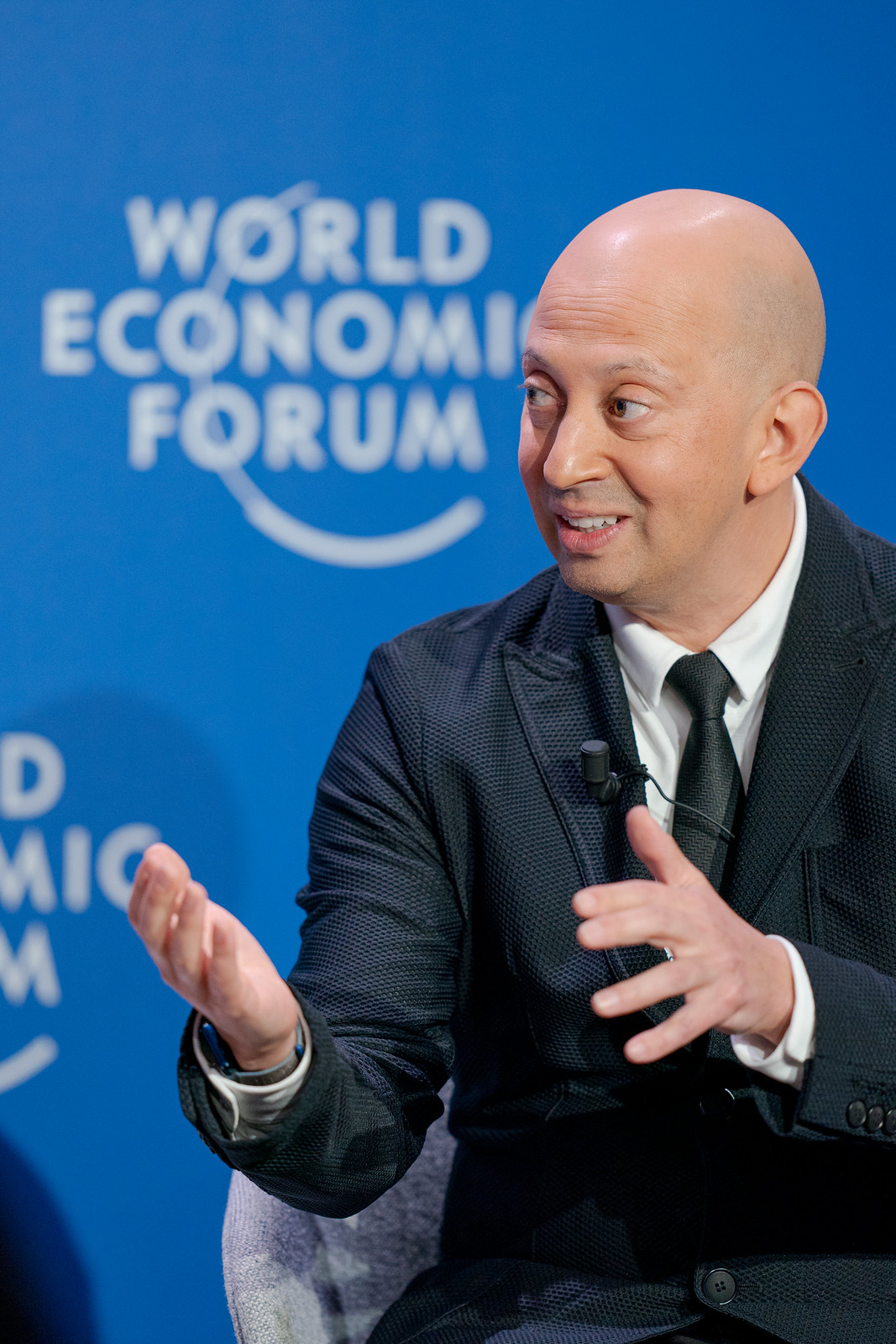
Wallerstein was used to having good meetings in China. The country was still poor; the average person made less than $US 100 a month, foreign investment was scarce, and the very idea of a technology startup was little more than a poorly understood novelty. Wallerstein, and his $100 million checkbook, were usually a welcome sight wherever they went. But not this time. After exchanging pleasantries, and a brief meeting, Ma Huateng, also known as Pony Ma, politely told Wallerstein that his two-year-old company, Tencent, was not for sale. Thank you for coming and goodbye.
Wallerstein was taken aback. He had never really had this experience in quite this way before. But he hadn’t come all the way from Beijing only to be told to go back to where he came from. Undeterred by the snub, he invited Huateng and his four cofounders to dinner that night, where, as legend goes, everyone got plastered. The next morning, he went back to Tencent’s office to make another pitch for how the two companies could work together.
It took over a year of courtship before Huateng finally came around and sold half of Tencent to Naspers for $34 million, a bold investment for that time and place, eclipsing as it did even SoftBank’s much mythologized $20 million bet on Alibaba that happened only a year earlier. After the investment, Wallerstein, a native Californian who at-tended the University of Washington and Berkeley, and who likes to play rock guitar in his spare time, was hired by Tencent as the company’s first non-Chinese executive. He became the first person outside of the company’s five founders to join Tencent’s executive team, the firm’s highest level of leadership. At the time, the three-year-old company had 45 employees and one product, QQ, which had only just managed to turn a profit.
“In the early days I used to do speeches to try to rally the troops, to encourage the company that we could become an international brand someday, that we could be a participant in the global economy,” Wallerstein, who prefers to work out of a converted church building in Palo Alto, tells me. “These were very hard to imagine concepts in 2000. I think even after we went public, it still wasn’t really clear to us that we could have any role or impact in international markets.”

At fifty, Wallerstein has devoted fully half his life to Tencent and was for the longest time the highest ranking and still is the longest tenured American in the upper ranks of the business. He is among a handful of Westerners swept along with the improbable rise of Tencent, and China, from near oblivion to almost total relevance in all things technology in the impossibly compressed time span of just twenty-five years. At its peak, in early 2021, Tencent was, with a market cap scraping almost $1 trillion, the most valuable company in Asia. Naspers’s $34 million early bet grew to be worth over $200 billion, making it one of the most outrageously successful investments in the history of capitalism, the corporate equivalent of winning the Powerball.
Naspers started as a modest newspaper business in Stellenbosch, South Africa, in 1915 and spent much of the twentieth century publishing Afrikaans-language newspapers and magazines. This single investment in an obscure Chinese startup initiated by a twenty-five-year-old consultant transformed it into a global internet and media powerhouse, at one point breaking into the ranks of the hundred most valuable companies on the planet, punching at the same level as tech headliners like Amazon, Netflix, and Facebook. Naspers’s stake in Tencent, which accounts for just about the entire value of the company, has made it by quite a wide margin the most valuable company on the entire continent of Africa.

How did Tencent grow so big so fast? In its early years the company’s growth was fueled almost entirely by its desktop-based messaging app, QQ. The company’s first product, still used by 800 million people, made it worth mere billions, but not yet hundreds of billions; China famous, not world famous. The company’s stratospheric rise would come more than a decade after its founding when it switched its focus from desktop to mobile devices. In 2011 it launched WeChat, the smartphone-focused superapp which would take Tencent, and the Chinese internet experience, to a whole new level.
WeChat combines the functionality of Facebook, WhatsApp, Uber, Instagram, and a variety of other payment and retail features; everything anyone would want to do on the internet on a smart-phone all in one app. With WeChat, Tencent controls the single most important digital service in the world’s single largest digital market. Nearly everyone – and I mean everyone – in China uses it. So central is WeChat to daily life in the country that a smartphone stripped of Tencent’s flagship product would to an average user be rendered practically useless.
Wallerstein’s first title at the company was head of international. He spoke fluent English and Mandarin, had had his formative experiences in the US, Asia, and Africa, and split his time between the West Coast and China. So it was only natural for his role to be the bridge between Tencent and the outside world. The job of most executives with this responsibility in most companies is to take what they’re selling at home and try and sell it abroad. Wallerstein couldn’t do that. “Everything was so optimized for China that our services didn’t look attractive to anyone outside of China,” he re-calls. “So we actually didn’t really focus on doing much with our products overseas.”
Wallerstein’s role was less to bring Tencent to the world than it was to bring the rest of the world to Tencent. In the early 2000s, internet usage in China was beginning to take off and the country was adding tens of millions of new internet users every month, many of whom were curious to figure out what they could do with this newly acquired window into the outside world. Tencent saw an opportunity in catering to the newly connected Chinese consumers’ ravenous appetite for foreign music, foreign games, foreign everything. It was Wallerstein’s job to sate this demand. “I was much more focused on bringing great technology, great assets, great intellectual property to China,” he says. “And the core of that strategy was to license great games to come into China.”
Tencent’s first forays outside the mainland started simple enough. Wallerstein partnered with foreign game developers to distribute their products on Tencent platforms in China. If the games did well, they split the profit. But over time the relationships grew deeper. Tencent went from distributing foreign games in China to buying stakes in the overseas companies that made these games.
“We found that a lot of these studios that we were interested in didn’t have much capital and we didn’t know if they were going to survive,” says Wallerstein. “But we liked their games. So how do we make sure they can survive? Well, maybe we’ll also invest in them and own a little bit of them to make sure they’ve got capital to finish their game.”
QQ was Tencent version one; WeChat, version two. The company’s modest and entirely opportunistic early investments in small gaming companies paved the way for Tencent version three: its metamorphosis from a China-focused smartphone app developer to a highly diversified global technology conglomerate, sometimes called the Berkshire of tech.
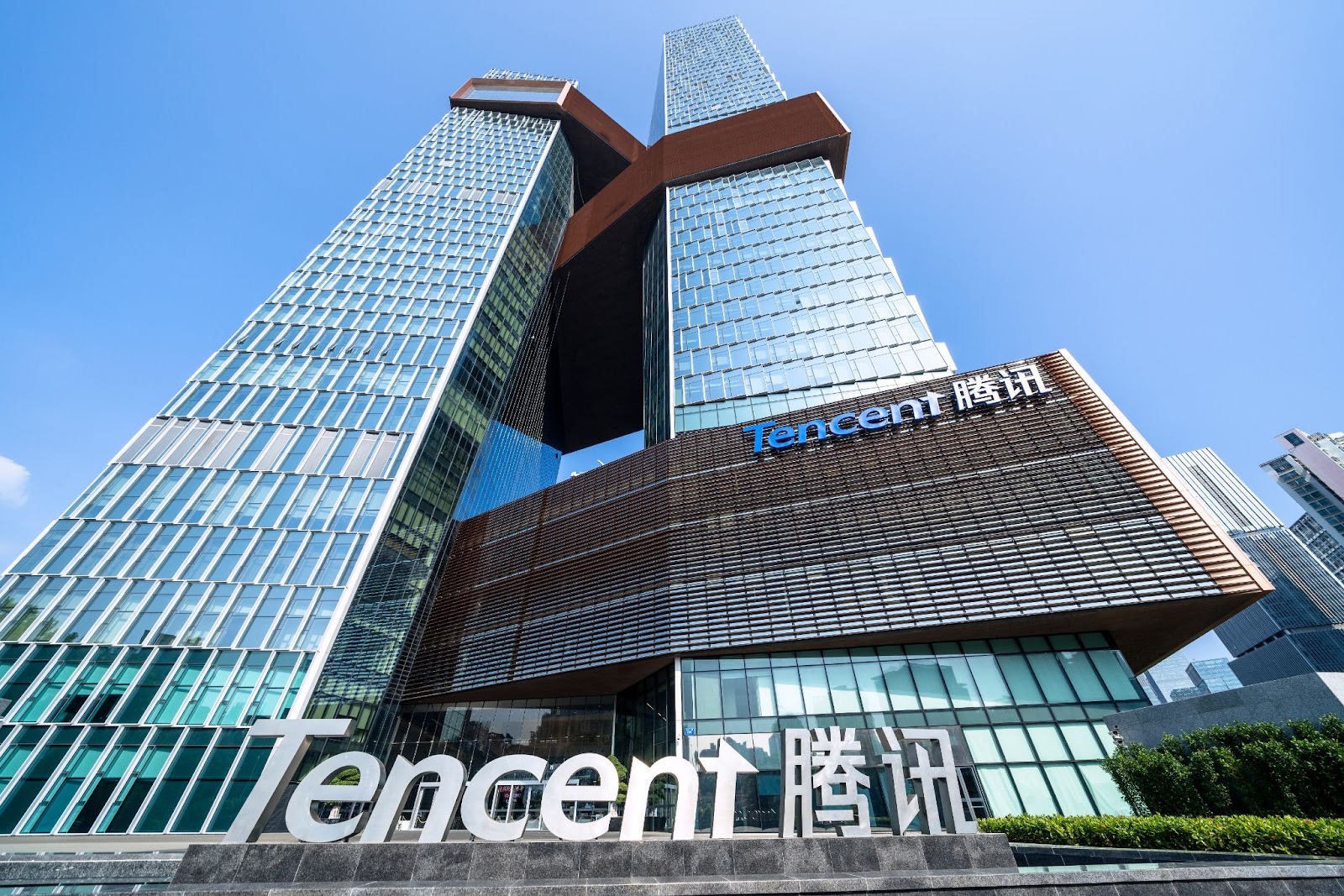
Tencent’s initial attempts to enter the gaming industry, which was previously dominated by American and Japanese players, were for the better part of half a decade met with spectacular failure. Those growing pains are now a distant memory as the firm has matured into the largest game vendor in the world. Tencent has stakes in over a hundred gaming studios from the US to Europe to Japan and South Korea and counts in its portfolio some of the industry’s most coveted titles. It owns all of Los Angeles−based Riot Games, the maker of League of Legends, which attracts over 180 million gamers a month; almost half of Epic Games, the North Carolina−based creator of Fortnite, played by 350 million people; and over 80 per-cent of Supercell, the Finnish gaming studio behind the hit Clash of Clans franchise, which attracts over 100 million users a month.
Tencent has minority stakes in Activision Blizzard, the American gaming studio behind Call of Duty, World of Warcraft, and Candy Crush; the French video game publisher Ubisoft that created the blockbuster Assassin’s Creed; and Krafton, the South Korean publisher of PUBG. It’s hard to think of a popular game that is in some way not associated with Tencent. Grinding Gear Games (New Zealand), Funcom (Norway), Sharkmob (Sweden), Sumo Group (United Kingdom), Inflexion (Canada) are all Tencent properties.
Tencent the social media company attracts over a billion users. But what is less well known is that Tencent the gaming company also reaches over a billion people. The difference is that while the user base for the firm’s social media apps is almost entirely Chinese, the audience for games linked to Tencent spans the globe.
Tencent’s presence in the entertainment industry goes beyond gaming. It is also a major player in the global music industry. Tencent Music Entertainment, or TME, is by far the most popular music streaming service in China. It would be tempting to call it the Spotify of China, but that would be to make the parallel the wrong way around. Not only does Tencent’s music streaming service have more users than Spotify, the most popular music streaming company outside China, it is in fact Spotify’s third largest shareholder, so the relationship can hardly be termed competitive. It is also one of the largest shareholders in Universal, the largest music company in the world. Tencent is also big in movies. Its production arm, Tencent Pictures, has produced major American franchise movies like Terminator: Dark Fate, Men in Black: International, and blockbusters like Kong: Skull Island, Wonder Woman, and Venom.
When most people outside China think Tencent, they still think WeChat. But that mental model is outdated. The company’s rapid overseas expansion has taken it beyond social media, beyond gaming, beyond entertainment, beyond China, beyond categorization really, and turned it into a highly diversified global holding company with stakes in over a thousand companies, more than 600 of which are outside China, including prominent US tech brands like Snap, Reddit, and Discord. In 2017, it paid $1.78 billion to buy 5% of Tesla, making it the tech icon’s fifth largest shareholder at the time. In 2021, at the peak of its international M&A activity, Tencent had amassed a listed investment portfolio of $ US 190 billion, with stakes worth tens of billions of dollars more in unlisted companies.
In 2014, David Wallerstein transitioned into the role of the chief exploration officer, or CXO, which made him the de facto head of Tencent’s internal venture capital fund. His remit was to look for bleeding-edge technologies wherever they could be found; radical moonshots that could make the company even more money while also plausibly solving some of humanity’s biggest challenges, like health, energy, and sustainability. From his office in Palo Alto he oversaw investments to the tune of billions of dollars into some pretty far-out ideas, like Moon Express, a startup that aims to put drones on the lunar body, and Planetary Resources, a company that is looking into asteroid-mining.
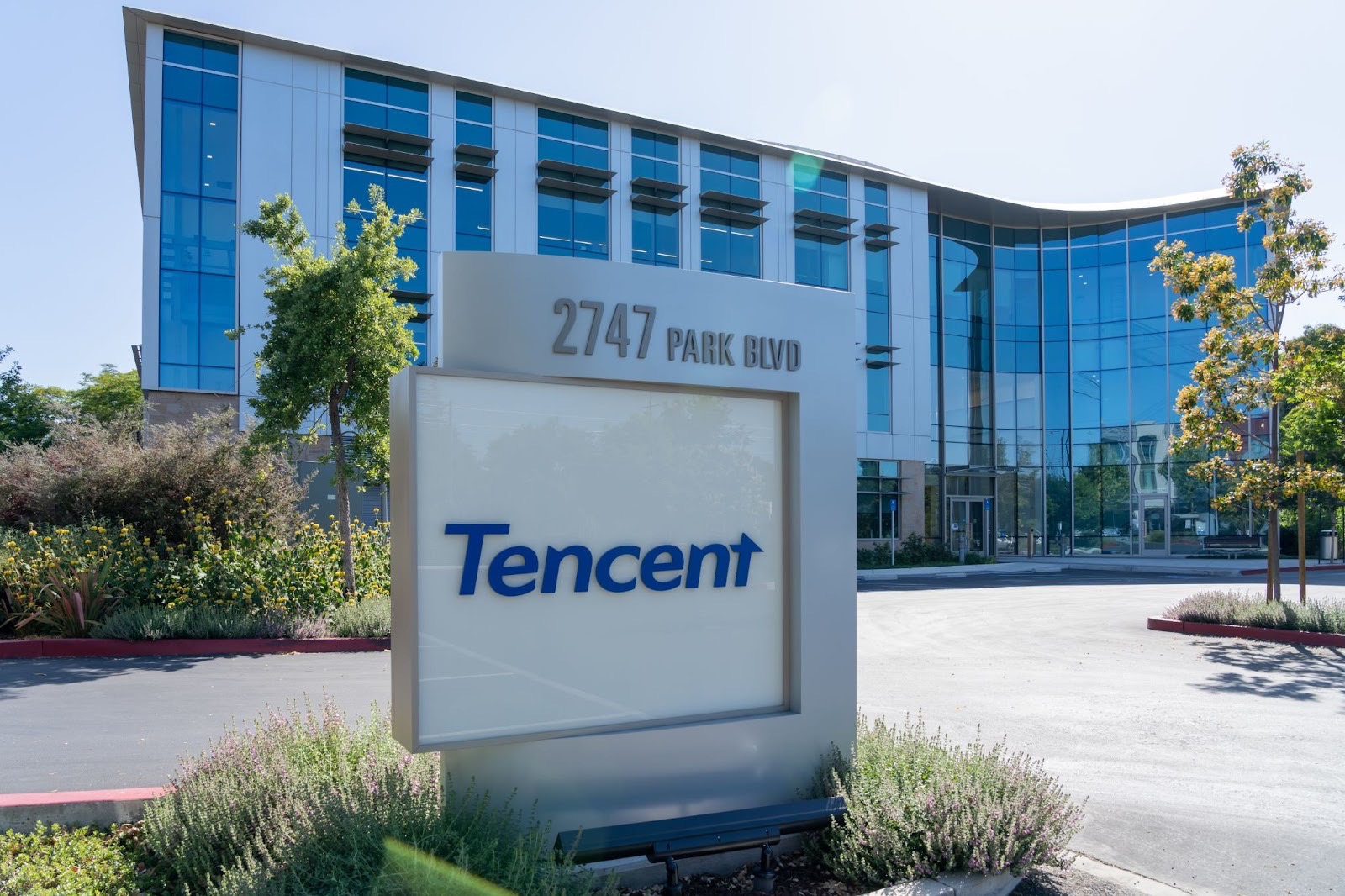
Tencent was now big enough to be able to splash around “utopian money,” remaking it in the image of its peers in Silicon Valley whose business plans at times sound like they’ve been plagiarized from the pages of sci-fi novels; less about monetizing captive markets or maximizing shareholder value and more about solving AGI (artificial general intelligence), making humanity a multiplanetary species, and extending the light of consciousness. Wallerstein’s job was no longer just about doing well. It was about doing good. When he came out with his first rock album, it included the song “The Last Chance,” in which he sings a hook that goes: “This is a chance, to face the reality / One last dance, for all of humanity,” and ends by fading out to the sound of a ticking clock.
Wallerstein started his career bringing outside capital to promising companies in China. Over time his job became precisely the opposite: to invest Chinese capital in companies abroad. The arc of his career is a micro expression of one of the biggest trends unfolding at the level of the global economy. For decades China was the largest recipient of foreign direct investment in developing countries. Now more foreign investment flows out of China than into China. In 2024, inbound foreign investment into China totaled $18.6 billion, the lowest in three decades, while outbound foreign investment from China totaled almost $163 billion, the highest ever.
It’s not just David Wallerstein, it’s not just Tencent, and it’s not just the tech industry. Chinese private and state-owned enterprises have been acquiring foreign assets across the board, encouraged in part by the government’s “going out” strategy. China is today the world’s second largest contributor to global outbound investment.
The dealmaking spans industries and geographies. Anbang, a major Chinese insurance company, owns the Waldorf Astoria in New York. Geely, a Chinese car maker, owns Volvo, the Swedish icon. The BAIC Group, a state-owned Chinese car company, is the largest individual shareholder of Mercedes-Benz. Sinochem, a Chinese state-owned chemicals company, owns Syngenta, the world’s largest agriculture chemicals company, based in Switzerland.
The deal-making frenzy has not gone unnoticed. The US has been cracking down on Chinese equipment manufacturers like Huawei and ZTE for quite some time. It is now extending these restrictions to Chinese investors as well. In January 2024, the US Department of Defense added International Data Group (IDG), one of the more prominent Beijing-based venture capital funds, to a list of entities identified as “Chinese military companies” supporting the “modernization goals” of the Chinese military by “ensuring it can acquire advanced technologies and expertise.”
IDG, which started out as an American venture firm based out of Boston that was later bought out by its Chinese team, denies these allegations. This is the first instance of a major Chinese-headquartered investment firm being added to a sanctions list by the US government. The charge carries added weight given it comes not from a civilian agency tasked with overseeing trade relations like the Department of Commerce but from national security circles at the Pentagon. The DoD would eventually drop IDG from its entities list, but the episode highlights the heightened geopolitical risks for investment firms operating across the US and China.
________________________
After decades of record growth, Chinese tech companies are now reeling from a dramatically altered operating environment both at home and abroad. Regulatory pressure is making it harder for them to acquire new assets and hold on to existing ones in the West: a place which had for decades been the sole focus of their efforts to go international. Tencent had to divest entirely from its 5% stake in Tesla just as the EV manufacturer became the largest car company in the world.
The Chinese government has also been cracking down on the power of big tech. In December 2023, it introduced new restrictions on gaming companies, aimed at curbing the amount of time people spend playing video games. Tencent, once an almost trillion-dollar company, has seen its market value slashed by a third. Amid this tumult, Wallerstein, the most powerful American at the Chinese tech giant for most of the company’s history, transitioned out of the CXO role in January 2024 and is now an advisor to the company on topics like climate and health.
I asked Wallerstein, the rock guitarist who bleeds Tencent, the native Californian whose personal story is woven into the founding myth of one of China’s biggest tech giants, if he is at all conflicted about tensions between the country that he is from and the country that made him who he is; what he thinks about the negative halo around China tech; the current impasse; and where things might go from here.
“I don’t think there’s real architecting of this moment going on. I think there’s some guidance, there’s some things said at a high level, announcements made which then can be reflected in policies, but I don’t think there’s a very clear vision of where people want things to go.
“It’s not really clear how Chinese companies would be seen positively in the US for doing good things from a US perspective. To me, I think importing a lot of American IP, movies, sports, media, music, Snoop Dogg kind of stuff to China should get you a gold star. I don’t know if there’s an authority that gives gold stars, but I just didn’t really on the ground ever get a pat on the back or a hand-shake, say, ‘Hey, at least you guys, when you import our movies or our music or our games or our intellectual property and pay us a fair rate for it, pay us money, that’s good, that’s positive.’
“And I think governments around the world need to figure out what they believe is positive behavior in addition to the negative behavior. So you could say, that’s bad, we don’t like that. We think you’ve been stealing IP, that’s bad. Don’t do any more of that. But then when you do that, that’s good, do more of that. And I encourage across borders, positive behavior. I think that’s entirely okay to say we like this behavior, we want people to import more foreign stuff, our stuff or whatever. I think we need to get back to identifying where the carrots and the sticks are. And where are the carrots? Because I think it’s just been nothing but sticks.
“I don’t think people are really clear about where they’re trying to go, where they are headed to. The best friends of America are all nations that America fought wars with. So the moment the bosses say, ‘Okay, we’ve agreed to something, we’ve negotiated, it’s done,’ it’s amazing how people then just stop and get along.”

Mehran Gul thinks and writes about technology and business. He is a winner of the Financial Times/McKinsey Bracken Bower Prize. He attended Yale where he was a Fulbright Scholar, Fox International Fellow, and Teaching Fellow. He has been a Lead for the Digital Transformation of Industries at the World Economic Forum and an expert on Higher Education, Entrepreneurship, and Industrial Policy at the United Nations Industrial Development Organization. Before Yale, he studied at the Lahore University of Management Sciences. He has been a visiting scholar at the Jawaharlal Nehru University in New Delhi and a Fellow with the Acumen Fund. He lives in Switzerland, and The New Geography of Innovation is his first book.