

In 1985, HSBC stunned the architectural world with its $1 billion headquarters building, a steel suspended structure so bold, experimental and expensive that it was an immediate lightning rod for controversy. Designed by a then little-known British architect, Norman Foster, it was seen as a statement of commitment to Hong Kong’s future, soon after the Sino-British agreement to return Hong Kong to Chinese sovereignty in 1997.
Five years later, the Bank of China hired the illustrious – and already famous – Chinese-American architect I.M. Pei to build its headquarters. The 1997 handover saw the next big bang in architecture, between the Norman Foster-designed international airport, the Cesar Pelli-designed International Finance Center, and Kohn Pedersen Fox International Commerce Center. Now a collection of high-end office buildings is once again creating waves. For a professional view, AmCham HK e-Magazine turned to Alec Stuart, a highly regarded American architect and designer resident in Hong Kong since 1991.
In between the late 1980s, late 1990s to early 2000s, and the present, Hong Kong office towers were relatively tame, said Alec Stuart, an alumnus of the Yale School of Architecture and founder of Alexander Stuart Designs Limited.
A surprising number of Hong Kong’s prime buildings have Yale School of Architecture connections. Norman Foster graduated in 1963 when Paul Rudolph, design architect of Bond Centre (now Lippo Centre) was the dean, and Cesar Pelli, architect of Cheung Kong Centre and IFC was later also a dean of the school.
“Architecture is always about money,” said Stuart. Hong Kong has constantly been rebuilding since World War II. Virtually all buildings in Hong Kong have been built either by the government or developers, so it was natural for them to want to control budgets and, for developers, to maximize profit.
“The first building that disrupted that pattern was HSBC, over 40 years ago,” said Stuart. “It still stands out. Through a limited competition, Norman Foster’s design was chosen. For the banks, it was very important to make a statement that they had confidence in Hong Kong and were going to stay. It stood apart from all other office towers for being a steel frame structure and for being entirely owner-occupied. The sense of lightness from the thinner steel members and the see-through glass challenged traditional notions of solidity for banks, underscoring HSBC’s bold statement. The building was immediately criticized for its different appearance and for the steep price tag. This criticism, however, succeeded in backing up the bank’s aims.”
“The splendidness of this building spurred the Bank of China into developing its own new building nearby. They hired the much more famous China born architect I. M. Pei to create a much taller building. The square plan with triangular setbacks and reflective glass is pure I.M. Pei. The elegant shape was and still is the most dramatic one on the skyline. It is, however, a more traditional office tower with many rented floors. The Bank of China wanted a strong presence, not an operational headquarters.”
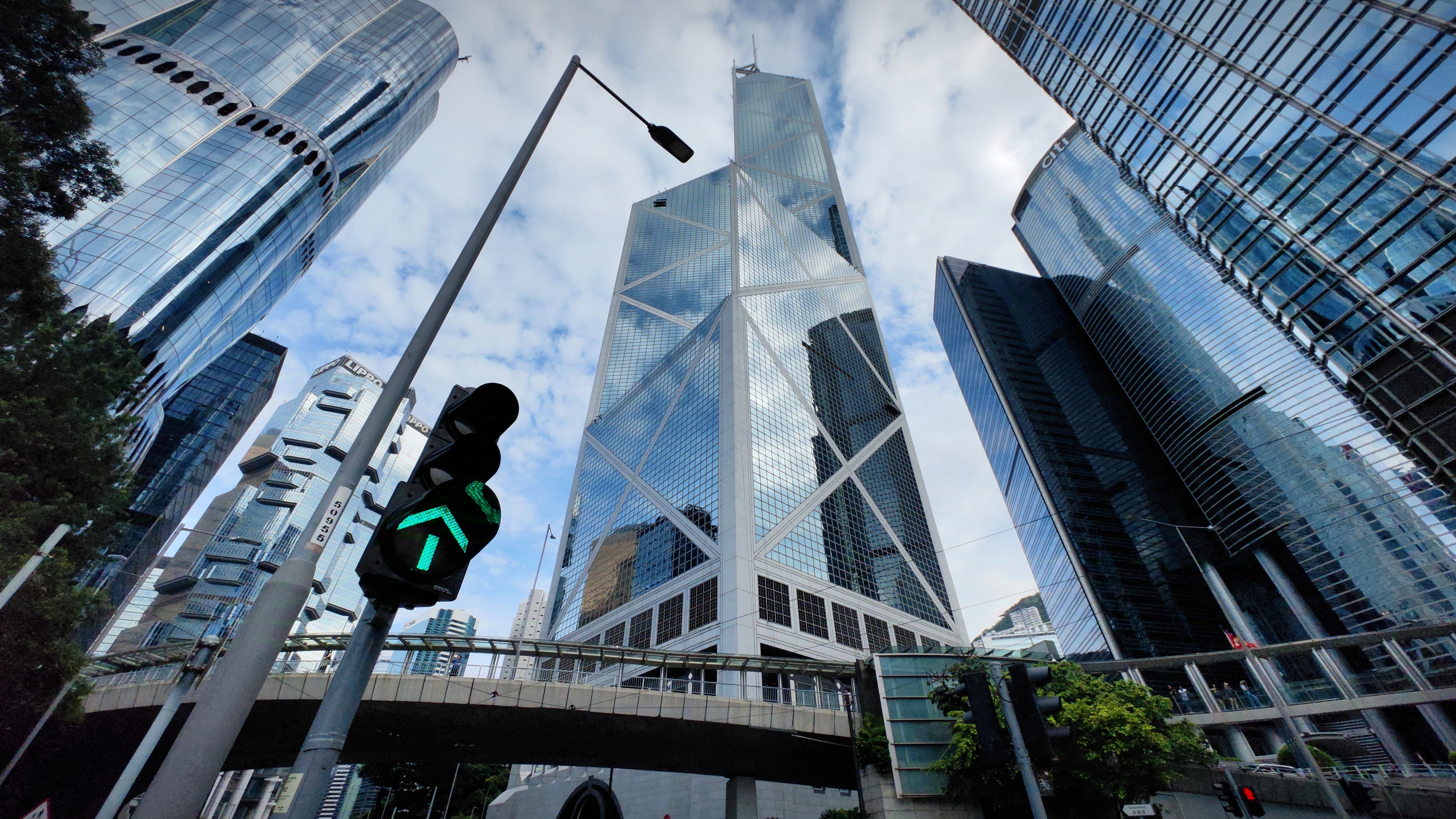
“For years, there was absolutely nothing that came close to these two specimens,” he added. The handover saw another burst of energy, with a number of public and public-private partnership projects with the MTR expansion at a higher-level quality, starting with the Hong Kong International Airport, designed by Foster, who by then was Sir Norman Foster.
Fast forward to the present, with some of the world’s leading architectural firms commissioned to design iconic buildings. “Everything that came before laid the groundwork,” he says, before sharing his views on four new office buildings that are setting new standards for design, low environmental impact, and changing the way we view the city.
The Henderson
Developer: Henderson Land
Architect: Zaha Hadid Architects
Operational: 2024
Scale: 36 stories, 190 meters, 465,000 sq ft
Cost: $3 billion for land acquisition

Stuart: “It’s not a classic Zaha Hadid building. There is none of her signature challenges to the floor plane and space. The space, here, is relatively conventional but beautifully wrought, and the materials are really lovely. Escalators go up at unexpected angles. It’s covered in dark glass with a quite beautiful quality, and the office floors are spell-binding with 3.5-meter ceilings.”
“It was a real commitment for Henderson which did not previously have a marquee tower. In the 1990s, they would never in their wildest dreams have done something so lavish. It’s next to the new Hutchison building, which is Cheung Kong Center redux, the AIA and Bank of China buildings are not far off, and it overlooks Chater Garden. As a building type, it is a standard office tower, but the curved glass and sparkling materials make it stand out and successfully extend prime rental offices towards the eastern side of Central. The cost of construction is much higher than in a square building. Previously, Hong Kong developers were far more careful to control the budget. They are expressing confidence now in the design value.”
International Gateway Center
Developer: Sun Hung Kai Properties
Architect: Zaha Hadid Architects
Operational: 2025 to 2026
Scale: Two towers, 29 stories,148 meters, and 24 stories, 122 meters, 2.6 million sq ft of office space and 600,000 sq ft of retail
Cost: Part of $5.43 billion in West Kowloon land purchases
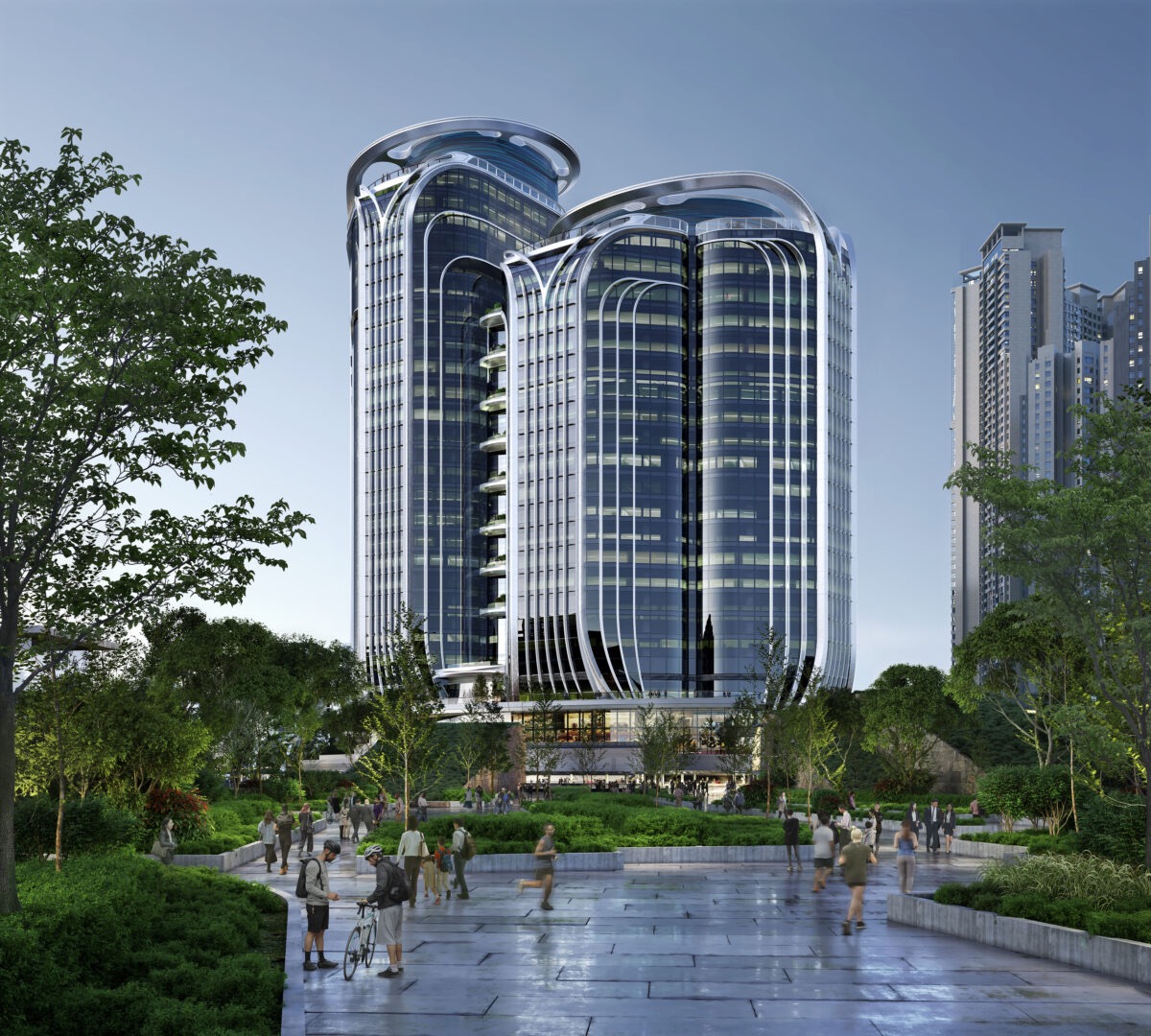
Stuart: “It’s not my favorite. It has a 1950s Cadillac radiator hub vibe. It’s already hard to transfer Zaha Hadid ideas into an office tower, but even more so with a clustered composition like this one. The late architect and her firm are all about challenging your ideas about architecture. Again, the materials seem to be the main design tool.”
Central Yards
Developer: Henderson Land
Architects: Lead8, AL_A, UNStudio, Peter Walker and Partners, and Speirs Major
Operational: Phase 1 opening in 2027, phase 2 in 2032
Scale: 1.6 million sq ft horizontal ‘groundscraper ‘with 700,000 sq ft of office space
Cost: $8 billion

Stuart: “In terms of the aesthetics, I withhold judgment, because the architectural renderings make it look fairly chaotic. The idea is to have this long, low building without having it be one single, long bar which has been dubbed a groundscaper. The colliding parts may be quite marvelous at the end of the day, but that will depend on the materials. In the renderings, rather a lot is going on, yet your experience walking through it or next to it will probably be a bit friendlier. My hope is for it to make an easy and meaningful connection from the heart of Central out to the ferry piers. There’s a lot about it that we’ll have to see when it’s done.
Central Crossing
Developer: Wing Tai Properties and CSI Properties
Architect: Foster + Partners
Operational: Mid-2026
Scale: 433,000 sq ft, with 28-story office tower and a hotel, only Grade A office development built in a heritage Urban Renewal Authority site, integrating one of the city’s oldest surviving shop houses
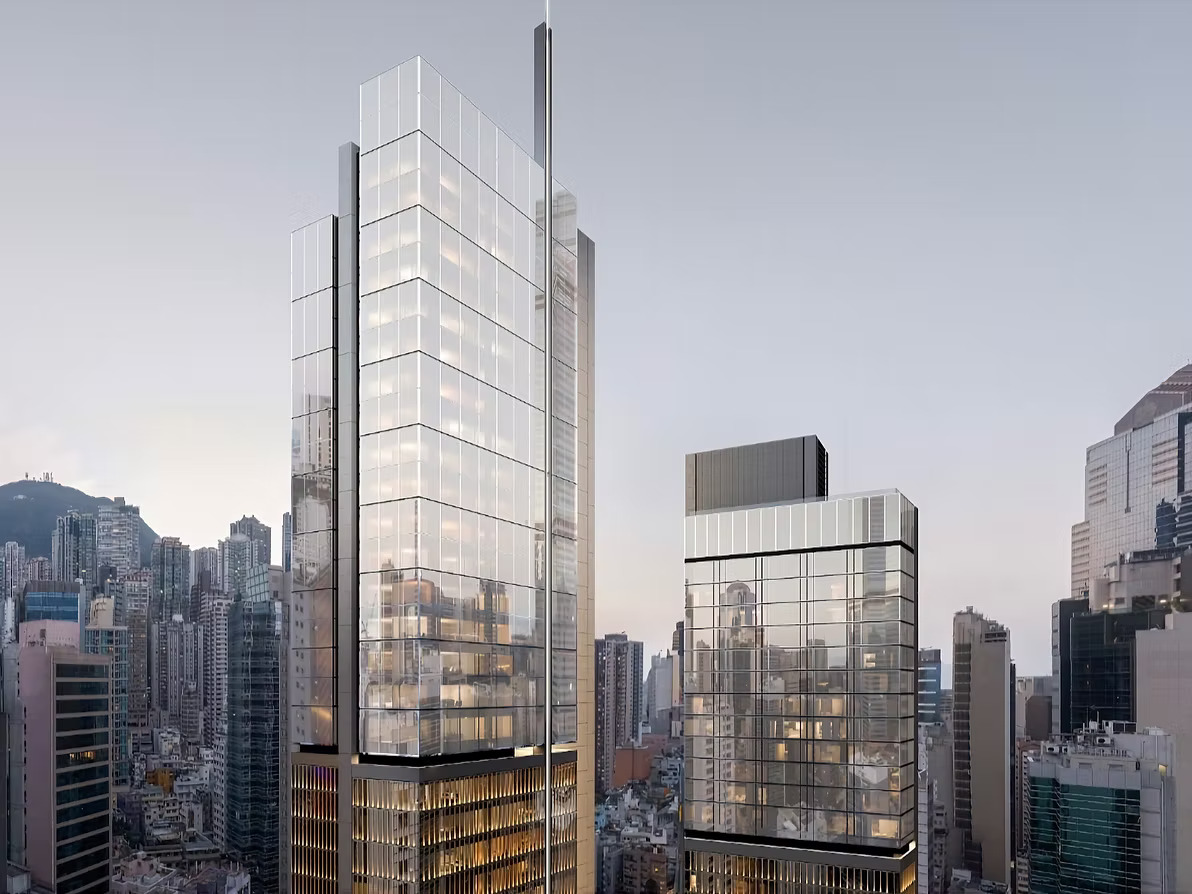
“Even though it’s a Foster + Partners building, it has a Wing Tai vibe to it. Wing Tai is generally more site sensitive than other architects with attention to a civic presence and urban space. They are one of the smaller developers and they really make the extra effort to make a difference, and I always think they are about creating places.”
“What I like about Central Crossings is that it is a total transformation of that part of Hong Kong. It’s unapologetic, in a way, having a giant building there amongst low-rise shop houses. The open ground sidewalk level spaces feel inviting and fun to walk through.”

Alec Stuart is the founder of Alexander Stuart Designs Limited, specializing in architectural renovations and interior design. His work has been covered by Architectural Digest, China Style and the South China Morning Post. He is also a marathon ocean swimmer.