
As International Women’s Day approaches on March 8, AmCham talks with former Jardine Pacific CEO Anna Cheung about the challenges and opportunities women face in corporate board inclusion in Hong Kong.
Anna Cheung is a self-declared Hong Kong outsider to the relatively small group of people, men and women, who are regularly called up to serve on boards. Yet Cheung became an independent director on not just one but three boards – two public, one private – by accident. She demurs at that description, but it sticks.
“I’m an outlier,” Cheung says. “Honestly, after I got on the HKEX board, my friend asked me who did I know. I didn’t know anyone. It was just a year when the chairman had four spaces to fill. With another year or another situation, I might not have been the perfect candidate.”
In September 2020, when she stepped down as chief executive officer of Jardine Pacific Limited, she was looking for another executive position.
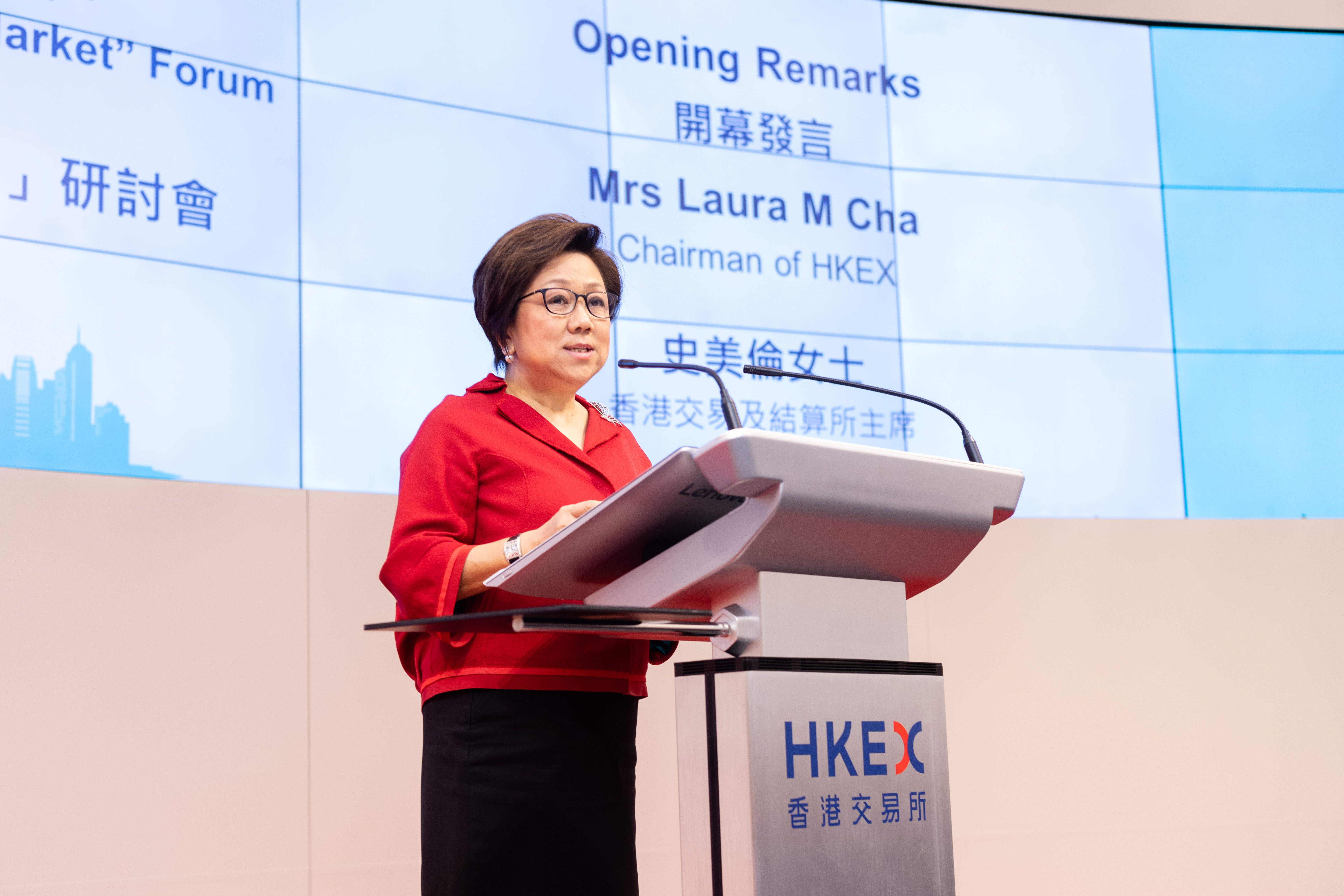
But along came Laura Cha, the first woman to chair Hong Kong Exchanges and Clearing Limited (HKEX), 0388.HK, the listed holding company for Hong Kong’s stock and futures exchanges. Cha had been working to develop a pipeline of younger professionals to serve on boards, and Cheung’s name had surfaced through an executive search firm. She had the right background in finance as well as management, and she was in her early 50s, young by standards of the exchange.
“While I wasn’t looking for a board role at the time, because the exchange plays such a critical role in promoting Hong Kong as an international financial center, I thought the opportunity was very attractive. And I was thinking that I could learn a lot as well. I thought, let’s start with that. If I do go executive, I would hope that having an executive with a board exposure on the exchange would be a value add,” she says, five years on.
“I was very open with Laura that I was looking for an executive role, and they were fine with that. And she was like, ‘As long as you don’t drop us!’ So that’s how my journey started. It wasn’t exactly the timing I was thinking of, but there’s never a good time, I suppose, and when you find the right one, just take it.”
HKEX wasn’t looking for a woman, per se. Out of four new directors when she joined, two were women. Today, four out of the 13 board members are female, including CEO Bonnie Chan.
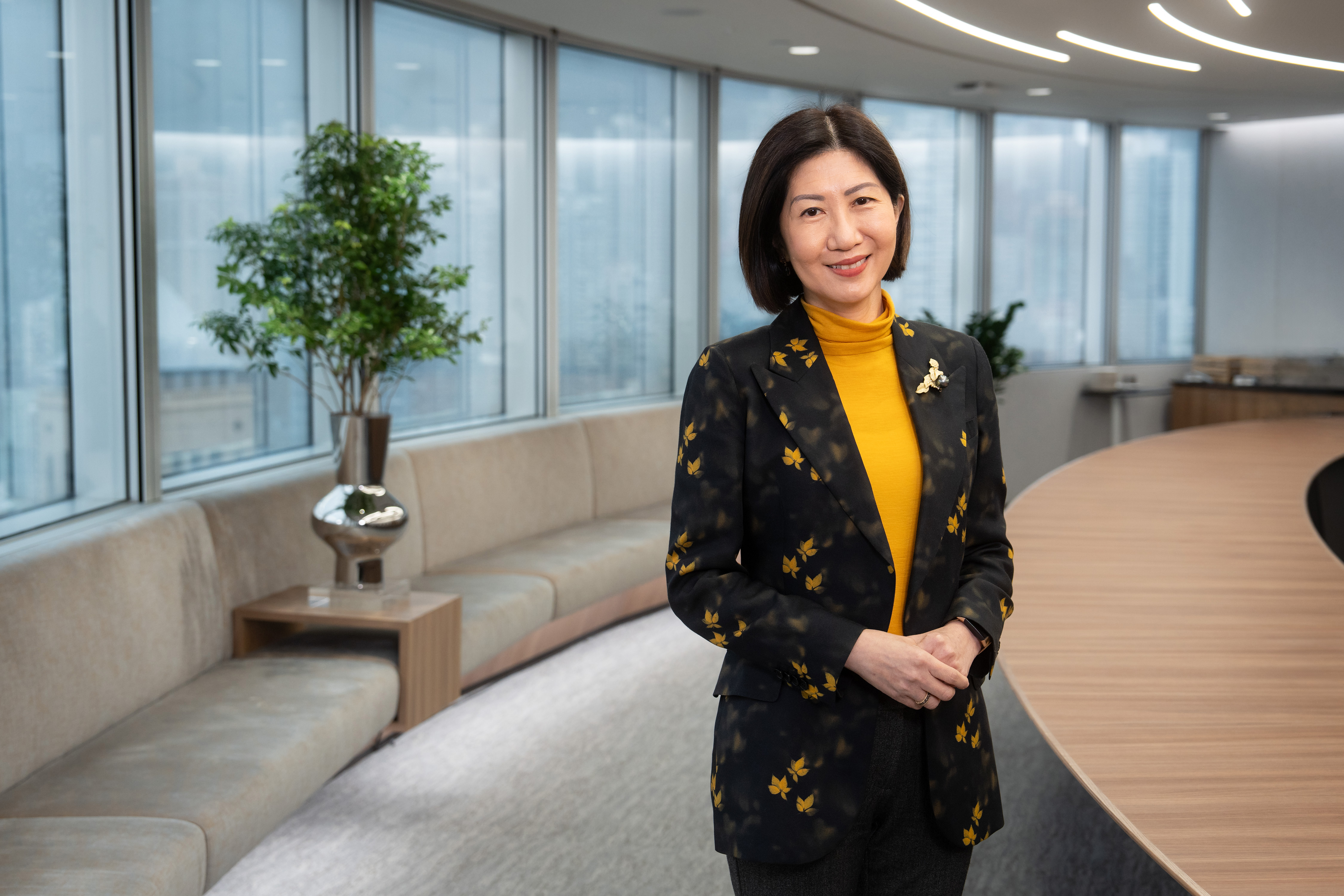
Hong Kong listed companies were galvanized to recruit women on boards – 90% of boards were all-male until the late 2010s. But in 2021, an amendment to the Listing Rules required all existing “single gender” listed companies – 850 or 32.9% of the total at that time – to appoint at least one director of a different gender by December 31, 2024.
Companies listed on HKEX were given three years to comply with the ruling, through the end of 2024, while all newly listed companies had to comply with the ruling from 2022. Rules were also introduced to prevent “over-boarding,” or boards appointing new directors with more than six directorships at other companies.
Since the ruling came into effect, the number of women on boards of listed companies on HKEX has increased substantially, although the exchange does not report precise numbers of female directors. Of the 2,670 non-Hang Seng Index (HSI) constituent companies, by the end of 2025, 21.5% had female directors; the share was higher, 28.1% for the 89 HSI companies, as of early 2026. These are the largest and most liquid companies on the exchange. On average, 22% of all listed companies had female directors by early 2026, according to HKEX, up from 18.8% in 2023. Only two listed companies with single-gender boards remained by January.
Another assist came from a record year for initial public offerings (IPOs) on HKEX, with 114 companies raising US$37.22 billion, well ahead of Nasdaq in the United States, which was second. All 114 newly listed companies were in compliance with the new ‘no single-gender’ rule, according to Cheung.
As recently as 2019, the share of boards of companies listed on HKEX with women directors was just 13.8% Global asset managers including BlackRock, the world’s largest fund manager, Fidelity International, and State Street Global Advisors were putting pressure on companies with no female board representation. BlackRock declared it would vote against re-election of chairs of nomination committees that lacked female board representation.
By some measures, Hong Kong is still catching up. It lags the European Union, which in 2022 mandated at least 40% female representation on boards of larger listed and private companies. It is not that far behind the corporate average worldwide, however. A 2024 report by MSCI saw women occupying 27.3% of board seats at large- and mid-cap constituents of MSCI’s All Country World Index as of October 2024, but found that female representation in leadership roles had declined below 2023 levels, and that nomination committees, which steer selection of board members, were the least likely to be chaired by women across all markets reviewed.
And Hong Kong’s ruling against single-gender boards was a landmark in Asia, putting HKEX ahead of both Singapore’s exchange (18.3%) and the Tokyo Stock Exchange (20.5%). Both Singapore and Tokyo have plans to increase the number of women on boards over time.
What do women have to do?
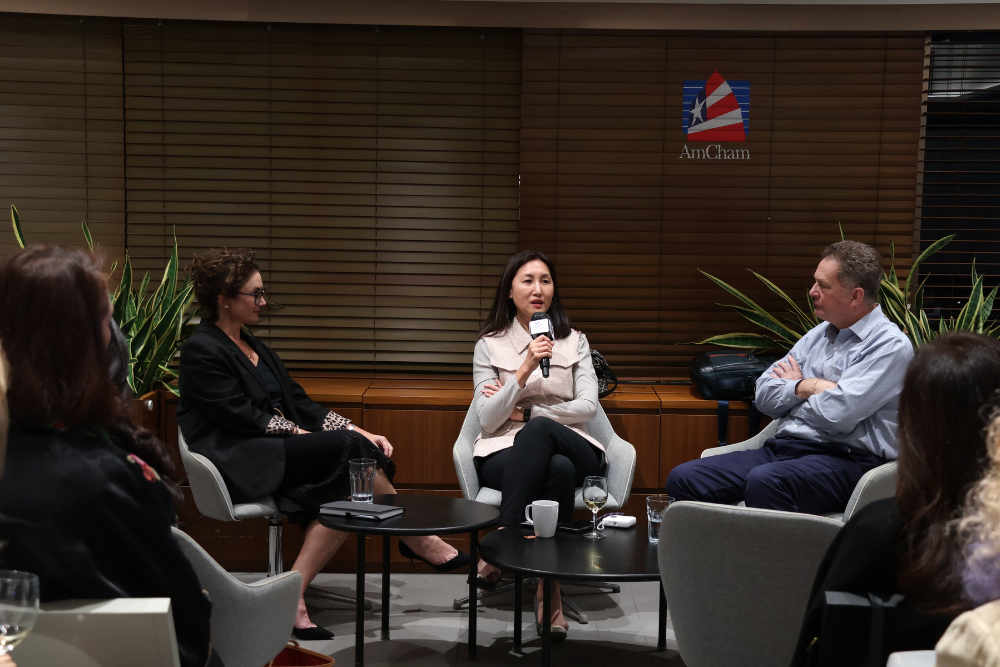
With the new rule in place, business and professional women are naturally curious about how to get on the radar for companies searching to improve the gender diversity of their boards. At The American Chamber of Commerce in Hong Kong, a panel discussion on “Board Signals: Women on Corporate Boards” on November 24, 2025, was packed. Cheung was a speaker together with Maren Moxom, Chief Financial Officer of Wallem Group and an independent director at KC Maritime Hong Kong Limited, commercial manager for a fleet of large-scale ocean carriers, and Nick Marsh, managing director of Meraki Executive Search & Consulting Limited.

Cheung was the only speaker with three positions as an independent director. In addition to HKEX, she is also on the boards of Hong Kong Broadband Network (HKBN, 1310.HK) and LGT Private Banking, formerly Liechtenstein Global Trust and a major international private banking and asset management group.
It was early 2021, and the second board offer, with LGT Private Banking, came at the same time as the offer from HKEX. “I was thinking, one local, one international, one is listed, one is private, a good mixture. The private one, relatively speaking, was lighter weight, so I could start with these two.”
Although both HKEX and LGT had used executive search firms, LGT had reached out not to Cheung but to a friend, who wasn’t interested, and gave the firm Cheung’s name. With HKEX, search firms began circulating her name when it became known that she was leaving Jardine Pacific. HKEX approached her after she had left.
HKBN approached her two years later, but she turned them down initially, because she was still looking for another executive role. She changed her mind the next time they approached her a year later. They were in a challenging market environment where their stock price had dropped from HK$13 to HK$2.50 per share.
“I thought, what are some of the areas we can work on? If I join, I can immediately add value and be helpful. It was scary, but it was really that excitement, and a clear case that there were turnaround opportunities that I had done before with Jardine businesses that would be applicable here.” Having been on different boards, she could see new pathways to add value, another reason for her change of heart.
Although both HKEX and HKBN were large assignments, Cheung says she kept her antenna out although she wasn’t actively looking for a fourth board position. With three boards under her belt, she had entered an elite group of women in Hong Kong who are experienced directors. Given the pre-2021 dynamic on boards, there is a relative shortage of women with experience, a complaint that companies in Hong Kong and other jurisdictions often complain about. The result is that companies continue to approach her, although she doesn’t always get the job.
One that got away was a Chinese tech company. Cheung was having lunch with a friend who had been approached by the company, but because she couldn’t speak Chinese, the friend had declined. “She basically just turned to me and said, ‘Are you interested?,’ just like that. And then she introduced me to her friend in a smaller search firm.”
From the start, Cheung didn’t see the fit, because the company was looking for someone with a background in Artificial Intelligence (AI).
“To be honest, if I looked at that board, it had enough tech people. If they had picked me, I would have been the only non-mainlander, although they were westernized and had backgrounds in venture capital,” she says. “I had the conversation but thought I didn’t quite meet their specifications. And I didn’t even think about it, but I came back from holidays and got a call that I was one of five names they had shortlisted. But the thing is, sometimes people don’t know what they want, and a search will throw out a list that prompts the company to think differently. So, I met them, and I still thought I didn’t meet their specifications.”
She ended up as one of two, and by that time she had become more interested in the sector. “Anyway, in the end, they still went for someone with more of a tech background, but at least for me, it got me thinking that to the extent opportunity came about, it could be quite interesting to get exposure to that sector.”
The tech company is not the only time she has been turned down. The lasting lesson according to Cheung is that there needs to be a match between the skills the candidate brings to the table and the specific board, let alone the company and the sector.
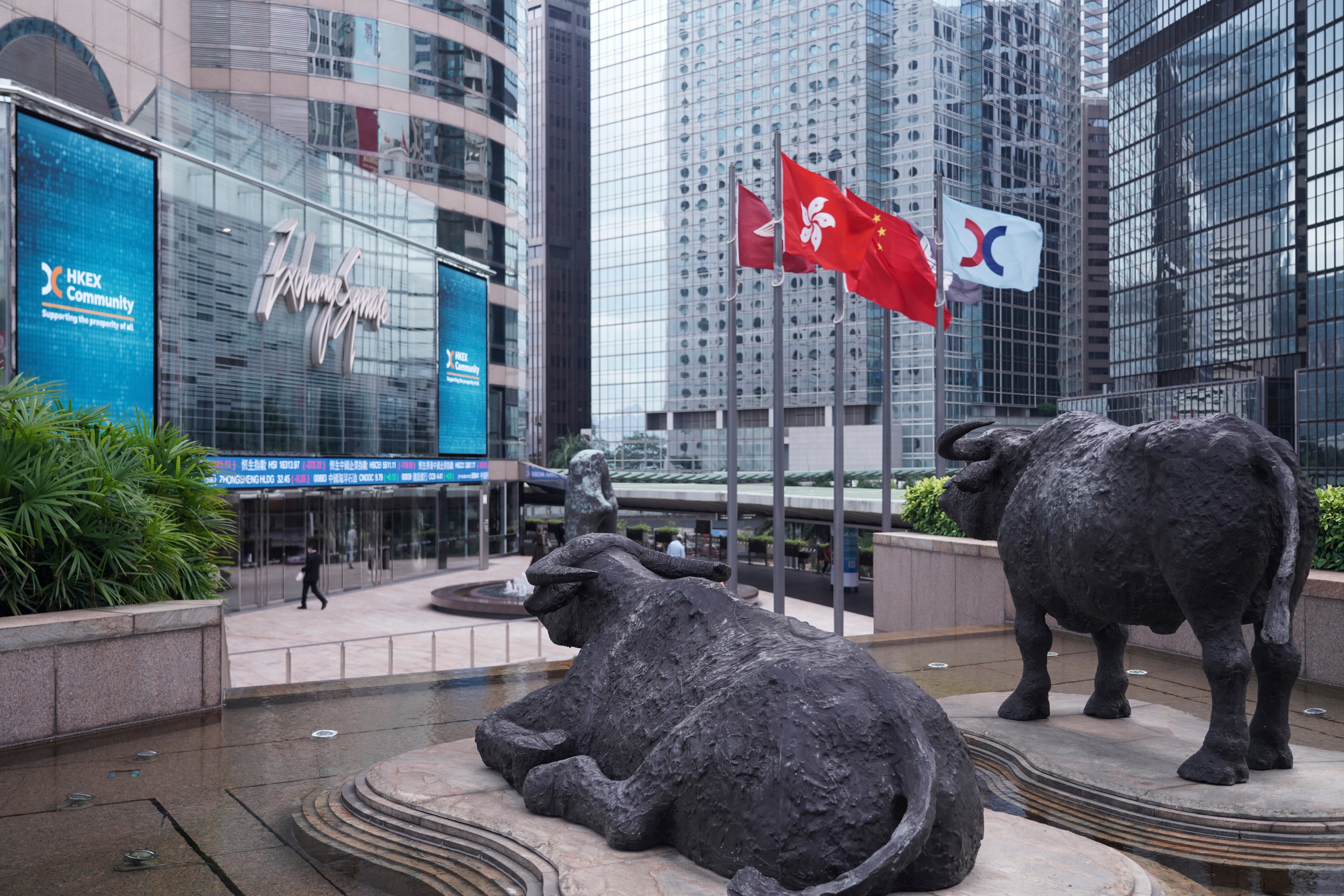
Ask Anna
How would Cheung counsel women seeking positions on Hong Kong boards? Her first point is that the math on rising opportunity can be deceptive. A rule of thumb is that roughly half of Hong Kong’s listed companies are family-controlled and have very specific networks of family and friends.
The other half are mainland Chinese companies, which can be a difficult fit for local or international professionals because of language and cultural issues. Very few non-Chinese multinationals list in Hong Kong and most are not or motivated to look for independent directors with Hong Kong and China experience, although of course, some do.
“This means that only a small sleeve of companies is available. On top of that, there are probably about 100 people in the board network, and it keeps going back to these 100 people because they have the experience. It’s very difficult to get into the network,” Cheung says. Generational change, the new rule against single-gender boards, and a growing pipeline of qualified women with board experience are part of a changing dynamic that she finds hopeful.
The initial pipeline of women directors has come from banks like HSBC and Standard Chartered Bank, which in multiple divisions have women CEOs who become highly qualified candidates if they look for positions on boards.
To get on a board is essentially a networking strategy, Cheung says. Few companies in Hong Kong go to the trouble of hiring executive search firms. It worked for her through her network, which provided introductions to search firms rather than her seeking them out. While she made use of the contacts, it was not part of her strategy.
According to Nick Marsh of Meraki Executive Search, only 50% of large company boards search via search firms, with the rest coming through networks, audit and bank referrals. This compares to 100% of large public firms in the UK. He says that in Hong Kong, only 15-20% of mid- to small-size public companies use search firms (compared to 75% in the United Kingdom), although the practice has begun to change in the last three years, with 60-70% of regulated subsidiary boards of insurers, banks and asset managers using search firms, which Marsh describes as a major change.
Government appointments are done through their own networks, as are 90% of non-profits and non-governmental organizations. “This lack of utilizing external search firms helps to stall getting independent directors onto boards that are truly independent, as well as new first timers and more women,” he says.
The most essential strategy is to be well prepared. “First you need to have established a credible career,” Cheung says. “It’s not a report card, but when you sit in the boardroom, you have been in the battlefield, you have seen different problems and that’s how you can shed light on the problems of an established company.”
Cheung’s own career, prior to Jardine Pacific, was largely in finance, with firms as varied as FountainVest Partners, 3i Group plc, Bankers Trust and Salomon Brothers. Her degrees are from the University of California, Berkeley and the Wharton School. Cheung added management experience to her portfolio from her five-year tenure as CEO with Jardine Pacific, a unit of Jardine Matheson Holdings (J36.SI) that manages businesses as diverse as Gammon, HACTL, Jardine Engineering Corporation, Jardine Restaurants, Jardine Schindler and Zung Fu, the longtime exclusive dealer for Mercedes-Benz vehicles.
Next, Cheung says, you need to think in terms of a skills matrix, and how that fits with the target company. One of the companies that did not recruit her was looking for someone with branding expertise, and despite the many hats she has worn, branding was not one of them. She was disappointed but not surprised.
While Hong Kong’s female board ‘network’ is heavily tilted to finance. Cheung says that auditors and legal professionals also have a strong edge in competing for board positions, if they have done work for a specific company. “That can lead you to a role which will be the best path, if not the easiest, but at least a window for you to get the first one.” Someone with an auditing background is a natural fit as an audit committee chair, while someone with a legal background may appeal to a company looking to improve its governance.
Does board diversity actually make a difference?
Cheung thinks so. “I personally think it’s good because men and women think differently and cover different aspects of things. But again, I don’t want to have people just focus on gender. It’s all sorts of diversity, and the skills matrix as well. When we want to bring someone on board for our nomination committee, you don’t just say, I need a woman. It’s not like that. You map out your skills, and hope that you have what you need within those skills sets. Only then do you say, ‘do I have the necessary gender diversity as well?.’”

In the end, the question that everybody asks is whether board diversity makes a difference to the way boards work.
There is a range of answers, but one study by Margarethe Wiersema of the University of California, Irvine and Marie Louise Mors of the Copenhagen Business School found that the presence of women on boards diminished the problem of “pluralistic ignorance,” otherwise known as sheep behavior.
“Although male directors may want more information on issues confronting the board, it is the women who are prepared to admit when they don’t have the information that they need to understand the issues,” they wrote in the November 2023 issue of the Harvard Business Review. Another study, by Jie Chen, Woon Sau Leung, Wei Song and Marc Goergen found that when women are on boards, male CEOs are less overconfident, improving the overall quality of decision making.
“Research has found that female directors tend to be less conformist and more likely to express their independent views than male directors because they do not belong to old-boy networks,” they write in September 2019 in HBR.
At a time when diversity, equity and inclusion (DEI) guidelines have been directly challenged or abolished by the US government, it becomes more crucial than ever for women to approach board membership with every ounce of professionalism and determination they’ve got, in Hong Kong and elsewhere. In Hong Kong, we’re fortunate to have a stock exchange and regulators who don’t need convincing, but in an unequal world, finding one’s way was never guaranteed to be easy.
Anna Cheung is an independent non-executive director at HKBN, Hong Kong Exchanges and Clearing Limited (HKEX) and LGT Capital Partners. Previously she was CEO of Jardine Pacific Limited, from 2015-2020; a senior advisor at FountainVest Partners; and a partner at 3i Group plc, among other roles. She has a bachelor of arts in computer science from the University of California, Berkeley and an MBA from the Wharton School at the University of Pennsylvania.
AmCham HK’s Women of Influence awards are in their 22nd year, with its awards presentation scheduled for March 13, 2026. Through its board of governors and all its committees, AmCham HK supports DEI and equal opportunity. Its current board includes 10 women out of 21 members and one ex-officio member, including Vice Chairman Sally Peng.

Anna Cheung is an independent non-executive director at HKBN, Hong Kong Exchanges and Clearing Limited (HKEX) and LGT Capital Partners. Previously she was CEO of Jardine Pacific Limited, from 2015-2020; a senior advisor at FountainVest Partners; and a partner at 3i Group plc, among other roles. She has a bachelor of arts in computer science from the University of California, Berkeley and an MBA from the Wharton School at the University of Pennsylvania.