

Photo credits: Desmond Chan
“An orchestra of this size and quality and cost needs a place where it can rehearse and perform.”
Benedikt Fohr joined the Hong Kong Philharmonic Orchestra (HK Phil) as Chief Executive in April 2019. His tenure was soon impacted by the onset of Covid-19, less than a year after coming on board. Hong Kong, although less affected by the pandemic at first, was isolated by its strict quarantine policy from the rest of the world. However, the orchestra stayed strong – in the 2023-2024 fiscal year ending in March, the orchestra had revenue of HK$199.2 million – HK$46.0 million from musical performances, accounting for 23% of total income, with fundraising supplying 23% of revenue and government subsidies supplying 52.7% of the total. With expenses of HK$198.7 million the orchestra recorded a surplus of HK$ 0.5 million. Fohr will be leaving Hong Kong in July 2025 after the end of the 2024-2025 concert season. Here he is in conversation with AmCham HK e-Magazine editor Edith Terry about the ups and downs of his time in Hong Kong as leader of one of Asia’s top symphony orchestras.
A day in the life
We have 96 full-time musicians in the orchestra, and a staff of about 40 people here in the office. Our office is right beside the Hong Kong Cultural Center. We have five departments, and they are like in every normal company – marketing, administration, fundraising, artistic planning and orchestral operations. My job is basically to oversee these departments and align our programs with financial possibilities. I have the overall responsibility on finance and in the end also on artistic development and artistic planning, because all of these, of course, depend on each other. As a team have to manage what we can do within our budget.
I start in the morning with emails, then I go to see the orchestra at rehearsal. Then I meet with different directors and my colleagues here. There might be lunch with an artist or (potential) sponsor. In the afternoon, I am back in the office, working on a strategy, on programs with colleagues, on financing, on tours and speak to agents. In the evening, it’s mostly either one of our performances or the performances of other art groups in Hong Kong. We have a lively music scene in Hong Kong, starting from the Hong Kong Academy for Performing Arts to Premiere Performances to Opera Hong Kong and Hong Kong Ballet. Every evening there is something you want to attend, or you should attend, and it is very, very diverse.
The interesting thing about Hong Kong is that we see both cultures. We have Chinese culture, represented by excellent groups in Hong Kong, and we also have Western culture represented by excellent groups. And this is quite unique, and it’s quite concentrated, happening on Hong Kong Island, Tsim Sha Tsui or West Kowloon. You can get around quite easily and find excellent performances almost every evening.
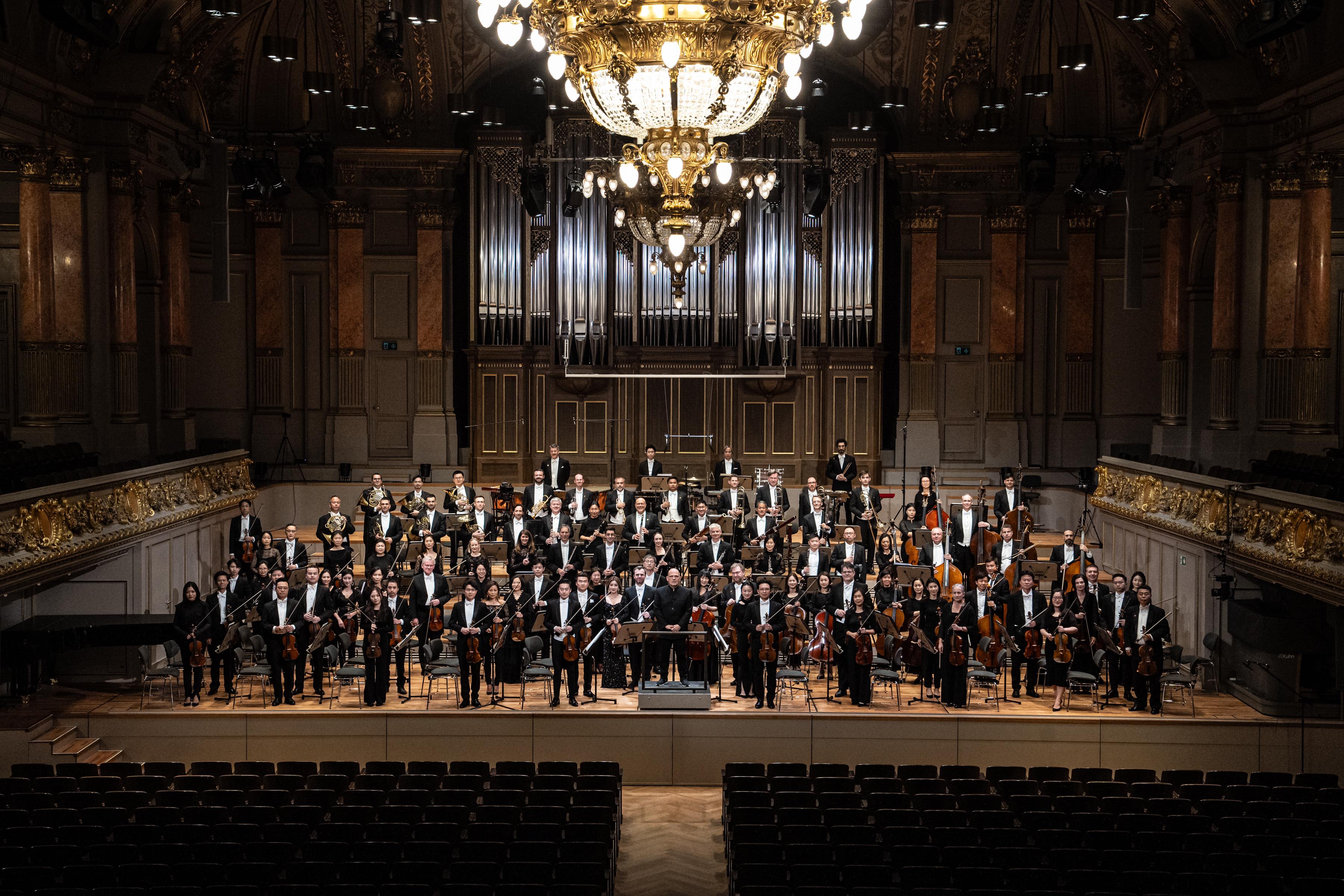
An international cast of musicians with 20 Americans
The top orchestras in Europe and New York perform at a very high level, and HK Phil is certainly comparable with these orchestras. Our orchestra is very international. I think we have over 20 Americans in our orchestra as well as Western Europeans, Eastern Europeans, Australians and many Asians. Around 50% of the musicians are Asian, many in the string section, because there’s a very good and long tradition for string instruments in Asia. There are Koreans, Chinese, Japanese and Taiwanese players in the string sections. Then in the woodwinds, brass and percussion, more of the musicians come from Australia, the United States and Europe.
And this is pretty much the same in many orchestras around the world. It’s not something particularly unique to Hong Kong, because nowadays, musicians study all over the world and have teachers coming from around the world. Asians go to Europe and the US to study, and they might stay there. For us, the challenge is to attract the best international musicians. We have international auditions, and the best musicians get the job wherever he or she comes from.
We want to attract the best international graduates to apply to HK Phil for auditions. And for that it is very important that they know about HK Phil, and that they know about its quality and the exciting life you can have in Hong Kong. Because when musicians join an orchestra, usually they tend to stay for a long time. Maybe they change once at a young age, but it’s very difficult to get into a top-class orchestra. If you get this job, you stay here and you grow up, build your family and spend your working life in Hong Kong.
We work on our profile by inviting the best possible conductors and soloists to Hong Kong. When they enjoy working with HK Phil, they go back to their own countries and testify that this is a great orchestra. People know us as well through our recordings and touring. When we are touring, in Berlin or Amsterdam, people talk about the orchestra and the press writes about it. When graduates understand that Hong Kong is an interesting place to go, they might apply for open positions. Unlike Europe, where if you study in Munich, you take the train to go to Berlin for an audition, you need to take a flight and spend money to get here, It requires quite some effort. And the chances are actually not very high due to fierce competition. For one position in the string section, we might have 100 applications.

Training and keeping administrative staff
With the staff it’s different. We have only two westerners on staff, Timothy Tsukamoto, an American who is our director of artistic planning, and myself. All the other colleagues are local, and we rely on applications from Hong Kong. People usually won’t come for such office jobs from outside, partly because of the language barrier. There are some specific requirements for jobs like ticketing, concert promotion, editing, orchestra operation and information technology (IT), which require some specialized knowledge and experience. On top of that, we are in competition with the private sector, which usually pays higher salaries, and with other arts groups and organizations in Hong Kong.
This is a constant area of concern for the Hong Kong Government. We have discussed several times how to provide good education and internships for young arts administrators. You would say, send them out, of course, to the United Kingdom and to Europe to gain that experience at universities and performing arts venues. But then most of them would stay there. They don’t come back because of the opportunities there. In Germany alone, we have 150 professional orchestras. But we need them back in Hong Kong to join our teams.
What is missing?
HK Phil has no “home” in Hong Kong, and we have weeks where we can hardly find a place to rehearse. An orchestra of this size and quality and cost needs a home where it can rehearse and perform. This is something Hong Kong really must work on and improve if it wants to be an international hub for the performing arts. It’s a very difficult situation because there are weeks when we must move from one venue to another just to find a place to rehearse. And sometimes we can’t even find a place.
In the city we have the Hong Kong Cultural Center, with its two major stages (concert hall and grand theatre), and City Hall. But there are so many art groups that want to rehearse and perform in these venues. HK Phil usually works from Tuesday to Saturday, from September to July, and we need at least a proper rehearsal space with good acoustic conditions during the rehearsals, and then have the final rehearsals and concerts on the main stage inside the concert hall.
Since there is such a demand for the Cultural Center, we only get it a certain number of days during the year. We like to go from time to time to the auditoriums in Tsuen Wan, Tuen Mun, Yuen Long or Sha Tin with more popular programmes, but not even those are always available.
Audiences nowadays expect events and want to enjoy the evening with friends. It’s not only about the concert and its 90 minutes of music. It’s also about enjoying the time before and after. And you see this at the M+ Museum, Hong Kong Palace Museum and Freespace, which are wonderfully situated on the waterfront, with restaurants and bars. People go there just to enjoy themselves.
There is an empty area in West Kowloon, between M+ Museum, the new Lyric Theater and the Xiqu Center that is supposed to be the location for the new Music Center.
Just recently, at the Hong Kong Performing Arts Expo, West Kowloon presented its different projects and mentioned the Music Center as a project for the future. This Music Center – which is to include an 1,800-seat concert hall with world-class acoustics, 300-seat recital hall and arts education facilities – is still on the drawing board. Hong Kong as a world city really needs this modern and acoustically well-constructed concert venue, not only for HK Phil, but also to attract the best international orchestras.
A model could be the Xinghai Concert Hall in Guangzhou, just around the corner. The resident orchestra there, the Guangzhou Symphony Orchestra, has its separate building with a huge rehearsal space, offices, and individual practice space for musicians. Across the street is the concert hall, with 1,500 seats. The orchestra rehearses in its rehearsal space and goes to the Xinghai Concert Hall for final rehearsals and concerts. For the rest of the week, the Xinghai Concert Hall is available for individual programming or rented out to other performing groups.
In this way it can create income and at the same time craft an identity for the orchestra and the audience. It is the same wherever you go, Shanghai, Beijing, Berlin, Amsterdam – all the orchestras have their own “homes”.
How to make it easier for visitors to enjoy HK Phil
This is “only” our 50th year, so we need to be patient, but at the same time, we need to have a strategy so that people from New York who come to visit Hong Kong know where to go and how to get tickets for concerts. If you go to New York, you want to go to Carnegie Hall or hit a few searches from Ticketmaster. If you go to Amsterdam, you want to go to the Concertgebouw.
It is difficult for short-term tourists to figure out how to buy tickets for HK Phil. Online there is no centralized, easily accessible platform to get the most important information on performances in Hong Kong. If you go to Hong Kong, you should have in mind to go to a concert of HK Phil or a performance by the Hong Kong Ballet, and it should not be difficult. This is what we should aim for.
And that’s even more true of the Greater Bay Area. Today I got a screenshot from a donor about a concert happening in Shenzhen, and neither he nor I could figure out where to go to get a ticket. I had never heard of the venue, because there are now so many venues in Shenzhen, and the half-Chinese-half-English promotion only makes things more difficult to understand. However, when I gave it to a colleague, she was able to find a link to book the tickets. It’s the same problem with diffuse marketing in the Greater Bay Area, but in Hong Kong, we should be able to deal with it. We should find a way to do it.
Highlights of the long-awaited 50th anniversary season Singapore and European tour
We started developing the tour at least two years ago. When we put a tour together, we start by looking at the territory where we want to go. Then we look for an agent to promote it in the territory. We discuss the repertoire with the conductor and try to find a soloist who is attractive, but not already too present in the area. We started planning for the 50th anniversary tour in 2022. We had to cancel another tour in 2021, due to Covid-19 and waited until we could be sure that the orchestra could leave Hong Kong, and that conductors could come in to rehearse with us. By 2022, we were pretty sure this would be possible, and we could go ahead with planning.
From then, it developed in a straightforward way. We were touring eight European cities – Dresden, Zurich, Toulouse, Aix-en-Provence, Rotterdam, Basel, Rome and Brussels. We wanted to have some of the major concert venues, so we discussed which venues might be available and look for other venues if necessary. And since we had cancelled our Singapore concert during the pandemic, we said, why don’t we put the Singapore concert at the start of the tour? That’s how it developed.

And then, of course, at the very last minute, some problems came up as they always do. Our director of orchestra operations, Vanessa Chan, came down with Covid just before the tour started. She was the core member of the tour because she had all the logistics of personnel and cargo in her department. And when we arrived in Singapore on February 19 for the concert on February 20, Lufthansa, the German flag carrier, went on strike just those few days, between February 19 and February 21. We had the whole group of 120 people, 96 musicians plus staff, and Lufthansa was supposed to bring us to Europe. Only the Frankfurt airport was open, but we were supposed to go to Berlin.
We had to split the group into eight groups, who flew from Singapore to different European capitals – Helsinki, London, Paris. From there, we all came together in Dresden, for the first concert on February 24, and everybody arrived in time. But I mean, it’s positively surprising that we were able to rebook such a big group in such a short time – one day. Lufthansa was very helpful.
It turned out OK. I was just happy that we could make it. Because it was the first concert, and if the first concert doesn’t happen in an easy and smooth way, the whole tour gets complicated, because the travel and concert schedule is quite tight. If the orchestra gets stuck at some point, then there’s the feeling of insecurity of not being on top of things, especially for the musicians. The orchestra needs to be in top shape on stage and not nervous, and the instruments need to be there. We were very lucky that the instruments went to Frankfurt, and they all arrived on time and could be shipped to Dresden.
The good thing about Europe and the Schengen Area of 29 European countries is that you only need to apply for visas in the first country and then you can move freely between them. This is an advantage. Even Switzerland, which is not an EU country, is included in the Schengen Area, so you don’t need to apply for 120-day visas at each border. Whenever you have hundreds of people going through Customs and Immigration, there is always some delay. But this tour, in almost three weeks, with six European countries and Singapore, nine cities in total, was very, very nice.
And that was just one of the highlights of the 50th anniversary season. Our touring schedule was unusually busy, because first, it was our anniversary season, and it was the first time after Covid-19 that the orchestra could go out. And as mentioned earlier, it’s very important for the orchestra and for Hong Kong to be present internationally.
Even before the European and Singapore tours, we started off the season with concerts at the Nanjing Jiangsu Center for the Performing Arts and Shanghai Oriental Art Center Concert Hall from September 1 to 2, 2023. We were in Bangkok for concerts at Mahidol University on October 21 and 22. Then we headed to Korea, for concerts in Seoul and Daegu on October 28 and 29, with Spanish conductor Roberto González-Monjas. After the European tour, we had a seven-concert tour across seven cities in Mainland China from May 8 to 18, visiting Wuxi, Shanghai, Wuhan, Changsha, Harbin, Shenyang and the National Center for the Performing Arts in Beijing as the final stop.

We discovered these fantastic new concert venues – the Changsha Concert Hall, the Wuxi Grand Theater and the Harbin Concert Hall. The orchestra was so excited to go to Harbin. It has the second oldest symphony orchestra in China, after Shanghai Symphony Orchestra, and is quite an impressive place. The Harbin Conservatory of music, established in 1928, is one of the oldest music institutions in China. We had collaborations with the Conservatory, giving talks and masterclasses with our musicians. This was another amazing experience in our 50th anniversary season.
Managing the transition from Jaap van Zweden to Tarmo Peltokoski
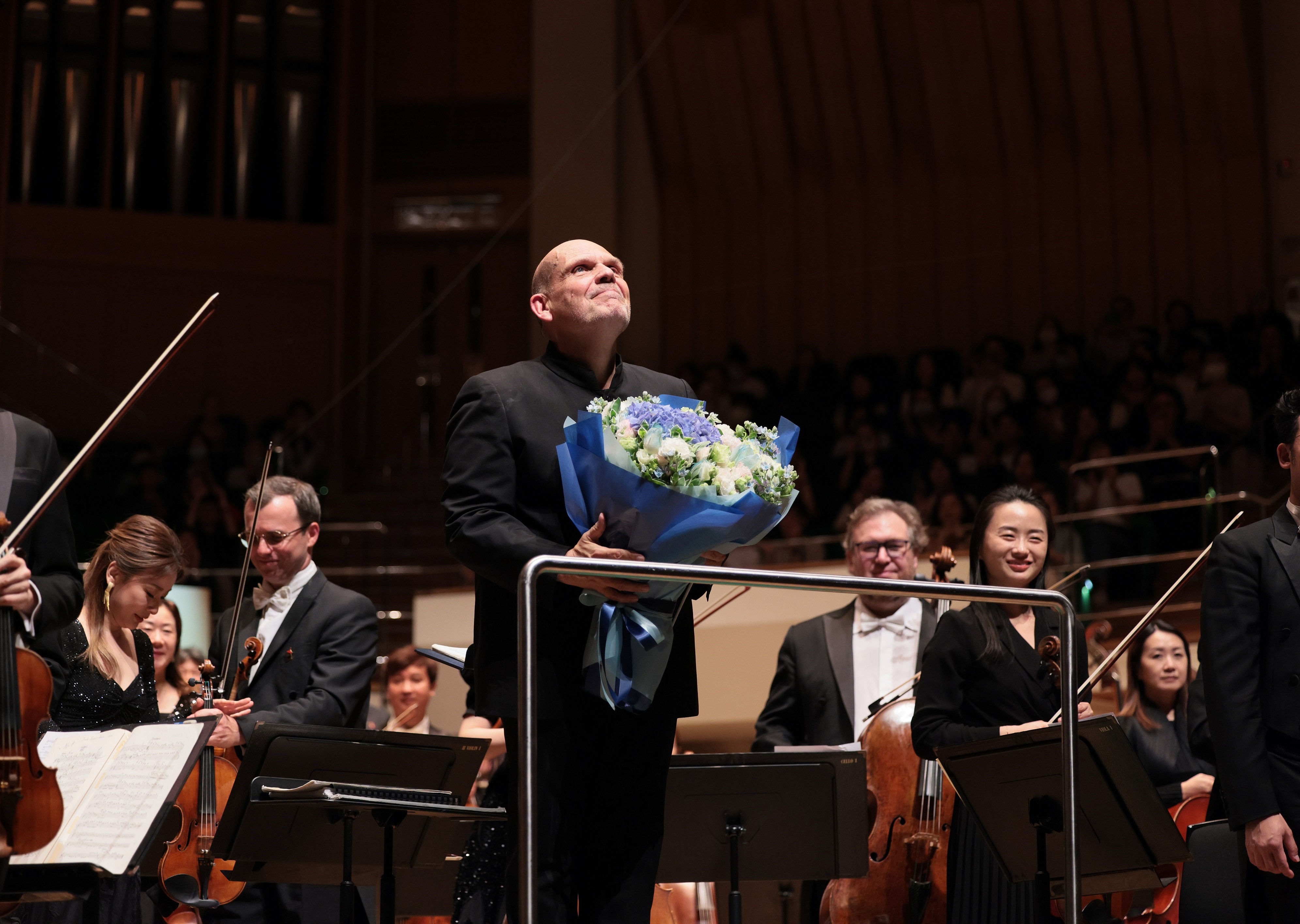
The transition has been smooth. Jaap van Zweden has been with the orchestra for 12 successful years and it was clear that at some point his musical leadership would come to an end. It was just the question of who would succeed him. And now everybody is excited about this fast-rising and exceptionally talented conductor Tarmo Peltokoski, who conducted the season finale in July 2024 and the season opening concert this September. These concerts were so exciting. The season opening concert you can still watch on the online video platform of Deutsche Gramophone “Stage +”.

Tarmo has a very different approach to working with the musicians, which is exciting to them. The coming five years with him will be different. He will bring a new repertoire to the orchestra and the audience. He might invite artists and composers that are new to the Hong Kong audience as well as interesting contemporary music. It will be a new era. And course, you can’t predict what will be in 10 years, but we strongly believe that Tarmo Peltokoski will be one of the very few outstanding conductors of the next generation.

Benedikt Fohr has been the Chief Executive of the Hong Kong Philharmonic Orchestra (HK Phil) since April 2019. Before joining the HK Phil, Benedikt was the Orchestra Manager (CEO) of Deutsche Radio Philharmonie Saarbrücken Kaiserslautern for 12 years, were he successfully merged the two orchestras from Saarbrücken and Kaiserslautern. Previously, he was the General Director of the Luxembourg Philharmonic Orchestra, Secretary General of the Camerata Salzburg and Managing Director of the Ensemble Research Freiburg. Benedikt was educated in Germany and holds an MBA from the University of Mannheim.