

Hong Kong is part of the Greater Bay Area (GBA) but how many of us know it beyond the major metropolises of Shenzhen and Guangzhou? Here the intrepid president of the Swedish Chamber of Commerce in Hong Kong spends a weekend in July traversing all nine cities that make up the region in mainland China, leaving out Hong Kong and Macau. What he learns may surprise you.

It is a Friday morning in July. I am on a high-speed train that is departing Hong Kong’s West Kowloon Station. In an hour, I will disembark for the first stop of a whistle-stop tour of the Greater Bay Area, a region comprising Hong Kong, Macau and nine of their mainland neighbors.
The GBA has recently been promoted as an answer to many questions about Hong Kong’s future. It is easy to see why it is seen as an important future driver of China’s (and Hong Kong’s) economy: with a Gross Domestic Product (GDP) of US$2 trillion, the GBA is a powerhouse on a par with South Korea and Australia. The region has been known as the “factory of the world” for a long time, but more recently the GBA has also generated its own world-beating brands (Shenzhen alone is home to Tencent, BYD, and Huawei). I ask myself if this means that a wholesale shift from polluting factories to high-tech is underway?
I feel a need to form my own understanding of the region. With a relatively small land mass (comparable to Croatia or West Virginia), but with a population of 86 million (exceeding that of Germany), I realize that the GBA must be one of the most densely populated areas in the world. Can I build a personal relationship with this place? Might I even get to know the “soul” of the GBA?
I set some ground rules: I am to visit each of the nine mainland GBA cities (leaving out Hong Kong and Macau) during an intense three-day itinerary. I will sample different modes of transport, and I will take every chance to meet fellow GBA dwellers, try local food specialties, and take in the natural landscape. Let the adventure begin!
Day 1
Huizhou
Huizhou is situated on the Dong (East) River and represents the northeastern outpost of the GBA. I get off the train at Huiyang, to the south of Huizhou proper. The surroundings are overwhelmingly rural. I have been recommended to visit a restaurant nearby called “Bamboo Plantation.”

After a short ride on narrow country lanes, my DiDi driver drops me off (Didi Chuxing is China’s ubiquitous ride-hailing service). It is still late morning and I am the restaurant’s first customer of the day. The Plantation is a rustic establishment featuring an outdoor brick oven in which bamboo tubes containing rice and preserved meat are baked. The waitress informs me that the tubes are usually shared by groups of people. When the dish arrives, I realize why.
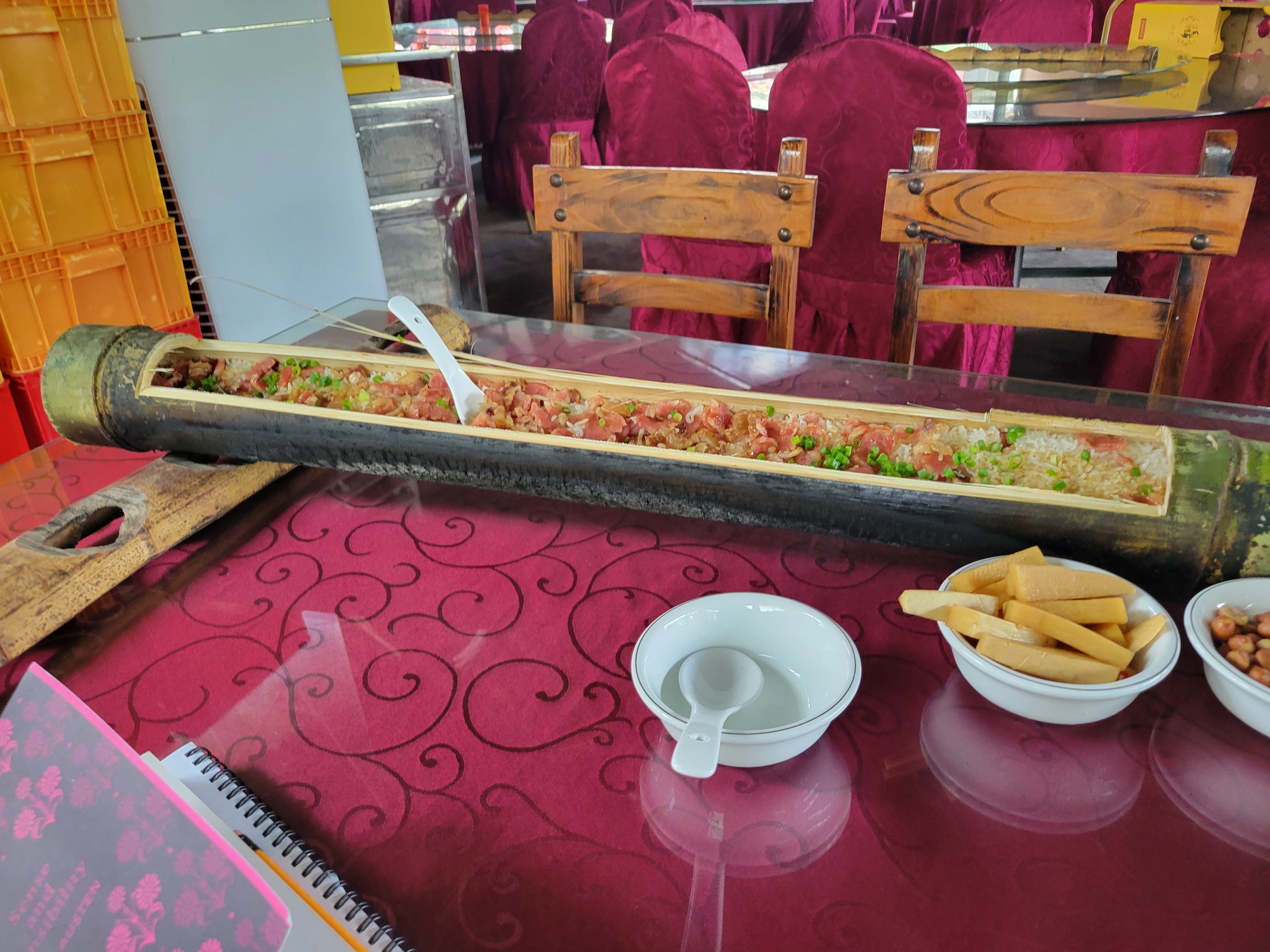
The dimensions of the bamboo tube are those of a man’s leg. The contents are very tasty, but there is no way I can finish the whole thing. I leave with a massive doggy-bag. Who knows when it might come in handy.
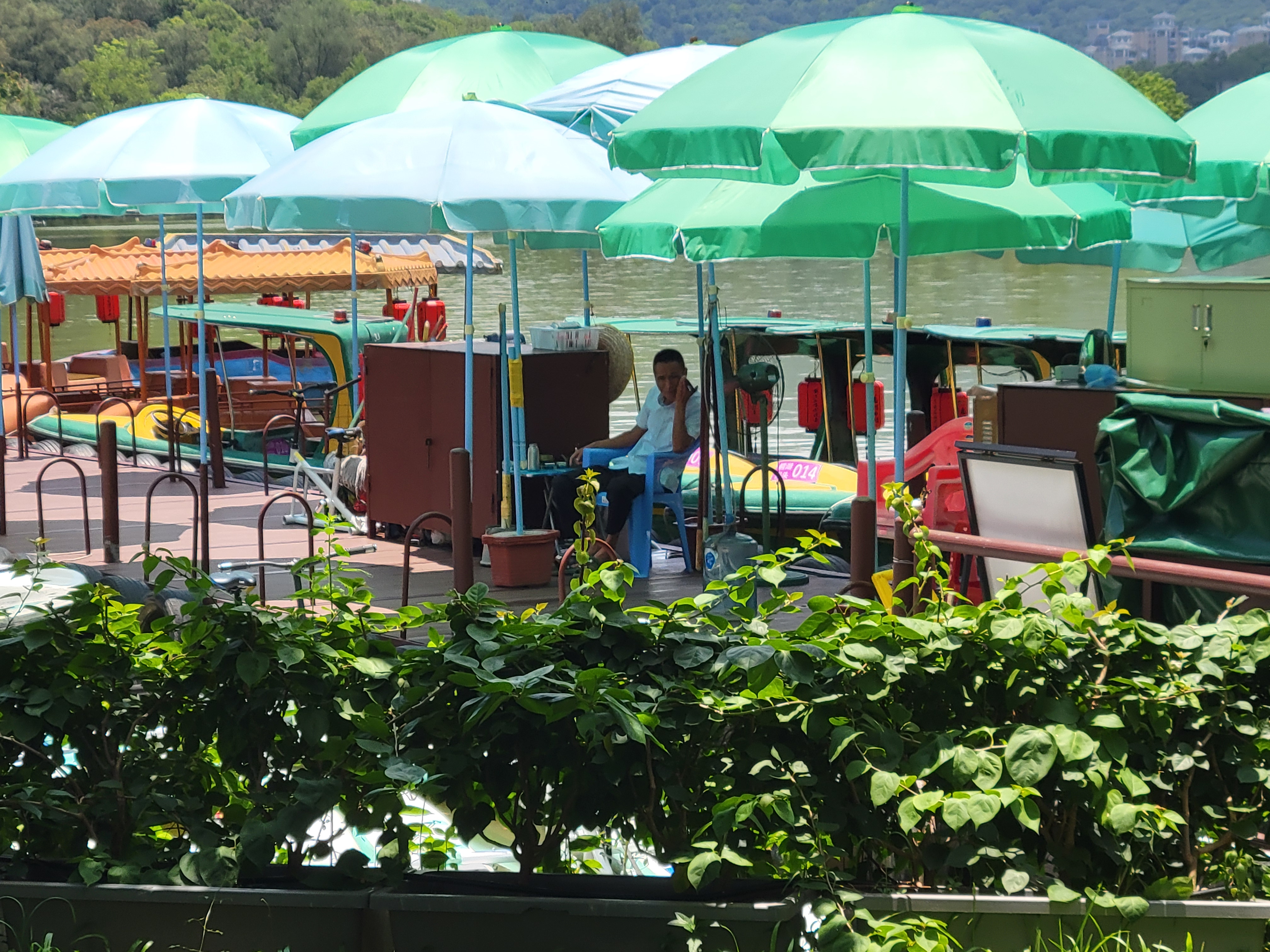
I order another DiDi to take me into central Huizhou. I stop at the city’s West Lake, which is delightful and reminiscent of its famous Hangzhou namesake. It is very hot at noontime and not many people are about. A man in charge of renting out paddle boats to non-existing tourists takes cover under a parasol as he faces the prospect of a long uneventful afternoon.
As I proceed across the Dong River in the direction of Huizhou Station, I am still content from the bamboo tube. My spirits are high, although I feel I have not quite encountered the soul of the GBA yet.
Dongguan
My itinerary follows a vaguely counter-clockwise route. This means that Dongguan is next up. I am surprised when my travel app tells me that the best available connection is via a “green train” from the pre high-speed rail era.
Soon enough, I’m in my seat. The train has set out from Suzhou a day earlier. Many passengers look quite knackered by now. I watch the GBA slowly pass by outside. Traveling west, the hilly terrain around Huizhou gives way to the flats of the Pearl River Delta.
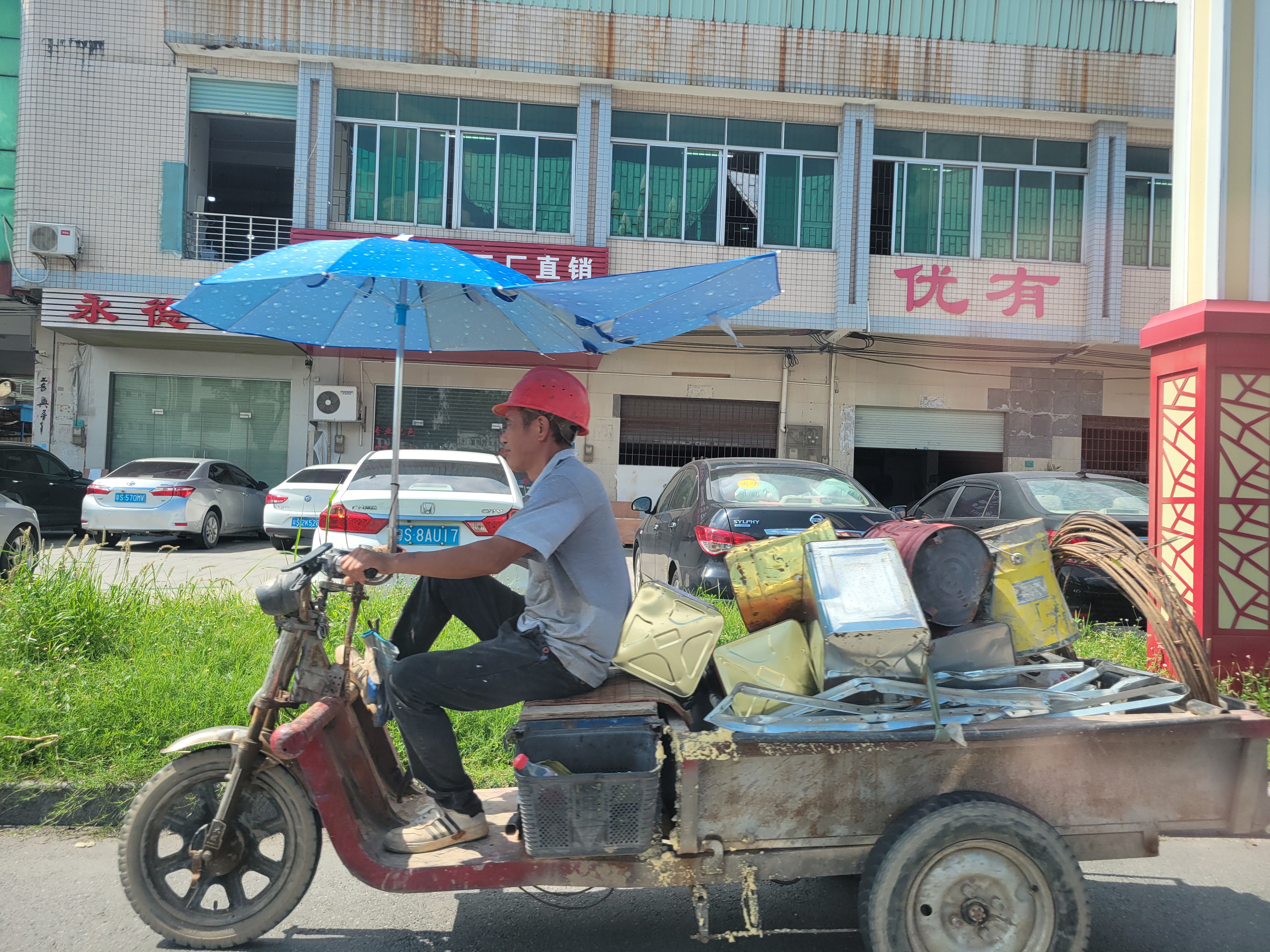
Dongguan’s population of 10.5 million makes it roughly the size of Paris. As the train approaches to my second GBA stop, it is becoming clear that Dongguan, unlike Paris, consists mostly of factories. Many of them look like they have seen better days. I ask Mr. Wang, a DiDi driver who drives me through the manufacturing sprawl in the afternoon, what he thinks of the place. “Nothing special,” comes the reply.
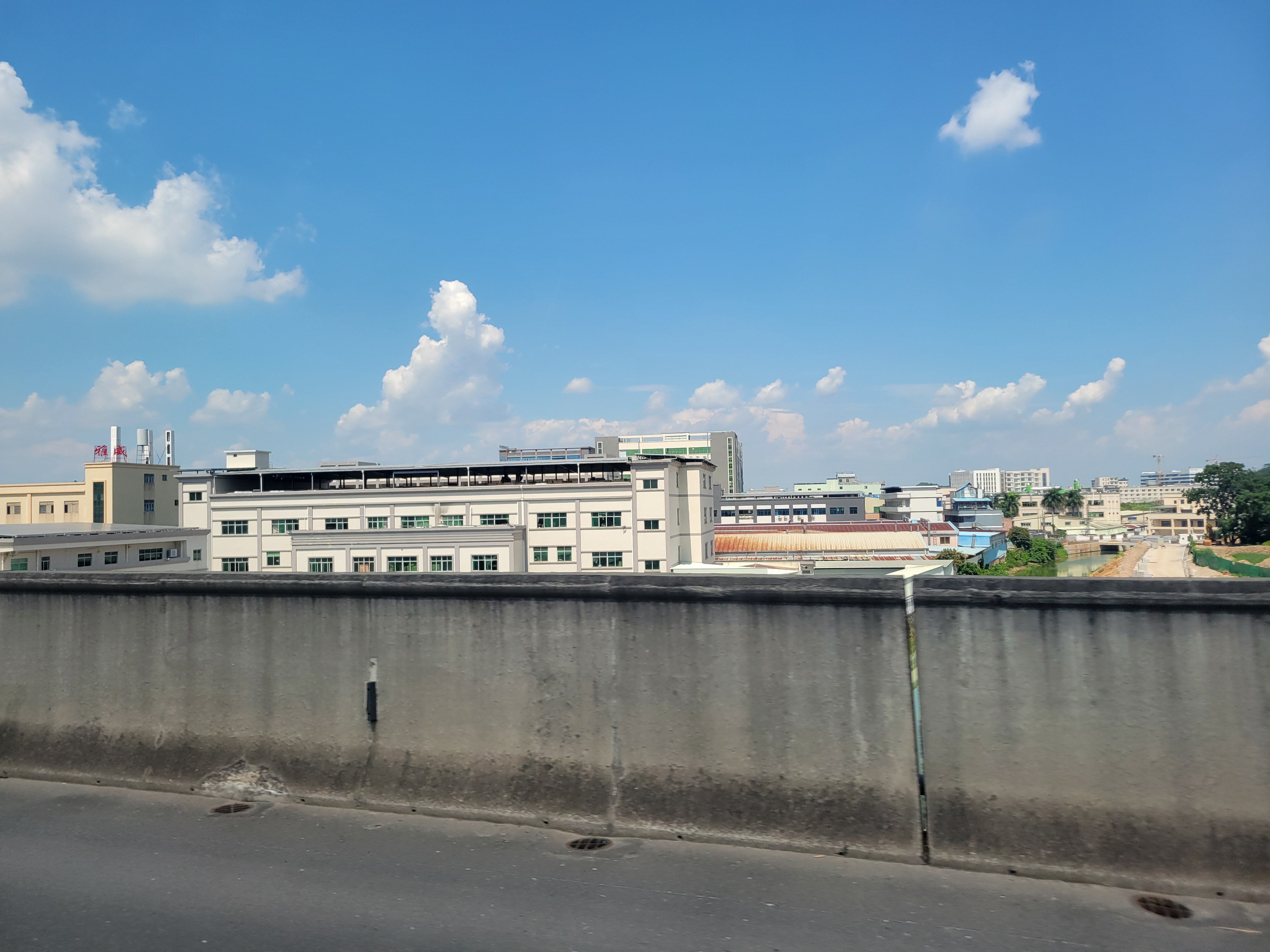
Mr. Wang drops me off near a metro station and I descend underground. This subterranean version of the city feels impressively modern and forward-looking compared to what I saw up above. I imagine that as the electronic devices assembled in Dongguan keep getting smarter, so will also local people have to climb up the knowledge ladder. Perhaps with time the factory districts will be replaced by something more innovative that would make Dongguan truly “special?”
The metro terminus is at Humen where the Pearl River meets the sea. Here I board a high-speed train for Guangzhou. As I locate my seat, the soul of the GBA remains as elusive as ever.
Guangzhou
Guangzhou South Station is very busy. Assuming the streets may be congested, I opt again for the metro. I get off at Canton Tower, the 600-metre iconic structure built for the 2010 Asian Games. Here the crowds are massive. It is clear that both locals and tourists enjoy congregating in this picturesque spot by the Pearl River.
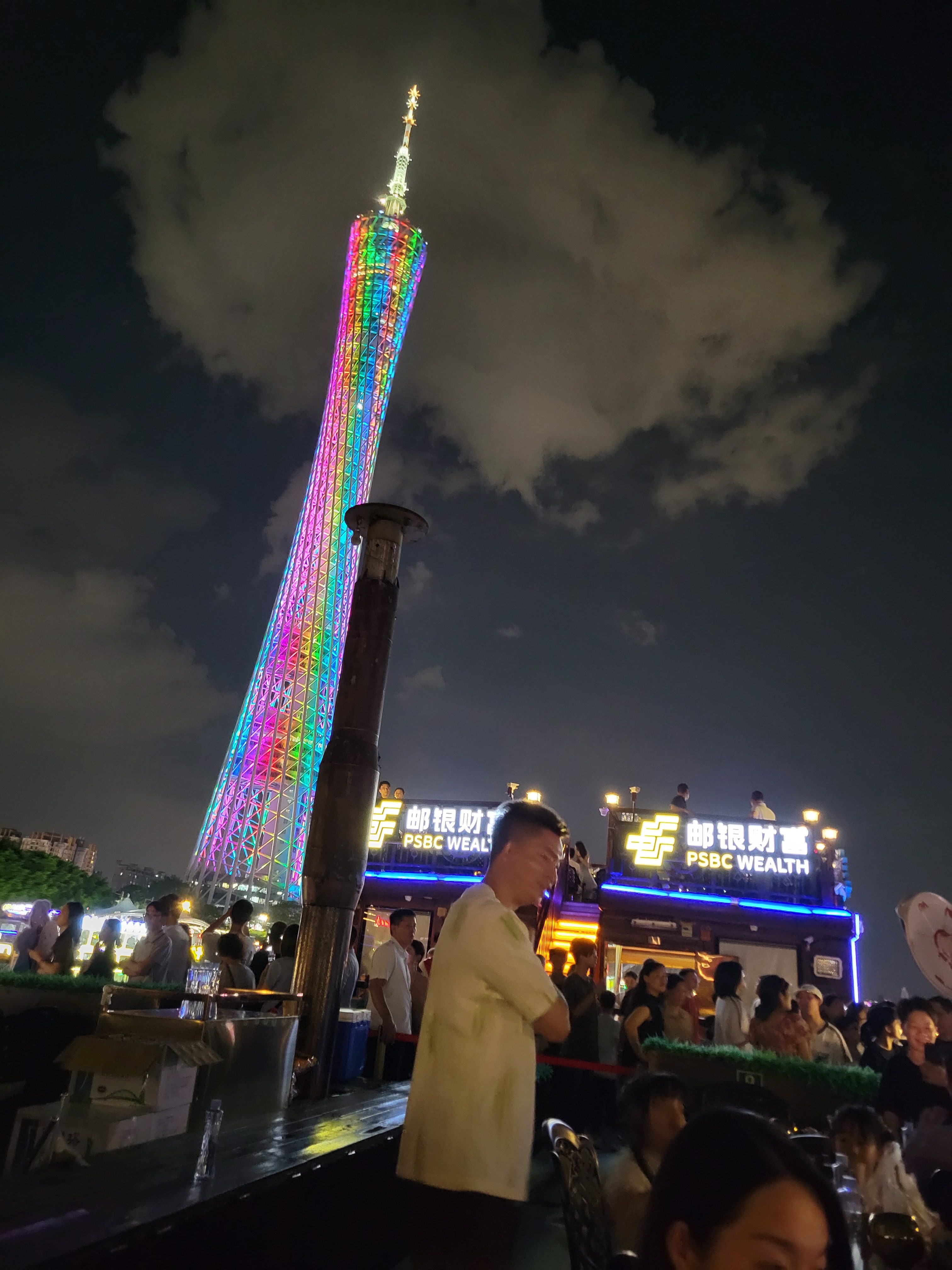
I have booked a ticket for a night cruise. Both banks of the river feature amazing skylines. I sit outside on the second level deck and take it all in together with my fellow passengers. Cantopop plays in the background. The feeling is glorious. And now I can feel it coming in the air. Here on the first night of my tour, as I sail down the river that is the central artery of this region, the soul of the GBA appears.
The elated feeling stays with me as I later locate my hotel. Once inside my room, I dig into my doggy-bag from Huizhou and enjoy some leftover bamboo tube rice.
Day 2
Foshan
The city whose name means Buddha Mountain is situated immediately southwest of Guangzhou. I take the metro to the Shunde district of Foshan and head for a restaurant named Fragrant River, which has received great reviews online. Since Shunde has been designated a “cradle of Cantonese cuisine” by UNESCO, this bodes well.
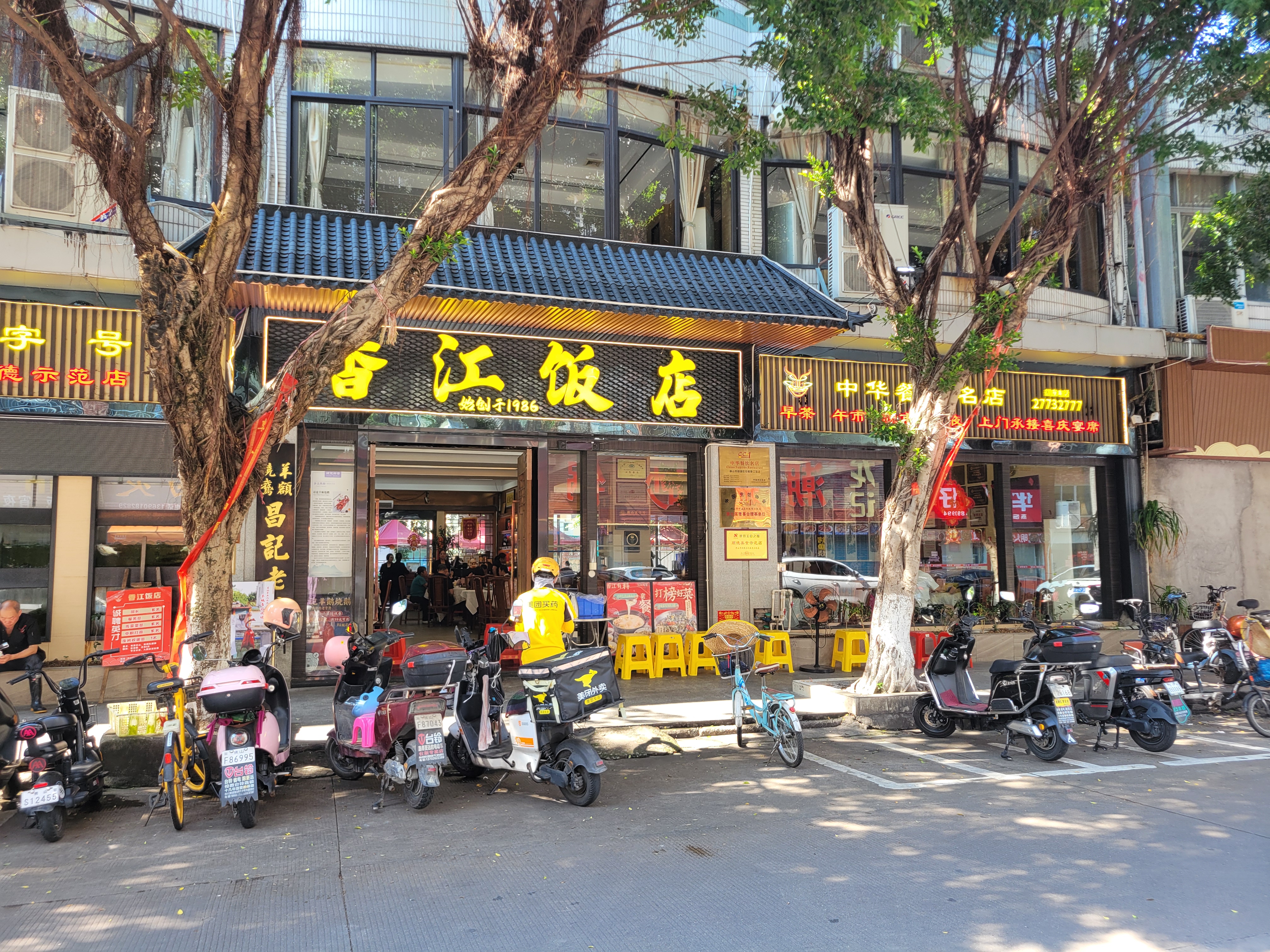
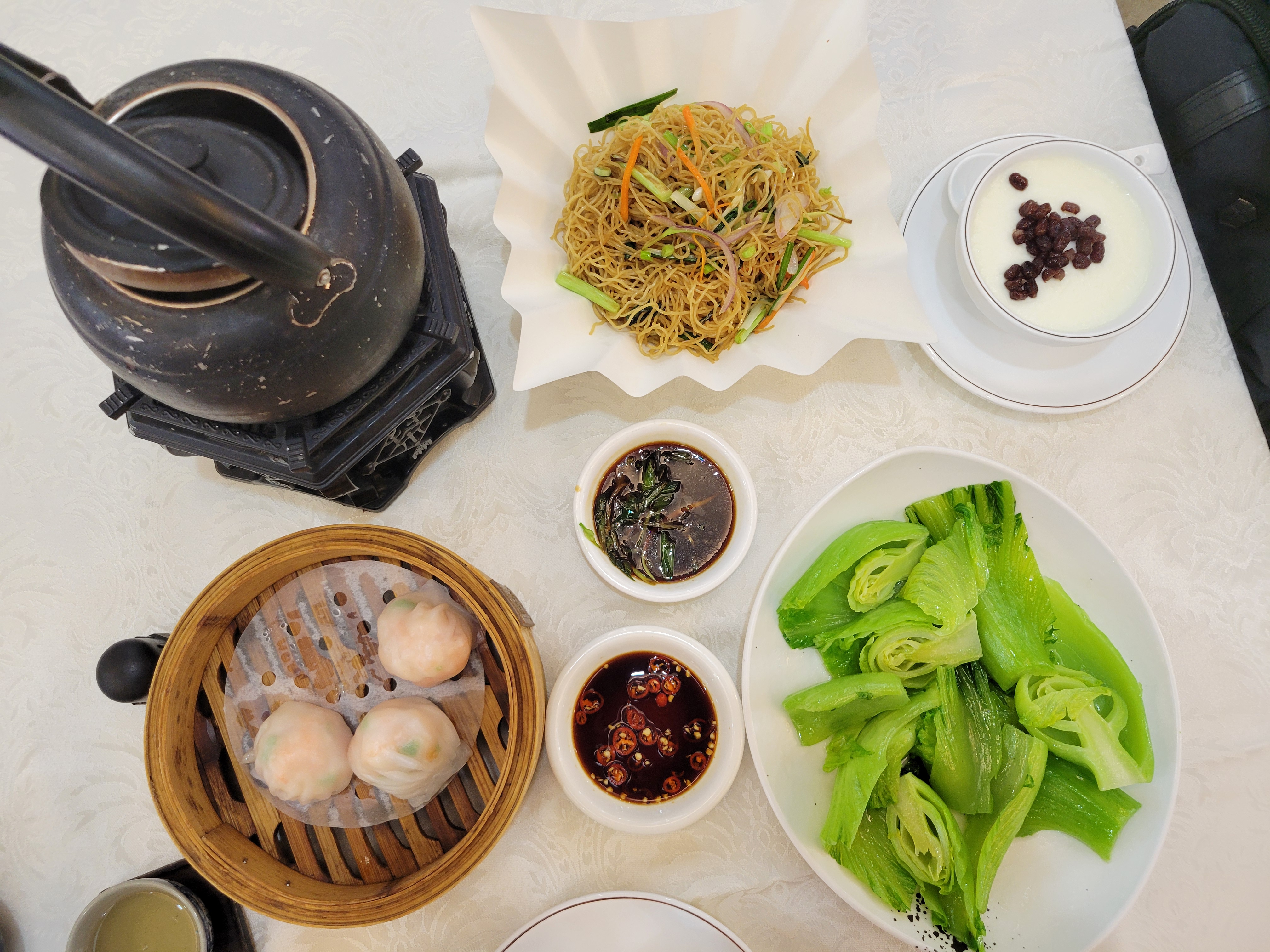
I enjoy some of the best dim sum of my life here. The ambiance of the restaurant is quite something. At a neighboring table, a group of four women and two men in their 50’s are celebrating something, maybe life itself? They have almost emptied a bottle of XO, and it is only nine in the morning! At several tables, guests are smoking. Health hazards aside, Fragrant River makes everyone feel at home. I certainly do. Mixed in with the tobacco smoke, I can sense the soul of the GBA.
Zhaoqing
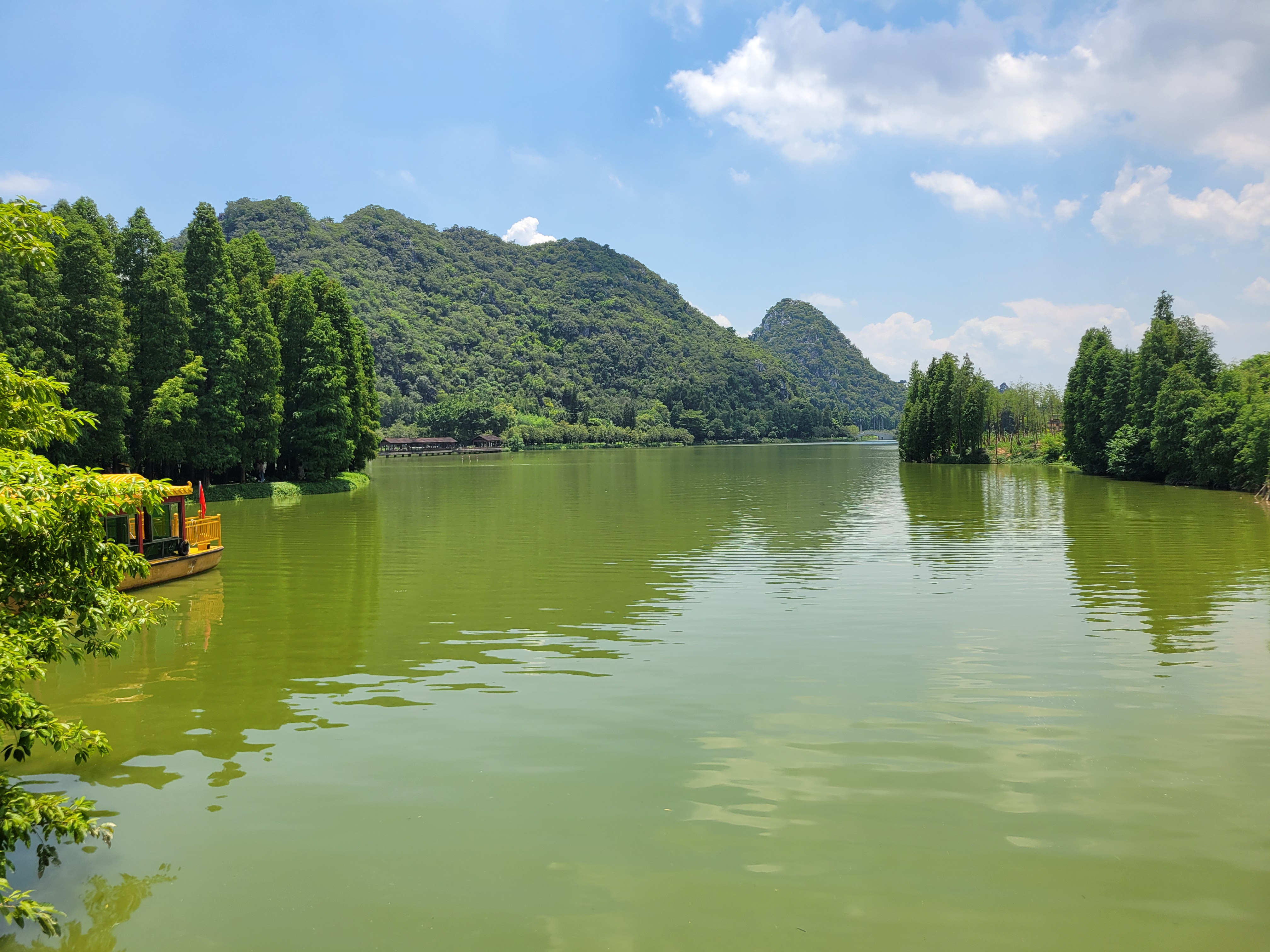
I get off the high-speed train at Zhaoqing East station and take a local bus downtown. As the Seven Star Crags come into view, I decide this is the highlight of my journey so far in terms of natural beauty. The “crags” is a series of limestone pillars picturesquely rising out of Star Lake. I roam for a bit, in awe of this natural wonder.

The sense of awe gives way to exhaustion under the ferocious midday sun. I tell myself that only a crazy person would submit voluntarily to an afternoon outside in this weather. My theory is confirmed when I meet Lawrence, a local man my own age who doesn’t merely speak English, he screams the language. “WHERE ARE YOU FROM? SWEDEN, VERY COLD RIGHT? MAKE SURE YOU CARRY ENOUGH WATER!” I check my water bottle, which is empty, and conclude that I am the real fool here.
I struggle as I look for a sensible route to my next stop in Jiangmen. There is no straight railway connection between Zhaoqing and Jiangmen. A DiDi driver tells me I should just cover the 100 kilometer-trip by car. But then, after some further online research, I realize that there is an intercity bus station nearby.
The station is a throwback to 1990s China. It is staffed by personnel who show little interest in serving the traveling public. In fact, very few of the traveling public have found their way here. The station has no air-conditioning. I pay 50 yuan for a ticket to Jiangmen and board the bus together with one other passenger.
Zhaoqing and Jiangmen are both on the Xi (West) River, which constitutes the “left” margin of the Pearl River Delta. The bus ride takes me through backwaters that make me think of the American Deep South. I start listening out for the guitar of a Mississippi bluesman, but then realize that the soundtrack of this particular delta should probably come from a two-stringed Chinese erhu fiddle.
Jiangmen
When I get into Jiangmen, I head for 33 Market Street in the city’s heritage district. The buildings here are two or three-story shophouses. Since they all have verandahs, a continuous covered passage is created along the street. I am not surprised to learn that this area has been used as a backdrop for several Chinese films and TV series.

Judging from Zhaoqing and now Jiangmen, the cities along the GBA’s western flank have not yet seen the same level of economic development as their siblings to the east. I didn’t see any factories during my afternoon bus ride. The drivers I travel with in Jiangmen are locals who prefer conversing in Cantonese, not the Putonghua-speaking transplants I encountered in Dongguan.
One of the TV series filmed in 33 Market Street is called “The Knockout.” It features an incorruptible police officer’s epic struggle to bring his former best friend (a fishmonger-turned-mobster) to justice. I watch an episode of this hard-boiled drama before collapsing into bed.
Day 3
Zhuhai
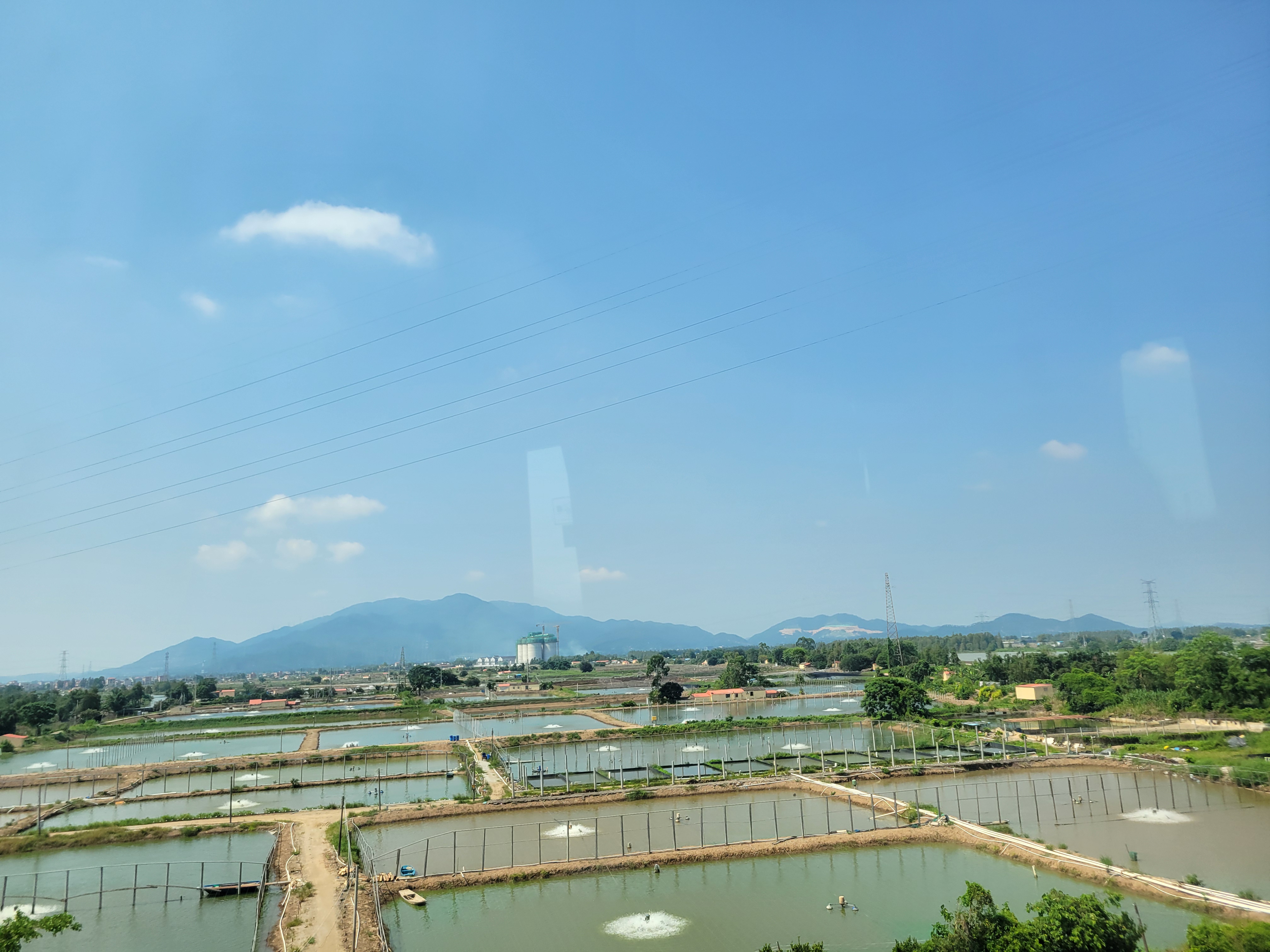
It is now Sunday, and my expedition continues by bus down the Xi River to where it empties into the ocean at Zhuhai. As during previous days, the road passes countless fish ponds. Aquaculture is clearly a key industry throughout the GBA countryside.
There is a mass movement underway in Zhuhai this morning: from every direction people appear to be headed for the waterfront. This gives Zhuhai a vibe quite different from what I have encountered elsewhere in the GBA. When I eventually make it down to the beach myself, I’m not surprised to find sunbathers tightly packed side-by-side, sardine style.
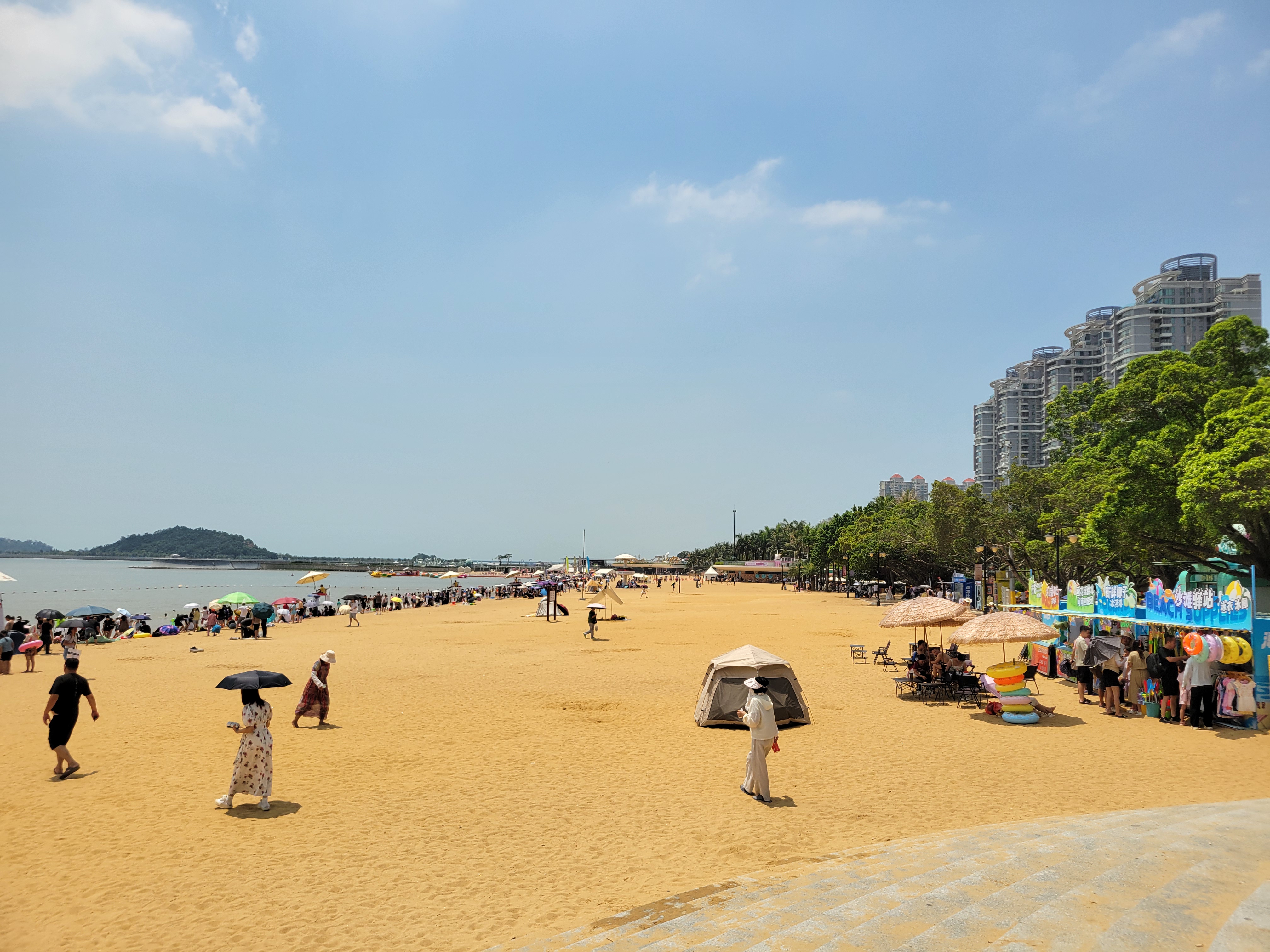
The “bay” of the GBA has been absent ever since I left Hong Kong, but alas here it is again. The Hong Kong-Zhuhai-Macau bridge paints a pretty silhouette out at sea, and in the distance one can just make out the contours of Hong Kong’s Lantau Island. I would have loved to stay for a swim, but with two GBA locations still left to explore I keep moving.
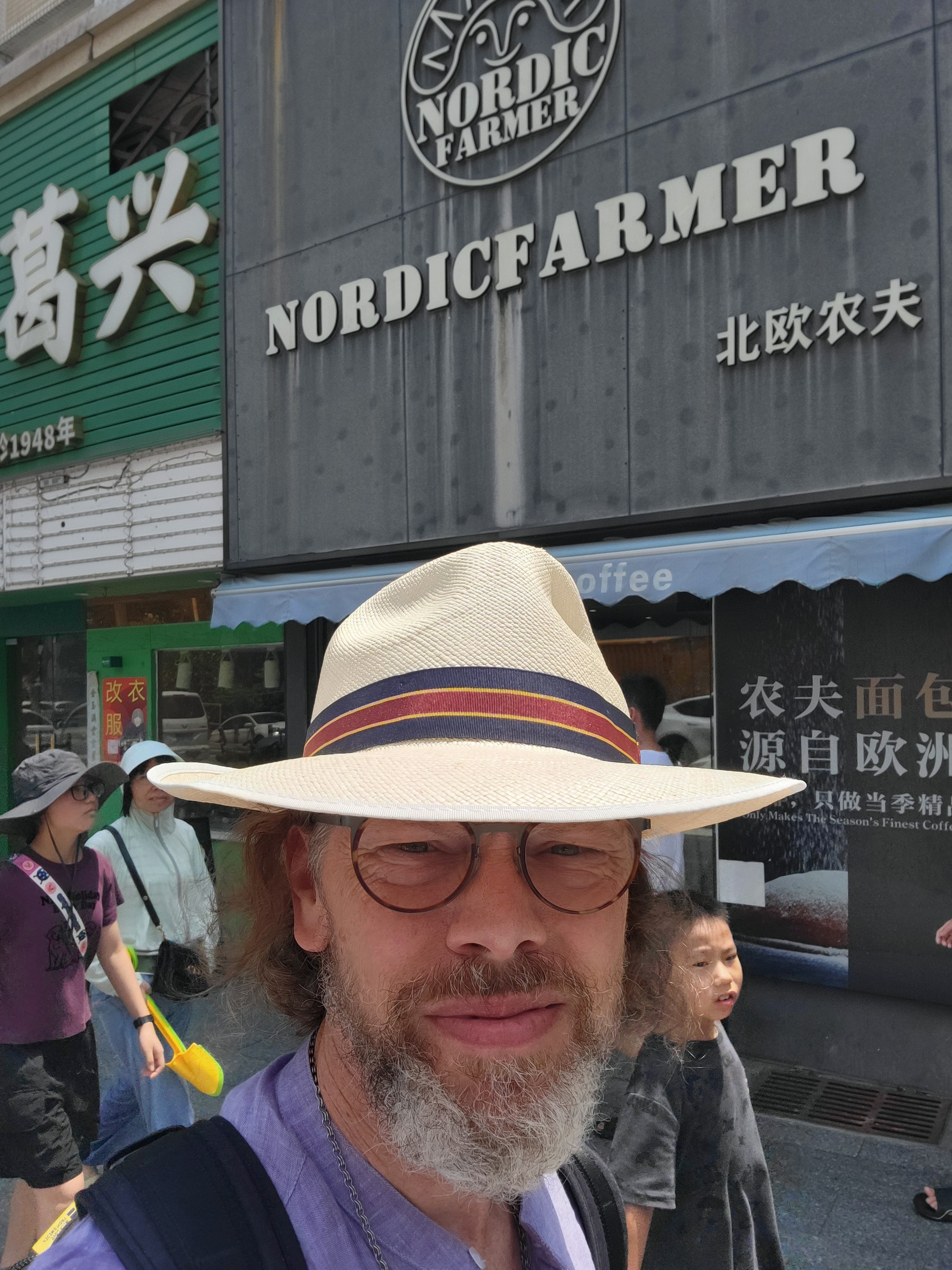
Walking back inland, I stop at a café called “Nordic Farmer.” Hailing from rural Sweden, this seems to be for me. As I plan my next move, I sample Nordic specialties previously unknown (coconut latte and lemon cheesecake).
Zhongshan
The city to the north of Zhuhai is named after Sun Zhongshan, also known as Sun Yat-sen, who is credited with overthrowing the Qing dynasty in 1911. I ask my DiDi driver to take me to Dr. Sun’s childhood home, which is now a popular tourist attraction. I marvel at the two-story village house from which sprung a man who had such a profound influence on his country. After some noodles, I board a city bus.

While DiDi is convenient and affordable, I am concerned I miss out on interaction with fellow GBA dwellers by not using more communal forms of transport. A woman seated next to me on the bus keeps scolding her two sons for a litany of wrongdoings. The boys are absorbed by their gaming consoles and take little notice. When the mother gets off, they almost miss their stop. I exchange looks with the older brother (“mothers…”) as the two of them are greeted on the street with fresh reprimands. I think to myself that here again I have unexpectedly caught a glimpse of the soul of the GBA.

The bus terminus is at Zhongshan International Talent Hub, a business park featuring the modern offices of both Chinese and foreign companies in tech and pharma. Here is evidence that the west side of the GBA is catching up with its neighbors to the east. In fact, I am soon to explore how the two sides have recently grown closer.
Shenzhen
Crossing the Pearl River outlet that separates Zhongshan from Shenzhen used to involve a two-hour detour via the Humen Bridge some 30 kilometers upriver from Zhongshan. This changed with the inauguration of the Shenzhen-Zhongshan Link in 2024. I board a bus at the Talent Hub and off we go on an almost 50-kilometer long system of bridges and tunnels. Despite having four lanes in each direction, the Link is very busy during my Sunday afternoon passage. After a 30-minute ride, we arrive at Qianhai New Zone (formally, the Qianhai Shenzhen-Hong Kong Modern Service Industry Cooperation Zone), a pilot area for closer cooperation between Shenzhen and Hong Kong.
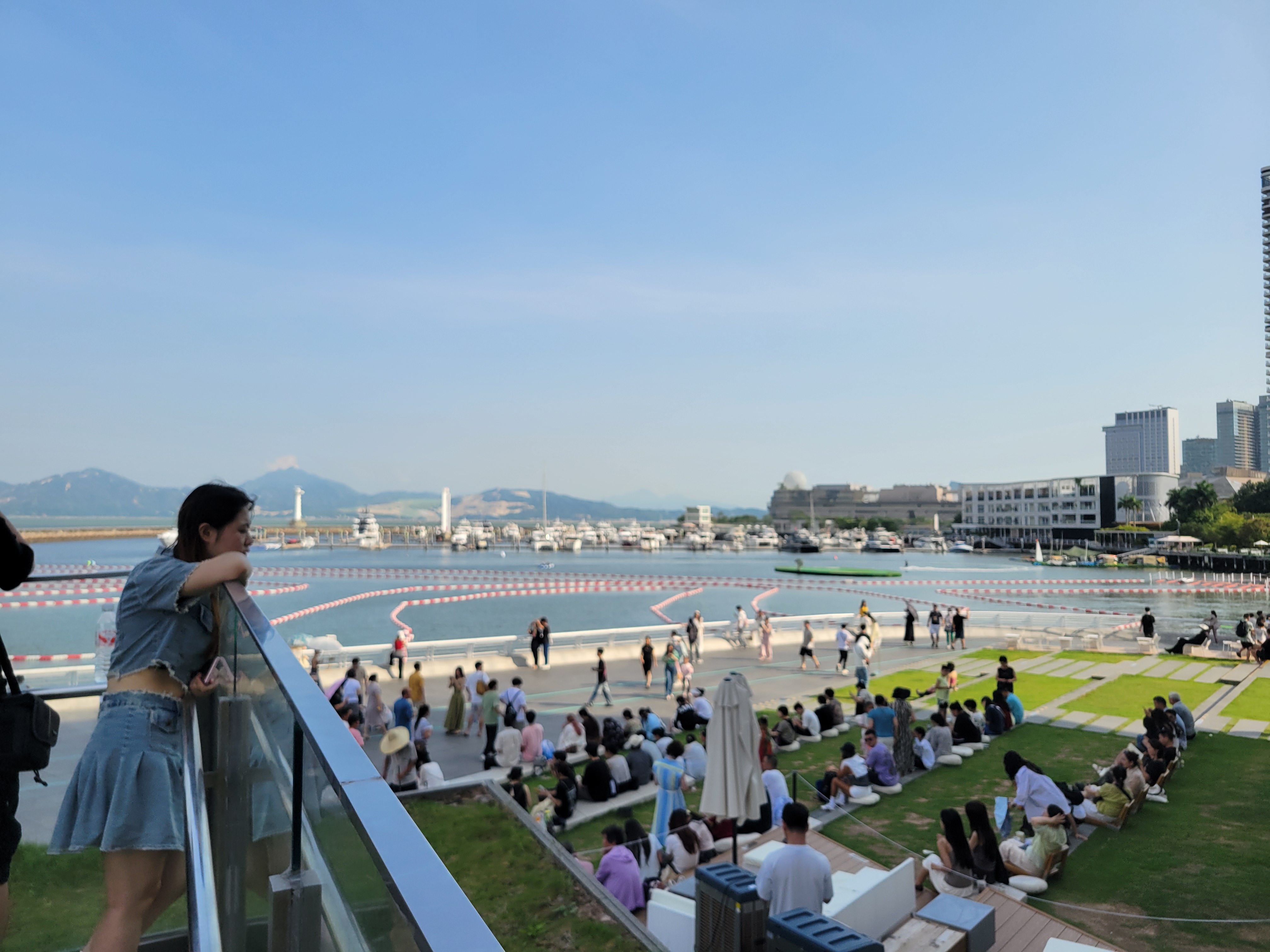
I want to go somewhere in Shenzhen that will allow me to collect my thoughts after three days on the road. I make my way over to the Design Society, located by Shenzhen Bay, where hipsters and young families are spending their day off with picnics on the lawn. I order some iced tea from a food truck and think back on what I have experienced.
The infrastructure has been a mixed bag of the shining new and the outdated. My connections in and out of core GBA cities like Guangzhou and Shenzhen were flawless, but more investment seems to be needed in roads and railways along the region’s periphery.
When it comes to the physical lay of the land, I come away with a newfound appreciation for the beauty of the GBA’s countless waterways, as well as the hill country in the east and west that is bracketing the delta. Sure, rapid industrialization has left its scars, but I have also seen plenty of signs of a new GBA emerging. I can’t help but think that in another few decades heavy industry might be but a memory.
As for the soul of the GBA, I have encountered it repeatedly through the region’s residents. This whistle-stop tour has perhaps been an unconventional approach to tourism, but I feel strongly that it is only through the meetings it has provoked – whether on the Pearl River cruise, at yum cha in Shunde, or even on the bus in Zhongshan – that I really get to know the GBA.
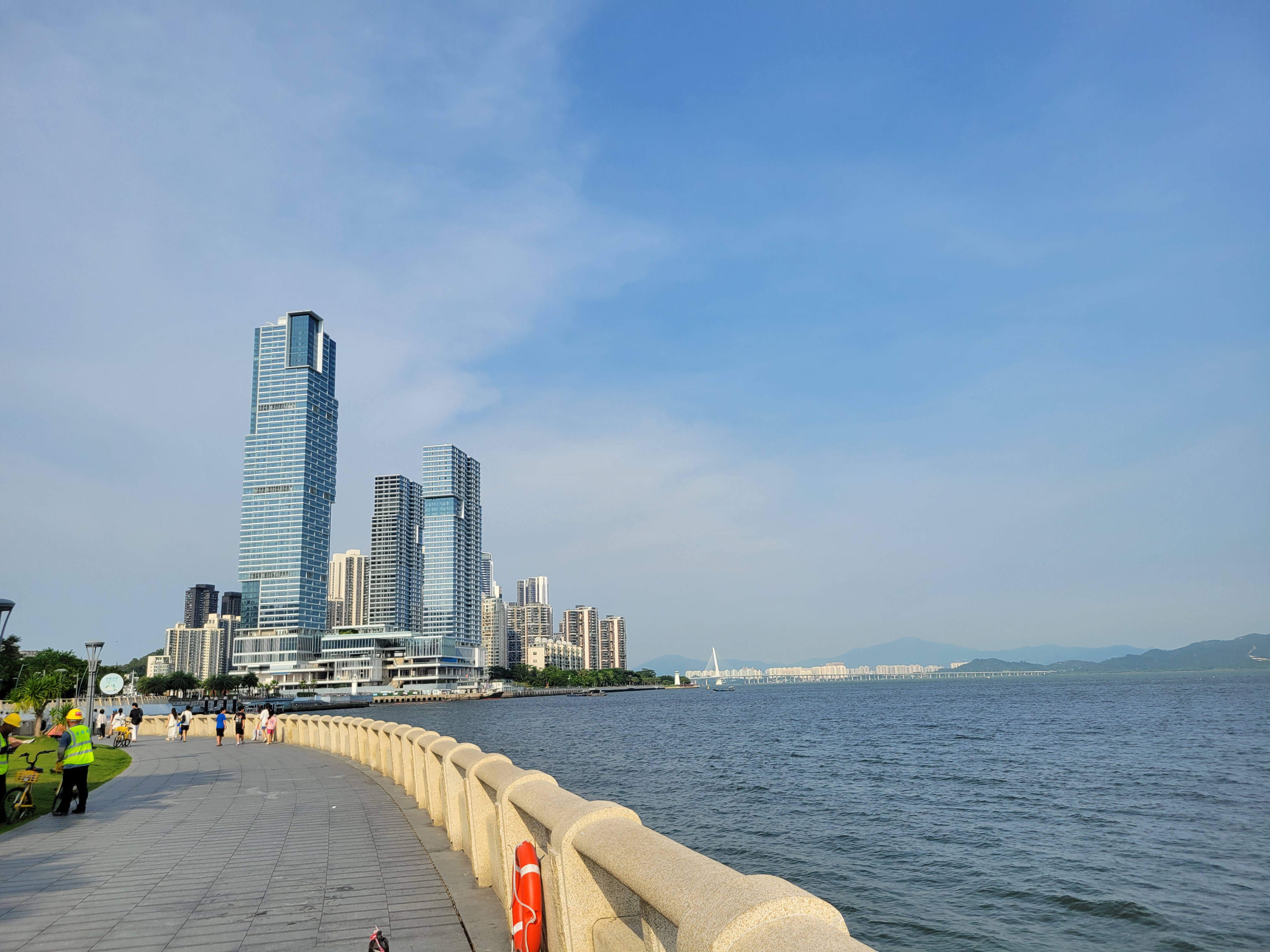
After finishing my iced tea, I take a stroll by the water. I look out across the bay where a bridge stretches over to Hong Kong’s New Territories. Now the time has come to return home. After four train journeys, three intercity bus rides, twelve DiDis, four metro transfers, and four city buses, I take a final Didi to the foot of the Shenzhen Bay Bridge where I pass immigration and catch a bus back to Hong Kong.

Kristian Odebjer was born and raised in Sweden. He has called Hong Kong home since his employer dispatched him to the city as a Chinese-speaking young lawyer in the late 1990’s. These days, Kristian practices corporate law with a Hong Kong law firm, and spends his free time indulging an endless fascination with the sights, sounds, and flavors of China. He has a master’s in law from Lund University and an MBA from UCLA Anderson School of Business. Odebjer’s undergraduate degree was in Chinese studies from Dalarna University in Sweden. He has served as chairman of the Swedish Chamber of Commerce in Hong Kong since 2017.