

Hong Kong Disneyland, owned 52% by the Hong Kong government and 48% by the Walt Disney Company, became the first Disney park in China almost 20 years ago. Today, as Hong Kong’s No. 1 paid attraction, and the 3rd top tourist destination overall, attracting guests from all around the world, the resort has become part of the social fabric of Hong Kong.
The most recent fiscal year report to Hong Kong’s Legislative Council, made public in July, was a dramatic improvement. Despite 76 fewer operating days compared to pre-Covid levels because of continuing restrictions during the fiscal year, which ended in September 2023, attendance jumped to 6.4 million, including another record high of 4.1 million local visitors. Non-local attendance recovery outpaced total Hong Kong visitor arrivals during the time period, and per capita guest spending grew by 54% to another record high.
With the future looking bright, is Hong Kong Disneyland a bellwether for the Hong Kong economy? CEO Michael Moriarty thinks so, in an interview with AmCham HK e-Magazine editor Edith Terry.

Q. Hong Kong Disneyland Resort is coming up on its 20th anniversary next year. How has the market changed since 2005?
A. When I first started, it was 2006 and so I’ve seen the evolution. If there’s one way to describe how people are engaging Hong Kong Disneyland, it is looking for a more elevated and sophisticated experience. And I think that goes for both Hong Kong and mainland China guests, as Disney calls visitors. They are looking to be taken on a journey and suspend belief – all in a very sophisticated and immersive way. Hong Kong Disneyland is not just a check-the-box activity anymore. It’s a feeling that people are seeking out.
We’re seeing it in the sophistication of their choices in food and beverage and merchandise – guests are seeking out higher quality food and merchandise. Our guest spending has gone up over 50% between fiscal year 2022 and 2023 and because the quality is there, they see the value and that makes guests happy.
The consumers know what they want. The newest trend is to purchase tickets consumer direct versus joining travel tour groups. If you have a quality product that makes people feel good, whether it’s the merchandise, the food, or the experience, they’re willing to pay for that and be happy with their choice. We’ve evolved to also meet these interests and desires.
Q. Has Hong Kong Disneyland finally turned the corner?
A. During Covid, Hong Kong people had a choice on how they spend their time, and they chose us. Their faith and love for us has not been taken for granted. You know, we’ve had record attendance, including for our annual pass, which we call Magic Access. We had record high local attendance during Covid, and we continue to see that strength. Our guest satisfaction scores have continued to increase, and Hong Kong Disneyland has become a source of pride to the people of Hong Kong. We are here for Hong Kong and to make it a better place. Our cast, which is what we call our Parks and Resorts employees, takes great pride in that. There have always been people who loved Disneyland. But I can say now that without a doubt, we’ve turned the corner.
Q. Is this the time to expand your physical footprint, as the South China Morning Post suggested recently? [1]
A. Right now, our focus is to get through the recovery period. Hong Kong is still not back to pre-pandemic levels. There’s no question the Greater Bay Area (GBA) is an amazing market opportunity – with 70 plus million people within a two-hour train ride, it’s staggering. The growth plan that we’ve set out, what we’ve already done with the World of Frozen, and what we’ve just announced with Marvel, is a strong lineup. To put a finer point on it, the GBA has huge market potential, and it’s a big part of our overall strategy, and of Hong Kong in general.
Think about what’s happening on Lantau Island, not just the connectivity to GBA. Just yesterday I traveled across the Hong Kong-Zhuhai-Macau bridge easily. There is also the new Shenzhen-Zhongshan bridge and the older Shenzhen Bay bridge. This makes Hong Kong Disneyland as accessible for a visitor from Shenzhen Bay as from Causeway Bay, and that’s a huge advantage for us and for everyone on Lantau Island. People from the GBA can enjoy the nature of the south Lantau country park, the magic here at Disneyland and the expansion they’re doing at the airport, which is a tremendous opportunity.
Q. 2023 was a strong year for Hong Kong Disneyland. Can you share your outlook for 2024?
A. 2023 was an amazing year for us, across the board. We posted a profit for the calendar year. Local attendance continued to be very strong, even after the pandemic, and there was a strong rebound in our inbound tourism well ahead of the market.
What’s most encouraging is that our rebound has been much higher than the market with respect to China and overseas visitors compared to pre-pandemic levels. The momentum has continued to pick up, and we’re having a good summer holiday.
We really don’t talk about future results. But what I can say is that I think everyone will be proud of how the resort has performed when we report our financial results to the Legislative Council early next year. In the 2023 calendar year we were profitable. The momentum has continued for the fiscal year 2024, which ends on September 28.
Q. What have you been doing to build footfall?
A. We’ve launched a lot of new attractions and entertainment, and our communications have emphasized experiences that you can only have at Hong Kong Disneyland. Not only that, but how you can share those unique and personal expressions with your friends, either at the resort or on social media, which has been a big driver of awareness post-pandemic. We launched World of Frozen on November 20 last year and made Olaf, a fictional character in Walt Disney Animation Studios’ “Frozen” films, our ambassador. A 10-meter Olaf visited Bangkok, Singapore, Taipei and Guangzhou, among other locations, before the opening.
Hong Kong has the first and largest “Frozen”-themed land in the world. Our publicity efforts have really created a lot of buzz in the market. We had a great response from mainland China, but also Southeast Asia, especially Thailand and the Philippines, all of which have come back very strong. As we look at the coming Chinese national holiday, Golden Week in October, we’re anticipating that about 80% of the guests will come from the mainland. The mainland business is quite strong, especially during the holiday periods.
We have something for everybody.
Q. How has HK Disneyland positioned itself post-Covid?
A. We looked at what everyone else was doing from a product standpoint. We went to Tokyo, Shanghai, Beijing, Guangzhou and Zhuhai to see what was going on. Enhancing our product was one of the things that we focused on during Covid, and are continuing to do, and is how we won the hearts of Hong Kong and helped solidify our position in the market.
Hong Kong Disneyland is unique in our ability to let guests be themselves and leave recharged. This is a case where our intimate size is an asset, because we bring you closer to your favorite people, your favorite characters and your favorite stories. And it’s beyond charming. It’s a place where really the magic enchants you. And I think that’s where we’re different than the other resorts around the world, whether it’s a Disney park or Disney cruises or other local amusement parks in the area.
During Covid, we launched our new Castle of Magical Dreams, the Momentous Nighttime Spectacular and prepared to open World of Frozen. During a large fan event in mid-August we announced our next expansion, themed around Marvel, which we’re very excited about.
Nearly half of the world’s population lives within a five-hour flight from Hong Kong. When you think about our guests and where we pull from, our resort represents the diversity of half the world and so we cater to that. And it impacts not just our go-to-market strategies, how we market, how we communicate, but our product strategies as well. Hong Kong guests are very different than guests from, say, Shanghai or Beijing, who are very different from Shenzhen and Guangzhou, who are very different than Manila, Bangkok, Jakarta and Singapore, or Taipei, Japan and Seoul. You think about the diversity of those places, but that’s the makeup of our visitors.
Hong Kong represents an international, metropolitan dynamic and we represent that as well. Not only do our cast members speak English, Mandarin and Cantonese, but many other languages – Tagalog, Japanese, and Bahasa. You’ll hear all those languages in the park. We have a very diverse cast base, with cast members from over 36 countries. And you’ll see all these communities in our park.
Q. How do you take advantage of social media?
A. One of the things that I’ve come to appreciate is that guests tell us how they want to interact socially. Disney is great at establishing a sense of place. We call it place making, where a guest is immersed in a land or a story. And those places, in and of themselves, create a unique perspective that is interesting to share through pictures. We also enhance that with our character interactions.
It’s things as simple as the food, whether it’s the plating and presentation at our fine dining or table service restaurants in the hotel or in the park or the Olaf ice cream cones at World of Frozen. We try to make everything entertaining, part of the experience and Instagram worthy.
I’ll give you one example. I mentioned how our visitors will tell us what they’re looking for. People who use Little Red Book, or Xiaohongshu, in China have fallen in love with our robot trash can called “Push.” It’s a trash can that goes around and talks to people. Then it became a social trend to get pictures taken with all our various trash cans around the park. It’s hard to predict how creative the consumer is going to be, or the guest is going to be, but being able to respond quickly to those changes is what matters.

Q. Can you talk more about the dress-up phenomenon at Disneyworld?
A. When you look how the consumer is behaving, guests see us as a unique place to express themselves. One example is how people dress up when they visit us. We call it Disneybounding, dressing up as their favorite Disney characters. People feel that Disneyland is a safe place to express themselves in a world that right now that can be a little bit hectic. And so the experience here is quite unique.
If you go into our resort right now, or on any given day, well over half of the people are showing some sort of Disneybounding. It could be as simple as a headband or a shoulder plush. We’re the only park that has Albert, a monkey that is one of the main characters of Mystic Manor. People will walk around with Albert on their shoulder, to show an affinity for Albert. Or they identify with Mickey Mouse or LinaBell, a curious fox and friend of Duffy. And it is really fun that way. And of course, the most fun time of year for this is Halloween, where guests get to dress not just as their favorite characters and heroes, but also as villains.
Q. Can you share the background of your collaborations with HK Ballet and HK Philharmonic?
A. The collaboration with HK Ballet is an interesting story. Septime Webre, the artistic director of the HK Ballet and I met at a mutual friend’s birthday party. Over casual conversation, I said, ‘Let’s do something together’. And Septime said, I’ve got an idea. Very quickly after that, this collaboration was born. We’ve been fortunate to work with the ballet for two years now, and we’re looking to see what other collaborations we might do. I think it’s an example of how Hong Kong Disneyland is integrated into the cultural community in Hong Kong. Since day one, we’ve been supporters of the arts and growing talent here, whether it’s singers, dancers, technicians or performers. We need them, and Hong Kong benefits from our growth in that space.
But to collaborate with a world-class talent, such as Septime, and to create a show as wonderful as StellaLou’s Wonderful Wishes Ballet was more than just connecting the dots between the two groups. It created a product that introduced ballet to a whole new market, and that is really the power that we have in the community from a cultural standpoint. If you know Septime, you know that he is never short of ideas. But StellaLou’s Wonderful Wishes Ballet was a test to see if this crazy idea of introducing Disney characters to these world-class dancers and performers, if we could introduce ballet to a whole new audience and make it accessible to everyone, that was the big idea.
We’ve also done collaborations with the HK Philharmonic playing in front of the Castle of Magical Dreams. We’ve had Lang Lang, one of China’s most famous pianists, play in front of our castle as well. This year, we’ll be featuring a new set of Disney Live in Concert Series where we’re collaborating with the Hong Kong Children’s Choir to get everyone ready for the Christmas season. It’s going to be absolutely beautiful.
Q. In mid-August, Disney announced a new Spider-Man attraction as part of its Marvel portfolio. What’s happening there?
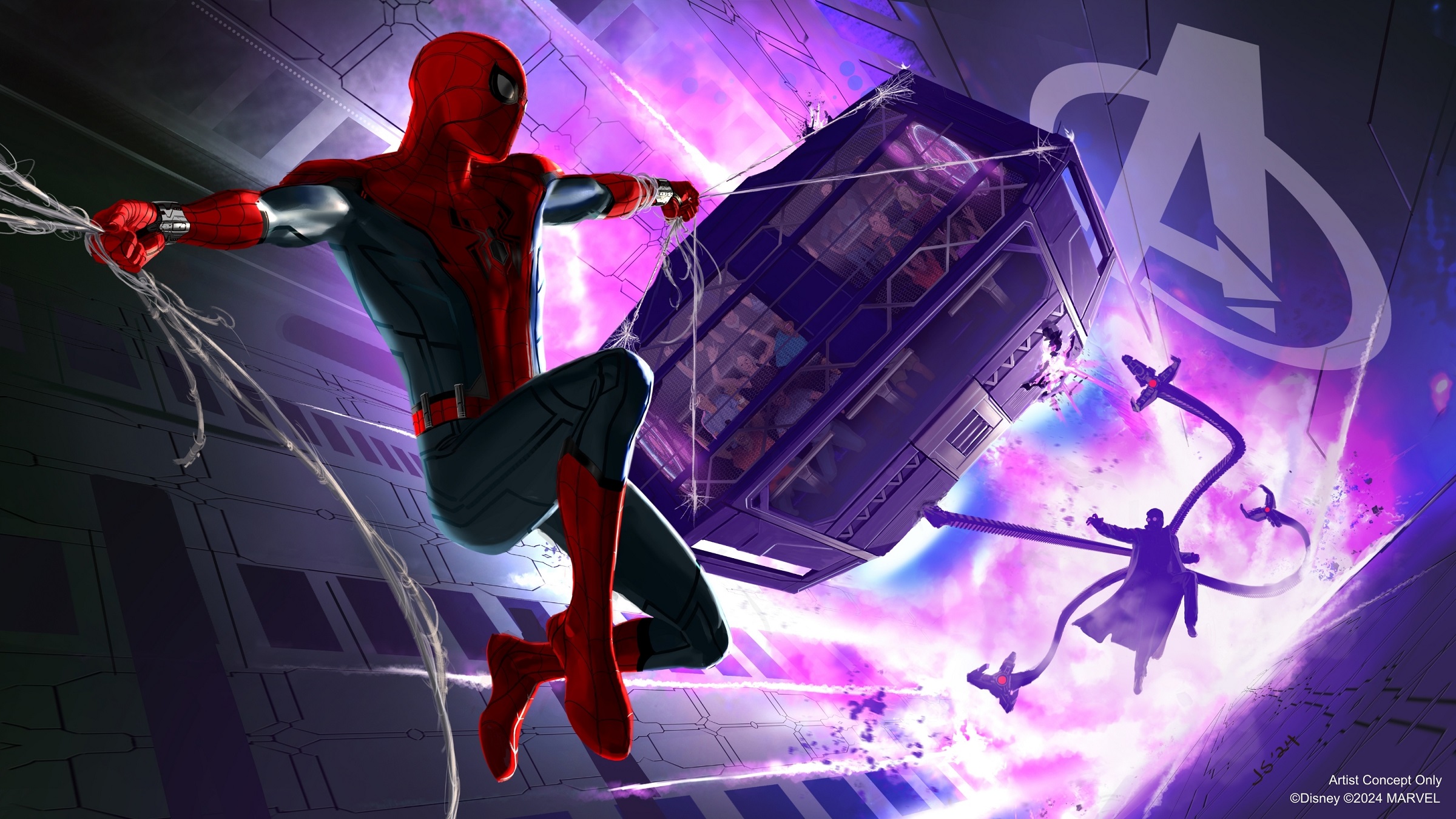
A. Hong Kong is officially a part of the Marvel canon. When we launched Iron Man Experience here in 2017, part of the story was that Tony Stark had Stark Tower in New York City and the Stark Expo in Queens (a fictional event started by Tony Stark’s father, Howard Stark). But in 2017, Tony brought the Stark Expo to Hong Kong Disneyland. The story of the Iron Man Experience evolves around that, and it’s been a lot of fun, and very special to have Hong Kong officially become a part of the Marvel universe.
We’ve expanded on that. We have Ant-Man and The Wasp: Nano Battle! here as well. And we’re expanding on the story of the Stark Expo to bring together the best minds to display the technology of the future. Marvel is a hugely popular franchise, not just in the park, but around the world. And I think this expansion represents a unique, one-of-a-kind story and experience that features Spider-Man, as well as some of his best friends, the Avengers, and brings the Marvel universe here to Hong Kong in a major way.
We always start with the story to make sure these experiences make sense to our guests. The new expansion is based around how Tony Stark wants to make sure that he’s building a better and brighter future for all mankind. And he’s bringing all the most brilliant minds from the Avengers to work together right here in Hong Kong to showcase their inventions and new technologies. It’s unique to us, but it also provides us with a lot of flexibility to tell additional Marvel stories down the road. The company is committed to Marvel as a franchise, and so we’ll be able to bring more and more to Hong Kong.
This is another bold step in our mission to expand Hong Kong Disneyland and continue to drive tourism into Hong Kong. You know, we are already the top paid attraction in Hong Kong, and the third most visited tourist destination, behind The Peak and Avenue of Stars in Tsim Sha Tsui, which are free. This investment is a testament to both the confidence that our shareholders have for the future of tourism in the region, but also our role in it. It’s going to add a lot more excitement to our resort. For sure, it’s going to enhance our appeal to Marvel fans and attract new fans in Asia.
Q. You have fantastic employee retention rates, in an economy where labor is in short supply. How do you do it?
A. Without our cast members, we do not have a business. We can make these great places, but without our cast, we really have nothing. When you think about our role in the community, we’re a tourism driver, an economic driver, but we’re also a driver of jobs. Since we opened, we’ve created nearly 300,000 jobs in the community, and with a Cast First approach.
We have been able to grow a lot of talent right here in Hong Kong. In fact, about a third of our workforce has been with us for more than 10 years, and 60% have been with us for more than five years. We are a place where people want to work. We’re one of the most desired employers for people coming out of school, which is great. One of the big reasons why cast members stay on at Hong Kong Disneyland is because we don’t just offer them jobs, we offer them careers. It’s possible for you to get a job as a part-time food and beverage host and eventually work your way up to run one of the largest restaurant businesses in Hong Kong, and I’m proof of it. My first job with Disney was as a lifeguard at River Country, the first water park at Walt Disney World Resort in Florida, over the summer. If I can do it, anyone can do it.
Additionally, we support the Disney Imaginations Hong Kong Design Competition, where we hold a creative contest for college students. We give them a challenge, and we bring the winners in as interns to our Imagineering team, which develops the all-important narratives and design that go into the Disney magic. We’ve even hired most of them to come and work for us.
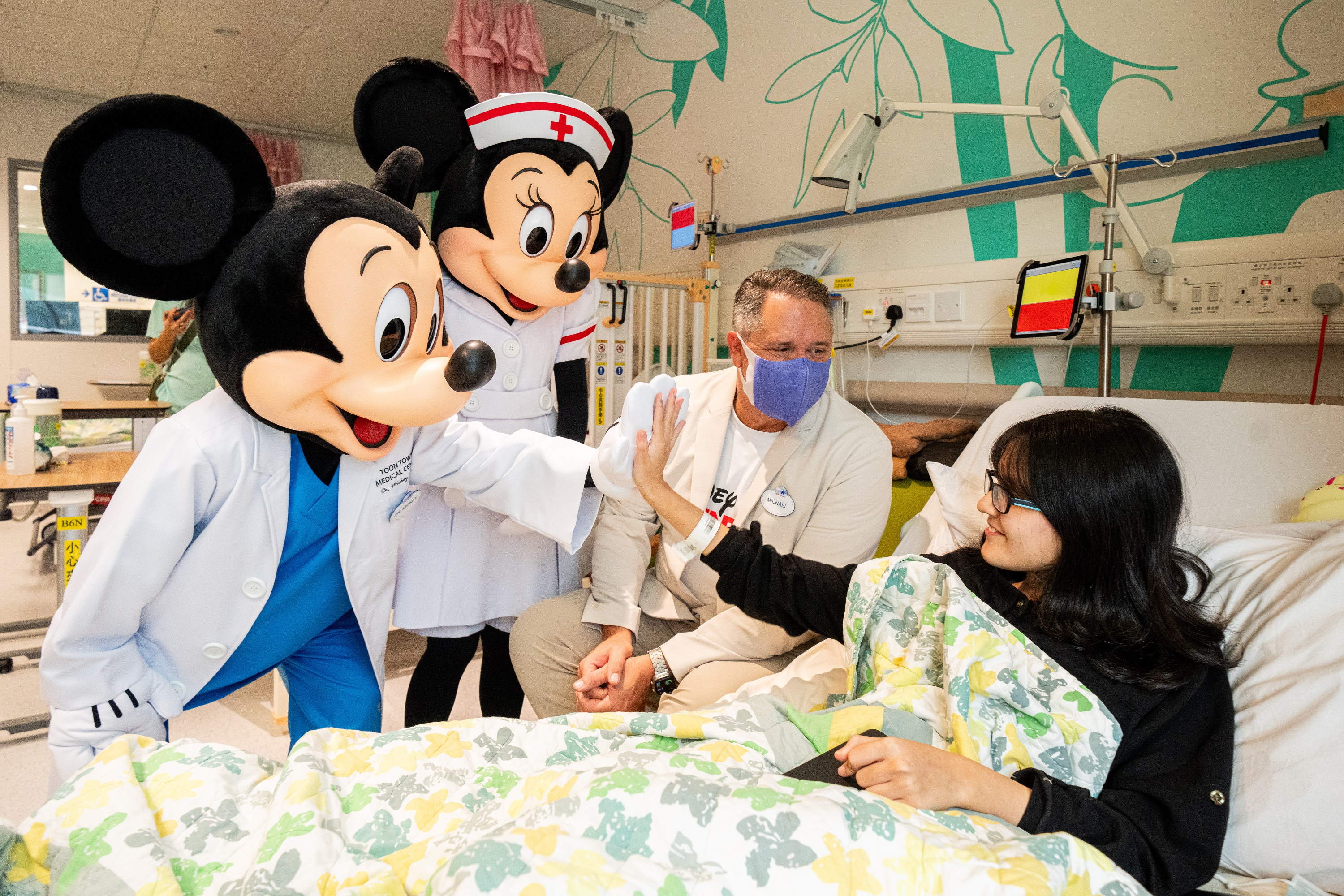
We also work to create an inclusive society not just for our guests, but for our cast. We’ve incorporated theatrical interpretation into some of our shows to include people with hearing disabilities, accessibility and so on. Our cast members are the ones who make it a reality. When we visited the Hong Kong Children’s Hospital, we had over 100 volunteers. Our cast members are the ones who go out and volunteer in the community, helping the underserved.
Q. When and how did you first come to Hong Kong, and why did you stay?
A. Hong Kong Disneyland brought me here in 2006 and since then, I’ve fallen in love with Hong Kong and Hong Kong Disneyland. My wife and I raised our kids here, and in some ways, we grew up here as well. Professionally it is just such a wonderful place to work. I found the work and the challenges very inspiring, and the diversity of cultures and personalities just so enriching.
When you ask, ‘Why do we stay?’, my wife and I say that we will stay as long as Hong Kong remains an adventure. And you know, so far, it not only remains an adventure, but has really become our home.
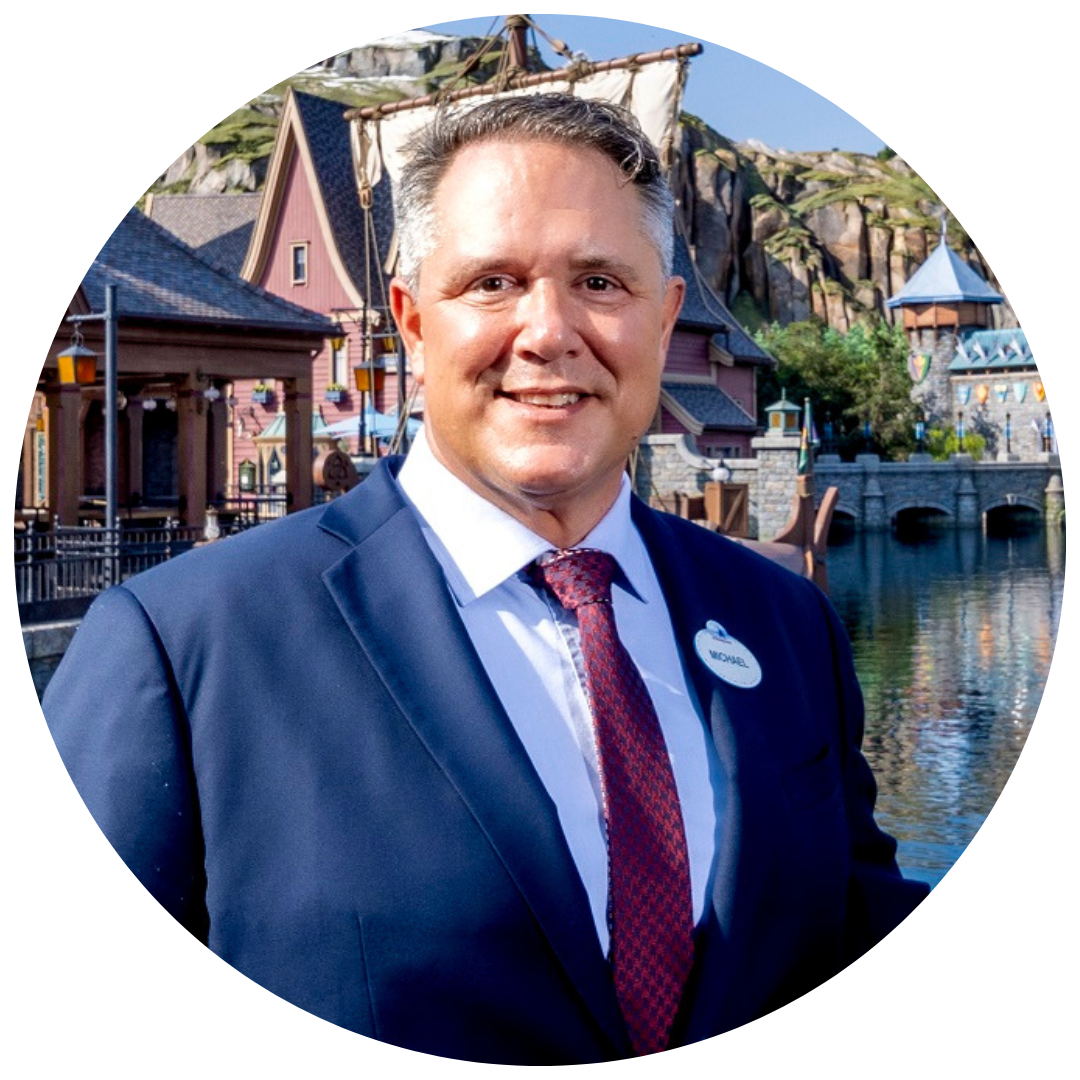
Michael Moriarty has been Managing Director of Hong Kong Disneyland Resort (HKDL) since December 2020. He brings almost 20 years of experience working for The Walt Disney Company in a variety of senior roles, including Chief Financial Officer (CFO) for HKDL from 2009 to 2012, and Finance Director of HKDL from 2006 to 2008. Michael is responsible for the overall management of the Hong Kong theme park and its three resort hotels, creating magical memories for guests from all over the world, while driving strategies that deliver business growth. A Hong Kong resident since 2006, Moriarty is actively involved in the local business community, and he and his family are frequent volunteers with local NGOs.
[1] SCMP Editorial, “Time to dust off plans for Disney expansion,” South China Morning Post, June 30, 2024, https://www.scmp.com/opinion/comment/article/3268585/time-dust-plans-disney-expansion