
By Edith Terry
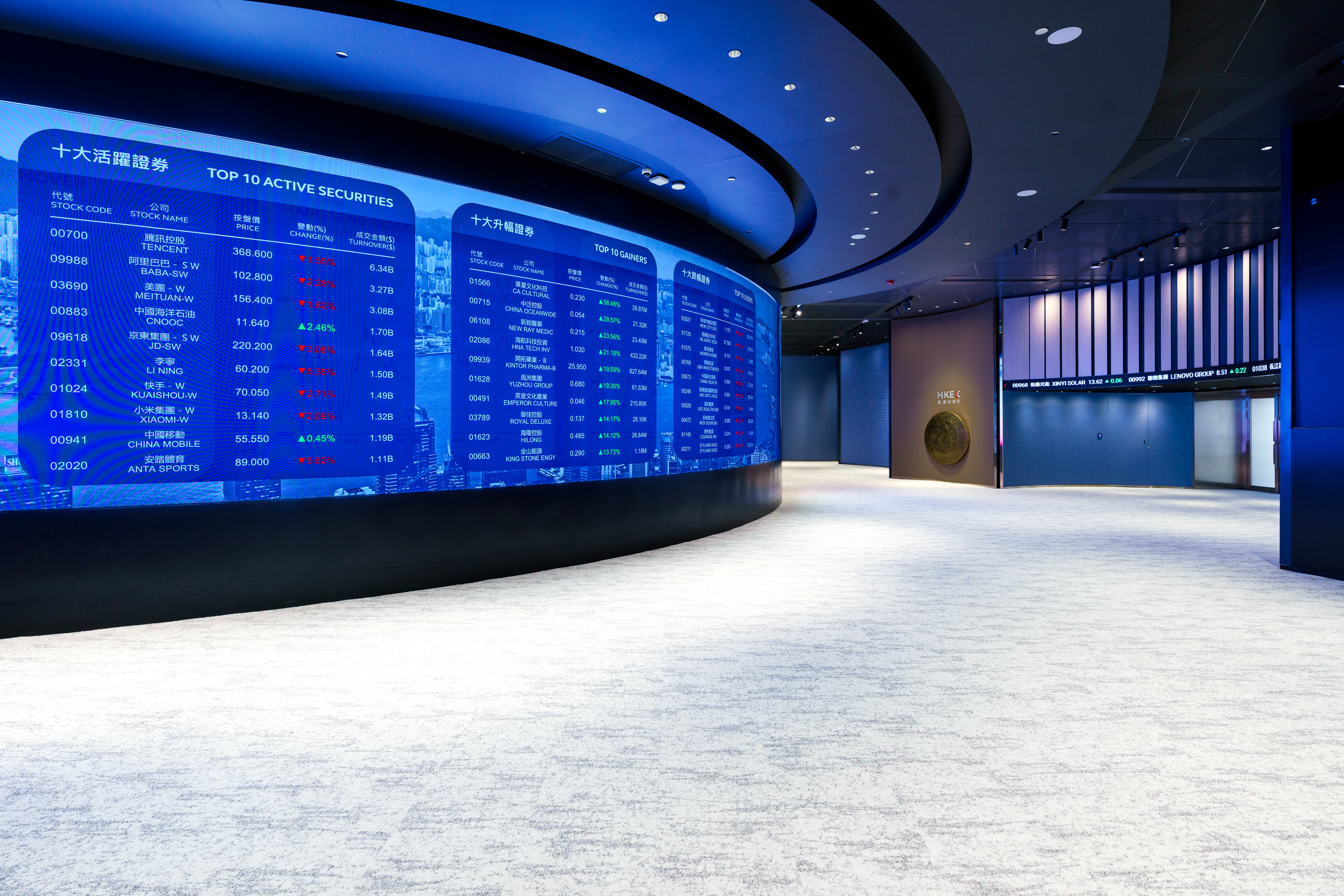
At the start of 2024, Hong Kong’s benchmark Hang Seng Index was in a three-year slump. 2023 was the worst year on record, with 29% decline. Observers resorted to Chinese astrology in a search for optimism. They needn’t have worried. The stock exchange is experiencing record trading volumes and is likely to lead global initial public offerings (IPOs) in 2025.
During Hong Kong’s bear market in 2023 and 2024, IPOs slowed to a trickle and China was declared “un-investable,” thanks to geopolitics and a slowing economy. Things could not be more different now. The current meme making the rounds among investors inverts the last two years’ catch phrase, “You can’t invest in China.” Now they are saying, “You can’t afford not to invest in China.”
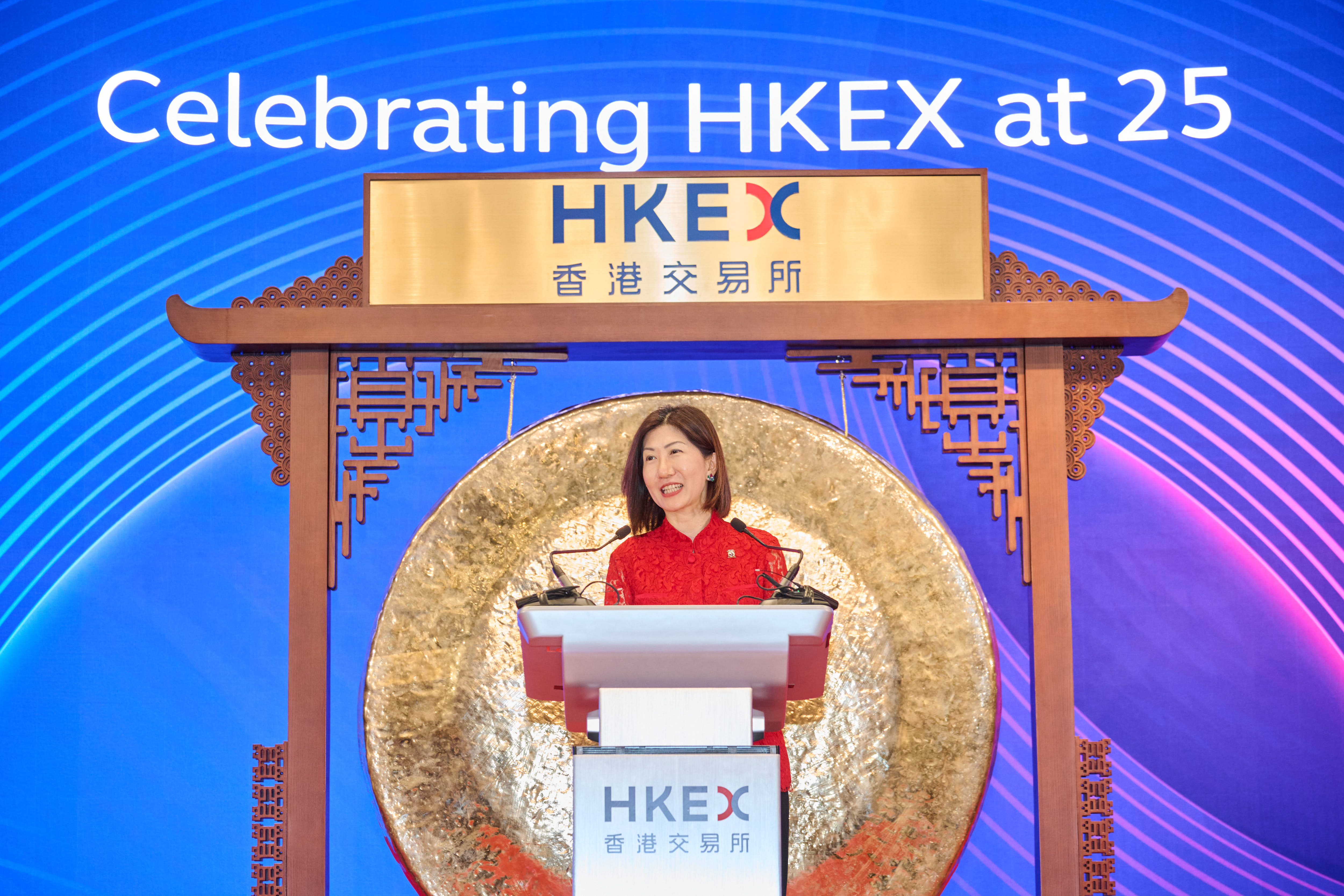
Presiding over the rally is Bonnie Y Chan, who became CEO of Hong Kong Exchanges and Clearing Limited (HKEX) in March 2024. She is the first woman to serve as CEO of HKEX and the first internal appointee, reflecting the diversity of the exchange as well as other financial institutions in the city. She belongs to a group of over 60 women CEOs in the financial industry in Hong Kong.

“I really do find this very, very special, the ability of Hong Kong as a place to groom so many talented women,” she says. “There is no glass ceiling, and they can rise to the very top. It’s a good feeling to be the first female CEO of HKEX. But I would also say the way that Hong Kong has developed as a market is very inclusive.”
Fortune magazine called her “the city’s second-most important financial ambassador, after Financial Secretary Paul Chan.” When asked why HKEX has been able to take advantage of a wave of new listings and frantic trading despite ongoing geopolitical headwinds, her response is diplomatic.
“From a geopolitical perspective, there are a lot of challenges,” she says. “And that continues to be the case. If you ask me, however, Hong Kong has proven time over time that we have the resilience to calibrate, adapt and adjust to different market conditions,” she says. “I’ve been in the market for over three decades by now, and the ability of Hong Kong to find ways to stay relevant is quite spectacular.”
Since 2018, the exchange has conducted a series of market reforms, including investing in the technological infrastructure that is invisible to outsiders but hugely important to investors. Chan has been one of the drivers of those reforms.
From bear to bull
With 80% of its market capitalization in China-related firms, Hong Kong has been the beneficiary of a surge in trading as well as a long queue of IPOs, including the world’s largest listings so far this year. HKEX is on track to become the leader in IPOs globally in 2025 for the first time since 2019. According to Pricewaterhouse Coopers (PwC), the exchange may see as many as 100 IPOs raising HK$220 billion (US$28.2 billion). As of the end of August, according to HKEX, 59 companies raised HK$134.5 billion in IPOs, nearly six times more than in the first eight months of 2024, and more than each of the previous three years.
The surge in IPOs and follow-on listings has seen Goldman Sachs, Morgan Stanley and other global banks pocket billions in fees. As of July, JPMorgan Chase & Co had expanded its Asia-Pacific headcount by 20% and was planning to increase its corporate banking headcount by another 20%. “It has come at a challenging time for some within the industry, and we think that is a great opportunity for us to expand,” a senior executive told the Reuters news agency.
Hong Kong’s equities market rebound is no accident, according to market observers. China has turned on the tap both for companies listed on the A-share market and for first-time listings since mid-2024. Fears of being pushed out of US exchanges have spurred a steady flow of secondary listings of Chinese companies in Hong Kong. This has unleashed a wave of listings of innovative Chinese companies in technology and artificial intelligence, prompting investors to rebalance their portfolios.
In April 2024, the China Securities Regulatory Commission (CSRC) released a five-point plan to support Hong Kong’s status as an international financial center (IFC), including expanding its two-way Stock Connect scheme that allows mainland investors to invest in Hong Kong assets, as well as international investors to invest in China’s A-share listings.
This prompted a rise in IPOs last fall, which in 2025 has turned into an avalanche of new listings. Late last year, the invitation became even more direct, as senior central government officials encouraged Hong Kong’s role as a gateway to international capital.
China’s elite industrial companies and financial institutions need hard currency to expand globally, and given strict capital controls domestically, Hong Kong is the IFC of choice, where Chinese companies can raise capital under Hong Kong’s robust commercial law and expect the depth and liquidity that is not present elsewhere in Asia Pacific outside Tokyo, which is less friendly than Hong Kong to non-local listings.
While geopolitics and mainland Chinese policy lie outside its control, HKEX has been ready for the rally in trading and the renewed wave of IPOs, from mainland China as well as elsewhere in Asia. Recent non-Chinese IPOs include three Singaporean companies, one Thai company, and one from Kazakhstan.
While this may seem like a trickle in comparison to the mainland Chinese listings, it signals to regional companies that Hong Kong is open for business and contributes to the long-term sustainability of the exchange. This has been reinforced by agreements with stock exchanges in the region as ‘recognized stock exchanges’, allowing cross-listings with 20 exchanges in Thailand, Singapore, Indonesia, Saudi Arabia and Abu Dhabi. HKEX has announced it will open an office in Riyadh, Saudi Arabia, to expand its presence in the Middle East and strengthen connections between China and the Gulf region.

Singapore, which once was seen as a possible alternative for Southeast Asian listings, has stalled badly, with an expected 10 IPOs in 2025, a number that represents a rebound from 2023 and 2024.
Prior to the wave of Chinese H-share listings that began in the 1990s, HKEX was a backwater even in regional terms, far overshadowed by Tokyo. It served small brokers on the sell side and family-owned companies with limited public floats on the buy side. The arrival of Chinese listings — first state-owned enterprises, then banks and financial institutions, followed by private companies — changed HKEX forever, but it took a while for the institution to evolve to catch up with the changing market landscape.
Its GEM board, the Growth Enterprise Market, was originally designed for startups, but had such high revenue requirements that it never went anywhere. It peaked in 2001 but has seen little volume since. As a result, despite Hong Kong’s stated aims to become a counterpart to Silicon Valley, as a start-up ecosystem, it ranks well below its counterparts in mainland China and other cities in the Asia-Pacific region, according to research platform Start-up Blink. And in terms of the unseen mechanisms behind the trading floor, HKEX’s trading infrastructure was considered outdated.

Chan’s “three Ps”
With Chan in the driver’s seat, watch for speed. She is prioritizing three buckets which she refers to as “three Ps” – participants, products and platform.
With the first P, participants, Chan has been working to make sure that the market is as inclusive as possible. Hong Kong has traditionally been able to attract investors from around the world but has had more difficulty attracting issuers from outside mainland China. That is changing partly because of its unique Stock Connect program, which allows non-Chinese issuers to participate in capital flows from the mainland as well as Hong Kong and international investors to invest in China’s A-share markets.
“It’s a unique feature that no other exchange in the world can offer,” says Chan. And it has helped to attract companies to list in Hong Kong, including some unusual plays like Jiaxin International Resources (3858.HK), a tungsten mining company which in August debuted simultaneously on HKEX and the Kazakh stock exchange, Astana International Exchange (AIX), raising HK$1.2 billion.
Established in 2014, Stock Connect has gradually expanded its quotas. Average daily turnover of the ‘Southbound’ channel of Stock Connect reached HK$110 billion in the first six months of 2025, three times the previous year, and accounting for 23% of the total trading volume in equities on HKEX. The exchange is discussing the introduction of Renminbi counters for Southbound Stock Connect so that Mainland Chinese users will not be subject to foreign exchange risk when they make their trades, which now have to go through foreign exchange currency conversion twice, both when they place their orders and when they repatriate earnings.
“This year we were very pleased to see a strong return of international investors, and they featured very prominently in our IPOs,” says Chan. “We saw subscriptions from investors across all regions, right from the US and Europe to the Middle East, Southeast Asia and Northeast Asia,” Chan says.
Chan’s second bucket, products, is advancing with the first licensing of stablecoins expected early next year and sandbox experiments with tokenization of Real World Assets and financial products under the aegis of HKMA. In turn, HKEX is broadening its suite of products to expand to new asset classes beyond its core equities franchise, it says. “Investors today are looking for a broader range of products — from bonds and commodities to emerging assets like cryptocurrency. While these haven’t traditionally been part of HKEX’s offering, we’re working to diversify our product suite to better align with different investment strategies and appetites,” Chan said.
Platforms are also top of Chan’s priorities. “What I mean by platforms is that we have to remember that operating a stock exchange is operating a piece of infrastructure,” she says.
As markets around the world move toward T+1 settlement — with the US leading the way — HKEX is preparing the Hong Kong market to make the transition, which will mean that trades are settled in 24 hours rather than 48. It has already extended derivatives trading hours and introduced severe weather trading to meet evolving market demands. Additionally, HKEX is building its own derivatives trading platform, the Orion Derivatives Platform, which is expected to be ready to support T+1 settlement by the end of 2025, though the actual timing of T+1 implementation will depend on more than technical factors.
“This is a place where investors and companies conduct their business, be it fund raising, be it trading, or be it risk management. Therefore, our ability to provide an efficient platform, where they feel safe and don’t need to worry about settlement or clearing, because it will all be taken care of. And to do that translates into a lot of investment on our side, optimizing our operations and making sure that we track the developments in capital markets.”
Turning point
According to Chan, the main turning point was in 2018, prior to her tenure, as the exchange began to recognize that its listing rules were poorly suited to a new generation of technology companies. The GEM board failed largely because its hurdles for start-ups were too high. Now the focus has shifted to the main board and creating rules for so-called “pre-revenue” companies.
The reforms started in the biotechnology sector, with the introduction of so-called Chapter 18A rules that required a core product beyond the concept stage, minimum market capitalization of HK$1.5 billion, and at least two years of operation under similar management. This was followed in 2023 by a new set of rules for pre-commercial “specialist technology” companies, under Chapter 18C. These contrasted with the main board listing rules of at least HK$500 million in revenue for the most recent financial year, aggregate profit of HK$80 million for the first three years, and a market capitalization of HK$4 billion.
“These companies have very different funding needs from traditional companies. Our listing rules used to require companies to have three years of profitable track record before they could come to list. However, biotech companies, for instance, are very R&D intensive, often investing for years before earning any revenue, let alone reaching profitability.”
“If we held on to our old listing framework, there would be a mismatch in terms of what our rules allow and their funding needs. So that set of reforms was quite revolutionary in the sense that we moved away from this requirement to meet their innovation journey.”
By the end of August, 77 biotech companies had raised HK$130 billion since the end of 2017. “These companies are thriving, driven by their ongoing development of innovative drugs and groundbreaking inventions. And with the success of Chapter 18A, three years ago we embarked on another journey in a similar vein. We asked ourselves what might be the next batch of companies with the highest potential, that will match investors’ appetite? We identified specialist technology as that area,” Chan said.
Specialist technology in HKEX’s definition is “anything from artificial intelligence to electric vehicles to new energy to new materials to agricultural tech,” Chan says. “Basically, hot technology, that has a similar need to the Chapter 18A biotech companies. They need a lot of money for R&D, and the best time for them to tap the public markets is while they are still in that phase, pre-revenue, pre-commercialization.”
Among the latest reforms is one designed to provide direct support for pre-commercial high-tech companies to list in Hong Kong. Launched in May, HKEX’s TECH channel offers pre-application guidance and confidential filing for companies in innovative sectors. Chan believes this initiative will help drive the next wave of market growth, attracting high-potential firms from fast-growing industries.
Can Hong Kong become the dominant regional exchange?
Mainland Chinese policy on offshore listings is overseen by the CSRC and is not necessarily forever. It has changed from time to time and may change again, depending on central government priorities. Hong Kong will need to grow beyond Mainland Chinese listings to grow, let alone become a rival to New York.
This is clearly on Chan’s mind. “We have already welcomed a few international companies this year,” she says. Many of them were attracted to list in Hong Kong because of the prospect of being included in Stock Connect, which was made possible in 2023. Even if you are an international company, so long as you’ve listed on a primary basis in Hong Kong, you can still be included in Stock Connect, and therefore southbound money can trade that stock,” she says.
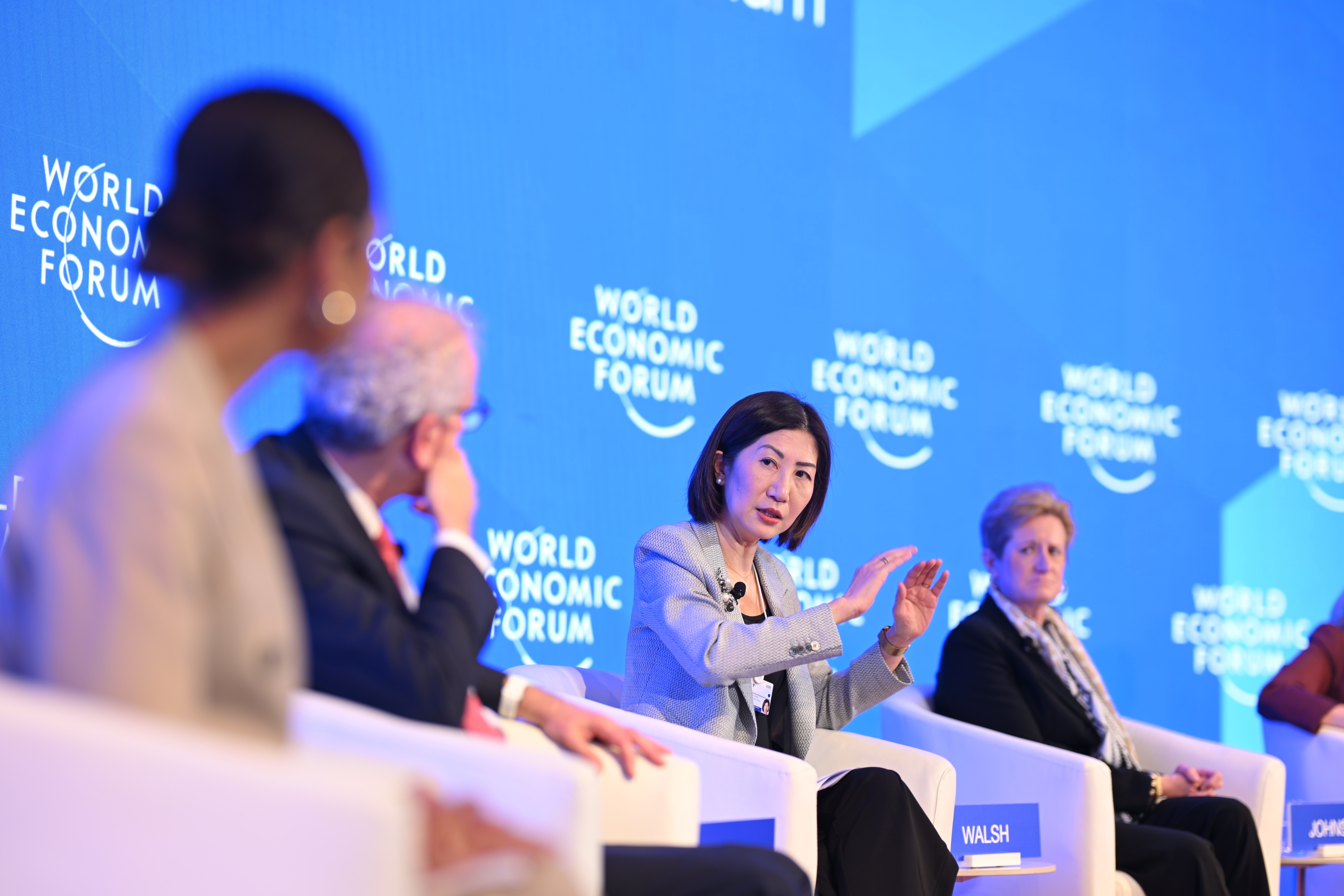
“If you look at Hong Kong as a stock market, we have very good liquidity. We’re one of the biggest amongst all the global exchanges. And liquidity is very important for companies, because the journey does not stop with their IPOs. As you grow your company, you need to repeatedly go back to the capital markets and do follow-on offerings. The ability to do so will depend on whether or not the stock exchange that you are listed on is deep enough to provide you with that capital raising possibility.”
“And so, when we look at the Asian space, we discovered that a lot of very promising, fast-growing companies might have initially listed on their domestic exchanges when they did their IPOs but have since outgrown them. If your company wanted to raise US$200 million, domestic exchanges in the region can support that level of fundraising. But as you grow, you might want to tap the market for US$1 billion.”
“There are not a lot of exchanges around the world which can support fundraising of that size, and therefore, as we go about promoting Hong Kong as an IPO market or fundraising market, and attract listings by overseas companies, we will focus on ones which we believe we are in a better position to serve as they continue their growth journey. And I think we’re quite fortunate, with the depth of HKEX and our markets, we are in a good position to do so.”
An ability to take curve balls
Chan’s career — spanning legal practice, investment banking and the stock exchange — has been anything but linear, but the zigzags themselves have strengthened her ability to navigate complexity.
Equipped with a law degree from the University of Hong Kong and a master’s in law from Harvard, Chan worked as a lawyer in the US and Hong Kong, where she also served as in-house counsel at Morgan Stanley. After joining HKEX in 2007 as Head of IPO transactions and listings, she went back to private practice with Davis Polk & Wardwell before re-joining HKEX in 2020 as head of listing.
As a member of the Financial Services Development Council between 2015 and 2018, and on its board of directors between 2019 and 2020, she produced working papers on market reforms and Hong Kong’s role as a capital fundraising center. At her second stint at HKEX, she started to put some of those ideas into action.
This included the introduction of SPAC listings in 2022, followed by Chapter 18C in March 2023, enabling pre-commercial tech companies to list in Hong Kong. Earlier, Chapter 18A — launched in April 2018 — paved the way for pre-revenue biotech listings, making biotech the fastest-growing healthcare subsector at HKEX, the world’s biggest biotech listing venue so far this year by funds raised.
And she championed digitization, launching the Fast Interface for New Issuance (FINI) system for IPO market participants in November 2023, shortening the IPO settlement cycle from five days to two. In May 2025, the exchange launched the Technology Enterprises Channel (TECH) adding confidentiality and mentoring for pre-application biotech and specialist technology companies. In just a few months since the launch of TECH, 50 new biotech and specialist technology companies have submitted listing applications to the exchange.
“In the current environment, what we manage to do very well is to play the role of a superconnector,” Chan says. “Against the backdrop of all the talk about de-coupling and the geopolitical tension, there is still a desire by market participants, investors and corporates, to stay connected. This is very basic. The function of a capital market is always to match capital with opportunities. And that is a role that we, at HKEX, continue to place a very strong emphasis on, and we want to play it well.”
“There are things that I do not control, or have very little control of, [like] the macro conditions and things like that,” Chan continues. “And there are things where we are more in the driver’s seat.”
Covid-19 hit Hong Kong in early 2020 in the middle of audit season. In her capacity as head of listing, Chan worked with the Securities and Futures Commission of Hong Kong to offer waivers and exemptions to some 1,800 affected companies, with enough information to give the markets comfort that the audits had not been compromised. “You can’t assume that you can always do things the same way, right?” she told one interviewer.
And that could be a mantra not just for Chan and HKEX, but for Hong Kong’s future as it navigates the stormy waters that may lie ahead.
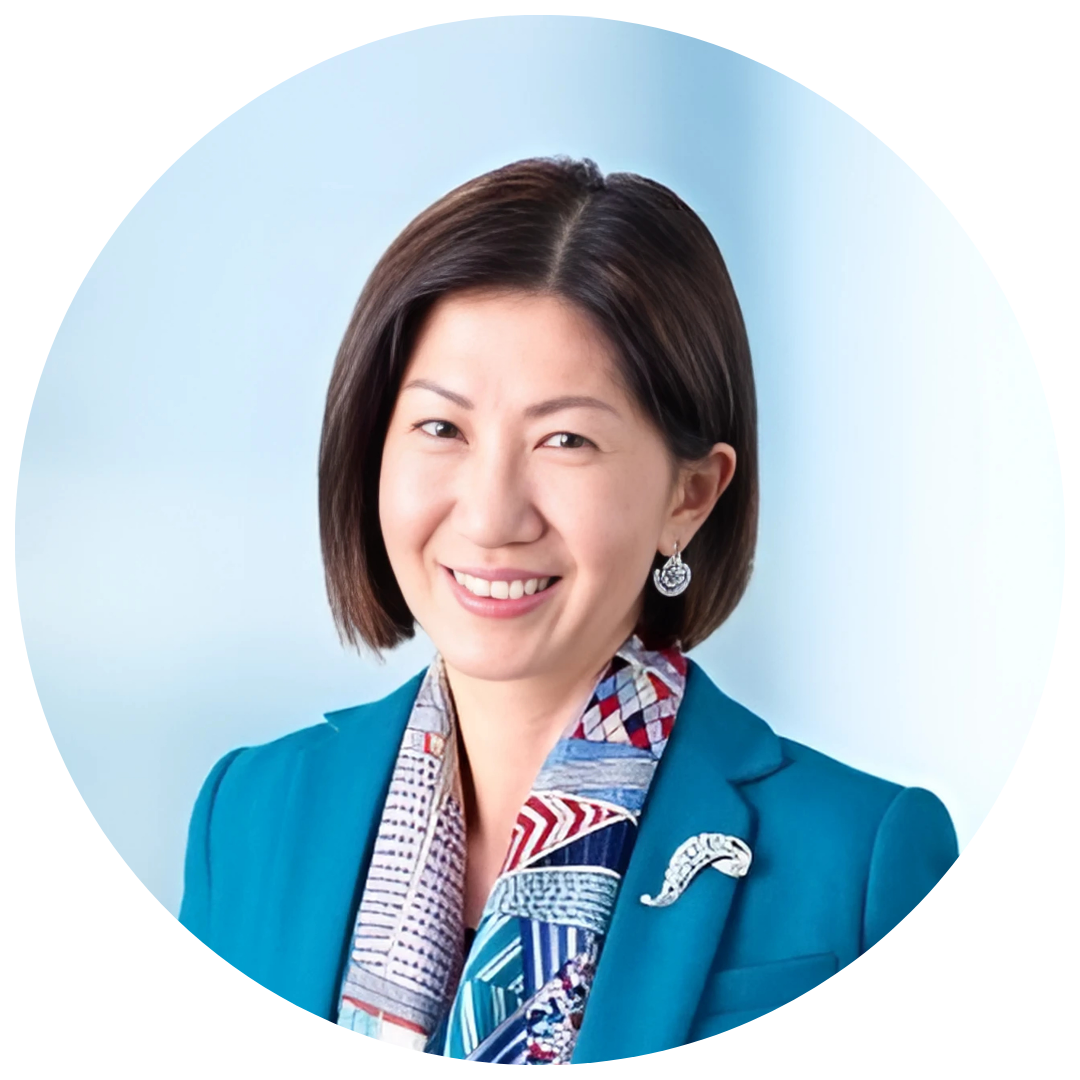
Bonnie Y Chan was appointed CEO of HKEX on March 1, 2024, after serving as Co-Chief Operating Officer, overseeing the Group’s key operational and strategic functions. She has held senior positions with international law firms and Morgan Stanley, as well as an earlier stint with HKEX as head of IPO transactions from 2007 to 2010, when she left to become a partner at Davis Polk & Wardwell before returning to HKEX in 2020. She has received numerous awards and was featured on TIME’s list of the World’s 100 Most Influential People of 2025, Fortune’s 100 Most Powerful People in Business in 2025 and Most Powerful Women in Business in 2024. Chan holds a Bachelor of Laws from the University of Hong Kong and a Master of Laws from Harvard Law School. She is admitted as a solicitor in Hong Kong and an attorney at law in New York State.