
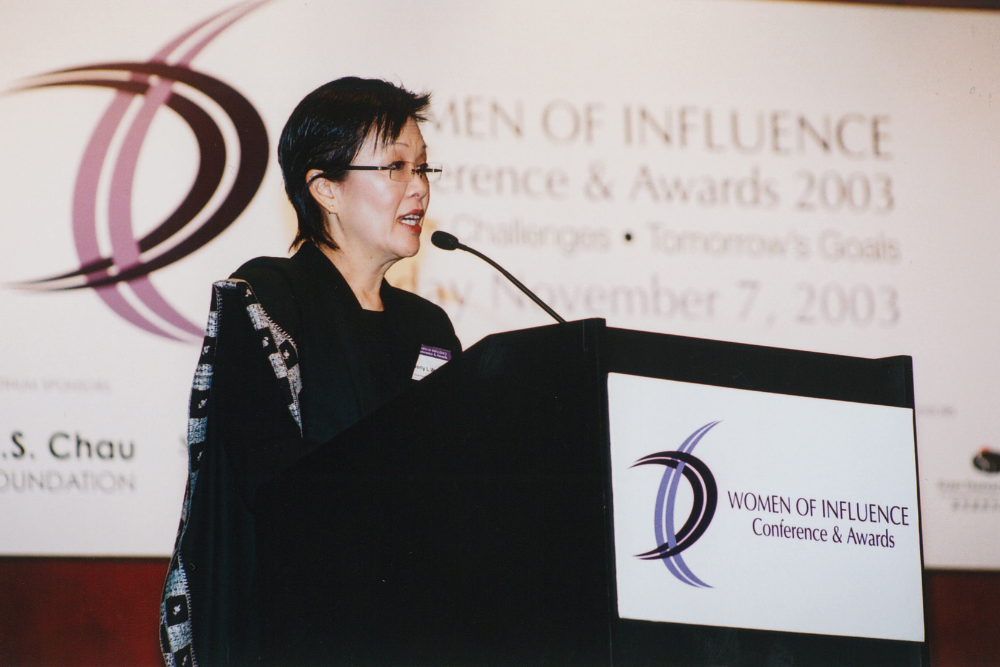
When Hawaii native Beverly Sunn arrived in Hong Kong in the early 1980s, there was no relocation industry. Armed only with a real estate broker’s license, she navigated an environment in which she, as an Asian-American, was deemed by her first employer to be unsuited to deal with multinational executives. She proved them wrong by establishing one of Hong Kong’s best-known relocation and real estate services, Asia Pacific Properties in 1985. Since then, she has worked with some of the largest global companies in Hong Kong, China and the Asia-Pacific (APAC) region and become a voice for the advancement of women through her work with the Women of Influence (WOI) conference, her brainchild. She initiated WOI as a board director of International Women’s Forum Hong Kong Chapter and the American Chamber of Commerce in 2004. At the 20th anniversary of the WOI conference in March 2024, she was awarded the organization’s life-time achievement award. Here she talks with AmCham HK e-Magazine editor Edith Terry about her journey.

Q. What brought you to Hong Kong in the first place?
A. My ancestors come from Zhongshan, which is in southern China, and migrated to the 50th state, Hawaii. Like my parents before me, I feel fortunate to have grown up in Hawaii, one of the most diverse communities in the world. Even today, the entire state is a veritable utopia of diversity with the largest multiracial population in the United States. To this day, that backdrop played an instrumental role in shaping both my personal and professional life. As a university student, I elected to go to Boston, a city steeped in history, culture and music. At Boston University, I majored in psychology as an undergraduate and then crisis management intervention in a two-year master’s program. After graduation, I worked in a variety of settings – a medical center in Boston treating families with physical, emotional, and mental challenges that included terminally ill youngsters, physically abused children and spouses and children with psychiatric disorders; a school for the emotionally challenged youngsters; a settlement house in an impoverished community and at a child abuse center. Eventually I found my way with my spouse to Hawaii, where I had three children. I was a trailing spouse in those days, and it was my husband who wanted to expand his horizons and come to Hong Kong, in 1981.
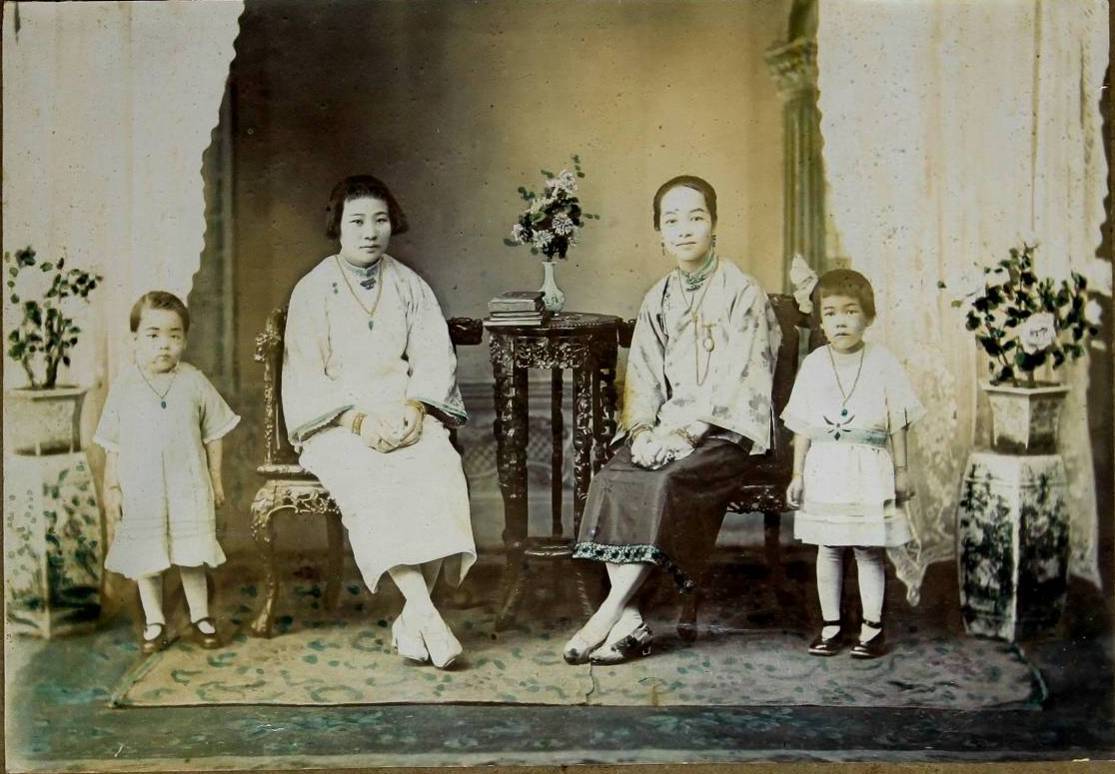
There were tremendous challenges in that transition in adjusting to a new environment, including a divorce and the loss of a parent due to lack of understanding of medical resources available in Hong Kong. I have to say it was so foreign to me to move from an environment such as Hawaii or the US mainland to come to Asia. As a result, I decided I wanted to get back into the workforce. For a short time, I worked for a major real estate company in Hong Kong. By then, I already had my real estate broker’s license from Hawaii, thinking it was a part-time occupation as we reared our children. All the multinationals were moving into Asia, and I had some idea of what needed to be done through my own experiences and challenges. But the firm thought that, if you were Asian, you couldn’t be supporting foreigners.
Q. How did you set up Asia Pacific Properties and APP Mobility?
A. So here I was, Asian in ethnicity with a strong sense of business and personal ethics, and I wanted to train people who were bilingual, who understood the culture and the environment, and was told it wouldn’t work. Frankly, that was quite a revelation. I realized that there was no room for me in the company, so I decided to start off on my own. In 1985, I set up Asia Pacific Properties, which was the pioneer in Hong Kong in relocation services. I took the model to China in the early 1990s when very few wanted to venture into China. We were one of the first entrants if not the first to be granted a license for relocation and real estate services. The licensing process took two years as officials at the time thought that “relocation” meant displacing families from their homes in China rather than finding places to live for multinational executives.
At the end of the day, when newcomers arrive in Hong Kong, they need to find a home and a residence. With my broker’s license, that focused on law and ethics, real estate was the platform, but beyond that, it was to support people through immigration, schools, children with special needs, orienting them to the community and helping identify their residence. We provided an array of settling in services and helping people to have adaptive skills into a new culture. The philosophy behind that was, if someone from another culture can help you integrate into a new community and a new culture, you’re doing it based on trust. You break barriers and biases. It is about developing individual understanding of the new environment and embracing diversity of cultures and peoples.
Q. Can you tell us about pioneering the relocation industry in Hong Kong?
A. There was no such thing as “relocation services” at that time, in the mid-1980s. I did it as a commitment to ensure that families wouldn’t have the same challenges that we as a family faced. In those days, there were no licensing laws at all in real estate, so anybody could be in the industry. I came with my real estate broker’s license from the US, where we focused on good business practices, transparency and ethics. I used to go back to the US to take courses to ensure that could mentor and coach my colleagues. I would say I was very determined. I don’t think it was just ambition, but I was determined that if we do something we should do it correctly.
After that, I would say I had fabulous opportunities. I was given the opportunity to develop relocation programs for the Walt Disney Company, British Petroleum, Pepsico, Volvo and Conoco Philips to name a few. Historically, these companies are inclusive in their philosophy and practice with high standards. They had the confidence to give us cart blanche to structure and design their programs in Hong Kong China and the APAC region.
Hong Kong is very open to global companies, and with that openness, global companies, including US companies, can and have infused their values into the local landscape and encouraged professional development in the careers of the workforce here. There are so many unique and special aspects of Hong Kong, because of its history, culture and agility, with a populace that is welcoming and supportive with strong values of honesty and integrity. Hong Kong has always had a can-do spirit, and the openness to bring in nationals from global companies to Hong Kong, based on having the very important rule of law.
My experience here has been extremely positive. We’re very fast in decision-making, more so than in some of the other cultures in Asia Pacific that may be more hierarchical or resist change, so that it will take longer to provide the kinds of services we would like to. But Hong Kong, because of its compactness, its agile mentality, and receptiveness to working with people from different cultures, has worked very well for us.

Q. What is the business model at Asia Pacific Property/APP Mobility?
A. The basis of our group is real estate. Real estate lies behind what we do – due diligence in the community and representation in a legal transaction that transfers monies – and is responsible for the extraordinary cost of doing business here. It’s not in management services or moving goods. It’s the ongoing cost of real estate. And because people don’t understand that they don’t pay attention to it. So that is where we are very focused as a professional group. We’re not agents, we’re consultants. With our clients, we serve as consultants to sellers.
We represent quite a few corporations as well as individuals of high net worth. When I first entered China, we were asked by companies, especially oil and gas companies, to represent them and their markets, to provide all their relocation services as well as real estate representation. It was our professional expertise in that very costly sector, real estate, that gave our clients comfort to work with us.
I took the entire Volvo Group from Gothenburg into Chengdu and Shanghai. They had no experience in China. The group decided they would manufacture in China, so they moved the entire executive team to China, hundreds of people, to set up factories. We also represented British Petroleum at the time. Disney was growing and continuing to develop at that time, and we represented both them and individuals applying to work in the region for Disney.
Over the last 15 years, we have provided services in the entire Asia Pacific region. In this past year, my team and I have spent a tremendous amount of time moving a very large corporation into Taiwan. We’ve moved groups into Singapore, Japan and Korea, tens to hundreds over time. We manage the movement into these countries, working either with our own consultants or partners that we have selected, and manage and oversee all the way through finding the homes for these individuals who need a place to live when they transfer.
Bear in mind that five of the major crises in life are death, moving, major illness or injury, divorce, and losing your job. Certainly, when you’re moving from city to city, it’s a crisis. When you’re moving from country to country, it becomes even more critical that you have support.
Q. Was Hong Kong the right place to start your business, given its perennially high real estate prices? And did you ever think of going into a less challenging industry?
A. Hong Kong has always been one of the most expensive cost centers for corporations, and that cost comes from the cost of real estate. That’s the cost of doing business here. But we do have a tax differential for individuals and corporations, which can’t be overlooked. In some ways, it equates to transport costs you would experience elsewhere. We’re not driving hundreds of miles to work.
By the time I moved here, I had gone from working with a child abuse unit in Hawaii, and then had a family of my own, and went into real estate and obtained my broker’s license, so I was practicing in real estate. That afforded me the opportunity to have more flexible hours, because I had a family of three children. As it turns out, there’s no such thing as part time work in Asia. When I moved here, I worked with people who had extraordinary biases. There was no professionalism in real estate. It was a very transactional industry, and it didn’t sit well with me, because there was potential for professional services in real estate. That was at the onset of the real estate market as well, as it began a trajectory to the world’s most expensive city for real estate, but I was more interested in supporting families. It was a personal commitment that no family should have to be as challenged as we had been.
For example, what schools were available here, how the infrastructure worked, whether there was home delivery for groceries. The simplest of things, yet all these had been on our own discovery tour. As we adapted and adjusted to the environment, there were so many wonderful people who reached out to us, but it took time to create relationships here and to understand and navigate what does exist, where you go for medical assistance, which hospitals provide you with emergency services, the differences between public and private hospitals.
Also, not having the language. I have a deeper comprehension of Cantonese, but I come from an environment where we spoke English.
Q. What were some of the adaptive skills that helped you survive?
A. I do feel that that optimism is very important and being creative, seeking solutions in changing environments, having the ability to adapt and to help your clients adapt, to change. And if you can do that, which you must, to survive and to thrive, then I think it’s a fascinating landscape. Women tend to have better adaptive capacity than men, because throughout their lives, they play many roles, and their roles change over time. If you’re working in a professional community, you still must maintain your family unit, which is the basis of a healthy society. And I don’t think it’s negative, but men tend to have more of a singular mindset through their work commitments and don’t have to adapt to various changes that women go through physically, having a baby, having a child, having to take care of elderly parents. It’s a daunting experience that also gives you also strength.
Q. How do you view the status of women in business in Hong Kong?
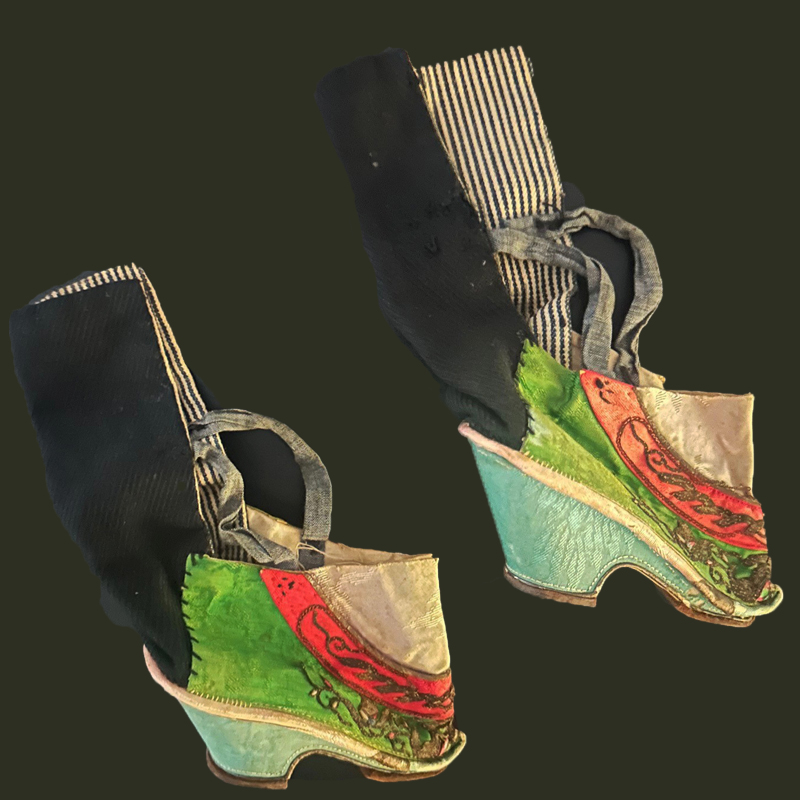
A. My grandmother’s shoes were only three inches in length as her family carried on the tradition of footbinding. My foot is eight inches in length but when we speak about women having come so far, I still think we have a long way to go. We have only 12% of women serving on boards of publicly listed companies in Hong Kong. In the US, we have 20%. In Norway, 35.5% of women are on boards. And this is because Norway mandated that by 2028 all boards must be at least 40% women.
Both men and women can be P&L (Profit and Loss) oriented. But I think women carry a more humanistic quality. They bring a different decision-making process into the mix. Women are more holistic in their approach, and more inclusive in the consideration of human capital. It goes beyond the P&L. They can offer empathy to boards, which I think is a very important quality.
You don’t have quite the impact of the Equal Opportunity movement in the US that began in the 1970s. There’s no ‘woke’ or other motivation in Hong Kong to include women at higher levels in business or government. The whole issue of getting women on boards is a great example. Hong Kong Exchanges and Clearing finally caved in and said, OK, we’ll have this rule to make listed companies have at least one woman on their boards by January 2025.
I think we are starting to see a change. Not just the American Chamber, but other business chambers are bringing more women onto their boards. You have The Women’s Foundation, a non-profit dedicated to improving the lives of women and girls in Hong Kong, through research, education and advocacy, and community programs, The American Women’s Association which is open to all nationalities and the Hong Kong Women’s Development Association. All these programs look to promote women in a very constructive way. Hong Kong is quite special. It’s more open than many other communities. And just remember, we’re working with a traditional culture where women’s role was to stay at home taking care of families. Luckily, we have the opportunity of live-in helpers, and our domestic helpers have been really very important to the success of families and women, who would not otherwise be out in the workforce.
US corporations have some of this built-in, long before Diversity, Equity and Inclusion (DEI) and Environmental, Social and Governance (ESG). It’s part of the foundation of their organizations, and frankly, it was because of this that I was able to provide services to major companies such as Disney, Automatic Data Processing (ADP), Pepsico, Wells Fargo, Blackstone and others. These are male-dominated businesses, at least oil and gas, and they work in very different environments. It’s been challenging, but that’s part of the joy of what I do. I create strategies to implement support services for their communities.
Q. Can you share about some of your own experience as a board director?
A. I just stepped down from a nine-year term on the board of Thomson Reuters Founders Share Company (TRFSC). This is a unique company which acts as a guardian to the ‘trust’ principles established by Reuters in 1941 to ensure their journalists would act at all times with integrity, independence and freedom from bias. It holds a “founders share” from when Reuters was publicly listed in the 1980s.It was Pehr Gyllenhammar, then chairman of the board of TRFSC, who flew to Hong Kong from the United Kingdom to interview me for the position on the recommendation of the Honorable Anson Chan, the first ethnic Chinese and woman to serve as Chief Secretary in both the British and Hong Kong government.
The board was composed of 16 directors from 12 different countries when I was asked to join it in 2014. They came from the worlds of politics, diplomacy, journalism, public service and business. We had the foreign minister of Denmark, the head of the journalism school in Colombia, and the former president of Finland. My name had been submitted to Pehr I believe on the basis that our business was highly ethical, and that we’ve been very sensitive in dealing with confidential information. We were a global player in Hong Kong, which in my opinion represented a microcosm of the global community and was ahead of its time in the 1990s.
When Pehr came to interview me, and subsequently invited me to serve on this illustrious board, it was very rewarding, given its intent. The trust principles were established in 1941 by the Reuters Group just after the outbreak of World War II. These are that all information should remain objective, truthful and delivered with integrity, without bias. These remained the core principles when Reuters was sold to the Thomson Group and became Thomson Reuters Corporation (TRI.US).
The great minds on the board come together to ensure that information is disseminated from Thomson Reuters with objectivity. I’ve had to do town hall meetings in many major cities to reinforce my commitment to these principles. And these journalists are phenomenal. So that was a nine-year journey that ended recently. It was quite an enriching experience, and my contribution was through my experiences and exposure to the Asia Pacific region and China.
During my term on the board, there were more females being invited to join. I was not the first, but there were fewer women than we now have. In 2015, the company appointed two-term president of Finland Tarja Halonen to the board as well as Ory Okolloh. Ory serves on the Board of Trustees of the Van Leer Group and is the chair of the Nairobi, Kenya-based Stanbic Bank Foundation. In 2023, Yuen Yuen Ang was appointed to the TRFSC board. She is the Alfred Chandler Chair Professor of Policial Economy at John Hopkins Unversiry and a leading expert on China’s political ecoomy and its relations with the US and the world.
Q. Can you share the beginnings of the Women of Influence conference in Hong Kong?

A. We can all be better contributors to bringing women to bringing women not just into the workforce but elevating their roles into decision-making and being on boards. I’ve been very active in the community. Twenty years ago, I started a conference called Women of Influence, and I did that through an organization called the International Women’s Forum (IWF), based in Washington, DC. As a board member of the Hong Kong chapter of IWF, it was open to my enthusiasm to find a platform to recognize accomplished and contributory women in Hong Kong. I invited the American Chamber of Hong Kong co-sponsor this concept, which they did, and the Women of Influence (WOI) forum in Hong Kong just celebrated its 20th year.
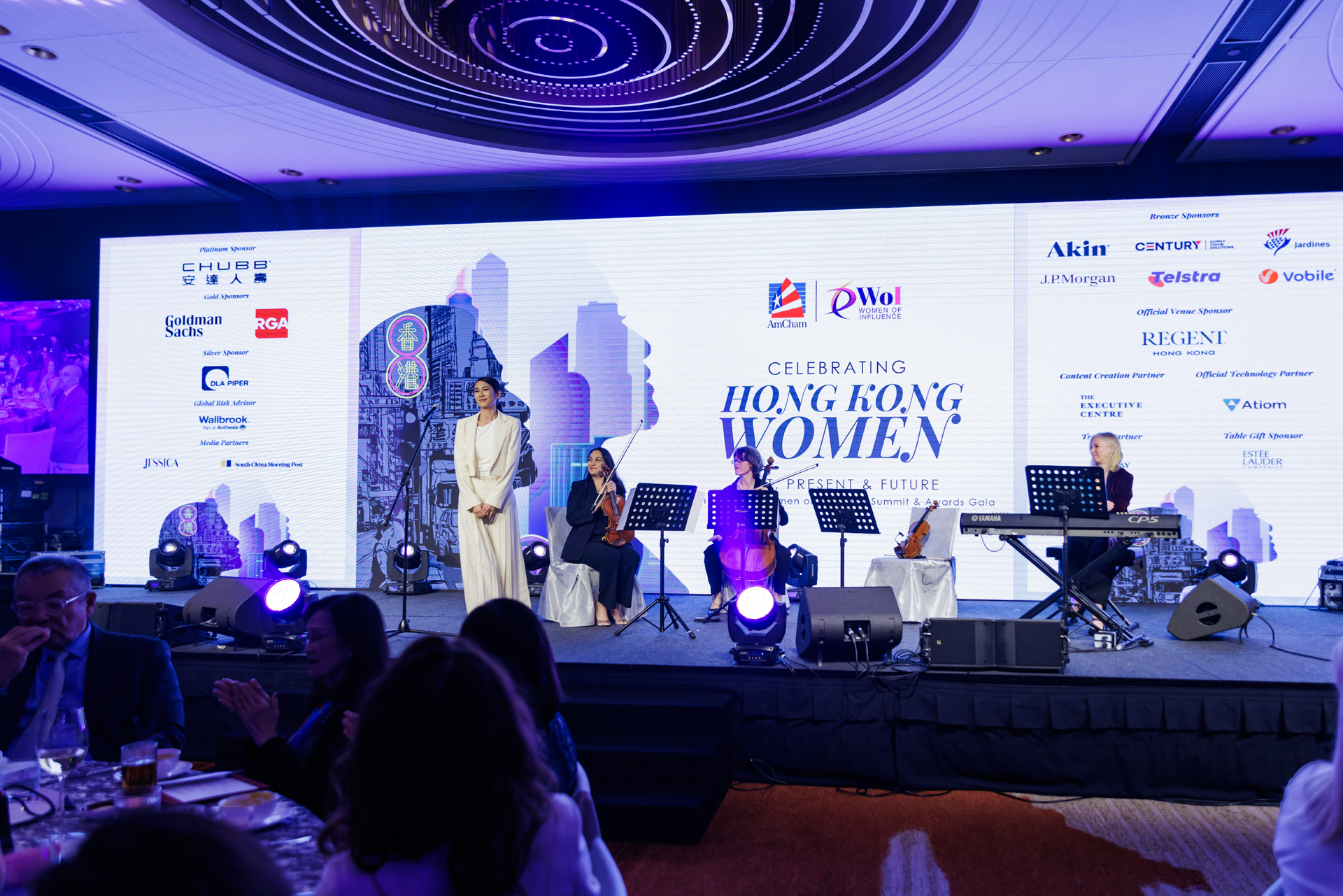
There are Women of Influence chapters in Australia, New Zealand Singapore and throughout the US, as we are headquartered in Washington, DC. The conference is organized by volunteers from the community of all ages and all professions. I want to credit AmCham and all the women who contribute hours of their time and dedication to the conference, which recognizes women from all sectors of the community. I may be biased but I do think WOI is one of the best-run women’s organizations in the APAC region thanks to its many volunteers and the support of the American Chamber of Commerce.
In 2004, just after the Severe Acute Respiratory Syndrome (SARS) when we held the first conference, we expected very little response, but we had a full house and it was very successful. Our keynote speaker was Anson Chan, who had been chief secretary until she retired in 2001. And we brought in Barbara Franklin, who had been Secretary of Commerce under George H.W. Bush and was the first female to lead a presidential mission to China in 1992. She was an International Women’s Forum member. I called Washington DC, and said, we’d like to invite Barbara Franklin to be our keynote speaker. At the other end, the administrator said, ‘What if she won’t come? Who else would you like?’ I said, ‘Barbara Franklin’. And she came, and we’re still in touch.
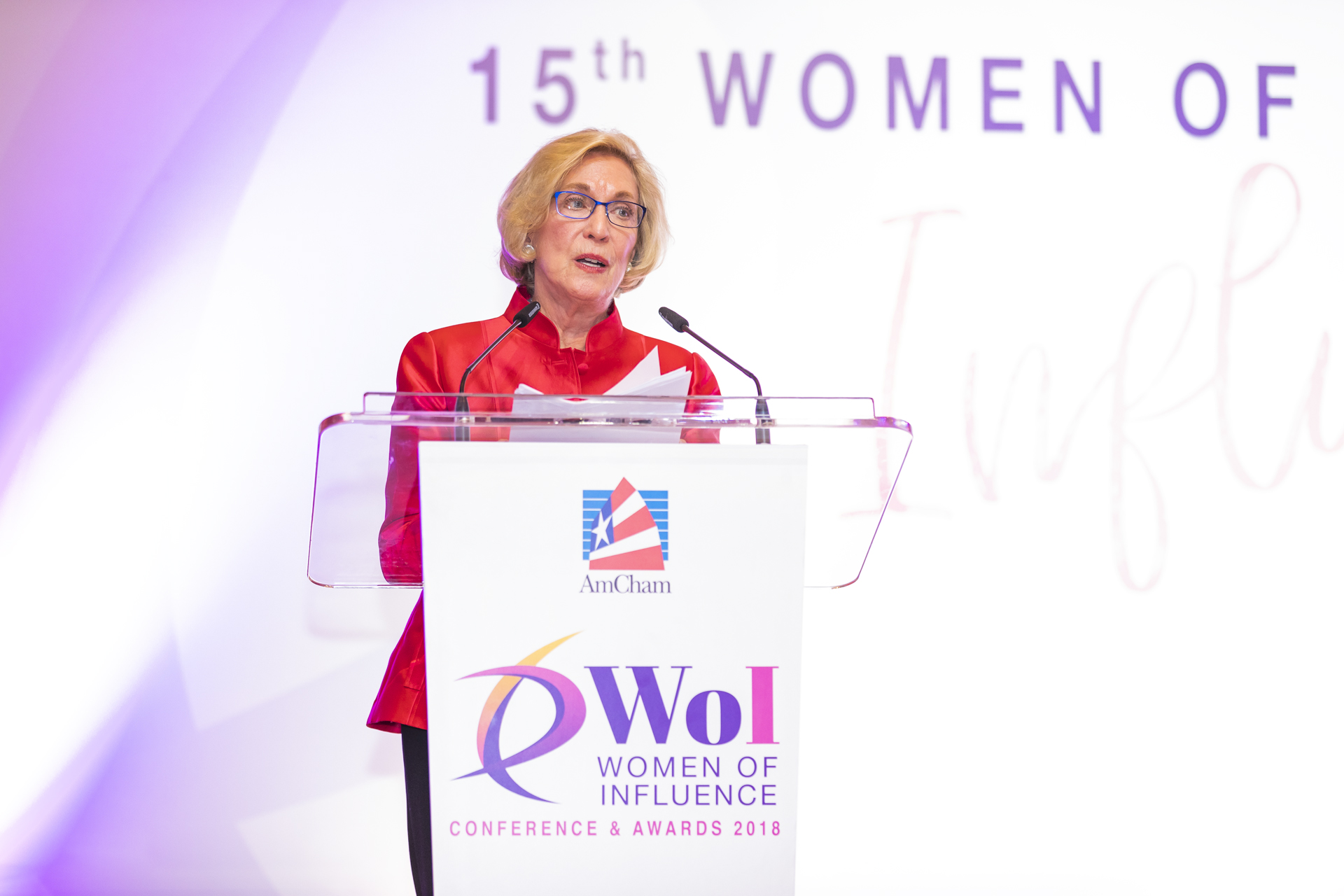
The WOI concept is to recognize women who make contributions to the community at large. I was looking to develop a platform of recognition. Candidates could come from all sectors of life. As it turned out, the 20th anniversary celebration of Women of Influence this year reflected that original concept.
It doesn’t necessarily mean you have to be a professional woman. You could be starting a grassroots organization. You could be a former domestic helper who started an organization to support other domestic helpers. You could be a volunteer. You could be in the arts. You could be a musician, for example, and make a major contribution to society. The music profession is a male-dominated profession. Only two or three percent of the conductors in the world are women. And this is what we looked to profile and showcase in 2024, not just professional women.
Q. What do you do in your time off, on weekends and holidays?
A. I’m a music lover, and so historically I have been a great fan of the Hong Kong Philharmonic Orchestra. I started a Friends of the Shanghai Symphony Orchestra group, with which I am still involved. And we support the orchestra through taking care of visiting artists and extend the hospitality of each of the symphonies through taking care of artists.
Tarmo Peltokoski, the new conductor of the Hong Kong Philharmonic, is exceptional. He is 24 years old, with the soul of a musical sage. The orchestra, I am sure, is excited about his presence. I think he will be wonderful for Hong Kong, and he will love being part of Hong Kong’s community
What I love is when I see eight-year-olds sitting in the audience, conducting in unison with the music. Attendance has increased to a wider spectrum of the community. I’ve been an avid fan of the Phil ever since arriving in Hong Kong, and I’ve seen the change in the audience, which is fabulous. We have so many younger people and college students attending performances.
When I’m in Europe, I just feel it’s a very different audience, and I am probably one of the younger ones in the audience. Not to mention the cost of performances. It’s very affordable in Hong Kong, partly because the government subsidizes culture. And you don’t have to drive an hour or two hours to get to a performance. And now we also have West Kowloon
I think Hong Kong has the makings of an important, major, international cultural center but only if we can continue to develop a plethora of creative and local resources in music, art and dance. I say this because the creative arts can be a vital force both in developing the untapped potential of individuals and bridging the gap between peoples and cultures worldwide. I’m very positive about Hong Kong, because it’s been very good to me, and I think I have also looked to contribute, whether it be to the development of women, volunteer work in community events or in supporting the Hong Kong Philharmonic. It’s a remarkable and unique city to have lived and flourished in – and for that, I am grateful.

Beverly L.W. Sunn is the founder and president of Asia Pacific Properties (APP) and APP Mobility, as well as a board member of OKAY.com. APP is headquartered in Hong Kong with offices in Shanghai, Beijing and Guangzhou. She has served on the International Advisory Council of Luxury Portfolio of the Chicago-based Leading Real Estate Companies of the World. She has also served on the board of directors of the Thomson Reuters Founders Share Company, the Members’ Leadership Board of NAI, a network of independent commercial real estate firms, and completed a three-year term on the board of directors of the Worldwide Employee Relocation Council. She has served on the Ladies Committee of the HK Philharmonic and is the founder of Friends-SSO of the Shanghai Symphony Orchestra led by Yu Long.
Sunn is a former president of the American Club of Hong Kong, the first woman to occupy the post in the club’s 85-year history, a former board member of the Hong Kong chapter of the International Women’s Forum, and a founding member of the Women of Influence conference in the Hong Kong business community. She holds bachelor’s and master’s degrees from Boston University.