

Sally Peng moderating a panel discussion at the 2025 China Conference.
July/August 2025 Issue
The last thing you should do if you are running a business is wait until the dust clears from incoming tariffs, sanctions and export controls from the Trump administration, says Peng, Senior Managing Director of Export Controls, Sanctions & Trade with FTI Consulting in Hong Kong, and AmCham Vice Chairman.
The background It was a different century when tariffs were gradually disappearing. Under the auspices of the World Trade Organization, when it was established in 1996, and a spaghetti bowl of bilateral and regional trade agreements, the consensus view was that trade should gradually move freely, with negotiated exceptions to protect infant industries in developing economies.
A chief financial officer of a multinational company could safely ignore tariffs as a cost of doing business. Tariff mitigation could be sorted out by someone like Peng, who has spent her entire legal career understanding tariff structures in complex Asia-Pacific supply chains and providing precise estimates of the costs of inbound shipments to the United States.

That was then. Now is the volatile, headlong onrush of ultimatums that began on “Liberation Day,” April 2, when US President Donald Trump announced “reciprocal” tariffs on 90 countries, including China and the European Union, with a 10% baseline tariffs on all countries. Tariffs on imports from China peaked at 245% before settling at 51.5% on average, after negotiations in London in June produced a temporary truce. China’s own retaliatory tariffs fell from 125% to 32.6% after London.
Other countries were given 90 days, until July 9, to strike deals to reduce their reciprocal tariffs, until new tariffs of 50% were declared on Brazil, together with a new package of 25% to 40% tariffs on 14 countries, including some of China’s closest trading partners on July 8. The latter were targeted at six member countries of the Association of Southeast Asian Nations (ASEAN) that have figured in new China plus one (or more) manufacturing strategies, as well as participants in China’s Belt and Road Initiative (BRI).
The latest tariff package, due to take effect August 1, was designed to force China’s trading partners to not transship Chinese goods with false claims of country of origin. On July 13, President Trump threatened duties of 30% on products from Mexico and the European Union, impatient with lack of progress towards a deal. Some deals have emerged, such as one with Vietnam on July 2 and with Indonesia on July 16, out of 200 that President Trump said he had negotiated, without further details.
What to do “When I first started doing international trade work, it was not tied to geopolitical issues,” says Peng. “Trade was driven by economic forces. It was too expensive to produce goods in the US, so they were produced in China, and as China became too expensive, labor-wise, production moved to Vietnam or elsewhere.”
“We call it supply chain for a reason, because everything within the chain affects everything else. Geopolitics are front and center for a lot of companies right now, and I see a lot of people becoming geopolitical consultants, and a lot more newcomers. We help people track these developments, but in more depth what we do is mitigate the duty impact by dollar amount. Before the geopolitical issues arose, when our clients looked at the supply chain, they only looked at the purchasing price, not the total supply chain cost, perhaps including transportation as well. Call it the landing cost, which is also affected by geopolitics.”
“We are still focusing on helping companies mitigate those risks. There are risks that cannot be mitigated – but doing nothing doesn’t seem to be a choice any more for any company,” Peng says.
What’s in a number? Tariffs were not a big part of the cost structure of multinationals until the first Trump administration. Chief financial officers did not have to pay much attention to them, because they were relatively fixed and could be built into retail and supplier pricing. “Tariffs are quite an old business,” says Peng. “It’s just something that people didn’t pay much attention to. When you see a tariff, it seems to be a percentage, but it’s much more detailed and complex than a percentage, because it doesn’t apply to the whole product. Each product may have a different duty rate based on the assembly and production network for different parts.”
The classic example is the iPhone and similar smart phones made by other brands. Apple Inc. uses 187 suppliers in 28 countries, and the end-product consists of 2,700 different parts. China produces roughly 80% of the parts, with less than 5% made in the US. Production of the display glass alone involves the US, China and South Korea. Apple has been shifting the supply chain for iPhones sold in the US to India and scaling back in China, and the company reportedly chartered flights to ship 1.5 million phones from India to the US before 26% tariffs were due to take effect on April 9.
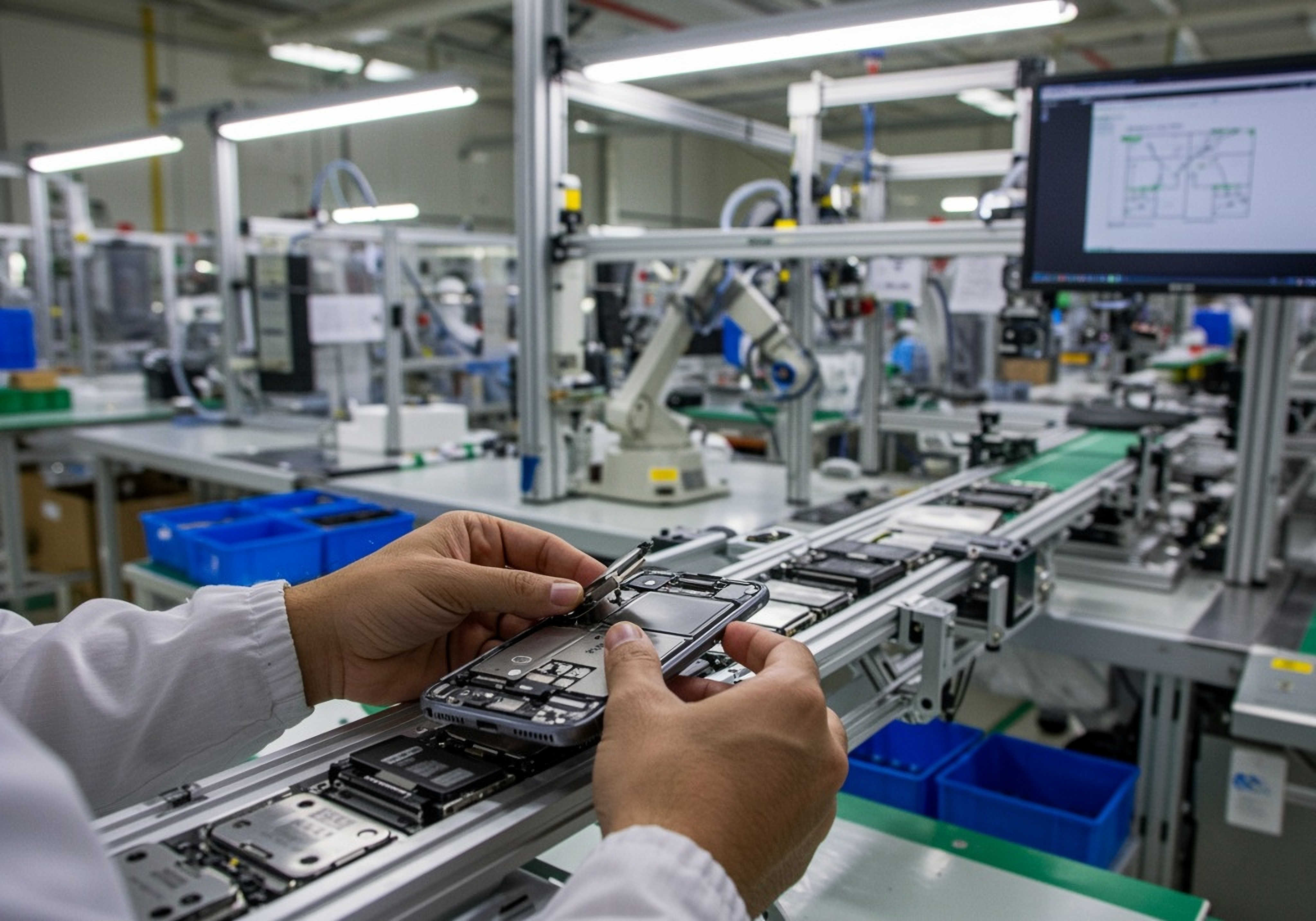
India wants a deal like the one that Vietnam negotiated in early July, reducing its “reciprocal” tariff rate from 46% to 20%. Vietnam promised to reduce tariffs on US goods to zero, buy 50 Boeing aircraft and commit to US$2.9 billion in US agricultural imports. One more example of the complexity facing importers to the US is the 40% levy in the Vietnam deal on goods deemed to have been transshipped from China.
Peng’s firm, FTI Consulting, which began as Forensic Technologies International in 1982 in a small warehouse in Annapolis, Maryland, offers clients a dashboard that translates their supply chains into concrete (if temporary) numbers. “We can show their total duty profile by country of origin, by product type and by value on the dashboard. They can use that to make much better decisions. First, they need to know their actual exposure. It’s not just whatever the newspapers say, 10% or 20%. They need to know their actual exposure. That is the first thing they should do.”
“In the beginning, a lot of companies, especially the ones that are not prepared, were quite panicked, because the numbers announced on Liberation Day were beyond their expectation. They’ve settled into a different mindset now. There’s not much that any individual company can do, other than monitoring news and constantly changing the numbers in their scenario planning.”
“We know a lot of investment has stopped, or at least postponed, until things are clear. We just don’t know if things will be clear anytime soon. We’ve talked to a lot of companies that want to wait until later. I would very much discourage that approach of waiting for something to happen, then react. Particularly if you’re in the supply chain business, it’s not very wise. Companies need to take some action to diversify their supply chain, whether or not the tariffs settle in the near future. If your company has not previously addressed this, relying on a single source of supply and tariff designation could expose you to unnecessary risk,” Peng says.
Hong Kong’s deep bench of talent on tariffs and trade Peng arrived in Hong Kong in 2009 as an international trade lawyer with a US-based law firm focusing on trade and customs. Customs law is generally not taught in law school, so Peng learned everything about US Customs and international trade from some of the leading practitioners of Customs and tariff mitigation after graduating from the University of Florida Law School in 2006. “I immediately loved the trade side of things,” she says. “All my colleagues, if they spoke Mandarin, would be doing mergers and acquisitions or IPOs. I completely missed that boat. I only got to do trade and I was loving it.”
Most of Peng’s work was with importers that had supply chains in Asia. “Even though I was young, I witnessed the progression of moving the supply chain from the US to Asia, and now going full circle,” with Trump’s attempt to force manufacturing back to the US through building a tariff wall. “In the first 10 years of my career, I always felt that free trade would last forever, because we were talking about all these trade deals and hoping to eliminate trade barriers. We’re obviously going in the other direction at the moment.”
Some of the most experienced multinationals were in the textile and apparels sector. Hong Kong was at the center of Asia-Pacific manufacturing networks partly because, under the Multi-Fiber Agreement and the Agreement on Textiles and Clothing, which ended in 2005, Hong Kong had higher quotas than China, meaning that goods could be brought from China and buttons or other details added to qualify for the Hong Kong quotas. International brands and manufacturers took advantage of this, creating an industry that largely moved to mainland China after the quotas were removed in 2005. The regional and even global head offices remained in Hong Kong, because of its convenience, low tax rates and experienced human resources.
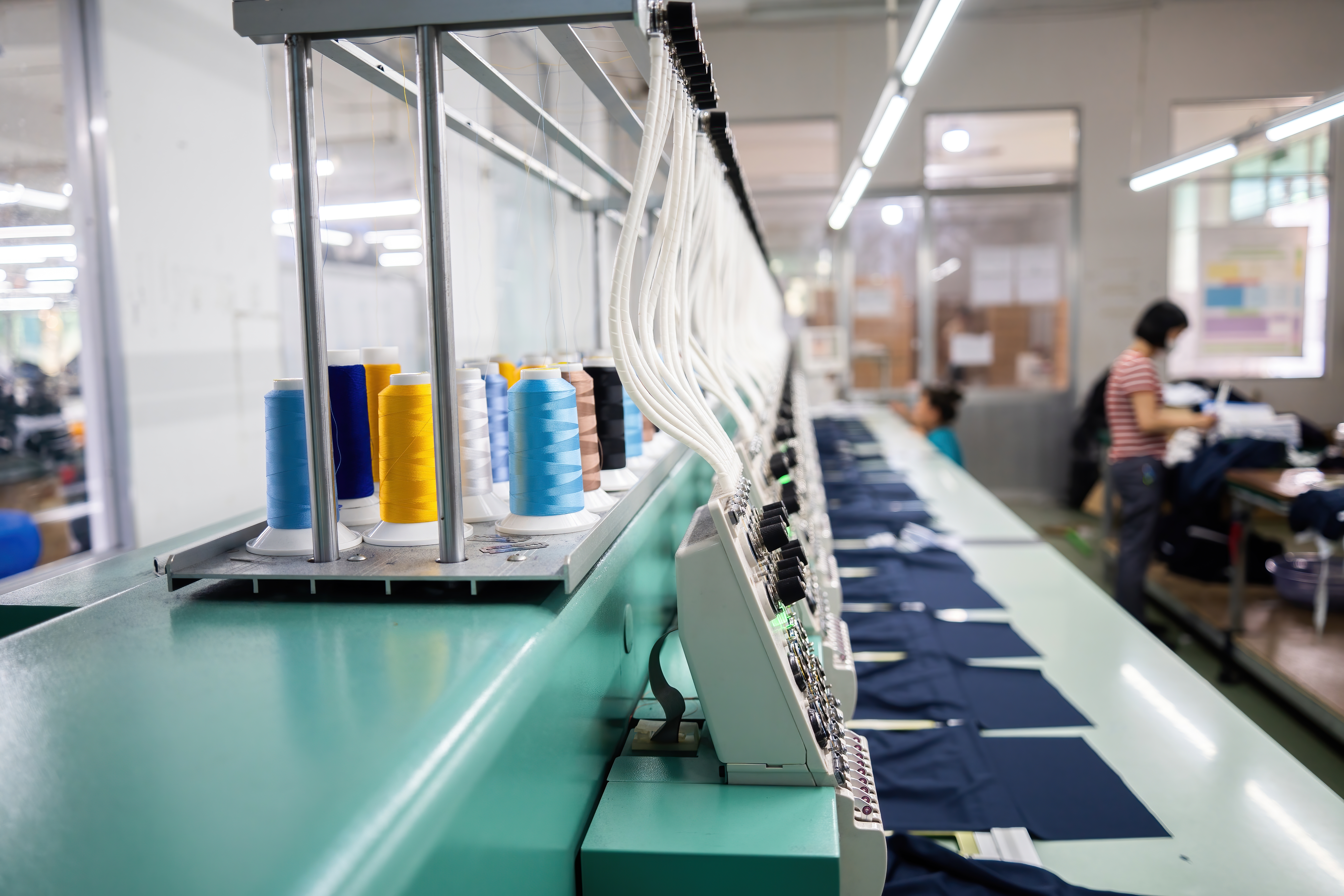
Peng discovered the Hong Kong textile business community after joining The American Chamber of Commerce. “I didn’t know anyone, and obviously, as a lawyer, I joined the Law Committee, who were people in my own field. So I decided to join something that had nothing to do with law. That’s why I joined the Apparel and Footwear Committee, because I thought it would be interesting. And that was absolutely correct. It was super interesting to hang out with these apparel and footwear executives, who look after sourcing globally, not just in China.”
“In Hong Kong, all the global sourcing people sit in one place. If you want to visit all the different brands, almost all the sourcing people for these huge US and European Union brands sit within 10 kilometers of each other, all in Kowloon. That’s why our committee meetings are in Kowloon sometimes, and they’re in the same building. All the apparel people in one building, and all the footwear people in one building.”
Networking across the region As vice-chair of AmCham, Peng credits the organization with helping her build a network with senior trade officials and governments across the region that she would not have had as a private practitioner.
During the Trans-Pacific Partnership (TPP) negotiations in the mid-2010s, AmCham sent a delegation of about about 20 people to Southeast Asia. According to Peng, 15 of them accounted for 50% of the garment industry. “When you have a group of people of this caliber under the banner of the AmCham Apparel and Footwear Committee you get to meet whoever is in charge in that country. We met with the vice premier of Vietnam.”

During her 10 years with the committee, now called the Apparel, Footwear & Supply Chain Committee, Peng joined at least 10 delegations, visiting China, Bangladesh, Cambodia, India and Africa. “I was always very grateful as a private, practicing lawyer to be able to do my work at the country level, through the Chamber, and that’s something I don’t think a lot of people get to do or know about,” she adds.
“It’s not something that I planned,” she says. “I didn’t know. We have members who, because they joined our delegations, were finally able to get their licenses that had been pending for nine months. But because of our meeting with, let’s say, the prime minister of a certain country, they could get the license in two weeks. And closer to the current time, the network that I built through all these delegations are now the main people that negotiate with the Trump administration. So that’s where I get a lot of my information. If I hear something, I get to talk to our network to confirm if the reports are true.”
“Within the region, we have a very strong network of people who used to be junior trade negotiators when we met them and are now quite senior. I was talking this morning with one of them about his experience with the Trump administration. They just finished one round of negotiation, and returned home last night.”
Most of the apparel and footwear companies do their tariff work in-house, because tariffs have always been such a large part of their cost structure. “Apparel and footwear people, they knew how to mitigate these things a long time ago. And most of them were operating their tariff mitigation in-house, because they had been operating for so long in Asia and had long supply chains. They are the ones who have in-house knowledge of how to manage tariffs. But we also run into a new wave of clients, in technology, like Electric Vehicle (EV) batteries. They are in a new industry, and have no idea how to manage tariffs, and usually need external help.”
The road to Hong Kong Peng’s ability to deal with complexity on trade issues comes naturally. Born in Taiwan, she graduated from National Chengchi University and ran two election campaigns before moving to the US in 2001 for a master’s degree in international relations at the Maxwell School of Citizenship and Public Affairs at Syracuse University. “Maxwell School kind of opened up everything that I did later,” Peng says.
She had not been planning to go into law, but the Maxwell School sent her on an internship with Ogilvy, the Washington, DC-based public relations agency, in their government lobbying division working for a pharmaceutical company. “All the lobbyists in the US are lawyers, and it kind of got me. I was just very intrigued by how they think and the way they resolve problems. I was not that naïve about politics, but the kind of maneuvering they did was just beyond my imagination. That’s why I went to law school.”

Sally Peng is a Senior Managing Director of Export Controls, Sanctions & Trade with FTI Consulting in Hong Kong, and AmCham Vice Chairman, leading the Export Controls, Sanctions and Trade practice in the Asia-Pacific region, and is an expert in export controls, economic sanctions, international trade strategy, global supply chain optimization and trade compliance. She holds a JD from the University of Florida Levin College of Law, an MA from the Maxwell School of Citizenship and Public Affairs at Syracuse University, a diploma from Peking University Law School in Beijing, and a BA from National Chengchi University College of Law. She is vice chairman of the 2025-2026 board of directors of The American Chamber of Commerce in Hong Kong.