

Andrew Martin during his closing keynote at the Cascale Annual Meeting in Munich, 2024.
July/August 2025 Issue
Cascale, the global nonprofit alliance across the consumer goods industry “to combat climate change and support decent work for all”, is not a stranger to Asia-Pacific, but it is getting much more visible and engaged with the region. Edith Terry spoke to Andrew Martin, Executive Vice President of Cascale, about why.
If Cascale is not a household word in Asia-Pacific that is in part because the name is new. The former Sustainable Apparel Coalition (SAC) was co-founded in 2009 by legendary mountaineer and conservationist Rick Ridgeway, then vice president of public engagement with Patagonia, the outdoor gear and clothing company, which itself was founded by passionate environmentalist Yvon Chouinard.
Patagonia and Walmart came together via a long-time friend of Ridgeway, world-class rafting guide Jib Ellison, when Walmart was seeking a way to set industry-wide metrics for apparel, footwear, and textiles sustainability, which had been an earnest but messy effort. Three years later, in 2012, SAC came out with the Higg Index tool, which they hoped to make an industry standard. It was meant to solve a problem with overlapping audits of their suppliers by supplying reliable metrics on sustainable performance of the multitude of suppliers to big international brands.
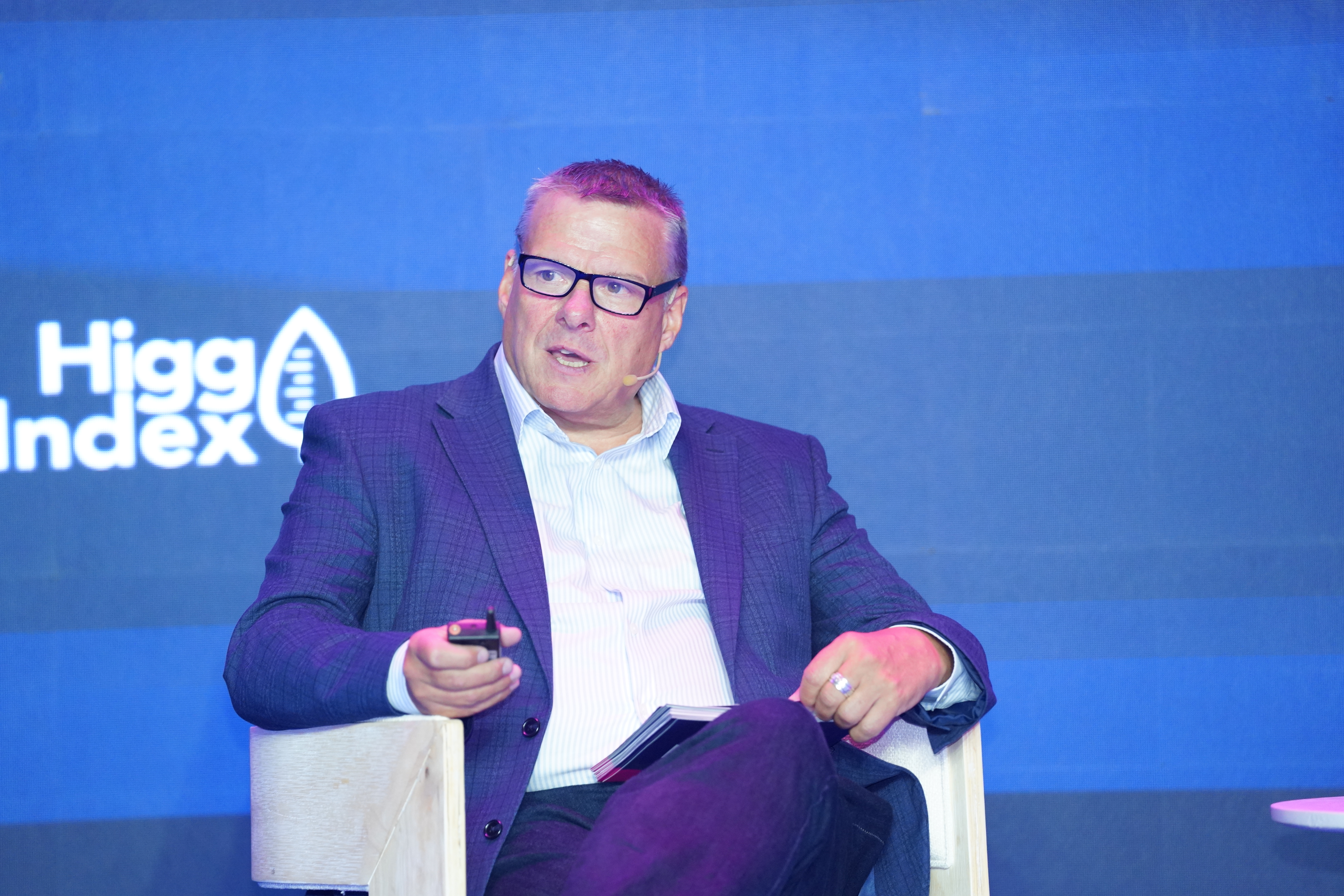
The name Higg came from the Higgs-Boson particle and reflected “our search for the particles of sustainability,” according to SAC’s then executive director Jason Kibbey. The nonprofit quickly recruited 60 members, representing brands, retailers and suppliers who accounted for more than one-third of the global industry in footwear and apparel.
Fast forward to the present. Cascale has more than 300 global members, representing all aspects of the value chain for home furnishings, bags and luggage, sporting and outdoor goods, and apparel, textiles, and footwear. There are five Higg Index tools, owned and developed by Cascale and exclusively licensed to Worldly, the leading platform for sustainability data and analytics in consumer goods supply chains.
Announced as part of a rebrand in 2024, the new name is a composite of SAC, reversed to CAS, with the next two letters, CA, referring to collective action and “scale” referencing scaled ambitions. “There were a few big learnings,” said Andrew Martin, Executive Vice President of Cascale, who is responsible for delivering strategic and operational leadership for the organization. “The technology was robust, but we hadn’t done enough engagement with critical stakeholders to help bring them along the journey.”
Bringing Cascale to Asia-Pacific
Today, Cascale is also paying much more attention to Asia-Pacific, where nearly 75% of the global apparel and footwear industry is based. This past May, Cascale released a report arguing that brands and manufacturers across the region should collaborate in meeting new and more stringent climate regulations that have been adopted across the region.
The report, Navigating Regulation and Building Resilience: Key Trends in Corporate Supply Chain Responsibility for APAC in 2025, described how countries in the region were rapidly putting into place disclosure requirements developed by the International Sustainability Standards Board (ISSB), the gold standard. It echoed findings by the ISSB itself, published in November 2024, that the Asia-Pacific region had the largest increase in disclosure requirements of any region between 2022 and 2023.
The message was a welcome one to suppliers in Asia-Pacific, where many companies are already committed to sustainability, but need to convince their brand customers to join them. From this perspective, Cascale provides a bridge, and one that Asia-Pacific suppliers are eager to use.
In May, Cascale held its first regionally focused meeting in Ho Chi Minh City, Vietnam, drawing over 650 attendees, 80 speakers and 22 sponsors and partners, making it “a resounding success,” according to Cascale’s Facebook page. On September 15-17, it will hold its annual meeting in Hong Kong for the first time, an event that drew over 600 attendees to its annual meeting last year in Munich.

Many of the tens of thousands of manufacturers in Asia-Pacific’s US$400 billion footwear and apparel industry are small and medium-sized enterprises (SMEs). There are some 6.4 million workers in the sector in China, the world’s largest textile manufacturer and exporter, and 21,000 companies. Vietnam, with the second largest textile industry globally, has around 7,000 companies with 3 million workers in the industry. Bangladesh, the third largest, has about 4,500 textile manufacturers and 4,500 companies.

Smaller companies at the end of the supply chain are not easy to convene. But at the Cascale Forum in Ho Chi Minh City, coming not long after Trump’s ‘Liberation Day’ tariffs on April 2, the audience was cautiously optimistic. “I expected the mood to be more somber than it was,” Martin said. “There was a real sense of okay, this is happening. We’ve been through things before, and we can come through this. Let’s hold strong and keep looking at the future.”
Covid as a trial run for the Trump tariffs
For most companies in the footwear and apparel supply chain in Asia-Pacific, the massive disruption caused by the Covid-19 pandemic was a trial run for the disruptions caused by some of the highest tariffs since the 1930s, and on top of that, uncertainty caused by changing policy coming almost daily from the White House. To the extent that the Higg Index offers for a way for SMEs to align with their retail and brand customers to harmonize data, it helps mitigate the cost of doing business.
Many of them face multiple sets of auditors asking the same questions on their environmental, social and governance (ESG) performance. A harmonized approach between brands and manufacturers “becomes even more important when you’re looking at cost measures to address tariffs,” Martin said. “To address those challenges, you start to reduce the areas where you don’t need to be spending money, which is duplicating assessments.” To the extent that brands and retailers accept the Higg Index, suppliers can conduct their own self-evaluations.
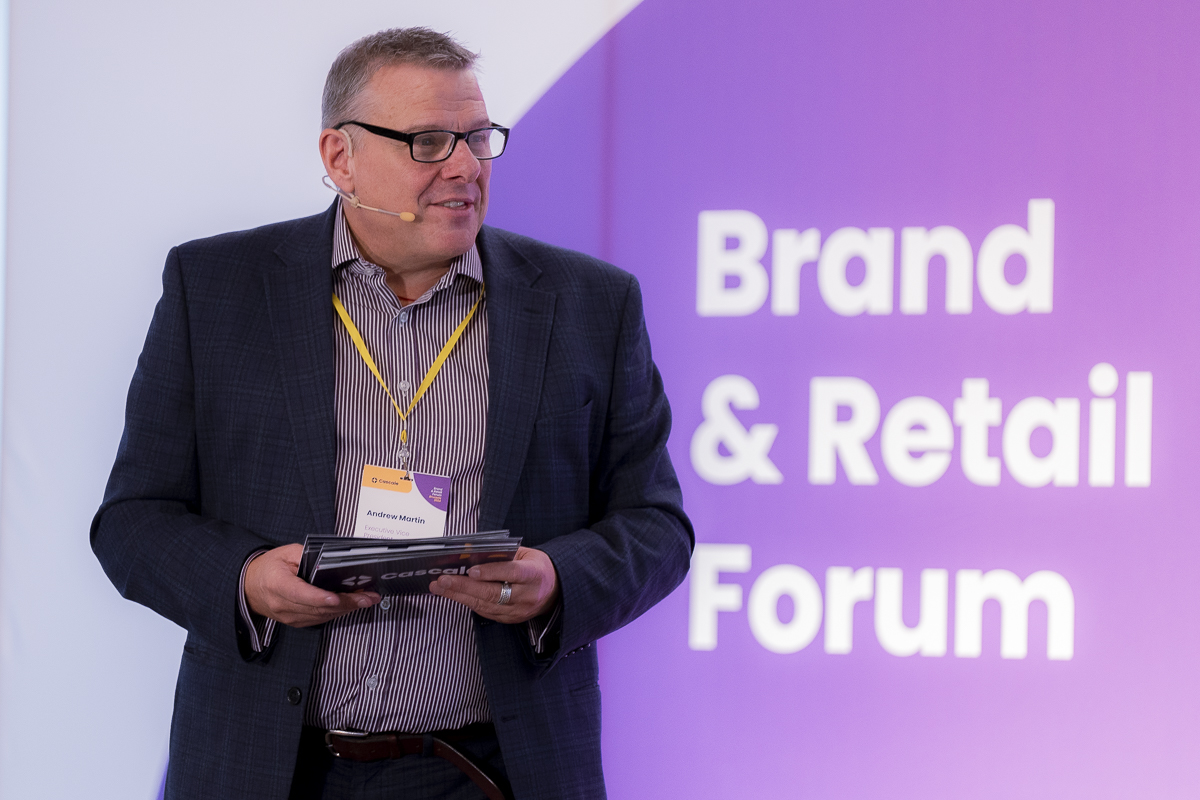
Martin described a survey that Cascale conducted in Vietnam at one of the sessions in May. “I think we had 500 people in the room, mainly manufacturers,” he said. “We asked, ‘What are the things that are holding you back to accelerate decarbonization?’” The choices included finance, technical solutions and alignment with brands. Finance and technical solutions were way down the list in the responses.
“The number one response was alignment across brands,” Martin said. “Manufacturers get as many as 200 audits from different brands, sometimes from the same auditors with almost the same questions. If we’re going to focus on areas to reduce cost, this is a critical one.”
International brands have a particular responsibility in the face of tariff disruption to work with suppliers to mitigate uncertainty, Martin said: “It’s like what happened during Covid. Where there is this level of uncertainty, the brands have a responsibility to build partnerships to think longer terms with the suppliers.”
A lot of the suppliers remember Covid, and the stronger ones are starting to choose who they want to sell to, because they know what their behavior is like. “Building those long-term relationships is important, and it’s also important for the brands, because it protects the future of their business and lowers their risk,” Martin said. “In this context, with the tariffs, I would be asking the brands, together with their manufacturers, to be thinking long-term. This is a short-term challenge. What are the decisions needed to be made now that will impact the long-term success of the business as a whole?”
A moment in time for Asia and Hong Kong
“This is a moment in time, where what’s happening in the Asian region is a real example of ways to go and what we could be doing differently, while in certain parts of the West, there is a bit of a pullback,” Martin said. “It’s a moment for us to be recognizing and to be looking at Asia and what’s happening, and Hong Kong is at the heart of it.”

Andrew Martin, Executive Vice President at Cascale, is responsible for delivering strategic and operational leadership for the organization, while continuing to oversee the Membership, Stakeholder Engagement, Collective Action, and Public Affairs teams.