
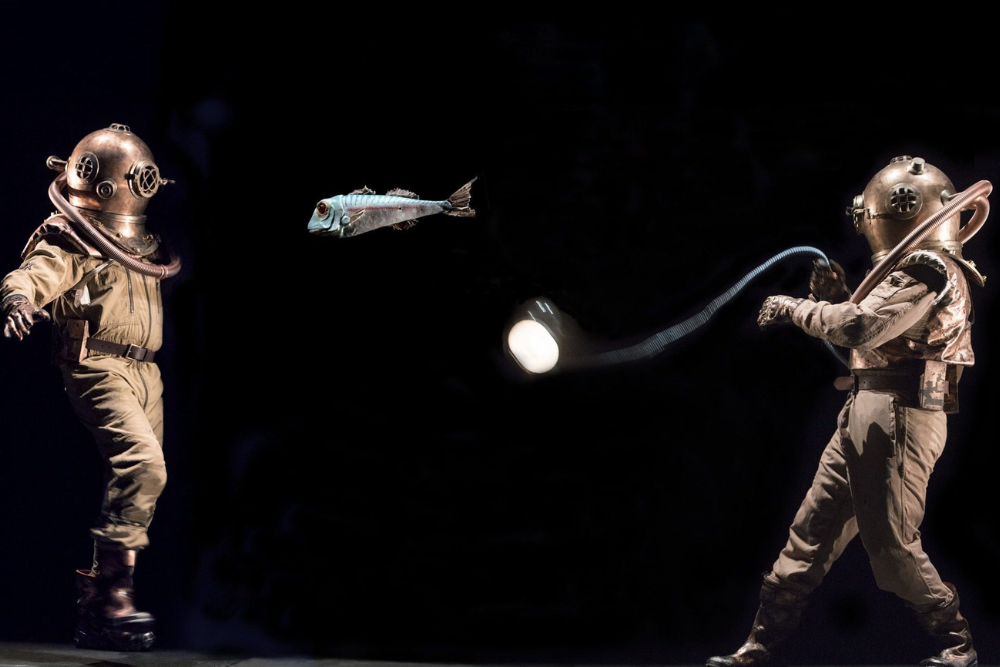
20,000 Leagues Under the Sea, a puppet drama in the 2025 Festival’s Jockey Club East-meets-West Series
“Proudly international yet unmistakably local”
The 2026 annual Hong Kong Arts Festival was the 54th season of an event which annually brings an extraordinary level of music, dance and theater to the city in February and March. This year was characteristically ambitious, with 1,100 artists and performers in 45 programs and over 180 performances, as well as about 300 community and education events. AmCham HK e-Magazine asked Executive Director Flora Yu, its CEO since November 2022, what it takes to keep one of the world’s biggest arts festivals going year after year, amid wars, pandemics and other obstacles
Bernard Chan, chairman of the West Kowloon Cultural District Authority, and a longtime supporter of the arts, calls the Hong Kong Arts Festival “one of the clearest mirrors of the city’s identity – proudly international yet unmistakably local.” An annual event that was initially designed to bring international tourists to the city after the inevitable slump following Chinese New Year, today it has become the largest event on Hong Kong’s cultural calendar.
For the team that puts the Hong Kong Arts Festival together, it is a work of passion. Executive Director Flora Yu, a 15-year veteran of the organization. In an interview midway through the Arts Festival, Yu said: “I love the festival. It’s the people here, who are so experienced and so good at what they do and who know so much about the arts. It’s great working with them. And the programs are always fascinating. We’re so tired that we all have panda faces, but I think we’re quite happy with the results.”
Yu first joined the Arts Festival as a contract editor in the 1990s. “The office was really small then,” she recalled. “We had very few people, but we loved the work so much we didn’t even want to go home.”
Two decades, several degrees and several jobs later, in late October 2011 Yu got an unexpected call from Grace Lang, program director of the Arts Festival. The then development director had just left, and the Arts Festival urgently needed a replacement, with just three months to go before the beginning of the fortieth season. Yu initially agreed to help as the temporary development director for one month, until they found the right replacement. One month became 15 years.
Organic growth
The Hong Kong Arts Festival merges seamlessly into Art Week when the Art Basel Hong Kong and Art Central art fairs bring mainland Chinese and international galleries, collectors and artists to the city, this year from March 25 to 29. But the art fairs emerged long after the Hong Kong Arts Festival, which began in 1973.
By the early 2000s, there was no question that the Hong Kong Arts Festival, whose timing was fixed and whose success was indisputable, would influence the timing for the large-scale contemporary arts exhibitions which were then being planned – first the Hong Kong International Art Fair, from 2008 to 2012 and its successors, Art Basel Hong Kong from 2013, and Art Central from 2015.
The Hong Kong Arts Festival also set the highest possible standard, bringing together headline performers in music, dance, theatre and opera from around the world in a dizzying few weeks, followed now by its contemporary art counterparts. It is almost too much. The month-long Hong Kong explosion in the arts comes and goes faster than the blink of an eye.
What began as a tourist draw now serves mainly local audiences, although it continues to attract international visitors as well as those from the Chinese mainland. Currently mainland Chinese make up around 10% of the audience, according to Yu. Ticket sales open online globally. Two months after the line-up was announced for this year’s Arts Festival in October 2025, around 50% of tickets were already sold. By late February 2026 when the Arts Festival opened, 80% of the 100,000 tickets had been sold. It has become an event that underlines the attractions of being a Hong Konger no matter where you come from, a crucial piece of the constantly evolving identity of Hong Kong as a city and a place to live.
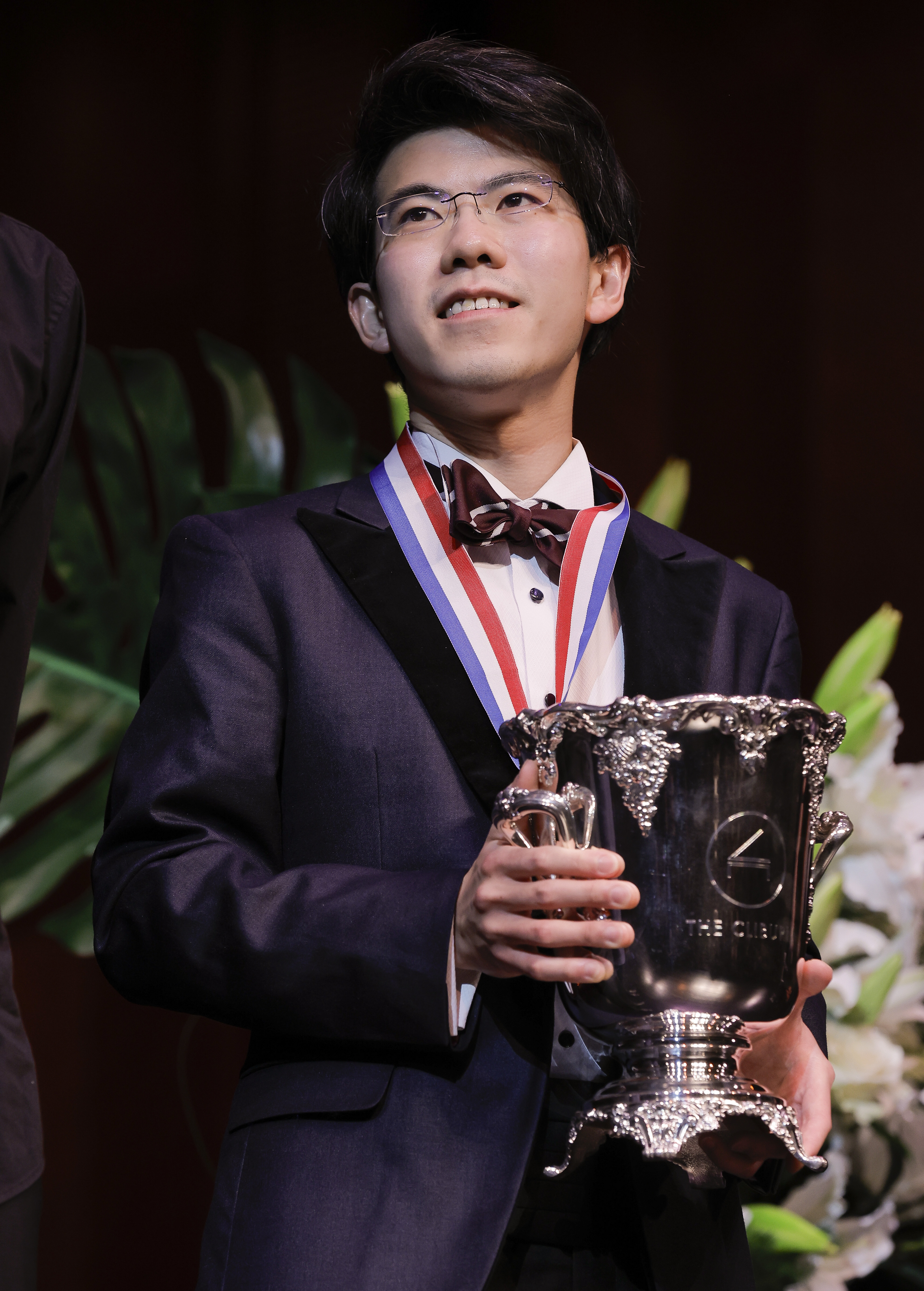
While the Arts Festival regularly brings some of the world’s top performers to Hong Kong, the 2026 or fifty-fourth season saw home-grown talent shine just as brightly. Tickets for local pianist Aristo Sham, winner of the 2025 Van Cliburn International Piano Competition, sold out so quickly a second performance was added soon afterwards. Meanwhile, all three performances of Reflections on a Sampan by Hong Kong-born, Berlin-based pianist Chiyan Wong and Friends were also completely sold out. Tickets for The Drunkard, a Cantonese theatre work based on Hong Kong writer Liu Yi-chang’s stream-of-consciousness novel of the same name, also sold out within days.
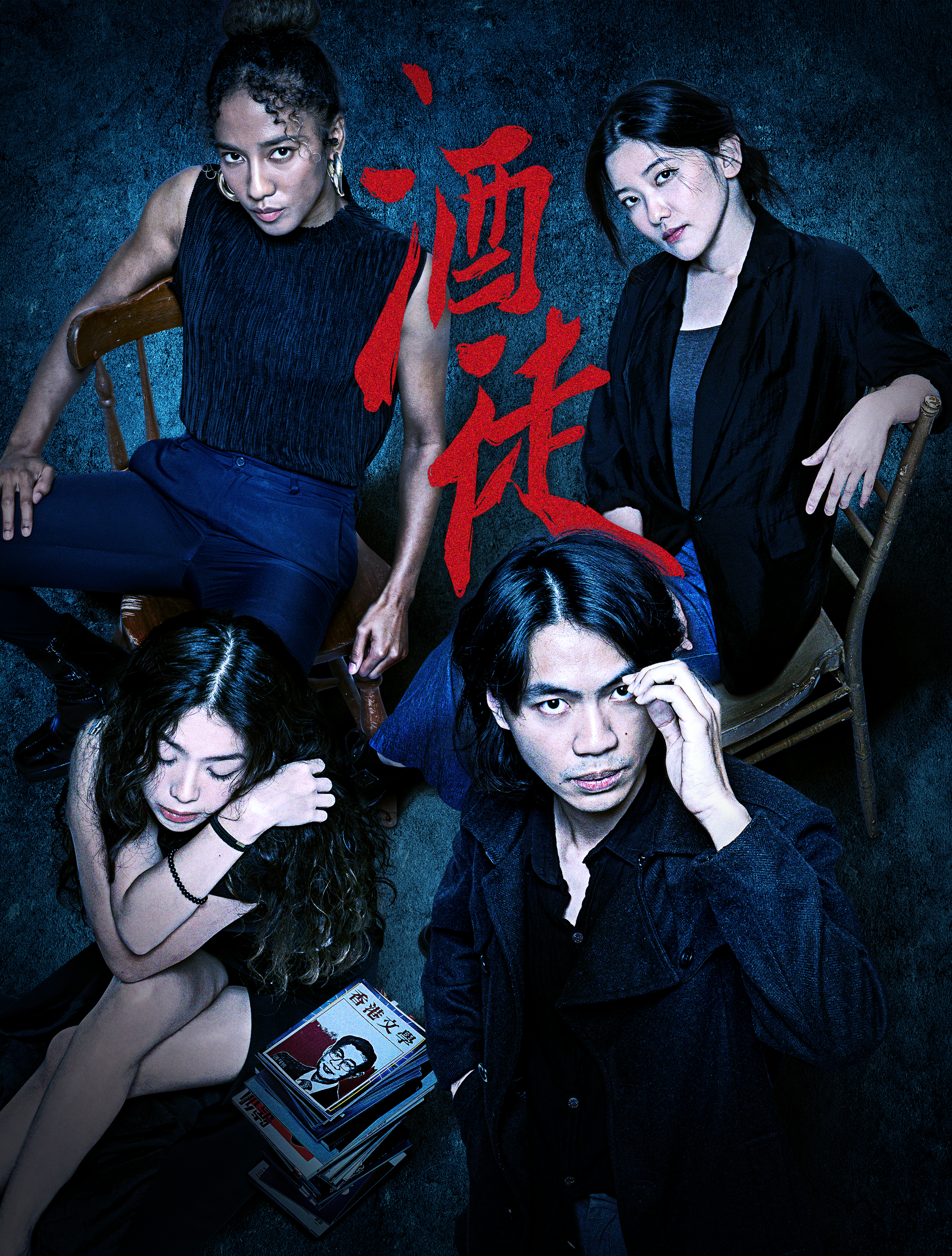
In the past two decades, the Arts Festival has invested heavily in nurturing local talent. To date, more than 200 works have been commissioned and produced by the Arts Festival, most of them involving local scriptwriters, directors, composers, lyricists, choreographers and performers. That the Arts Festival has been bringing top international performers to Hong Kong for over half a century is undoubtedly a factor that helped to encourage and inspire local artists.

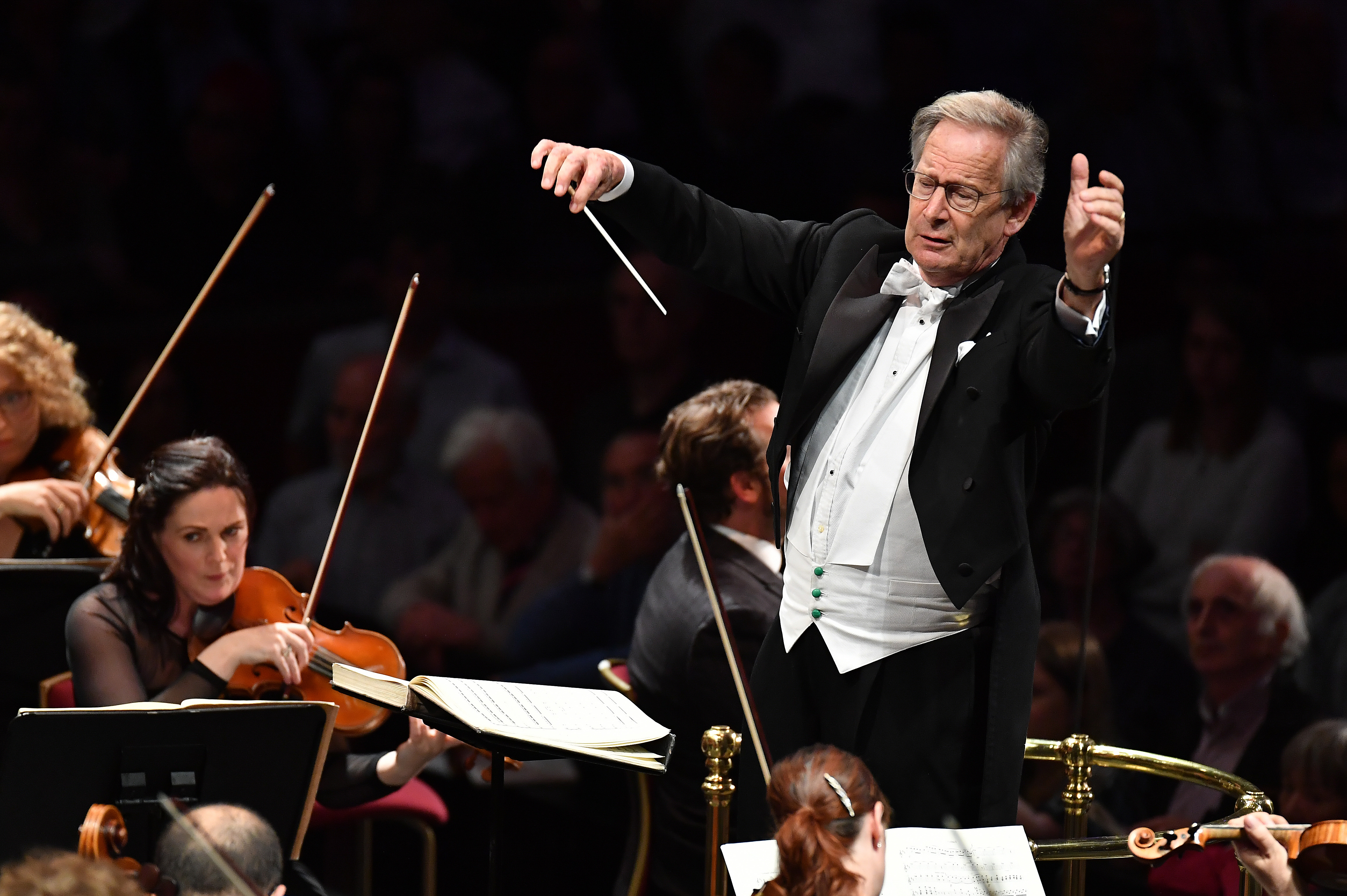
The very first Festival, in 1973, brought the London Philharmonic, the New Japan Philharmonic under Seiji Ozawa, violinist Yehudi Menuhin, lyric soprano Elizabeth Schwarzkopf and Dame Margot Fonteyn with the New London Ballet to Hong Kong, then a British colony. This year, superstar dancer Roberto Bolle and French tenor Benjamin Bernheim swept away their audiences, while the venerable Sir John Eliot Gardiner brought his recently formed Constellation Choir and Orchestra to perform Mozart’s Requiem and Bach’s Mass in B Minor.
With such riches, it may seem pedestrian to ask how the Arts Festival team pulls it off, year after year. The day after the first performance on February 27, war began in the Middle East, closing major airports throughout the region.
Wars, pandemics – the show must go on (most of the time)
“It was challenging, but there was no crisis, as we have well-tested systems and procedures in place, and seasoned professionals to manage the operations,” said Yu. Some air tickets had to be re-routed, especially for return tickets, leading to substantially higher logistics costs. “Fortunately, the freight had all arrived on time, even though the trip back home will also be significantly more expensive.”
This level of confidence is perhaps to be expected, particularly after the Arts Festival’s experience with the Covid-19 pandemic between 2020 and 2022. The forty-eighth Festival was cancelled in its entirety in 2020 and the 2022 Festival, on the Festival’s fiftieth anniversary, had to cancel most of its live performances. The team coped. Live performances went online, and the much-anticipated immersive arts tech opera Laila was filmed and turned into a documentary.
The Hong Kong Arts Festival team of about 65 full-time staff and ad hoc temporary interns and assistants squeeze into a rented floor of the Hong Kong Arts Center on Harbor Road. The building is only a few years younger than the Arts Festival itself and similarly dates from an era when Hong Kong was considered a cultural desert and the arts struggled for survival with minimal support from the British colonial government. The British governor, Lord Murray MacLehose, granted an awkward triangular, 10,000 sq.ft. lot for the 16-story arts center, which was to take on multiple missions, from housing arts organizations to education to performance.
Designed by modernist architect Tao Ho, who also designed Hong Kong’s Bauhinia flag, the floor occupied by the Hong Kong Arts Festival is a no-frills in a building with a distinctly Bohemian atmosphere, with music students, artists and the public dropping in and out. Someone is usually playing at an open piano next to the front door at Two Harbor Road.
While logistics are handled by a small, dedicated Festival team that works outside the office, the Arts Festival team in Wanchai does everything else, from selling tickets and branding, finding sponsorship and donations, commissioning, production, community outreach, arts education, editorial, technical preparations, artist bookings to negotiating venues. In the 2026 season, the Festival booked 13 different venues including the Champagne Bar at the Grand Hyatt Hotel. “It’s complicated,” said Yu. “It’s been complicated for over 50 years.”
For major international orchestras, opera companies and ballet, negotiations begin at least three years ahead of time. Negotiations with smaller ensembles and individual artists normally start a year and a half to two years in advance, Yu said.
“Because of our historical role as an integrated arts festival serving both Hong Kong people and visitors, we always try to have a balanced program line-up each year to serve different sectors of the community,” Yu said.
These include classical music and opera for lovers of classics, Cantonese opera for opera connoisseurs, circuses and family programs for kids, musicals and Cantonese-language theater for younger audiences, jazz, world music, classical ballet and contemporary dance, as well as traditional and avant-garde theatre in Cantonese, Putonghua, English and other languages.
The actual booking of venues is done after the Arts Festival puts together a master list, had it endorsed by the Program Committee, successfully slotted the performances into the calendar and venues, and done the math to know “we can afford them. Then we can finalize the whole program line-up,” Yu said. “Our Program Department secures 40 to 50 programs per Festival, which then turn into 140 to 180 performances. This means we are talking to around 100 different parties at the same time, each with its own schedules and touring plans.”
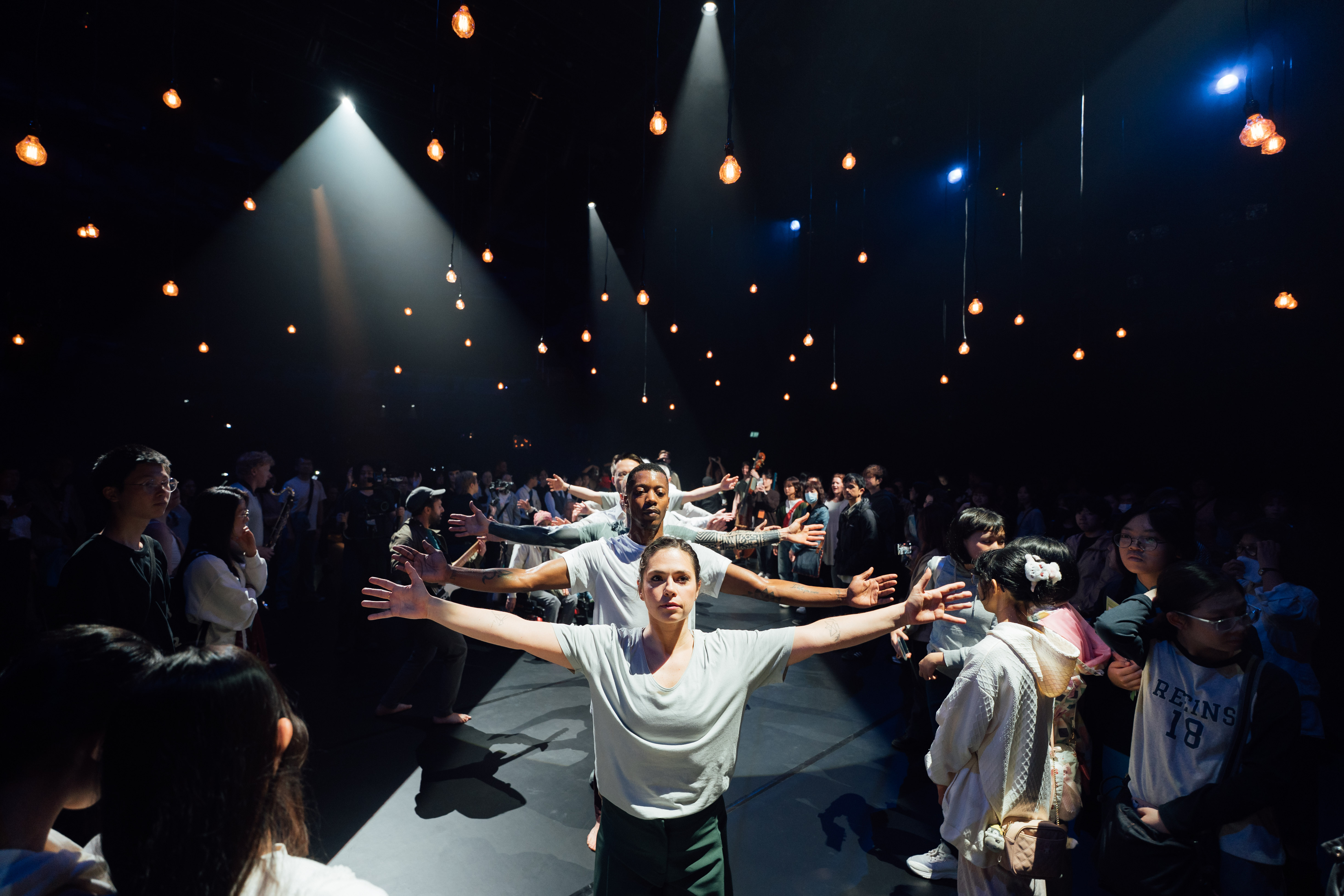
On top of the Hong Kong Arts Festival, the management team also runs a parallel arts festival for audiences and artists of “different” abilities – the Arts Festival avoids the term disabled, because it believes all people are “abled” in different ways. The “No Limits” program is now in its eighth year. Since 2019 the organization has partnered annually with the Hong Kong Jockey Club; in 2026, it staged 29 performances. Its eleven programs included screening of four films on-line and in-person, together with an extensive series of outreach and education programs.
A tight budget and variable costs
Funding from the Hong Kong Jockey Club for “No Limits” is one of the many reasons why total income for the Arts Festival increased from HK$128 million in 2018, before the “No Limits” funding was added to the budget, to HK$151.43 million in the 2025 season and an estimated HK$159 million for the current season.
As a non-profit organization, the budget is usually tight, but in most years the Arts Festival has been able to break even or see a surplus. It had a deficit of HK$3.36 million in the fifty-second season in 2024, when HK$8 million in fixed term funding from the Hong Kong government came to an end. Box office income was HK$33.09 million, 21.85% of total income. Sponsorship and donations accounted for HK$63.15 million, or 41.7% of income, followed by government grants of HK$48.9 million, or 32.2% of income.
In the 2025 season, government funding consisted of a recurring baseline grant of HK$18.89 million and a matching grant of HK$30 million, which has been capped at that amount since 2017. The Arts Festival had a HK$0.95 million surplus last year.
This year, for the fifty-fourth season, the organization is hoping for box office income of 24% of revenue, 44% from sponsorship and donations, and 32% from government recurring and matching grants. The Hong Kong Arts Festival Foundation, set up in 2022, is aimed at raising additional funds for supporting long-term, major scale activities of the Arts Festival.
As to the war and other interruptions, Yu said they do have an impact on the Arts Festival. “But there is no crisis on a day-to-day basis, partly because we’ve been planning for the festival for such a long time and partly because we have seasoned, professional administrators,” Yu said.
“Everybody knows what he or she is doing, and we have systems and procedures in place that people need to follow. If there is an incident, say in the first performance, we log it in a digital logbook and have a strategy ready to deal with it the next day. But we remain very alert all the time because the world is changing while we are operating.”
How it all began
The history of the Hong Kong Arts Festival dates to 1970, when a sales manager for British Overseas Airways Corporation (BOAC), now British Airways, began thinking about ways to fix the dip in air traffic to Hong Kong that followed the Chinese New Year in January and February.
Based in London, Charles Hardy visited Hong Kong to lobby the Hong Kong Tourist Association, and the local head of BOAC, David Creedy, ponied up HK$450,000 to subsidize the event. When Hardy realized that would not be enough to launch the event he had in mind, he went to Sir Run Run Shaw, founder of Shaw Studios, for the 250,000 British pounds he needed, about USD 625,000 at the exchange rate at the time. Shaw picked up the phone to call Sir Kenneth Fung Ping-fan. He put the phone down and told Hardy, “You have your festival.”
Hardy and his colleagues set a high bar, modelling the Hong Kong program after the Edinburgh International Arts Festival, perhaps the most famous arts festival in the English-speaking world. Today, the Hong Kong Arts Festival’s budget is a tad larger than its British predecessor, not counting the Edinburgh Fringe events. But it continues to present the best musicians, theater and dance productions in the world for the month of its duration.
54 years later, the city has changed and the Arts Festival has changed. Where once it was about bringing the arts and music world to Hong Kong, it has become a common meeting ground for international, local and mainland Chinese talent. “Even though we’ve been working on international cultural exchange for half a century, I think we are now playing a much bigger role,” Yu said. “In recent years, we’ve had much more commissioning of works that involve the collaboration of Western, Chinese mainland and Hong Kong artists.”
“It’s a reflection of the new role of Hong Kong, as a melting pot of things western, the Chinese mainland and Hong Kong itself.” She gives as an example the touring production of 20,000 Leagues Under the Sea, a Chinese-language puppet drama based on the Jules Verne novel, in the 2025 Festival’s Jockey Club East-meets-West Series.
Directed by Comédie-Française black-light theater visionaries Christian Hecq and Valérie Lesort, 20,000 Leagues was co-produced by the Hong Kong Arts Festival, the Central Academy of Drama in Beijing and Tempest Projects and premiered in the 2025 Festival at the Xiqu Centre in the West Kowloon arts district. It began touring in the Chinese mainland shortly after the end of the 2025 Hong Kong Arts Festival and is touring still. “It’s been very welcome all over the mainland,” Yu said. “People love it. The novel is read widely in the mainland and I understand it is even studied in primary school.”
Whatever the reasons for its success, the Hong Kong-French-Beijing production represented a type of collaboration that could only come from Hong Kong.
As it engages with mainland Chinese artists and audiences, the Hong Kong Arts Festival is creating something new. And because it has the Arts Festival stamp, it gets attention. “We are grateful that people do trust us,” said Yu. “Some of them will say, ‘I don’t know this artist, but because the Arts Festival is presenting it, I’ll trust them for the time being, and buy a ticket’.”

Flora Yu was appointed Executive Director of the Hong Kong Arts Festival in November 2022. Before she joined the Arts Festival as Development Director in 2011, Flora held senior management positions in the performing arts and commercial sectors, including Assistant General Manager of the Hong Kong Philharmonic Orchestra, head of corporate communications for the Shui On Group, and Deputy General Manager of Shanghai Xintiandi. She is Vice Chairman of the Hong Kong Arts Administrators Association and a member of the Advisory Board of the Master of Science in Arts, Technology and Business programme of Lingnan University. She has a BA in Fine Art from Wheaton College in the US, an MA in Literary Studies from the University of Hong Kong, and an MBA from the University of British Columbia, Canada.