

by Doug Woodring
A former chair of AmCham HK’s Energy and Environment Committee, Doug Woodring started in asset management in Hong Kong 28 years ago before a career as a serial entrepreneur in two directions – reducing plastic in the ocean, and water sports. Founded by Woodring and now in its fifteenth year, Ocean Recovery Alliance, an NGO based in Hong Kong and California has been working with villagers in Cambodia and Lombok, Indonesia, to build grassroots alliances to improve the health of the ocean and waterways. In water sports in Hong Kong, Woodring, together with Douglas Woo, chairman of Wheelock and Company created a series of ocean open water swim races that have made Hong Kong a premier center for the sport. Here he writes about a stunning new global initiative to reduce plastic pollution by promoting “circularity” – a model of consumption and production that involves recycling and restoring existing materials and products as long as possible.
Globally, the issue of plastic pollution is second only to climate change in terms of visibility and level of public concern. This year marks the world’s first attempt to create a global agreement on the reduction of plastic pollution and Ocean Recovery Alliance has been on the ground at three of the four meetings on the issue. The United Nations Plastic Treaty, which will be concluded on November 30, 2024, in Busan, Korea, means that plastic pollution is on the minds of over 180 governments and their participating delegations. Regardless of the exact outcomes, a flurry of legislation, voluntary and financial efforts will be deployed throughout our economies, impacting brands, consumers and hopefully bringing environmental benefits along the way.
Does recycling really work?
Plastic is malleable, durable and long lasting. These are among the attributes that have led to its widespread use, but also lead to its downfall as a waste material. Almost all plastic can be recycled. Just because a package says that it is “recyclable” does not mean the city or country where it has become waste has the infrastructure or recovery to recycle it. Hong Kong is potentially the most efficient city in the world for large scale collection and recovery of materials due to the density of people and material per building, but the systems being used, or lack thereof, have kept this from becoming a reality.
Unfortunately, plastic recycling has a bad name and image in the world today, partly because governments have not done a good job to build trust that collection systems work, keep materials uncontaminated from others, and result in quality recycled content for new uses.
As a result, much of the environmental world has come to assume that recycling simply does not work at the scale we all thought it would. In fact, that is not because it cannot work, but because the planet has not given it a chance. Europe and parts of Asia have waste-to-energy incineration programs that undercut proper material recovery efforts, while the rest of the world simply does not invest in plastic recovery and the recycling infrastructure, or the non-technical societal changes which could make it work.

Today the new lexicon for plastic pollution reduction includes circular economy, mass balance, plastic credits and offsets, all of which will become more familiar, as they are all important components of the broad solution-set needed to remediate and revalue plastic as a secondary material. The term circular economy is often used indiscriminately for domestic, local or international circularity, but by default it includes recycling (contrary to those who think it is not working or is not a significant factor in plastic reduction), because recycling is one of the only scalable processes which circulates materials into new value outputs with secondary uses.
Proof on the ground
Although policy sets the stage for consistency and planning, which is critical when looking five to 10 years into the future for research and development (R&D), machinery and supply chain infrastructure, the world also needs good case studies and examples which show how new policies and programs can work.
Founded in Hong Kong in 2011, Ocean Recovery Alliance brings creative thinking to new ways to reduce plastic pollution, at local levels but also internationally and across borders. Our on-the-ground efforts are now paying off in both Cambodia, where we have worked for the past six years, right through the pandemic, and Lombok, Indonesia.
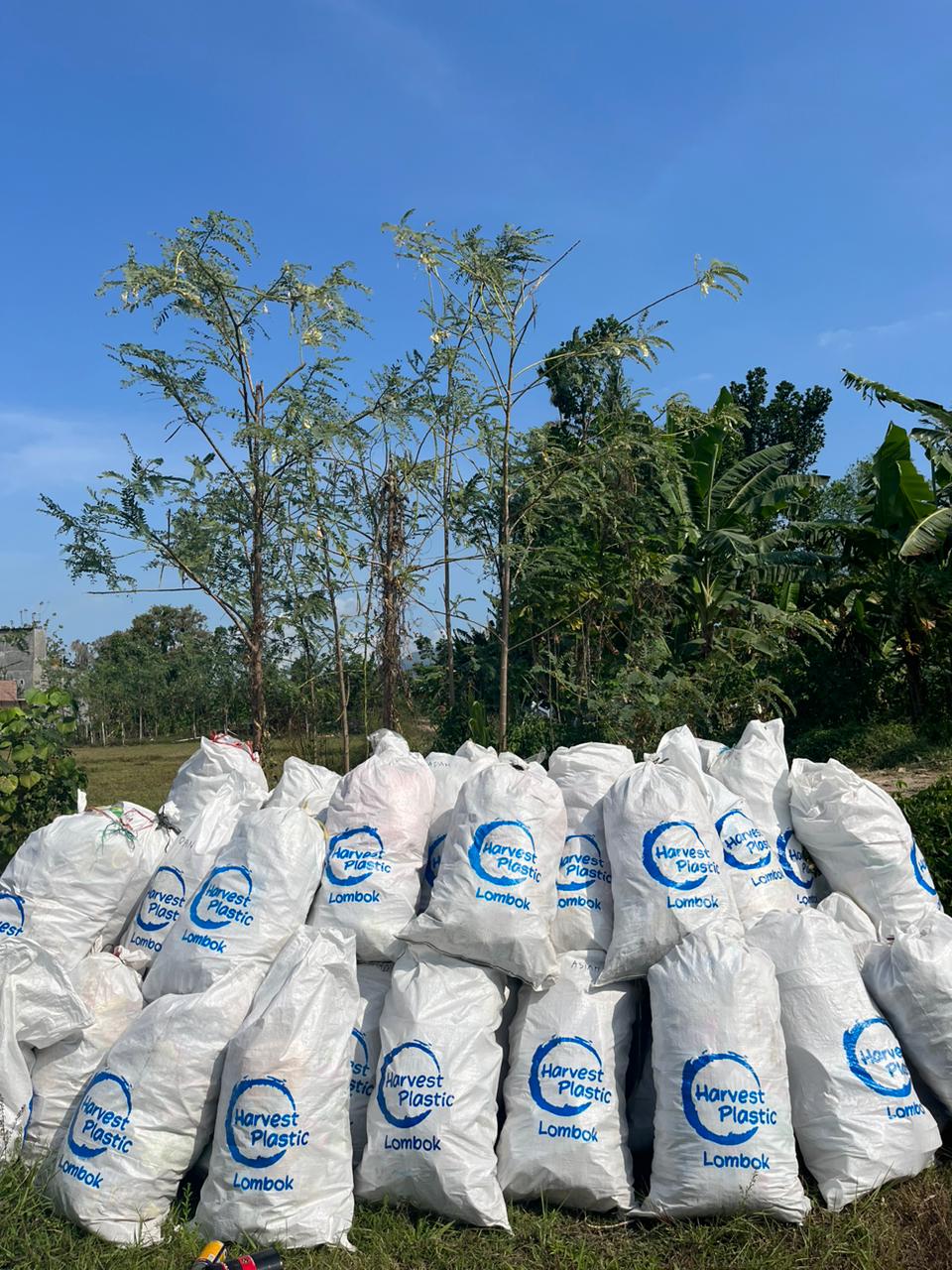
In both places, we have worked with communities introducing an innovative program called Harvest Plastic. Harvest Plastic has proven that village communities and households can recover over 90% of plastic, a globally significant percentage, and do it in a way that does not lead to further contamination. The exciting and scalable aspect of this change is that we do not even require technology to make it work.
Jurisdictional Upswell is a term that references the outcomes when a series of local communities create societal change across jurisdictions from new ways of interaction, focus and engagement for environmental improvements. Positive societal change can happen with the proper introduction of innovative, collective levers across many different environmental issues. In this case, the two Harvest Plastic Programs are aimed at reduction of plastic pollution. It is proving to be a successful way to change the way waste management is handled, initially in rural communities, but with the goal of impacting larger population centers from the outside, inward.
The Harvest Plastics program results in collecting significantly higher volumes of good quality plastic, making recycling both cheaper and easier and creating competitive advantages for those involved. By focusing on communities which lack waste infrastructure, the results are immediate avoidance of dumping and burning of plastic. Concentration at the household level also increases the likelihood that all members of the family are educated and engaged with the focus on plastic. The result is that plastic is removed from the waste stream without food waste and other contaminants, creating better quality feedstock for recycling which is easier and cheaper to sort and clean.
The approach is replicable, scalable and leads to creative solutions. With consistent, uncontaminated supplies of material, entrepreneurs and fit-for-purpose innovations can be introduced into the market, creating jobs, and bringing value to the communities involved, who are recovering over 90% of plastic from the waste stream. We know these are impressive numbers, as most countries that try find it difficult to recover more than 15% of plastic.
In Hong Kong, as an example of the level of difficulty in recovering materials, we have seen repetitive postponement of the waste charging scheme – the name of the program itself is enough to draw opponents from all fronts – and challenges with the recovery of polyethelene terephthalate (PET) drink bottles from the market by New Life Plastics, 57% owned by Swire Coca-Cola, 10% by German waste management recycling firm Alba Group and 33% by Hong Kong’s Baguio Waste Management and Recycling. Two years after the opening of the New Life Plastics facility in EcoPark, it is only processing PET bottles at 30% capacity, due to weak incentives and inadequate collection infrastructure.[1] In 2022, Hong Kong sent only 12.3% of its one million tons of plastic waste to the facility for recycling, according to Environmental Protection Department statistics.
The planet’s ever-increasing waste footprint
World population is increasing, particularly in developing countries. That means our collective waste footprint is also expanding. The negative impacts are severe in parts of the world which have never had, or spent sufficient resources on, waste management and material recovery infrastructure for the reduction of plastic pollution.
For example, it is estimated that up to 40% of the world’s waste is simply burned by open flame, yet this issue is rarely talked about, because the next day, there is not much to be seen. This does not mean it is healthy, however, nor the correct thing to do. We know that carbon black, or soot, is one of the main contributors to global warming, but the long-term impacts from the toxins from burning plastic are far from well understood.
Today, many cities and jurisdictions have set medium-term goals for landfill avoidance, partly due to the lack of space, but also to preserve resources through the creation of circular economy systems. By incorporating the design, use and recovery of materials into secondary products or materials, circularity puts less pressure on virgin and primary resources which are over-exploited, and then simply thrown away after a single use.
The new Plastic Treaty
New case studies and operating examples are even more important today. Just a few years ago, no one would have anticipated the UN negotiations on a global Plastic Treaty, potentially creating a historic moment for plastic. It will mean widespread opportunities for those wanting to participate in the heavy-lift of remediating some of the millions of tons of plastic which exist in our communities today, and for years to come. The negotiations are focusing on reductions in virgin feedstock, single-use materials and reuse programs. Even so, we have to be realistic about what can actually be replaced or removed from our economies.
Plastic mitigation resembles carbon reduction or sequestration, except that most stakeholders do not want to see plastic burned or gasified for energy, and landfills are becoming an increasingly expensive option. The planet’s plastic pollution issues, which touch every UN member state, cannot be solved simply with “future” regulations, commitments and programs for reduction. A wide range of solutions is needed. These are already available, but rarely given visibility or replicated in global markets.
This is partly because recycling is portrayed as being ineffective, despite that it is the only broad program cutting across communities and governments for the recovery of materials. Without recycling, it is impossible to create circular economies, nor can brands big and small reach their commitments to use recycled content instead of virgin material. It is estimated that the excess demand for recycled content is over 6 million tons per year. This will likely grow as member states become more engaged in the outcomes of the UN Plastic Treaty, whether voluntary or mandatory in nature.
Success is contingent on collaboration
The UN Plastic Treaty discussions have looked at reduction, re-use models, financing, health and social issues, but not at the trade of legitimate feedstock, which is the input needed to meet the growing (and increasingly legislated) demand for the use of recycled content. Little emphasis has yet been put on the remediation or recycling aspects of taking plastic feedstock into circular systems, so it does not become waste in the first place.
Instead of discussing the ways to scale remediation and reduction of plastic through recycling in the Plastic Treaty talks, much of which will require the trade of commodity plastic inputs for recycling, many delegates at discussions have deferred all trade issues to the existing Basel Convention. The latter was adopted in 1989 and governs trade in hazardous materials.[2] This would be fine if there was proper coordination with the Basel Convention on facilitating a global circular economy, but so far, there has not been any such collaboration or alignment. The Basel Convention was not meant to stop trade in legitimate materials, which includes feedstock for recycling and circular economies, which by default, have value, and therefore do not become waste. Yet the latest amendments in 2021 on within the convention are often mis-interpreted as being set up to limit trade in plastics.
By leaving trade out of the new UN Plastic Treaty, we unintentionally define and limit circularity to domestic policy. This puts a huge burden on countries today which already lack domestic funding or capacity for the recovery and re-valuation of plastic, including the US, which has a nationwide recovery rate for plastic bottles of just 30%. Globally, only 9% of plastic is being recycled. Without the ability to trade in legitimate, qualified material, we cannot meet demand for recycled content, keeping us dependent on virgin fossil-based feedstocks which are responsible for over 7% of the world’s carbon dioxide inputs today, increasing to an expected 15% in 20 years.
We need the UN Plastic Treaty and the Basel Convention to work in parallel to achieve the goal of reducing plastic pollution. Today these two treaties are not aligned, often because the participants from each member state are different. They may not be able to collaborate with their peers on a different negotiation. Many of the new delegates at the UN Plastic Treaty talks are not expert in the complexities of plastic pollution and re-use, because this is a new convention topic for most involved. Collaboration is imperative, because without the Basel Convention working to facilitate the goals of the UN Plastic Treaty, the latter will end up falling far short of its pollution reduction goals.
Communities face environmental challenges from all sides. It is also important to remember that carbon dioxide is not the only input creating negative externalities. Local issues are often caused by water pollution, much of which is derived from plastic, and poor overall municipal solid waste systems with little material recovery or value creation.

Ocean Recovery Alliance’s Harvest Plastic program is a way to show that there are new and innovative opportunities for regions and jurisdictions to improve, simply with creative thought and new ways of household engagement. The supply of consistent, uncontaminated material then means that entrepreneurs and innovators start to get involved, supporting circular economies at the start of a global supply chain. This then leads to brand engagement and demand, complementing the objectives of what the UN Plastic Treaty has set out to accomplish – a world without plastic pollution.

Douglas Woodring is the Founder and Managing Director of Ocean Recovery Alliance, a non-profit organization which combines innovative solutions, technology, collaborations and policy to create positive improvements for the health of the ocean. Launched in 2010, the Plastic Disclosure Project (PDP) was the world’s first plastic footprinting methodology. He was awarded the 2018 Prince’s Prize for Innovative Philanthropy from Prince Albert of Monaco, and is a United Nations Environment (UNEP) Climate Hero, Google Earth Hero and has been on the advisory board of the XPrize, and The Economist’s World Oceans Summit. In 2019 he was inducted into the International Marathon Swimming Hall of Fame for his innovative contributions to the sport, and was also named as one of the top 50 “watermen” in the world. From Northern California, Mr. Woodring has dual Master’s degrees from The Wharton School (MBA) and Johns Hopkins University, School of Advanced International Studies (SAIS) in Environmental Economics. He has BA from the University of California at Berkeley.
[1] Eric Ng, “How Hong Kong can rescue the struggling recycling industry and win its war on plastic waste,” South China Morning Post, March 2, 2024, https://www.scmp.com/business/article/3253787/how-hong-kong-can-rescue-struggling-recycling-industry-and-win-its-war-plastic-waste
[2] “Overview: Basel Convention on Hazardous Wastes,” Office of Environmental Quality, US State Department, https://www.state.gov/key-topics-office-of-environmental-quality-and-transboundary-issues/basel-convention-on-hazardous-wastes/ – :~:text=The Convention, which was adopted,other waste to importing countries.